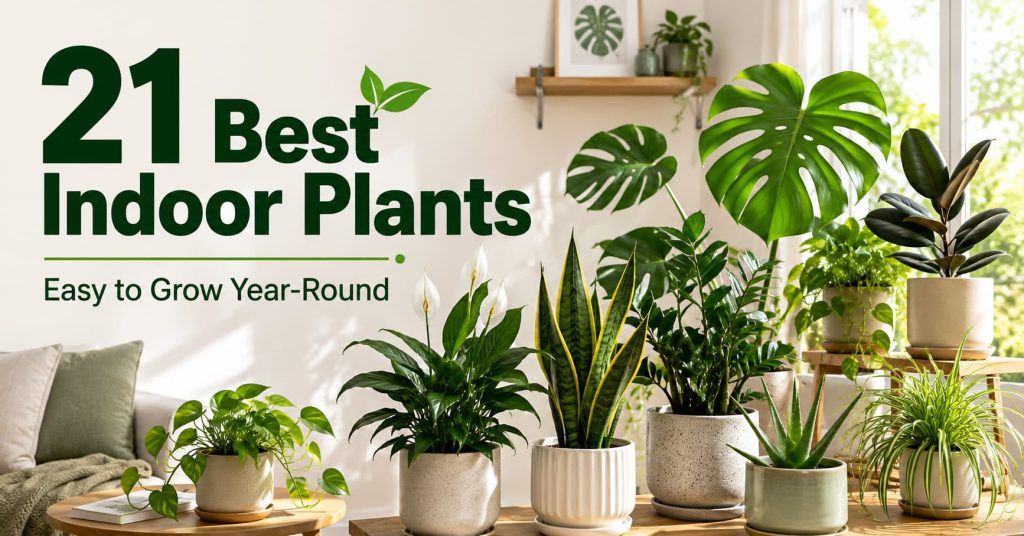
Looking for the best indoor plants that are easy to grow to brighten your home without spending hours on maintenance? Whether you’re a complete beginner or an experienced plant enthusiast, choosing the right houseplants can transform your living space while improving indoor air quality and creating a more relaxing environment.
In this guide, you’ll discover the best indoor plants that are easy to grow for low light, bright rooms, offices, apartments, and busy lifestyles. We’ll also cover practical care tips, common mistakes to avoid, and how to keep your plants healthy all year long.
Before choosing the perfect houseplants for your home, it’s helpful to understand the basics of indoor gardening. If you’re new to growing houseplants, start with our comprehensive guide, Indoor Plants: The Ultimate Guide to Choosing, Growing & Caring, where you’ll learn how to choose the right plants, understand their growing needs, and care for them successfully.
21 Best indoor plants that are easy to grow for Every Home
Below are some of the best indoor plants that are easy to grow for both beginners and experienced plant lovers. These reliable houseplants are easy to care for, adapt well to indoor environments, and can help you create a healthier, greener home year-round.
If you’re interested in learning more about healthy houseplants and proven gardening techniques, the Oregon State University Extension Service provides reliable, university-backed resources on indoor plant care, watering, pest management, and plant health. It’s a trusted source for practical advice that gardeners of all experience levels can apply.
1. Snake Plant (Sansevieria)
The Snake Plant (Sansevieria) is widely regarded as one of the best indoor plants that are easy to grow for beginners, and it’s easy to see why. If you’re new to indoor gardening or often forget to water your plants, this hardy houseplant is incredibly forgiving.
Its tall, upright leaves add a modern, architectural touch to any room, making it a popular choice for living rooms, bedrooms, offices, and apartments. The Snake Plant adapts well to different lighting conditions and can thrive even with minimal attention, making it an excellent option for busy homeowners.
Why People Love It
• Extremely low maintenance
• Thrives in low to bright, indirect light
• Tolerates occasional missed watering
• Stylish upright leaves that complement modern interiors
• Slow-growing with an impressive lifespan
• Excellent choice for beginners and frequent travellers
Care Tips
Light: The Snake Plant grows best in bright, indirect light but also performs remarkably well in low-light areas, making it one of the most versatile indoor plants for homes and offices.
Water: Allow the soil to dry out completely before watering again. Overwatering is one of the few things that can harm a Snake Plant, so it’s always better to underwater than overwater.
2. Pothos
Pothos is one of the best indoor plants that are easy to grow for anyone looking for a beautiful, fast-growing houseplant that’s incredibly easy to care for. Known for its cascading heart-shaped leaves and trailing vines, Pothos adds a touch of greenery to shelves, hanging baskets, desks, and office spaces with very little effort.
Its forgiving nature makes it an excellent choice for beginners, as it can adapt to a range of indoor conditions and quickly bounces back if you occasionally miss a watering. Better yet, it’s one of the easiest plants to propagate, allowing you to grow new plants from simple stem cuttings.
Why People Love It:best indoor plants that are easy to grow that are easy to grow
• Fast-growing trailing vines
• Low-maintenance and beginner-friendly
• Thrives in bright, indirect light
• Easy to propagate from stem cuttings
• Perfect for hanging baskets, shelves, and plant stands
• Adds a lush, tropical feel to any room
Care Tips
Light: Pothos prefers bright, indirect light but can also tolerate lower light conditions, although its growth may slow slightly.
Water: Water when the top inch or two of soil feels dry. Avoid leaving the soil constantly wet, as this can lead to root rot.
3. ZZ Plant
The ZZ Plant (Zamioculcas zamiifolia) is often considered one of the best indoor plants that are easy to grow for busy people or anyone who doesn’t have time for frequent plant care. Thanks to its thick underground rhizomes, it stores water efficiently and can go for weeks without watering, making it one of the most drought-tolerant houseplants available.
Its glossy, dark green leaves remain attractive throughout the year, adding a sleek, modern look to homes, apartments, and offices. Whether you’re a first-time plant owner or simply want a fuss-free houseplant, the ZZ Plant is an excellent choice.
Why People Love It:
• Extremely low maintenance
• Stores water, making it highly drought tolerant
• Beautiful glossy green foliage
• Thrives in low to bright, indirect light
• Ideal for offices, apartments, and low-light rooms
• Perfect for beginners and busy lifestyles
Care Tips
Light: The ZZ Plant grows well in low light but thrives best in bright, indirect light. Avoid prolonged direct sunlight, which can scorch its leaves.
Water: Allow the soil to dry out completely before watering. Because it stores water in its rhizomes, overwatering is far more harmful than underwatering.
4. Spider Plant
The Spider Plant is one of the best indoor plants that are easy to grow for beginners thanks to its adaptability, fast growth, and charming appearance. Its long, arching green leaves, often striped with creamy white, bring life and movement to any indoor space. Whether placed in a hanging basket, on a shelf, or on a plant stand, the Spider Plant makes an attractive addition to your home.
One of its most delightful features is its ability to produce baby plantlets, often called “spiderettes,” which hang gracefully from the mother plant. These can be easily propagated, allowing you to grow new plants or share them with friends and family.
Why People Love It:
• Beginner-friendly and easy to grow
• Produces baby plantlets for easy propagation
• Fast-growing under the right conditions
• Attractive arching foliage
• Adapts well to a variety of indoor environments
• Looks beautiful in hanging baskets and elevated planters
Care Tips:
Light: Spider Plants thrive in bright, indirect light but can also tolerate lower light conditions. Avoid prolonged direct sunlight, which may scorch the leaves.
Water: Water when the top inch of soil feels dry. Keep the soil lightly moist during the growing season, but avoid overwatering.
5. Peace Lily
The Peace Lily is one of the best indoor plants that are easy to grow for anyone who wants elegant greenery with beautiful white flowers. Its glossy dark green leaves and graceful blooms bring a sense of calm and sophistication to living rooms, bedrooms, and offices.
One reason beginners love the Peace Lily is that it gives a clear signal when it needs water. Its leaves will droop slightly when thirsty, making it much easier to know when it’s time to water. With proper care, this beautiful houseplant rewards you with lush foliage and long-lasting blooms throughout the year.
Why People Love It:
• Elegant white flowers and glossy green foliage
• Beginner-friendly and easy to care for
• Clearly signals when it needs watering
• Adds a fresh, tropical look to indoor spaces
• Thrives in homes and offices with indirect light
• Makes an attractive decorative houseplant
Care Tips:
Light: Peace Lilies grow best in medium to bright, indirect light. They can tolerate lower light, but flowering may become less frequent.
Water: Keep the soil lightly moist, allowing the top layer to dry slightly between waterings. Avoid letting the plant sit in waterlogged soil.
6. Monstera Deliciosa (Swiss Cheese Plant)
The Monstera Deliciosa, often called the Swiss Cheese Plant, is one of the best indoor plants that are easy to grow for creating a bold, tropical statement in your home. Famous for its large, glossy leaves with natural splits and holes, this eye-catching plant instantly adds character to living rooms, offices, bedrooms, and other indoor spaces.
Although Monstera can grow quite large, it’s surprisingly easy to care for, making it a favourite among both beginners and experienced plant enthusiasts. Given enough light and humidity, it grows quickly and develops the dramatic foliage that has made it one of the most popular houseplants in the world.
Why People Love It:
• Large, decorative leaves with unique natural splits
• Creates a lush tropical feel indoors
• Fast-growing in the right conditions
• Makes an impressive statement plant
• Suitable for beginners with basic care
• Perfect for living rooms, offices, and spacious interiors
Care Tips:
Light: Place your Monstera in bright, indirect sunlight. Too much direct sun can scorch the leaves, while very low light may slow its growth.
Water: Water when the top 2 inches (5 cm) of soil feel dry. Ensure the pot has good drainage to prevent root rot.
Humidity: Monstera thrives in moderate to high humidity. Increasing humidity can encourage larger, healthier leaves with more distinctive splits.
7. Rubber Plant
The Rubber Plant (Ficus elastica) is one of the best indoor plants that are easy to grow if you’re looking for a stylish houseplant that makes a bold statement. Its large, thick, glossy leaves bring a modern, elegant feel to any room, while its upright growth allows it to develop into a beautiful indoor tree over time.
Despite its sophisticated appearance, the Rubber Plant is relatively easy to care for, making it a great choice for both beginners and experienced plant lovers. With the right care, it can thrive for many years and become a stunning focal point in your home or office.
Why People Love It:
• Large, glossy leaves with a striking appearance
• Can grow into an attractive indoor tree
• Easy to prune and shape
• Long-lasting and durable
• Adds a modern, elegant touch to interiors
• Suitable for homes and offices
Care Tips:
Light: Rubber Plants grow best in bright, indirect light. They can tolerate moderate light but will grow more slowly in darker areas.
Water: Water when the top 1–2 inches of soil feel dry. Avoid overwatering, as consistently soggy soil can lead to root problems.
Extra Tip: Rotate the pot every few weeks to encourage even growth, as the plant naturally leans toward its light source.
8. Aloe Vera
Aloe Vera is one of the best indoor plants that are easy to grow for people who want a houseplant that’s both beautiful and practical. Its thick, fleshy leaves store water, allowing it to thrive with very little attention, making it an excellent choice for busy homeowners or anyone new to indoor gardening.
Its compact size makes it ideal for sunny windowsills, kitchen counters, and desks. Besides its attractive appearance, Aloe Vera has long been appreciated for the soothing gel found inside its leaves, which is commonly used for minor skin irritations and burns.
Why People Love It:
• Extremely drought tolerant
• Requires very little maintenance
• Compact and ideal for small spaces
• Perfect for sunny windowsills
• Stores water in its thick leaves
• Attractive succulent with practical uses
Care Tips:
Light: Place Aloe Vera in a location that receives plenty of bright, direct or indirect sunlight. A sunny south- or west-facing window is often ideal.
Water: Allow the soil to dry out completely before watering. Since Aloe Vera stores water in its leaves, overwatering is the most common cause of problems.
Soil: Use a well-draining cactus or succulent potting mix to help prevent excess moisture around the roots.
9. Chinese Evergreen
The Chinese Evergreen (Aglaonema) is widely considered one of the best indoor plants that are easy to grow for low-light spaces. Its beautifully patterned leaves, available in shades of green, silver, pink, and red depending on the variety, add colour and elegance to homes and offices throughout the year.
Known for its adaptability and easy-going nature, the Chinese Evergreen thrives in indoor environments where many other plants struggle. It’s an excellent choice for beginners or anyone looking for a low-maintenance plant that still delivers impressive visual appeal.
Why People Love It:
• Beautiful patterned foliage in a variety of colours
• Thrives in low to medium light
• Beginner-friendly and easy to maintain
• Slow-growing and long-lasting
• Excellent choice for offices and apartments
• Adds year-round colour to indoor spaces
Care Tips:
Light: Chinese Evergreens prefer low to medium, indirect light but can also grow well in brighter locations away from harsh direct sunlight.
Water: Water when the top inch of soil begins to dry. Keep the soil lightly moist but never waterlogged.
Extra Tip: Keep the plant away from cold drafts, air conditioners, and sudden temperature changes, as these can stress the foliage.
10. Cast Iron Plant
The Cast Iron Plant (Aspidistra elatior) lives up to its name as one of the toughest and best indoor plants that are easy to grow you can grow. Renowned for its incredible resilience, this hardy houseplant thrives in conditions that would challenge many other indoor plants, making it an excellent choice for beginners, busy homeowners, and anyone who doesn’t have a naturally green thumb.
With its deep green, upright leaves and slow, steady growth, the Cast Iron Plant brings timeless elegance to homes, offices, and shaded corners where other plants may struggle. If you’re looking for a plant that asks for very little but gives lasting beauty in return, this is an outstanding choice.
Why People Love It:
• Extremely durable and long-lasting
• Thrives in low-light conditions
• Tolerates occasional neglect
• Slow-growing and easy to manage
• Perfect for beginners and busy lifestyles
• Adds lush greenery to darker rooms and offices
Care Tips:
Light: The Cast Iron Plant prefers low to medium, indirect light but can adapt to brighter locations as long as it’s protected from direct sunlight.
Water: Allow the top couple of inches of soil to dry before watering. This plant is far more tolerant of underwatering than overwatering.
Extra Tip: Wipe the leaves occasionally to remove dust and keep them looking healthy and glossy.
11. Bird of Paradise
If you’re searching for one of the best indoor plants that are easy to grow to make a bold statement, the Bird of Paradise (Strelitzia) is hard to beat. Its large, banana-like leaves create an eye-catching tropical display that instantly transforms living rooms, entryways, and spacious offices into lush, vibrant spaces.
Although it requires a little more attention than some beginner-friendly houseplants, the Bird of Paradise rewards proper care with impressive growth and, in ideal conditions, may even produce its iconic bird-shaped flowers. It’s the perfect choice for anyone who wants a dramatic centrepiece that becomes the focal point of a room.
Why People Love It:
• Large tropical leaves that make a striking statement
• Creates a luxurious indoor atmosphere
• Fast-growing in the right conditions
• Excellent focal point for spacious interiors
• Adds height and architectural interest
• Brings a resort-like feel to your home
Care Tips:
Light: Bird of Paradise thrives in bright, indirect light and benefits from several hours of gentle direct sunlight each day.
Water: Water regularly, allowing the top inch of soil to dry slightly between waterings. Keep the soil evenly moist during the growing season without becoming waterlogged.
Space: Give this plant plenty of room to grow, as it can become quite large over time.
12. Philodendron
Philodendrons are among the best indoor plants that are easy to grow for anyone looking for lush tropical foliage with minimal effort. Available in both trailing and upright varieties, these versatile houseplants fit beautifully into almost any indoor space, from bookshelves and hanging baskets to tabletops and plant stands.
Their attractive heart-shaped leaves, rapid growth, and forgiving nature have made Philodendrons a favourite among beginners and experienced plant enthusiasts alike. They’re also incredibly easy to propagate, allowing you to grow new plants from healthy stem cuttings.
Why People Love It:
• Fast-growing and easy to care for
• Beautiful heart-shaped or tropical foliage
• Available in trailing and upright varieties
• Easy to propagate from stem cuttings
• Adaptable to a wide range of indoor conditions
• Perfect for homes, apartments, and offices
Care Tips:
Light: Philodendrons grow best in bright, indirect light but can also tolerate medium to low light, although growth may be slower.
Water: Water when the top inch or two of soil feels dry. Avoid allowing the soil to remain constantly wet.
Extra Tip: Prune long vines occasionally to encourage fuller, bushier growth and maintain an attractive shape.
13. English Ivy
English Ivy (Hedera helix) is one of the best indoor plants that are easy to grow for adding cascading greenery to your home. Its elegant trailing vines and lush green leaves make it a popular choice for hanging baskets, shelves, bookcases, and plant stands. Whether you want to soften the look of a room or create a beautiful vertical display, English Ivy brings timeless charm to almost any indoor space.
This fast-growing vine is relatively easy to care for and responds well to occasional pruning, allowing you to shape it to suit your décor. With proper care, it can quickly become one of the most eye-catching plants in your indoor garden.
Why People Love It:
• Beautiful trailing vines for hanging displays
• Fast-growing and easy to shape
• Adds a classic, elegant touch to interiors
• Perfect for shelves, hanging baskets, and wall planters
• Easy to prune and maintain
• Suitable for beginners with basic care
Care Tips:
Light: English Ivy grows best in bright, indirect light but can also tolerate medium-light conditions. Avoid prolonged exposure to harsh afternoon sun.
Water: Keep the soil slightly moist, allowing the top layer to dry just a little between waterings. Avoid letting the soil become waterlogged.
Extra Tip: Trim long vines occasionally to encourage fuller growth and maintain a tidy appearance.
14. Jade Plant
The Jade Plant (Crassula ovata) is one of the best indoor plants that are easy to grow for anyone who prefers low-maintenance succulents. Recognised by its thick woody stems and fleshy, glossy leaves, this attractive plant is believed by many to symbolise good luck and prosperity, making it a popular addition to homes and offices.
Because it stores water in its leaves, the Jade Plant requires very little watering and can thrive for decades with proper care. Its compact size makes it an excellent choice for desks, windowsills, and small indoor spaces.
Why People Love It:
• Extremely low maintenance
• Long lifespan with proper care
• Requires very little water
• Compact size for desks and shelves
• Attractive succulent with thick, glossy leaves
• Ideal for beginners and busy homeowners
Care Tips:
Light: Jade Plants thrive in bright light and benefit from several hours of direct or indirect sunlight each day.
Water: Allow the soil to dry out completely before watering again. Like most succulents, Jade Plants dislike constantly wet soil.
Extra Tip: Use a well-draining succulent or cactus potting mix to keep the roots healthy and prevent overwatering.
15. Dracaena
Dracaena is one of the best indoor plants that are easy to grow for adding height, colour, and elegance to modern interiors. Available in many varieties, its long, sword-like leaves come in striking shades of green, yellow, cream, and red, making it an attractive feature in homes, apartments, and offices.
This versatile houseplant is relatively low-maintenance and adapts well to indoor conditions, making it a favourite for beginners and experienced plant lovers alike. Whether placed in a corner as a statement plant or used to brighten an office, Dracaena brings a fresh, contemporary feel to any space.
Why People Love It:
• Available in many beautiful varieties
• Colourful, sword-like foliage
• Easy to care for and beginner-friendly
• Excellent for homes and office spaces
• Adds height and structure to interior décor
• Adaptable to a range of indoor environments
Care Tips:
Light: Dracaena grows best in medium to bright, indirect light. While it can tolerate lower light, brighter conditions encourage healthier growth and more vibrant foliage.
Water: Water moderately, allowing the top inch or two of soil to dry before watering again. Avoid waterlogged soil, which can damage the roots.
Extra Tip: Rotate the pot occasionally to encourage even growth and prevent the plant from leaning toward the light.
16. Parlor Palm
The Parlor Palm (Chamaedorea elegans) has been one of the best indoor plants that are easy to grow for generations thanks to its graceful appearance and easy-going nature. Its delicate, feathery fronds bring a touch of tropical elegance to living rooms, bedrooms, offices, and apartments without demanding constant attention.
Unlike many tropical plants, the Parlor Palm adapts well to typical indoor conditions and performs beautifully in lower-light spaces. It’s an excellent choice for anyone looking to create a calm, relaxing atmosphere with minimal maintenance.
Why People Love It:
• Elegant, feathery fronds
• Thrives in low to medium light
• Low-maintenance and beginner-friendly
• Ideal for homes, apartments, and offices
• Adds a soft, tropical feel to indoor spaces
• Slow-growing and easy to manage
Care Tips:
Light: Parlor Palms prefer low to medium, indirect light and can thrive in rooms where many other tropical plants struggle.
Water: Water moderately, allowing the top inch of soil to dry slightly before watering again. Avoid keeping the soil constantly wet.
Humidity: Average indoor humidity is usually sufficient, although occasional misting can help keep the foliage looking fresh during dry seasons.
17. Boston Fern
The Boston Fern (Nephrolepis exaltata) is one of the best indoor plants that are easy to grow for adding lush, vibrant greenery to your home. Its long, arching fronds create a soft, elegant look that instantly brightens living rooms, bathrooms, bedrooms, and covered patios. If you’re looking to create a relaxing, tropical atmosphere indoors, the Boston Fern is an excellent choice.
While it requires slightly more attention than some beginner houseplants, the effort is well worth it. Given the right balance of moisture and humidity, this beautiful fern will reward you with full, healthy foliage all year round.
Why People Love It:
• Lush, feathery green foliage
• Creates a fresh, tropical atmosphere
• Excellent for hanging baskets and plant stands
• Naturally softens indoor spaces
• Fast-growing under the right conditions
• Beautiful statement plant for bright rooms
Care Tips:
Light: Boston Fern thrives in bright, indirect light. Too much direct sunlight can scorch its delicate fronds.
Water: Keep the soil consistently moist but not waterlogged. Never allow the soil to dry out completely.
Humidity: This plant loves higher humidity. Consider placing it near a humidifier, misting it occasionally, or keeping it in naturally humid rooms such as bathrooms.
18. Prayer Plant
The Prayer Plant (Maranta leuconeura) is one of the best indoor plants that are easy to grow for anyone who appreciates unique foliage. Its beautifully patterned leaves feature striking shades of green, red, and cream, but what truly sets it apart is its fascinating daily movement. In the evening, the leaves gently fold upward, resembling hands in prayer—a behaviour that gives the plant its common name.
Compact and decorative, the Prayer Plant is perfect for tabletops, shelves, and desks. While it enjoys a little extra humidity, its eye-catching appearance makes it well worth the effort.
Why People Love It:
• Beautiful patterned foliage
• Leaves fold upward each evening
• Compact size for small spaces
• Adds colour and texture to indoor décor
• Ideal for shelves, desks, and tabletops
• A unique conversation piece
Care Tips:
Light: Prayer Plants grow best in medium to bright, indirect light. Avoid direct sunlight, which can fade or damage the colourful leaves.
Water: Keep the soil evenly moist without allowing it to become soggy. Water when the surface begins to feel slightly dry.
Humidity: Higher humidity helps maintain healthy foliage and vibrant leaf colours. A humidifier or pebble tray can be beneficial.
19. Lucky Bamboo
Despite its name, Lucky Bamboo (Dracaena sanderiana) isn’t actually bamboo, but it’s still one of the best indoor plants that are easy to grow for beginners thanks to its simplicity and versatility. Whether grown in water with decorative pebbles or planted in soil, Lucky Bamboo adds a clean, elegant look to homes and offices.
Its compact size and minimal care requirements make it perfect for desks, coffee tables, and small apartments. Many people also appreciate it as a thoughtful gift, as it’s often associated with good fortune and positive energy.
Why People Love It:
• Compact and space-saving
• Can grow in water or soil
• Extremely easy to care for
• Ideal for homes and office desks
• Attractive upright stems and lush foliage
• Excellent choice for beginners
Care Tips:
Light: Lucky Bamboo prefers bright, indirect light. Avoid direct sunlight, which can cause the leaves to yellow.
Water: If grown in water, replace the water every one to two weeks and ensure the roots remain submerged. If planted in soil, keep it lightly moist but never waterlogged.
Extra Tip: Use filtered or distilled water where possible, as Lucky Bamboo can be sensitive to chlorine and other chemicals found in tap water.
20. Ponytail Palm
The Ponytail Palm (Beaucarnea recurvata) is one of the best indoor plants that are easy to grow for busy homeowners because it’s incredibly forgiving and remarkably easy to care for. Although it’s called a palm, it’s actually a succulent that stores water inside its swollen trunk, allowing it to survive long periods without watering.
Its long, curly leaves cascade gracefully from the top of the trunk, giving it a fun, distinctive appearance that works well in both modern and traditional interiors. If you occasionally forget to water your plants, the Ponytail Palm is an excellent choice.
Why People Love It:
• Extremely drought tolerant
• Unique, eye-catching appearance
• Stores water in its swollen trunk
• Perfect for busy lifestyles
• Long-lived and easy to maintain
• Great for sunny rooms and apartments
Care Tips:
Light: Ponytail Palm thrives in bright light and enjoys several hours of direct sunlight each day.
Water: Allow the soil to dry out completely before watering again. Because it stores water in its trunk, overwatering is far more harmful than underwatering.
Soil: Use a well-draining cactus or succulent potting mix to help prevent root rot.
21. Heartleaf Philodendron
The Heartleaf Philodendron is one of the best indoor plants that are easy to grow for anyone who loves trailing greenery with minimal maintenance. Its cascading vines and glossy, heart-shaped leaves make it a beautiful addition to shelves, hanging baskets, bookcases, and plant stands, where the stems can gracefully spill over the edges.
Highly adaptable and incredibly forgiving, this popular houseplant grows well in a variety of indoor conditions and is perfect for beginners. It also responds well to pruning and is easy to propagate, allowing you to grow even more plants from healthy cuttings.
Why People Love It:
• Beautiful cascading vines
• Attractive heart-shaped leaves
• Low-maintenance and beginner-friendly
• Fast-growing under the right conditions
• Easy to propagate from stem cuttings
• Perfect for shelves, hanging baskets, and plant stands
Care Tips:
Light: Heartleaf Philodendron prefers bright, indirect light but also tolerates medium to low light, making it suitable for many indoor spaces.
Water: Water when the top inch or two of soil feels dry. Avoid allowing the soil to remain constantly wet.
Extra Tip: Trim long vines occasionally to encourage fuller growth and maintain a lush, healthy appearance.
Every plant teaches something new every season, as your confidence grows, you can gradually expand your collection with more varieties and experiment with different indoor gardening techniques.
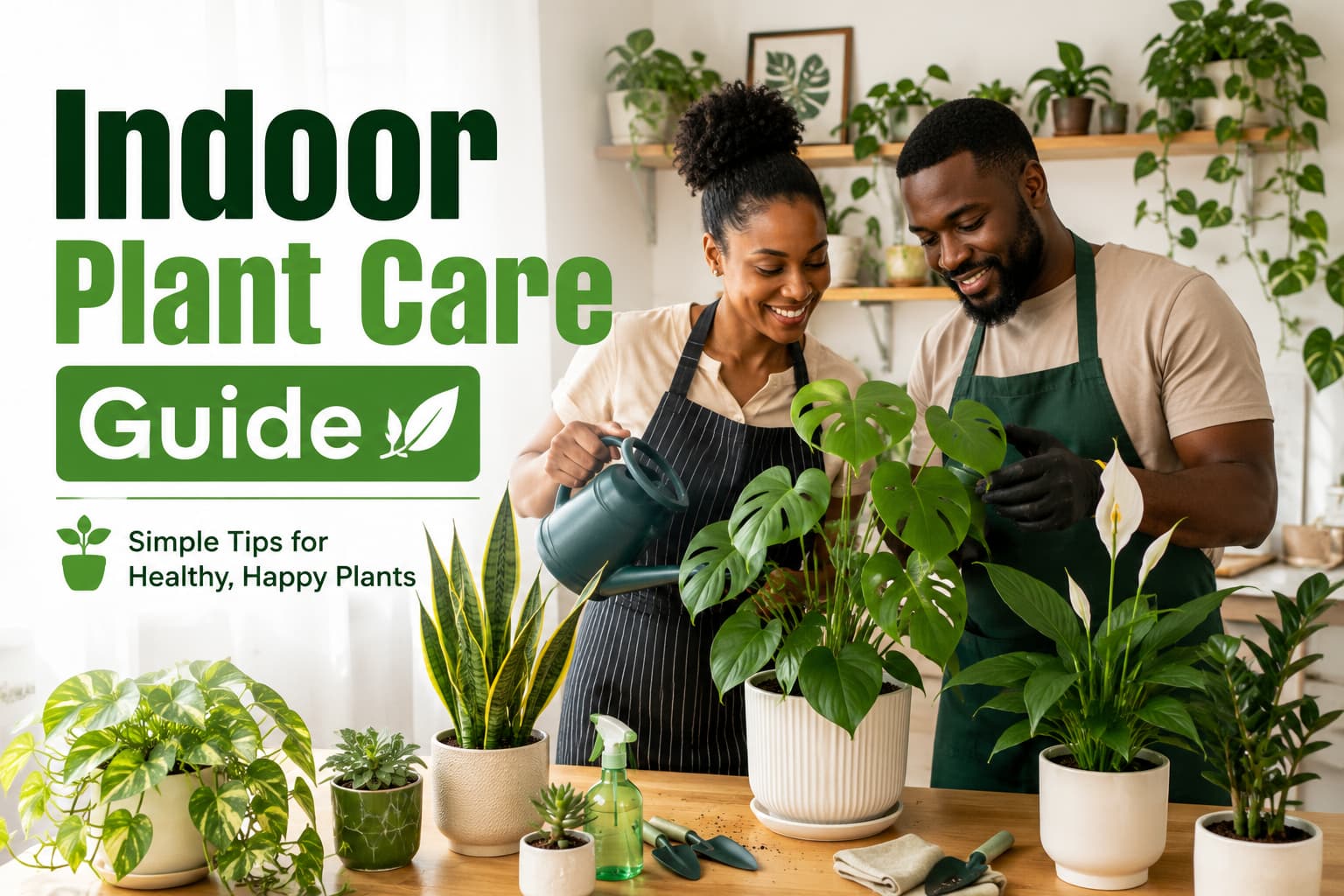
Indoor Plant Care Guide
Growing the best indoor plants that are easy to grow doesn’t require years of gardening experience. Most houseplants thrive when their basic needs are met consistently. By understanding a few essential care principles, you’ll keep your indoor garden healthy and vibrant throughout the year.
1. Choose the Right Light
Light is one of the most important factors in plant health. Before choosing a plant, consider the amount of natural light your home receives.
• Low light: Snake Plant, ZZ Plant, Cast Iron Plant, Chinese Evergreen
• Medium light: Peace Lily, Spider Plant, Parlor Palm
• Bright, indirect light: Monstera, Rubber Plant, Philodendron, Bird of Paradise
Avoid placing most indoor plants in harsh afternoon sunlight, as it can scorch their leaves.
2. Water Wisely
Over-watering is one of the most common reasons indoor plants struggle.
A simple rule is to check the soil before watering. Insert your finger about an inch into the soil—if it feels dry, it’s usually time to water. If it’s still moist, wait another day or two.
Different plants have different watering needs, so always adjust your routine based on the specific plant you’re growing.
3. Use Well-Draining Soil
Healthy roots need both moisture and air. Always choose a quality potting mix suited to your plant type, and make sure your containers have drainage holes to prevent excess water from collecting around the roots.
4. Maintain Comfortable Humidity
Many tropical houseplants appreciate moderate humidity, especially during dry seasons.
You can increase humidity by:
• Grouping plants together
• Using a humidifier
• Placing pots on pebble trays with water
• Occasionally misting humidity-loving plants such as Boston Ferns and Prayer Plants
5. Feed During the Growing Season
Most indoor plants benefit from a balanced liquid fertiliser every four to six weeks during spring and summer. Reduce feeding during autumn and winter when growth naturally slows.
6. Clean and Inspect Regularly
Dust can build up on leaves and reduce a plant’s ability to absorb sunlight. Wipe larger leaves gently with a damp cloth every few weeks, and inspect your plants regularly for signs of pests, yellowing leaves, or other issues so problems can be addressed early.
- Healthy houseplants start with the right care. This beginner-friendly guide covers everything you need to know about indoor plant care, from watering and lighting to soil, fertilizing, and common mistakes, so your plants can thrive year-round.
Frequently Asked Questions (FAQs)
1. What are the best indoor plants that are easy to grow for beginners?
Some of the easiest indoor plants for beginners include Snake Plant, Pothos, ZZ Plant, Spider Plant, Cast Iron Plant, and Heartleaf Philodendron. These plants tolerate a wide range of indoor conditions and require minimal maintenance.
2. Which indoor plants need the least water?
Succulents and drought-tolerant plants generally require less frequent watering. Aloe Vera, ZZ Plant, Snake Plant, Jade Plant, and Ponytail Palm can often go several weeks between waterings, depending on your home’s temperature and humidity.
3. What are the best indoor plants that are easy to grow for low-light rooms?
If your home doesn’t receive much natural light, consider growing Snake Plant, ZZ Plant, Chinese Evergreen, Cast Iron Plant, or Parlor Palm. These plants adapt well to lower light levels while remaining attractive year-round.
4. Which indoor plants grow the fastest?
Fast-growing indoor plants include Pothos, Philodendron, Spider Plant, Monstera Deliciosa, and English Ivy. With proper light, watering, and occasional feeding, they can produce impressive growth throughout the growing season.
5. How often should indoor plants be watered?
There isn’t a single watering schedule that works for every plant. Most indoor plants should only be watered when the top layer of soil begins to dry. Always check the soil first rather than watering on a fixed timetable.
6. Do indoor plants improve air quality?
Some indoor plants have been studied for their ability to remove certain airborne compounds under controlled conditions. While their effect in a typical home is generally limited, indoor plants can still make living spaces feel fresher, more inviting, and visually relaxing.
7. What is the easiest indoor plant to keep alive?
The Snake Plant is widely considered one of the easiest indoor plants to grow because it tolerates low light, infrequent watering, and occasional neglect better than most houseplants.
Key Takeaways:
• Choose indoor plants that match the lighting conditions in your home.
• Avoid overwatering by checking the soil before watering.
• Start with beginner-friendly plants like Snake Plant, Pothos, or ZZ Plant if you’re new to indoor gardening.
• Use well-draining soil and pots with drainage holes to promote healthy root growth.
• Clean leaves regularly and inspect plants for pests or signs of stress.
• Feed most houseplants during spring and summer for stronger, healthier growth.
• With consistent care, even beginners can build a thriving indoor garden.
Practical Action Steps
Ready to start your indoor gardening journey? Follow these simple steps to set yourself up for success:
1. Assess Your Space
Walk through your home and identify areas with low, medium, and bright, indirect light. This will help you choose plants that naturally suit each location.
2. Start with Two or Three Easy Plants
Rather than buying many plants at once, begin with beginner-friendly options such as a Snake Plant, Pothos, or ZZ Plant. These are forgiving and help you build confidence.
3. Choose the Right Pot
Select containers with drainage holes and use a quality indoor potting mix to reduce the risk of overwatering and root rot.
4. Create a Simple Care Routine
Set a weekly reminder to check your plants’ soil, remove dead leaves, and monitor for any signs of pests or disease. Consistent observation is more effective than watering on a strict schedule.
5. Learn as You Grow
Every plant responds differently to its environment. Observe how your plants react to changes in light, watering, and temperature, and adjust your care routine accordingly.
6. Expand Your Collection Gradually
Once you’re comfortable caring for a few easy houseplants, explore more varieties to add colour, texture, and personality to your indoor space.
Whether you’re decorating your first apartment, refreshing your office, or creating a relaxing home sanctuary, choosing the best indoor plants that are easy to grow is the first step towards a healthier, greener living environment. Start small, stay consistent, and enjoy the rewarding experience of watching your indoor garden flourish year-round.
For science-based gardening advice and practical growing information, the University of California Agriculture & Natural Resources offers expert resources on plant care, soil health, watering practices, and sustainable gardening. Their research-backed guidance is an excellent resource for anyone looking to improve their indoor plant care knowledge.
In Conclusion
Growing indoor plants is one of the easiest and most rewarding ways to enhance your living space while developing a relaxing and enjoyable hobby. Whether you choose a hardy Snake Plant, a graceful Peace Lily, or a striking Monstera, success comes from understanding each plant’s basic needs and providing consistent care.
Start with a few beginner-friendly varieties, observe how they respond to your home environment, and adjust your routine as needed. Over time, you’ll gain confidence, improve your gardening skills, and enjoy a home filled with healthy, thriving indoor plants throughout the year.

I’m Bon (aka Guider), an indoor gardening writer and houseplant enthusiast passionate about helping beginners successfully grow and care for indoor plants. I create practical, beginner-friendly guides covering indoor plant care, watering, lighting, soil, repotting, plant problems, and choosing suitable houseplants for different homes. My articles draw on research from trusted horticultural organizations, university extension resources, and botanical institutions, combined with practical plant-care principles and careful content review.