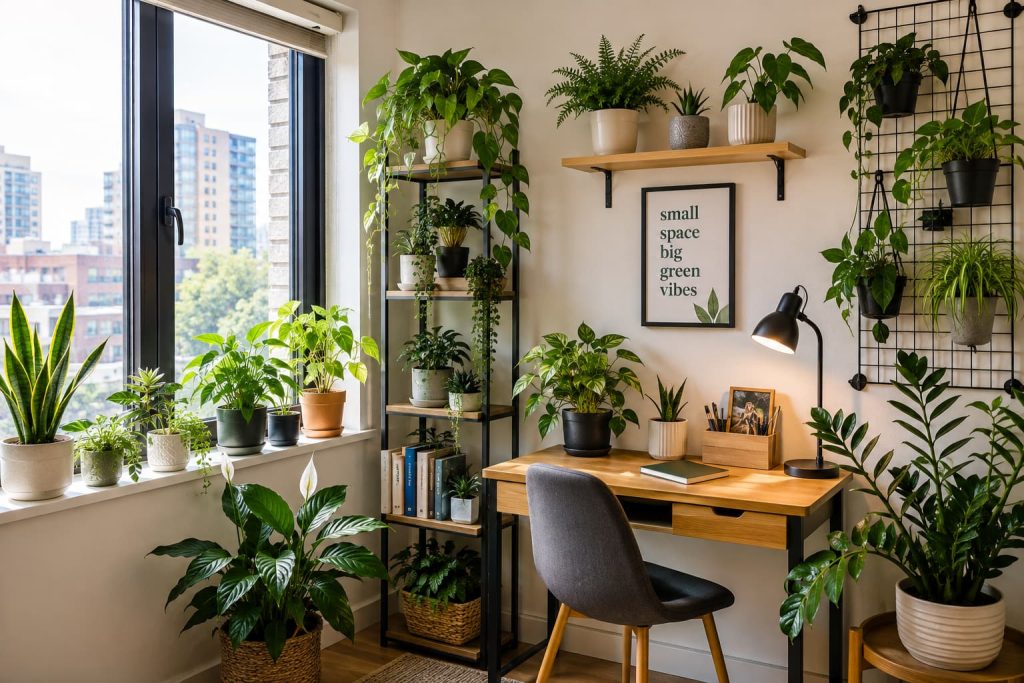
Small homes and apartments do not mean you have to give up on houseplants. The best indoor plants for small spaces can add beauty, freshness, and personality without taking up valuable room. The key is choosing plants that match your available space, lighting, and lifestyle—not simply picking the smallest plant at the garden center. With the right varieties, even a tiny room can become a beautiful, thriving indoor garden.
The best indoor plants for small spaces tend to have a compact growth habit, modest root systems, slow-to-moderate growth, or a form that lets you use vertical space. Some can sit comfortably on a windowsill or desk, while others can hang from the ceiling or climb a support without taking over valuable floor space.
Light matters just as much as size. A tiny plant placed in a dark corner may struggle, while a slightly larger plant in the right window can remain healthy and manageable. Light intensity and duration are among the most important factors when choosing where to position a houseplant.
New to houseplants? Learn the basics of watering, lighting, potting, feeding, pruning, and placement with our Indoor Plant Care for Beginners guide.
This guide covers 15 compact and space-efficient houseplants, explains where each works best, and shows you how to choose plants based on your available light, floor space, maintenance preferences, and growing conditions.
Quick Comparison: Best Indoor Plants for Small Spaces
| Plant | Best For | Light | Growth Habit | Care Level |
| Pothos | Hanging baskets and shelves | Low to Bright Indirect | Trailing/vining | Easy |
| Snake Plant | Narrow floor spaces | Low to bright indirect | Upright | Very Easy |
| ZZ Plant | Desks and darker rooms | Low to bright indirect | Upright/clumping | Very Easy |
| Aloe Vera | Sunny windowsills | Bright light/direct sun | Compact rosette | Easy |
| Peperomia | Desks and Shelves | Bright Indirect | Compact/bushy | Easy |
| Spider Plant | Hanging Displays | Bright indirect to moderate | Arching | Easy |
| Chinese Evergreen | Small floor corners | Low to Medium Indirect | Upright/clumping | Easy |
| Fittonia | Small shelves and terrariums | Bright Indirect/Filtered | Low-growing | Moderate |
| Pilea peperomioides | Tabletops and shelves | Bright Indirect | Compact/Upright | Easy |
| Heartleaf Philodendron | Hanging or vertical spaces | Low to Bright Indirect | Trailing | Easy |
| Hoya | Shelves and hanging baskets | Bright Indirect | Trailing/climbing | Moderate |
| Parlor Palm | Narrow Corners | Bright indirect to lower light | Upright/clumping | Easy |
| Haworthia | Small sunny spaces | Bright Indirect | Compact rosette | Easy |
| Cast Iron Plant | Dim Corners | Low to moderate | Upright/clumping | Easy |
| Air Plant | Tiny surfaces and wall displays | Bright Indiract | Compact/epiphytic | Moderate |
What Makes a Plant Good for a Small Space?
Not every small plant is automatically a good small-space plant.
A plant can start out tiny and eventually become too large for a desk, shelf, or windowsill. Before buying, consider its mature size, growth habit, light requirements, watering needs, and whether you can move it upward rather than outward.
Here are the characteristics worth looking for.
1. Compact growth
Plants that naturally remain relatively small are easier to keep on desks, shelves, bedside tables, and narrow windowsills.
Examples include peperomia, Haworthia, Fittonia, and some small-growing cultivars of larger houseplant groups.
2. Upright growth
An upright plant can occupy a surprisingly small footprint.
This is why plants such as snake plants can work well in apartments. Their leaves grow upward rather than spreading widely across the floor.
3. Trailing or climbing growth
Trailing plants can be excellent space-saving indoor plants because their foliage can extend downward from a shelf or hanging basket.
Instead of using another piece of floor space, you use vertical space.
Pothos and heartleaf philodendron are particularly useful for this approach.
4. Slow or manageable growth
A plant that grows slowly or responds well to pruning is easier to control in a compact home.
However, slow growth does not mean a plant can survive without adequate light. Plants still require suitable growing conditions to remain healthy.
5. Flexible placement
The best plant for your apartment is one that can actually thrive in the location available.
The Royal Horticultural Society (RHS) recommends choosing plants according to the conditions you can provide, including light, temperature, water, and humidity, rather than choosing a plant based solely on appearance.
15 Best Indoor Plants for Small Spaces
Discover 15 of the best indoor plants for small spaces, from compact options for apartments and desks to easy-care plants for shelves, windowsills, and corners.
1. Pothos
Pothos is one of the most useful plants for a small apartment because it does not need to occupy much floor space.
Its vines can trail from a shelf, hang from a basket, or be trained along a support. That makes it particularly useful when horizontal space is limited.
Pothos is also forgiving compared with many more demanding tropical houseplants. However, “low light tolerant” does not mean “no light.” Poor lighting can lead to slower, weaker growth and less attractive foliage.
If you already have a pothos and want to make better use of limited space, train the vines upward or allow them to trail from a high shelf rather than allowing them to spread across furniture.
Small-space tip: Use a hanging basket or tall shelf to keep the foliage away from your working surfaces.
For other details such as watering, pruning, propagation, and general maintenance, see our Pothos Plant Care guide for more.
2. Snake Plant
Snake plants are among the best choices when floor space is narrow but you still want a substantial-looking plant.
Their stiff, upright leaves occupy relatively little horizontal space compared with broad, spreading houseplants. This makes them useful beside furniture, in narrow corners, or along the edge of a room.
They are also adaptable to a range of indoor light conditions, although growth is generally stronger when the plant receives adequate light.
The main mistake to avoid is treating tolerance of dry conditions as a reason to water on a strict schedule. Let the growing medium dry appropriately between waterings rather than watering simply because a certain number of days have passed.
Small-space tip: Choose a narrow, appropriately sized pot rather than a wide decorative container that unnecessarily increases the plant’s footprint.
See our complete Snake Plant Care guide for more detailed growing advice.
3. ZZ Plant
The ZZ plant is a strong choice for people who want attractive foliage without creating a large, spreading display.
Its upright stems grow from underground rhizomes, giving the plant a structured appearance. A young ZZ plant can fit comfortably on a table or shelf, while a larger specimen can occupy a relatively narrow floor area.
It also tolerates periods of dryness better than many moisture-loving tropical plants. That makes it useful for people who sometimes forget to water.
Still, low-light tolerance should not be confused with complete darkness. Every green plant needs light to photosynthesize.
Small-space tip: Keep the plant away from constantly wet soil and choose a container with drainage.
You can learn more about watering, light, soil, and repotting in our ZZ Plant Care guide.
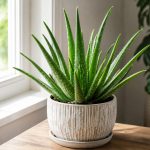
4. Aloe Vera
Aloe Vera is a compact succulent that can be an excellent choice for a bright apartment.
Its fleshy leaves grow in a rosette rather than producing long stems, so a healthy specimen can occupy a defined area on a sunny windowsill or tabletop.
The major limitation is light. Aloe Vera is not a good choice for a dark apartment corner. If your available space receives little natural light, choose a plant adapted to those conditions instead.
Because aloe stores water in its leaves, consistently wet soil can be problematic. A porous, well-draining growing medium and a container with drainage are important.
Small-space tip: A bright kitchen or living-room windowsill can provide useful growing space without sacrificing floor area.
For more information, see our Aloe Vera Indoor Plant Care guide.
5. Peperomia
Peperomias are among the most versatile small indoor plants because many species and cultivars remain relatively compact.
Their leaves come in a wide range of shapes, textures, and colors, allowing you to add visual interest without requiring a large pot or much floor space.
They generally prefer bright, indirect light, although their exact requirements vary between species and cultivars.
One useful rule is to avoid watering based solely on the calendar. Check the growing medium and the plant’s condition instead.
Small-space tip: Peperomia is particularly useful when you want a tabletop plant but do not have room for a large container.
6. Spider Plant
Spider plants are excellent for apartments because their arching foliage can be displayed vertically.
Instead of placing a wide plant on the floor, you can put a spider plant in a hanging basket or elevated planter. Its leaves naturally extend outward and downward, creating a fuller display without requiring another piece of furniture.
Mature plants can also produce plantlets on long stems, which can add to their visual appeal.
Spider plants generally do best with good indirect light. In very poor light, growth can become weak and less vigorous.
Small-space tip: Hang the plant where its leaves and plantlets have room to extend without blocking walkways.
7. Chinese Evergreen
Chinese evergreen, or Aglaonema, can be a useful choice when you want a leafy plant but have limited floor space.
Its upright-to-clumping growth habit allows it to fill a corner without necessarily spreading as widely as many large tropical foliage plants.
Different cultivars can have significantly different appearances and light tolerances, particularly those with heavily variegated leaves.
As with other houseplants, the specific cultivar matters. Always check the growing requirements of the plant you purchase.
Small-space tip: Place a compact specimen beside a desk, cabinet, or other piece of furniture rather than using a large floor planter.
8. Fittonia
Fittonia, commonly called nerve plant, is particularly useful when you want a lot of visual detail from a small plant.
Its colorful veined leaves create an attractive display without requiring a large container.
Fittonia naturally has a low, spreading growth habit, so it works well in small containers and terrariums.
The University of Florida IFAS Extension (Gardening Solutions) notes that terrariums are particularly suitable for small, slow-growing tropical plants, and Fittonia-type plants can work well in this kind of controlled display when their requirements are met.
Fittonia does appreciate more consistent moisture and humidity than drought-tolerant succulents, so it may not be the best choice if you want an extremely hands-off plant.
Small-space tip: A small terrarium can turn a tiny tabletop into an entire miniature garden.
9. Pilea peperomioides
Pilea peperomioides, commonly known as the Chinese money plant, has a distinctive appearance created by its round leaves and upright growth.
A young plant can fit comfortably on a desk or shelf, making it a good candidate for apartments where every surface matters.
Give it enough light to maintain compact, healthy growth. If a plant stretches significantly toward the nearest window, which can be a sign that its current light level is insufficient.
Rotating the container periodically can also help maintain a more balanced appearance when growth is strongly directed toward the light.
Small-space tip: Use a compact pot and rotate the plant occasionally rather than allowing it to lean heavily toward one side.
10. Heartleaf Philodendron
Heartleaf philodendron is another excellent option when your biggest limitation is floor space.
Its trailing stems allow you to move the plant’s growth into vertical space. Put it on a high shelf, hanging planter, or wall-mounted display designed to support a plant.
Although it can tolerate lower light, brighter indirect light generally supports stronger growth.
Do not choose it simply because you have a dark corner. A location that receives almost no usable natural light may require a different solution, such as an appropriate grow light.
Small-space tip: Let the vines trail downward instead of allowing them to spread horizontally across a desk.
11. Hoya
Hoyas are especially interesting for small apartments because many grow as trailing or climbing plants.
Instead of requiring a large floor footprint, they can be displayed from a hanging basket or trained along a small support.
Many Hoyas prefer bright light and a growing medium that does not remain constantly wet. Their care requirements vary among species, so identify the particular Hoya you are buying before applying a fixed watering routine.
Their growth can also be slower than that of some common trailing houseplants, which may make them easier to manage in a carefully planned display.
Small-space tip: Give a Hoya a vertical support and let it grow upward rather than consuming shelf space.
12. Parlor Palm
If you want the appearance of a palm without immediately filling a room with a large tropical plant, a parlor palm can be worth considering.
Its narrow stems and graceful foliage create height without the broad footprint of many larger indoor palms.
It can tolerate lower-light conditions better than many sun-loving plants, but adequate light remains important for healthy growth.
Avoid placing it directly against a hot window where intense sunlight could damage foliage.
Small-space tip: Choose a young specimen if your apartment is particularly small, and allow it to grow gradually into the space.
13. Haworthia
Haworthia is an excellent choice when you have very little room for a plant.
These small succulents form compact rosettes and can fit into containers that would be too small for most conventional houseplants.
They are especially useful for desks, narrow windowsills, and small decorative groupings.
The most important consideration is light. Haworthia is not a suitable solution for a dark room simply because it is small.
Water carefully and allow the growing medium to dry appropriately between waterings.
Small-space tip: Several small Haworthias can create a varied display while taking up less space than one large houseplant.
14. Cast Iron Plant
Cast iron plant, Aspidistra elatior, is known for its tolerance of less-than-ideal indoor conditions.
Its upright leaves emerge from the base, allowing the plant to create height without developing the broad, sprawling habit of some foliage plants.
It can work particularly well in apartments with less natural light, although “low light” still means some usable light—not a completely dark room.
Growth is relatively slow, which can be useful when you want a plant that does not rapidly outgrow its location.
Small-space tip: Use it in a narrow corner where an upright plant is more practical than a wide, bushy one.
15. Air Plant
Air plants, or Tillandsia, are unusual because they do not need to be planted in conventional potting soil.
That makes them interesting for very small spaces. You can display them in small holders, mounted arrangements, or other suitable plant displays without dedicating floor or shelf space to a conventional pot.
However, their unusual appearance does not mean they require no care.
Air plants still need appropriate light, air circulation, and water. After watering, they should be allowed to dry appropriately rather than remaining wet for prolonged periods.
Small-space tip: Use a small display that allows good airflow and makes it easy to remove the plant for watering.
Give your indoor plants the nutrients they need to thrive. Learn how to fertilize indoor plants correctly, including when to fertilize, what to use, and common mistakes to avoid.
How to Choose the Best Indoor Plants for Your Small Space
The right plant depends less on the size of the plant at the time of purchase and more on the conditions of the space where you intend to keep it.
Use this four-step process before buying.
Step 1: Measure your actual space
Look at the area where the plant will live.
Is it:
• A narrow windowsill?
• A desk?
• A bedside table?
• A bookshelf?
• A bathroom shelf?
• A narrow floor corner?
• A hanging location?
• A kitchen counter?
Then consider both the width and height available.
A plant that is only 15 cm wide but eventually grows several feet tall may not be appropriate for a tiny shelf.
Likewise, a trailing plant may technically be small at its base but require significant vertical or horizontal clearance as its vines develop.
Step 2: Determine how much light the space receives
This is one of the most important steps.
A small apartment can have dramatically different growing conditions from one room to another.
The Missouri Botanical Garden explains that insufficient light can result in slow, spindly growth and smaller or paler leaves, while excessive light can cause leaf damage in plants that are not adapted to it.
Do not choose a plant solely because it is labeled “low light.”
Instead, identify the actual location first.
For Bright window, consider:
• Aloe Vera
• Haworthia
• Pilea
• Peperomia
• Hoya
For Bright indirect light, consider:
• Pothos
• Spider plant
• Peperomia
• Heartleaf philodendron
• Hoya
• Pilea
For Lower-light location, consider:
• Snake plant
• ZZ plant
• Cast iron plant
• Chinese evergreen
• Parlor palm
These categories are only starting points. Light requirements vary among species, cultivars, seasons, window orientations, and distances from windows.
Step 3: Decide whether you have floor space or vertical space
This is where small-space gardening becomes much easier.
If you have little floor space, look upward.
For shelves, choose:
• Peperomia
• Pilea
• ZZ plant
• Fittonia
• Haworthia
For hanging baskets, choose:
• Pothos
• Spider plant
• Heartleaf philodendron
• Hoya
For narrow floor corners, choose:
• Snake plant
• Parlor palm
• Cast iron plant
• Compact Chinese evergreen
Chicago Botanic Garden guidance for small-space planting similarly emphasizes making use of different heights and vertical areas rather than restricting plants to the floor.
Step 4: Consider your watering habits
Your lifestyle matters.
If you frequently forget to water, a moisture-demanding plant may become frustrating.
If you tend to water plants frequently, drought-tolerant plants such as succulents may actually be more challenging because excessive moisture can cause problems.
The USDA Plants Database recommends checking whether a plant actually needs water rather than watering according to a fixed routine. Containers should also have adequate drainage so excess water can escape.
Best Indoor Plants for Small Apartments by Location
Instead of choosing a plant first, you can choose according to the space you need to fill.
| Small-Space Location | Good Choices |
| Tiny windowsill | Haworthia, Aloe vera, Peperom |
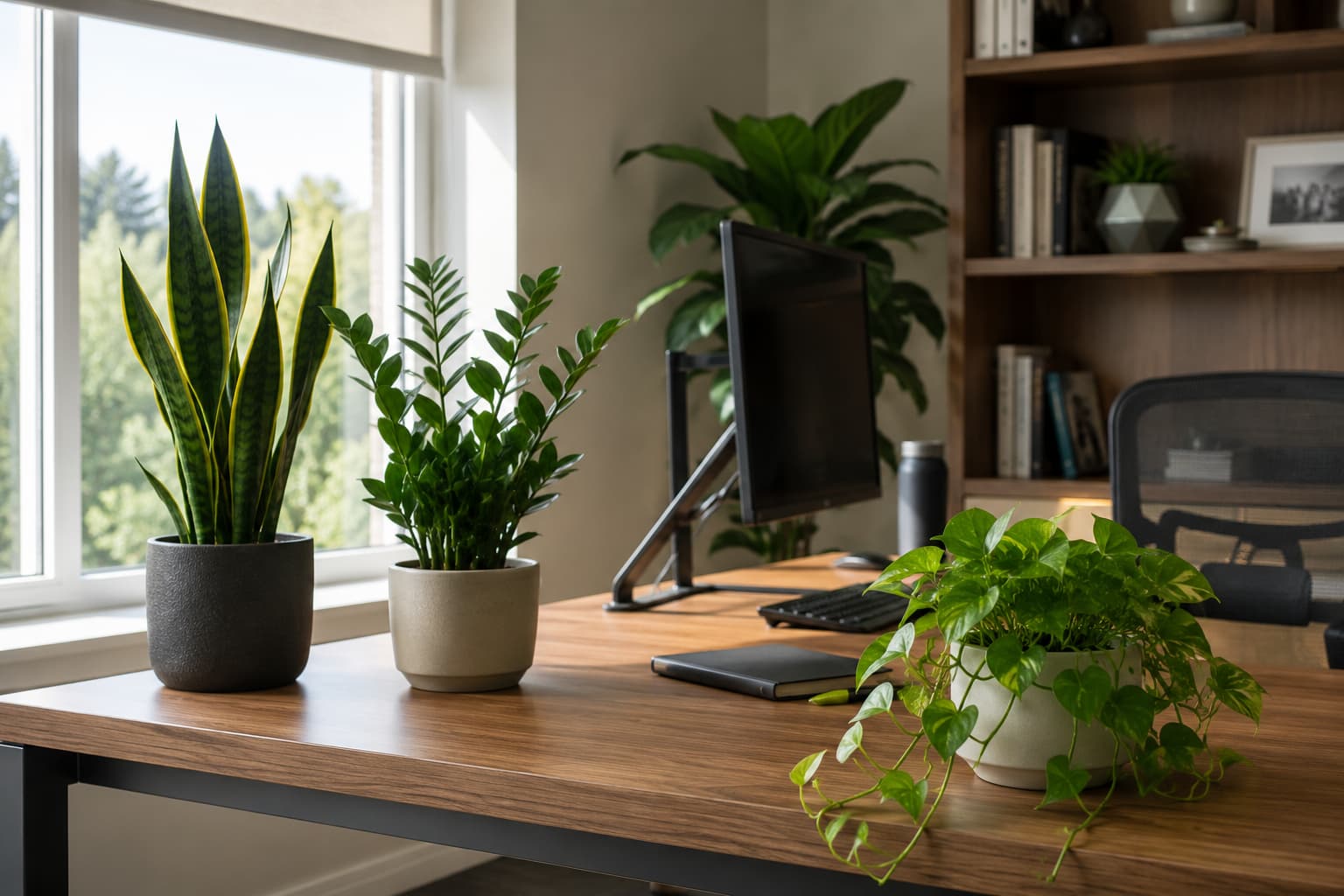
| Desk | Pilea, Peperomia, ZZ plant |
| Bookshelf | Pothos, Heartleaf philodendron |
| Hanging basket | Spider plant, Pothos, Hoya |
| Narrow Floor Corner | Snake plant, Cast Iron Plant |
| Low-light corner | ZZ plant, Snake plant, Chinese evergreen |
| Bright shelf | Hoya, Pilea, Peperomia |
| Small terrarium | Fittonia and other suitable small tropical plants |
| Very limited display space | Air plant, Haworthia |
How to Save Even More Space With Indoor Plants
Choosing compact plants is only half the solution. How you display them can make an even bigger difference.
1. Use vertical space
Shelves, plant stands, hanging baskets, and suitable wall-mounted displays can move plants off the floor.
This is particularly useful in apartments where floor area is already occupied by furniture.
2. Group small plants carefully
Instead of placing several large pots around a room, group a few genuinely compact plants in one defined area.
For example, a small arrangement could combine:
• One peperomia
• One Haworthia
• One small Pilea
Make sure each plant still receives the light and care it needs.
Do not group plants solely for appearance if their environmental requirements are completely different.
3. Use the corners intelligently
A narrow corner is often wasted space.
An upright snake plant or compact cast iron plant can make use of that area without requiring a large amount of floor space.
4. Choose the right pot size
A decorative pot can easily become larger than the plant requires.
Avoid automatically moving a small plant into a huge container simply because you want a particular look.
The container should be appropriate for the root system and growing conditions, and it should provide drainage.
The American Horticultural Society (AHS) recommends choosing an appropriately sized container and emphasizes the importance of drainage for houseplants.
For more detailed container advice, see our guide to choosing pots for indoor plants.
Common Mistakes When Growing Plants in Small Spaces
Growing plants in small spaces can be rewarding, but a few common mistakes can affect their health and growth. Learn what to avoid when choosing, placing, watering, and caring for indoor plants in compact areas.
Mistake 1: Putting a plant in a dark corner because it is small
Size and light requirements are separate issues.
A tiny succulent still needs suitable light. A small tropical plant may also struggle if placed far from a window.
Always choose the plant according to the conditions of the location.
Mistake 2: Ignoring mature size
The plant you buy today may not be the plant you have six months or two years from now.
Before purchasing, research the mature size and growth habit.
This is especially important for plants marketed as “small” because a young specimen of a large species can be temporarily compact.
Mistake 3: Using oversized pots
A huge container can consume valuable space while also holding more growing medium than the plant requires.
Choose the container based on the plant’s root system and growing needs rather than simply choosing the largest attractive pot.
Choosing the right pot can make a big difference to indoor plant health. Learn how to select the best pots for indoor plants based on size, drainage, material, and your plant’s growing needs.
Mistake 4: Watering on a schedule
“Water every Sunday” sounds simple, but indoor conditions change.
Temperature, light, humidity, pot size, plant size, and season can all affect how quickly the growing medium dries.
Check the plant and its growing medium instead.
Mistake 5: Buying too many plants
Small plants can make it tempting to collect dozens because each individual pot seems harmless.
Before long, however, shelves become crowded and plants compete for light.
A smaller collection of healthy plants is usually more satisfying than a crowded collection struggling for space.
Mistake 6: Forgetting airflow and access
Do not pack plants so tightly together that you cannot inspect them, water them, clean their leaves, or spot pests.
You also need enough room to move the container when necessary.
How to Keep Small Indoor Plants Healthy
Small-space plants still require the same basic environmental conditions as larger houseplants.
1. Give them suitable light
Light is the foundation of indoor plant growth.
The RHS notes that light levels can change significantly throughout the day and across seasons. A location that works well during one part of the year may receive very different light later.
If you notice long gaps between leaves, weak growth, leaning toward a window, or unusually small new leaves, reconsider the plant’s light conditions.
2. Water according to need
Do not assume that small pots should be watered frequently.
Small containers can dry relatively quickly, but watering frequency still depends on the plant, potting medium, light, temperature, and humidity.
Check the growing medium before watering.
Watering correctly is essential for healthy houseplants. Learn how to water indoor plants properly, including when to water, how much to use, and common watering mistakes to avoid.
3. Provide drainage
A compact plant does not need a waterlogged root system.
Use a container that allows excess water to escape and avoid leaving the pot sitting in accumulated water.
4. Avoid overcrowding
Small spaces can encourage you to put plants close together.
Leave enough room to inspect foliage and provide adequate air circulation.
Crowded plants can also make pest detection more difficult.
5. Rotate plants when appropriate
Plants naturally respond to light.
If a plant repeatedly grows toward one direction, rotating the pot periodically can help maintain a more balanced appearance.
What If Your Apartment Has Almost No Natural Light?
This is an important distinction.
Low light is not the same as no light.
The Missouri Botanical Garden notes that very dark areas are difficult growing environments, while houseplants can be selected to match a wide range of indoor conditions.
If a location receives almost no usable natural light, moving a “low-light” plant there may only delay the problem.
An appropriate grow light may be necessary.
The RHS also notes that ordinary domestic lighting is not designed to provide the light plants need for growth, while artificial grow lights can be used where natural light is inadequate.
Best Low-Maintenance Indoor Plants for Small Spaces
If your priority is minimal maintenance rather than maximum variety, start with plants that tolerate some variation in watering and indoor conditions.
Good candidates from this list include:
1. Snake plant — excellent for narrow spaces and relatively forgiving.
2. ZZ plant — useful when you want structured foliage and do not want to water frequently.
3. Pothos — versatile for shelves and hanging displays.
4. Peperomia — compact and well suited to desks.
5. Spider plant — useful for hanging displays.
6. Cast iron plant — suitable for some lower-light locations.
7. Aloe Vera — good for bright windowsills when watered appropriately.
Remember that “low maintenance” does not mean “maintenance free.” Every living plant needs suitable light, water, temperature, and growing conditions.
Struggling with dim rooms? Discover 21 best low light indoor plants for beginners, including easy-care varieties that can thrive in lower-light indoor conditions with proper care.
Best Small Indoor Plants for Beginners
If you are new to indoor gardening, you do not need to start with a rare or demanding plant.
A simple beginner-friendly combination might be:
• Snake plant for a narrow floor corner
• Pothos for a shelf or hanging basket
• Peperomia for a desk
• Haworthia for a bright windowsill
This gives you four different growth habits while keeping the overall footprint small.
The important thing is to choose plants according to the conditions you already have rather than trying to redesign your entire home around plants.
For a broader introduction to choosing, watering, positioning, repotting, and maintaining houseplants, see our Indoor Plant Care for Beginners guide.
Quick Small-Space Plant Checklist
Before bringing home a new plant, use this simple checklist to make sure it will thrive in your available space:
• How much physical space do I actually have?
• How large will the plant become when mature?
• Does it grow upright, outward, or downward?
• How much natural light reaches the location?
• Can I use vertical space instead of valuable floor space?
• Does the plant’s watering requirement fit my routine?
• Does the container have adequate drainage?
• Can I easily reach the plant for watering, pruning, and inspection?
• Am I choosing the plant based on its growing conditions rather than appearance alone?
Answering these questions before buying can help you choose the best indoor plants for small spaces and create a small indoor garden that remains attractive, manageable, and healthy.
Frequently Asked Questions
1. What are the best indoor plants for small spaces?
Some of the best choices include pothos, snake plant, ZZ plant, peperomia, spider plant, Fittonia, Pilea, Haworthia, heartleaf philodendron, and compact Chinese evergreen varieties.
The best option depends on your available light and whether you have floor, shelf, windowsill, or hanging space.
2. What is the best plant for a very small apartment?
There is no single best plant for every apartment.
For a narrow floor area, a snake plant is particularly practical. For a shelf, peperomia or Pilea can work well. For vertical space, pothos or heartleaf philodendron can be excellent choices.
3. What are the best small indoor plants for low light?
Snake plant, ZZ plant, cast iron plant, Chinese evergreen, and parlor palm can be suitable choices for lower-light areas.
However, low-light tolerant does not mean that these plants can grow indefinitely in complete darkness.
4. What indoor plants take up the least space?
Very compact plants such as Haworthia, small peperomias, Fittonia, and some air plants can occupy very little physical space.
The display method also matters. A hanging or vertically trained plant can provide greenery without using valuable floor area.
5. Are hanging plants good for small apartments?
Yes. Hanging plants can be particularly useful because they use vertical space instead of floor or tabletop space.
Pothos, spider plants, heartleaf philodendron, and suitable Hoyas are good examples.
Make sure the hanging location is secure and provides appropriate light.
6. How do I stop indoor plants from taking over a small room?
Choose plants with manageable mature sizes, prune or train vigorous growers when appropriate, use vertical displays, and avoid buying plants based only on their current size.
Give each plant enough space for healthy growth rather than packing containers tightly together.
7. Can I grow indoor plants without a windowsill?
Yes. Shelves, plant stands, hanging baskets, and other suitable locations can work as long as they provide the light and environmental conditions the plant requires.
If natural light is insufficient, an appropriate grow light can supplement it.
If you’re planning to repot your indoor plants, knowing how to protect the roots can make all the difference. For a safe and successful process, check out our step-by-step guide on How to Repot Indoor Plants Without Damaging the Roots and learn simple techniques to keep your plants healthy and thriving after repotting.
Conclusion
The best indoor plants for small spaces are not necessarily the smallest plants you can find. They are plants whose mature size, growth habit, light requirements, and care needs fit the space you actually have.
For narrow floor areas, start with upright plants such as snake plants or cast iron plants. For shelves and desks, consider peperomia, Pilea, Haworthia, or a compact ZZ plant. If floor space is the main problem, trailing plants such as pothos and heartleaf philodendron allow you to take advantage of vertical space.
Most importantly, choose the location first and the plant second.
A small plant in unsuitable conditions will not outperform a slightly larger plant that is perfectly matched to its environment. Good plant selection is ultimately about finding the right relationship between space, light, plant size, and care requirements.

I’m Bon (aka Guider), an indoor gardening writer and houseplant enthusiast passionate about helping beginners successfully grow and care for indoor plants. I create practical, beginner-friendly guides covering indoor plant care, watering, lighting, soil, repotting, plant problems, and choosing suitable houseplants for different homes. My articles draw on research from trusted horticultural organizations, university extension resources, and botanical institutions, combined with practical plant-care principles and careful content review.