
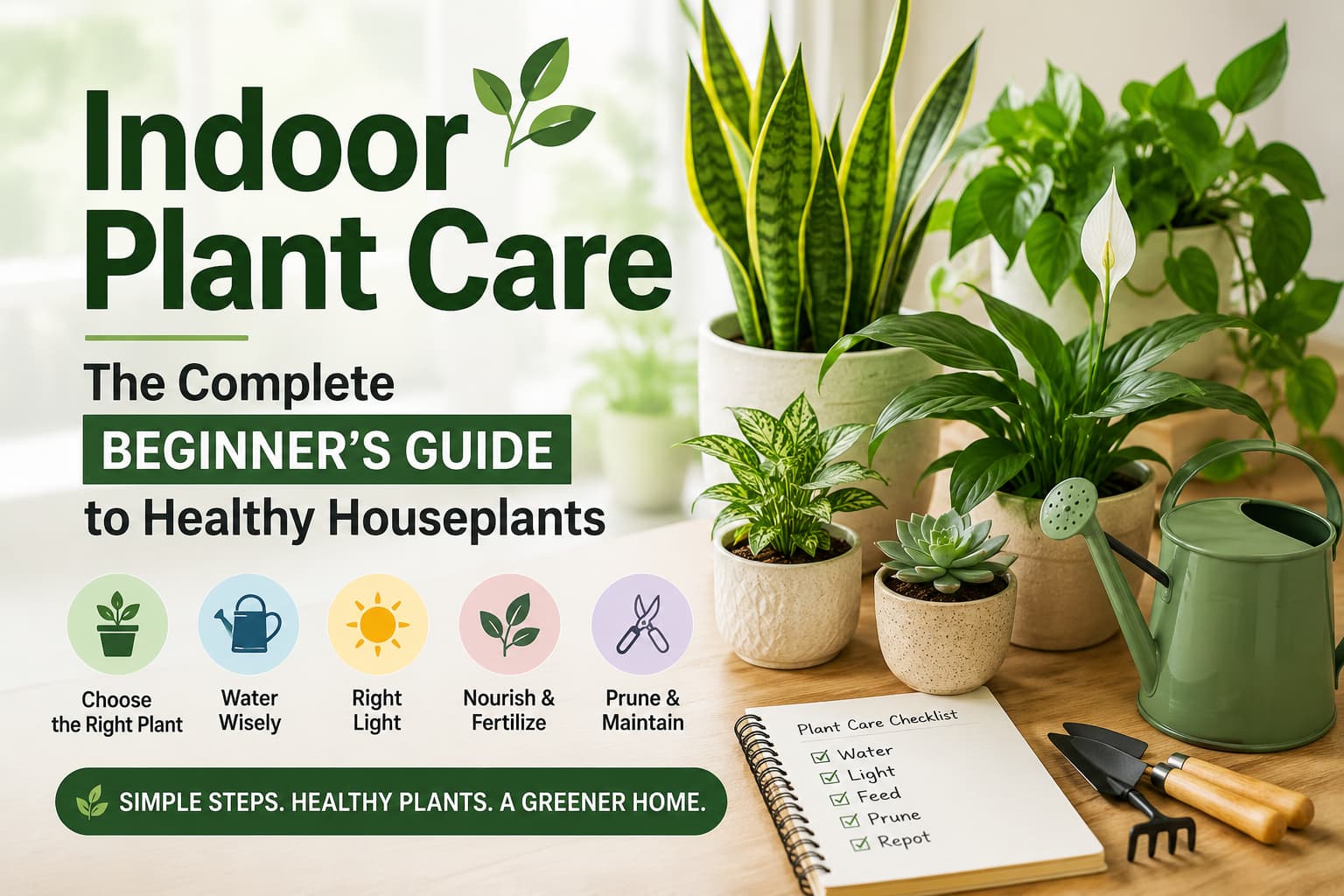
Indoor plants do more than decorate your home. They add color, life, and character to living spaces while creating a more inviting environment. However, keeping houseplants healthy involves more than occasional watering. Indoor plant care for beginners starts with understanding the basic needs of your plants, including light, water, humidity, soil, nutrients, drainage, and regular maintenance. Once you understand these essentials, caring for houseplants becomes much easier.
Successful indoor gardening starts with understanding a few basic requirements: light, water, humidity, soil, nutrients, drainage, and regular maintenance. Once you understand how these factors affect your plants, caring for them becomes much easier.
This beginner-friendly guide explains how to choose suitable houseplants, provide the right growing conditions, avoid common mistakes, and recognize problems before they become serious.
Explore our comprehensive Indoor Plant Care Guide. Get expert tutorials on seasonal watering, fertilizer schedules, repotting, and quick pest prevention tactics.
What Is Indoor Plant Care?
Indoor plant care is the process of providing houseplants with the environmental conditions and maintenance they need to grow and remain healthy inside homes, offices, and other enclosed spaces.
Essential care includes:
• Providing suitable light
• Watering according to soil moisture
• Using appropriate potting soil
• Maintaining suitable humidity
• Supplying nutrients when necessary
• Providing adequate drainage
• Repotting when plants outgrow their containers
• Removing damaged foliage
• Monitoring for pests and diseases
Unlike plants growing outdoors, houseplants depend largely on the conditions you create for them. Small changes in light, watering, temperature, or humidity can therefore have a significant effect on their growth.
If you’re choosing plants for the first time, see our guide to 21 Best Indoor Plants for Every Home for beginner-friendly options suitable for different rooms and lifestyles.
Why Indoor Plants Need Different Care Than Outdoor Plants
Indoor environments differ considerably from natural outdoor habitats.
Houseplants may experience:
• Less natural sunlight
• Lower humidity
• More stable temperatures
• Limited root space
• Little or no natural rainfall
• Reduced air movement
These conditions mean that indoor plants depend on the care provided by their owners.
For example, a Monstera growing in a tropical forest receives filtered light, rainfall, warm temperatures, and naturally high humidity. The same plant inside a home depends on you to provide suitable light, water, airflow, and growing conditions.
The goal isn’t to reproduce nature perfectly. Instead, provide conditions that are reasonably close to what the plant needs to remain healthy.
How the Nigerian Climate Affects Indoor Plant Care
Growing houseplants in Nigeria is highly rewarding, but our distinct tropical climate means you cannot simply follow generic international gardening advice. To keep your plants thriving from Lagos to Abuja, your indoor care routine must adapt to our local seasonal cycles.
1. Lighting: Navigating the Tropical Sun & Tinted Glass
Most popular indoor plants love bright, indirect light but will scorch and die under direct, harsh equatorial sunlight.
• The Best Spots: Place your plants near East-facing windows for gentle morning sun, or set them 1 to 2 meters away from intense South- or West-facing windows.
• The Tinted Glass Factor: If your apartment or office features heavily tinted window glass (very common in modern Nigerian buildings to keep heat out), it blocks a massive amount of usable light. Move your plants much closer to the glass than standard guides recommend to ensure they get enough energy to photosynthesize.
2. Water & Seasonality: The Two-Season Routine
Instead of Spring, Summer, Autumn, and Winter, your watering schedule must pivot entirely around our two major seasons:
• The Heavy Rainy Season (May – October): Indoor humidity spikes across Nigeria during these months. Because the air is thick with moisture, your potting soil will dry out much slower. Cut your watering frequency in half during this period and always test the top soil with your finger before adding more water to prevent lethal root rot.
• The Intense Dry & Harmattan Season (November – February): The dry, dusty Harmattan winds act like a giant sponge, stripping moisture from both the soil and your plant’s leaves. During these months, your plants will be much thirstier. Watch for crispy brown leaf tips on sensitive varieties like Peace Lilies or Prayer Plants.
3. Dust Management: The Harmattan Clean-Up
One uniquely Nigerian challenge for indoor gardeners is the fine layer of dust that settles over everything during the Harmattan season.
• Why it matters: Dust blocks the tiny pores (stomata) on your plant’s leaves, preventing them from breathing and absorbing light efficiently.
• The Fix: Make it a habit to gently wipe your plant’s leaves down with a soft, damp microfiber cloth once every two weeks. For sturdier plants like Monsteras or Snake Plants, you can take them to the bathroom or compound and gently rinse the foliage down with clean water.
4. Soil Formulation: Building a Breathable Mix with Local Materials
Packaged, imported potting soils can be incredibly expensive or hard to find in local markets. Fortunately, you can easily mix an outstanding, highly breathable indoor soil mix yourself using readily accessible local materials.
Use this simple, beginner-friendly ratio for excellent drainage:
• 50% Local Topsoil / Black Soil (Purchased from a local roadside nursery or collected cleanly)
• 30% Sharp River Sand (Provides critical drainage so water flows away from roots smoothly)
• 20% Well-Rotted Poultry Manure or Dried Compost (Provides a gentle, natural nutrient boost)
Choosing the Right Indoor Plants
Good houseplant care begins before you purchase a plant.
Choose species that fit the amount of light available in your home, the time you can devote to maintenance, and the conditions in the room where they will grow.
A plant that naturally tolerates your home’s conditions will usually require less intervention than one placed in an unsuitable environment.
Consider Your Light
Light is one of the most important factors affecting indoor plant growth because plants use it for photosynthesis.
Before choosing a plant, observe the rooms where you intend to keep it.
Ask yourself:
• Does the room receive bright sunlight?
• Is the light indirect or direct?
• How many hours of natural light reach the room?
• Does the window face north, south, east, or west?
• Do nearby buildings or trees block the sunlight?
Different plants have different light requirements.
Low-Light Plants
These plants tolerate lower-light conditions better than many other houseplants:
1. Snake Plant
2. ZZ Plant
3. Cast Iron Plant
4. Chinese Evergreen
Suitable locations may include bedrooms, offices, hallways, and rooms with limited natural daylight.
Remember that low light does not mean complete darkness. Even plants that tolerate low light need some usable light to survive.
Bright, Indirect Light Plants
These plants generally perform well in bright rooms where sunlight does not remain directly on their leaves for long periods.
Examples include:
1. Monstera
2. Pothos
3. Philodendron
4. Peace Lily
5. Rubber Plant
Direct-Sun Plants
Some houseplants tolerate or prefer several hours of direct sunlight.
Examples include:
1. Aloe Vera
2. Jade Plant
3. Ponytail Palm
4. Many succulents
5. Most cacti
Choosing a plant that matches the available light is usually easier than trying to alter the lighting conditions of an unsuitable room.
Match Plants to Your Lifestyle
Your schedule also matters.
If you’re frequently away from home or prefer low-maintenance plants, consider forgiving species such as:
• Snake Plant
• ZZ Plant
• Pothos
• Spider Plant
• Cast Iron Plant
If you enjoy frequent plant care, you may prefer species that appreciate more consistent moisture or humidity, including Boston Ferns and some Prayer Plants.
The best beginner plant isn’t necessarily the easiest plant overall. It is one whose needs match your environment and routine.
Understanding Indoor Plant Light Requirements
Plant light requirements can be grouped into several broad categories.
Bright Direct Light
This refers to several hours of sunlight reaching the plant directly.
Suitable plants include:
• Aloe Vera
• Jade Plant
• Cacti
• Many succulents
Bright Indirect Light
This means the room receives plenty of natural light, but the plant is protected from prolonged, intense direct sunlight.
Suitable examples include:
• Monstera
• Pothos
• Philodendron
• Peace Lily
• Rubber Plant
Sheer curtains can help reduce the intensity of sunlight when necessary.
Medium Light
Many adaptable houseplants grow well with moderate daylight.
Examples include:
1. Spider Plant
2. Dracaena
3. Chinese Evergreen
Low Light
Low-light areas receive limited natural daylight but should still have enough illumination for basic plant growth.
Examples include:
1. Snake Plant
2. ZZ Plant
3. Cast Iron Plant
Plants kept in low light generally grow more slowly than those receiving brighter conditions.
How Often Should You Water Indoor Plants?
There is no universal watering schedule for houseplants.
Instead of watering every few days automatically, check the soil and consider factors such as:
• Plant species
• Pot size
• Soil type
• Light intensity
• Temperature
• Humidity
• Season
For many common houseplants, watering is appropriate when the upper 2–5 cm of soil feels dry, although plants with different moisture requirements may need a different approach.
How to Check the Soil
Insert your finger about 2–5 cm into the potting mix.
• If the soil feels dry, the plant may need water.
• If it remains noticeably damp, wait and check again later.
This simple check is more reliable than following a rigid calendar.
Find the Best Soil for Indoor Plants: How to Choose Potting Mix. Learn how to select the perfect well-draining blend to keep your houseplants thriving and growing.
Signs of Overwatering
Common warning signs include:
• Yellowing leaves
• Soft stems
• Wilting while the soil remains wet
• Foul-smelling soil
• Root rot
Signs of Underwatering
Possible signs include:
• Dry, crispy leaf edges
• Drooping leaves
• Very dry soil pulling away from the container
• Slow or stunted growth
Remember that symptoms can have several causes, so don’t assume that every yellow or drooping leaf means the same thing.
How to Water Houseplants Correctly
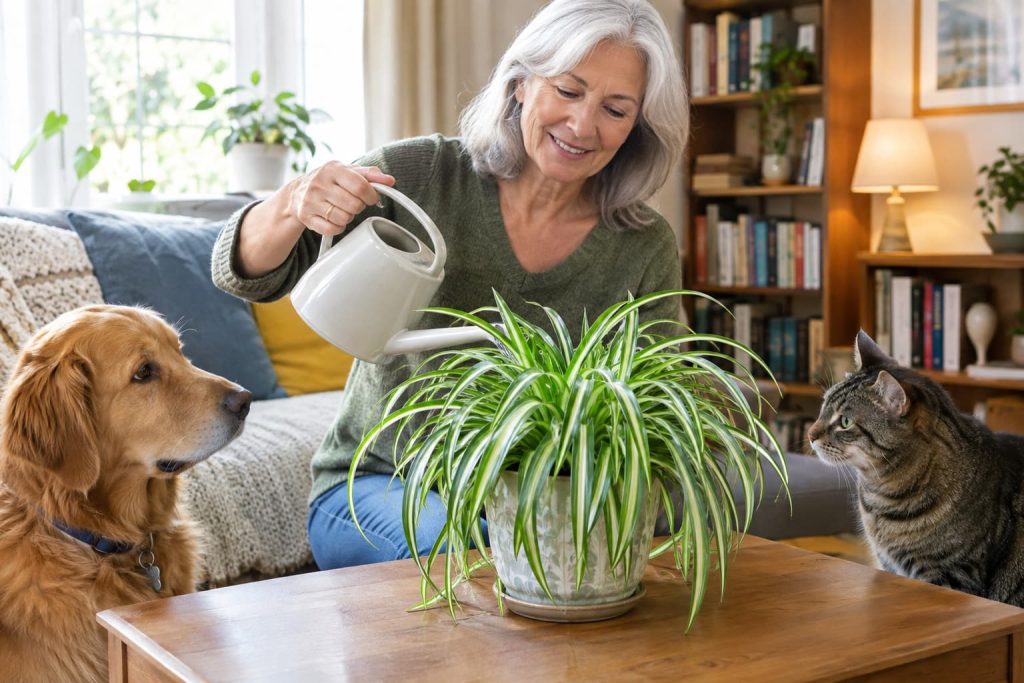
When a plant needs water, give it a thorough watering rather than repeatedly providing tiny amounts.
Follow these steps:
1. Water slowly around the base of the plant.
2. Continue until excess water begins draining from the holes.
3. Allow the container to drain completely.
4. Empty standing water from trays or decorative containers.
Thorough watering helps moisten the root zone evenly and reduces the likelihood of dry pockets developing inside the pot.
Master houseplant care with this Complete Beginner’s Guide to Watering Indoor Plants. Learn schedules, signs of overwatering, and expert tips for strong growth.
Use Pots With Drainage Holes
Good drainage protects roots from remaining in saturated soil for extended periods.
Drainage holes help:
• Remove excess water
• Improve oxygen availability around roots
• Reduce the likelihood of waterlogged soil
• Lower the risk of root-related problems
If you prefer decorative pots without drainage holes, keep the plant in a separate nursery pot with drainage and place that inside the decorative container.
Select the Best Pots for Indoor Plants: How to Choose. Find the ideal size, material, and drainage setup to ensure your beautiful houseplants continue to thrive.
Humidity and Houseplants
Many popular houseplants originate from tropical or subtropical environments where humidity can be considerably higher than in some indoor spaces.
Dry indoor air can contribute to:
• Brown leaf edges
• Curling leaves
• Poor foliage development
• Increased moisture stress
Plants that often appreciate higher humidity include:
• Monstera
• Peace Lily
• Boston Fern
• Prayer Plant
• Calathea
• Philodendron
Simple Ways to Increase Humidity
You don’t always need expensive equipment.
Try:
• Grouping plants together
• Using a humidifier
• Placing a water-and-pebble tray beneath pots without allowing the pot to sit directly in the water
• Keeping humidity-sensitive plants away from heating vents and strong air-conditioning drafts
Humidity requirements vary between species, so avoid assuming every houseplant needs tropical-level moisture.
Boost moisture levels with 10 Easy Ways to Increase Humidity for Indoor Plants. Learn simple, proven methods like pebble trays and grouping plants to save dry foliage.
Choosing the Right Potting Soil
The best potting mix depends on the type of plant you’re growing.
Using an unsuitable medium can contribute to poor drainage, compacted roots, or excessive moisture retention.
Tropical Houseplants
Plants such as Monstera, Pothos, Philodendron, and Peace Lily generally benefit from a loose, well-draining mix that holds some moisture without becoming waterlogged.
A suitable mix may include materials such as:
• Quality potting mix
• Perlite
• Orchid bark
• Coco coir
The exact combination depends on the plant and growing conditions.
Succulents and Cacti
Succulents and cacti generally need a faster-draining medium than moisture-loving tropical plants.
Commercial cactus or succulent mixes often contain materials that improve drainage, such as:
• Perlite
• Pumice
• Coarse mineral particles
• Coarse sand
Avoid using a dense mix that stays wet for long periods.
Orchids
Orchids are different from ordinary potted houseplants and often grow best in chunky, airy media rather than conventional soil.
Orchid mixes commonly contain materials such as:
• Bark
• Perlite
• Sphagnum moss
• Other coarse materials
The goal is to provide sufficient airflow around the roots while retaining appropriate moisture.
Learn the essentials with this quick guide on How to Repot Indoor Plants Successfully. Avoid shock and ensure healthy growth with simple steps for upgrading your houseplant’s home.
Fertilizing Indoor Plants
Houseplants need nutrients for healthy growth, but fertilizer should complement good basic care rather than compensate for poor light, watering, or soil conditions.
Over time, nutrients in a container can become depleted, particularly when a plant remains in the same growing medium for a long period.
When to Fertilize
Many houseplants benefit most from feeding during active growth, commonly in:
• Spring
• Summer
• Early autumn
Plants that naturally slow down during winter may need less fertilizer or none at all.
Common Fertilizer Types
Options include:
• Liquid fertilizer
• Water-soluble fertilizer
• Slow-release fertilizer
• Organic fertilizers
Always follow the product’s instructions. Excess fertilizer can damage roots and contribute to salt accumulation in the growing medium.
Feed your houseplants correctly with this guide on How to Fertilize Indoor Plants. Learn the best timing, dosage, and nutrient mixes to avoid root burn.
Signs a Plant May Need Nutrients
Possible signs include:
• Slow growth
• Pale foliage
• Smaller new leaves
Reduced flowering in flowering species
However, these symptoms can also result from inadequate light, watering problems, pests, or root issues. Check the overall growing conditions before adding fertilizer.
What Is Potting?
Potting is the process of placing a plant into a container filled with an appropriate growing medium.
For example, potting a new houseplant involves selecting a suitable container, adding potting mix, positioning the plant correctly, and watering it appropriately.
Potting vs. Repotting
Potting generally refers to placing a plant into a container, particularly when it is being grown in a container for the first time.
Repotting involves moving an established potted plant into another container, often because it has outgrown its current pot or the growing medium needs replacing.
How and When to Repot Indoor Plants
Repotting can provide additional root space and replace depleted or deteriorated growing medium.
However, plants don’t need to be repotted simply because a certain amount of time has passed.
Signs It’s Time to Repot
Look for signs such as:
• Roots growing through drainage holes
• Roots tightly circling the root ball
• Growth slowing despite appropriate care
• Water passing through the container unusually quickly
• The plant becoming unstable or top-heavy
How to Repot
1. Choose a container only slightly larger than the existing one.
2. Prepare fresh potting mix.
3. Carefully remove the plant from its current container.
4. Loosen severely compacted roots gently.
5. Position the plant at approximately the same depth.
6. Fill around the roots with fresh growing medium.
7. Water appropriately after repotting.
Avoid moving a plant into an excessively large container. A large volume of unused soil can retain moisture for longer and increase the risk of root problems.
Upgrade your houseplant’s home safely using our guide on How to Repot Indoor Plants. Learn the exact steps to move your green friends without causing transplant shock.
Pruning and Cleaning Houseplants
Regular maintenance helps keep plants attractive and can support healthy growth.
Remove Dead or Damaged Leaves
Remove leaves that are:
• Completely yellow or brown
• Dead
• Diseased
• Severely damaged
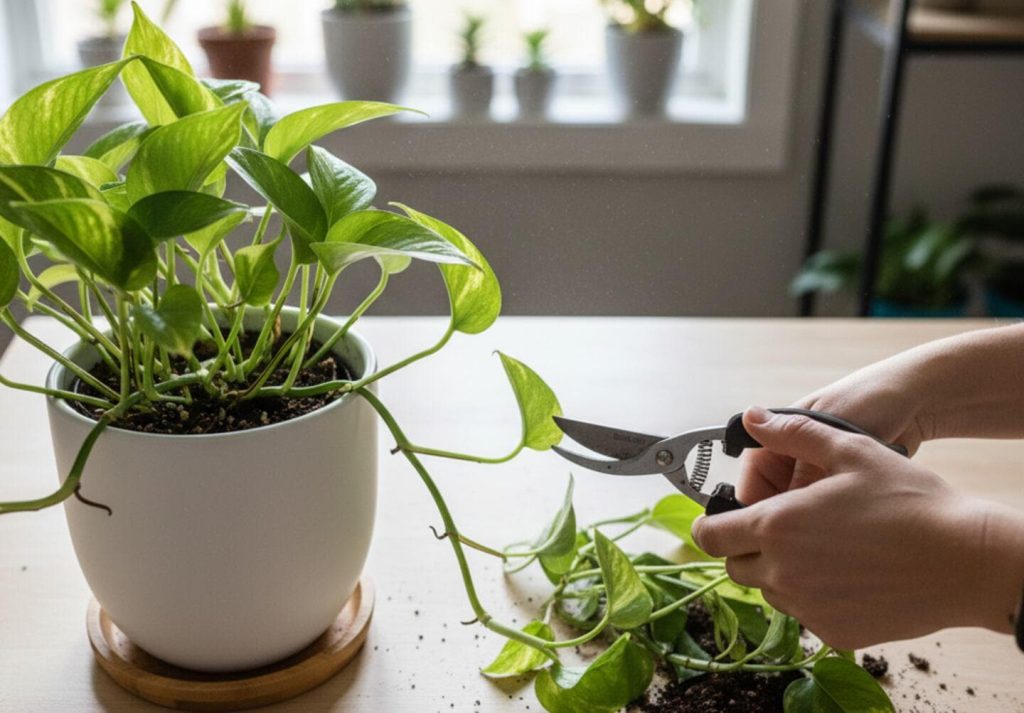
Use clean, sharp scissors or pruning shears to make clean cuts.
Keep your houseplants shaped and thriving with our guide on How to Prune Indoor Plants. Learn exactly where to cut to boost new growth and remove dead leaves safely.
Clean Dust From Leaves
Dust can accumulate on broad leaves and interfere with efficient light capture.
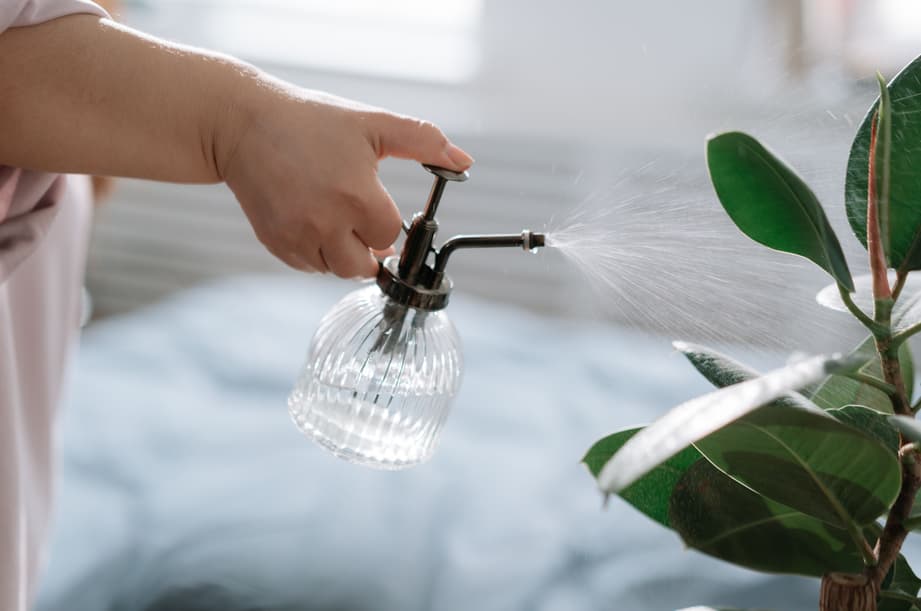
Gently wipe large leaves with a soft, damp cloth when they become dusty.
Plants with broad foliage, such as Rubber Plants and Monsteras, can particularly benefit from occasional cleaning.
How to Prevent Common Houseplant Problems
Prevention is generally easier than trying to correct a serious plant problem.
Provide Appropriate Light
Place each plant where its light requirements can be met. Insufficient light can contribute to weak, elongated growth, while excessive direct sunlight may scorch sensitive foliage.
Maintain Good Air Circulation
Adequate airflow helps reduce excessive moisture around foliage and can make conditions less favorable for some fungal problems.
Avoid packing plants tightly together, particularly in humid rooms.
Inspect Plants Regularly
Spend a few minutes each week examining your plants.
Check both sides of the leaves for:
• Small insects
• Webbing
• Sticky residue
• Spots
• Holes
• Distorted new growth
Early detection makes pest and disease management much easier.
Isolate New Plants
When bringing a new houseplant into your collection, consider keeping it separate from existing plants for about one to two weeks while you monitor it for signs of pests or disease.
This precaution can reduce the risk of introducing an infestation to your other plants.
Diagnose and fix your houseplant issues using our guide on Common Indoor Plant Problems. Easily identify the causes of yellow leaves, root rot, and pesky pests.
Common Indoor Plant Care Mistakes to Avoid
Understanding what not to do is just as important as learning proper care.
1. Watering on a Fixed Schedule
Plants don’t dry out at the same rate. A schedule that works for one plant may leave another constantly wet or too dry.
Check the soil and adjust watering according to the plant’s needs and growing conditions.
2. Choosing Plants for the Wrong Light
A sun-loving succulent may struggle in a dark corner, while a shade-tolerant houseplant may suffer when exposed to intense afternoon sunlight.
Choose plants according to the conditions you can realistically provide.
3. Ignoring Drainage
Containers without adequate drainage can allow excess water to remain around the roots.
Use suitable containers and a growing medium appropriate for the plant.
4. Applying Too Much Fertilizer
More fertilizer does not necessarily mean faster or healthier growth.
Excess nutrients can damage roots and cause problems such as brown leaf margins and salt accumulation.
5. Moving Plants Too Frequently
Plants need time to adjust to their environment.
Constantly changing their location can expose them to different light, temperature, humidity, and airflow conditions.
Once you’ve found a suitable position, avoid unnecessary relocation.
6. Forgetting to Rotate Pots
Plants often grow toward their strongest light source.
Turning the container approximately a quarter turn every one to two weeks can encourage more balanced growth, although the exact frequency is not critical.
Beginner Houseplant Care Checklist
Use this checklist to build a simple maintenance routine:
✓ Check soil moisture before watering.
✓ Match each plant with suitable light.
✓ Use containers with adequate drainage.
✓ Keep foliage reasonably clean.
✓ Inspect plants regularly for pests.
✓ Fertilize during active growth when appropriate.
✓ Provide additional humidity for plants that need it.
✓ Rotate plants if uneven growth becomes noticeable.
✓ Repot when roots become crowded.
✓ Remove dead or damaged foliage.
A simple routine is usually more sustainable than trying to perform complicated maintenance every day.
Frequently Asked Questions
1. Can I keep different types of indoor plants in the same room?
Yes. Different houseplants can share a room as long as their basic environmental requirements are compatible. Before grouping plants together, consider their light, temperature, humidity, watering, and airflow needs. Plants with very different requirements may be better placed in separate areas.
2. How do I know if a plant is healthy when buying it?
Look for firm stems, healthy-looking leaves, active new growth, and a generally balanced shape. Avoid plants with extensive yellowing, widespread leaf damage, visible pests, webbing, mold, or severely damaged stems. Check both the upper and lower surfaces of the leaves before bringing a plant home.
3. Should I quarantine a new houseplant?
Quarantining a newly purchased plant can help prevent pests or diseases from spreading to your existing collection. Keep the new plant separate while you inspect it regularly for insects, webbing, spots, or other unusual symptoms.
4. Can indoor plants improve the appearance of a small room?
Absolutely. Plants can add color, texture, and visual interest without requiring much floor space. Compact plants can be placed on shelves, desks, windowsills, or small stands, while trailing varieties can make use of vertical space.
5. Is it better to keep indoor plants in plastic or decorative pots?
Both can work well. Plastic nursery pots are lightweight and commonly have drainage holes, while decorative containers can improve the appearance of a room. A practical approach is to keep the plant in a suitable nursery pot and place it inside a decorative outer container.
6. How often should I check my indoor plants?
A quick inspection once or twice a week is usually enough for most houseplants. Look at the leaves, stems, growing medium, and overall appearance for changes. Regular observation helps you notice pests, damaged foliage, or environmental stress before the problem becomes severe.
7. Can I grow indoor plants without natural sunlight?
Some houseplants can grow under artificial lighting when natural light is inadequate. However, the type, intensity, and duration of artificial light matter. If a room receives very little natural light, a suitable grow light can provide an additional source of illumination.
8. How many indoor plants should a beginner start with?
There is no fixed number. Starting with a small collection of a few plants can make it easier to understand their individual needs and develop a manageable care routine. As your experience increases, you can gradually add species with different requirements.
Practical Action Plan for Beginners
If you’re starting an indoor garden, don’t try to change everything at once.
Week 1: Assess Your Environment
• Observe the natural light in each room.
• Identify bright, medium, and low-light areas.
• Check that containers have adequate drainage.
• Match your plants to appropriate locations.
Week 2: Establish a Watering Routine
• Check soil moisture before watering.
• Learn which plants prefer drier or consistently moist conditions.
• Remove dead or damaged foliage.
• Clean dusty leaves where necessary.
Week 3: Inspect Plant Health
• Check leaves for pests and unusual spots.
• Examine new growth for abnormalities.
• Rotate plants if they are developing unevenly.
• Monitor humidity-sensitive plants.
Week 4 and Beyond
• Fertilize during active growth when appropriate.
• Repot plants when they become root-bound.
• Continue monitoring light and soil moisture.
• Adjust your routine according to how each plant responds.
The goal isn’t to create a perfect routine. It’s to learn how your plants respond and make small adjustments when necessary.
Key Takeaways
• Choose plants that match the light and conditions available in your home.
• Check soil moisture rather than relying on a rigid watering schedule.
• Use suitable growing media and containers with adequate drainage.
• Understand the difference between low, indirect, and direct light.
• Provide additional humidity when a particular plant benefits from it.
• Fertilize during active growth without overfeeding.
• Repot when roots become crowded or the growing medium deteriorates.
• Inspect plants regularly for pests and other problems.
• Remove dead foliage and keep leaves reasonably clean.
• Pay attention to how your plants respond and adjust care accordingly.
Conclusion
Successful indoor plant care does not require a complicated routine. It starts with understanding the basic conditions your plants need and providing them consistently. Reliable horticultural resources such as the Royal Botanic Gardens, (Kew) can also help you make informed plant-care decisions.
Give each plant the appropriate light, water according to its moisture requirements, use a suitable growing medium, maintain reasonable humidity, and monitor its condition regularly. Resources such as the University of Florida IFAS Extension – (Gardening Solutions( provide practical, research-based information that can help you better understand these essential aspects of plant care. These simple habits can prevent many of the common problems beginners encounter.
Whether you are caring for your first Snake Plant or building a collection of tropical houseplants, experience will make plant care easier. As you observe how your plants respond to different conditions, you will become better at recognizing what they need before problems become serious.
Ready to choose your next houseplant? Explore our guide to Discover the ultimate houseplant checklist with these 21 Best Indoor Plants Easy to Grow All Year Long. Find low-maintenance, hardy varieties perfect for any home. for beginner-friendly plants that can suit different rooms, light levels, and lifestyles.

About the Author: Emebu Blessing Oghale
Emebu Blessing Oghale is an expert SEO content writer, digital creator, and indoor gardening enthusiast based in Asaba, Nigeria. Combining horticultural principles with years of digital media experience, he founded Indoor Plant Guide to provide practical, beginner-friendly troubleshooting tips for plant parents across West Africa and beyond. When he isn’t cultivating tropical houseplants, he serves his local community as a pastor at Living Faith Church.
Hi Bon,
Truly, this is a really helpful guide for anyone just starting with indoor plants. I especially liked the practical advice on choosing plants based on available light and checking the soil before watering instead of following a fixed schedule. The explanations are simple and easy to follow, and the tips on drainage, humidity, and common mistakes are useful. I’ll definitely be using some of these tips with my own houseplants!
Hi Orwasen, it is my pleasure having you visit, and drop a comment. Thanks bro.