

How to use neem oil for plants safely and effectively is an important skill for anyone caring for indoor plants. Neem oil can help manage certain insect pests and plant diseases when used correctly, but the wrong concentration or application conditions may damage delicate leaves. Before spraying your houseplants, learn how to choose the right product, apply it properly, and protect your plants from unnecessary harm.
This guide explains how to use neem oil for plants, from choosing the right product to applying it safely. Whether you grow pothos, peace lilies, monsteras, or other houseplants, these practical steps will help you make informed decisions about treating your plants.
What Is Neem Oil?
Neem oil is extracted from the seeds of the neem tree (Azadirachta indica), a tree native to parts of South Asia. It is used in some garden products to manage insects, mites, and certain plant diseases.
Neem-based products do not all work in the same way. Some contain azadirachtin, a compound that can interfere with insect feeding, growth, and reproduction. Others contain clarified hydrophobic neem oil, which works mainly through direct contact with susceptible pests.
According to University of New Hampshire Extension, identifying the active ingredient and following the product label are important steps in using neem products effectively.
This distinction matters because a product made for cosmetic or medicinal use is not necessarily suitable for treating plants. Choose a product specifically labelled for the plant and pest you intend to treat.
What Does Neem Oil Do for Plants?
Neem oil can be useful when a plant has a pest problem that the product is designed to control. However, it is not a universal treatment for every plant disease or insect.
Depending on its formulation and label instructions, neem oil may help with the following:
- Aphids: Small insects that cluster on young shoots and tender leaves.
- Mealybugs: Soft-bodied pests that often appear as white, cotton-like patches.
- Whiteflies: Tiny white insects that fly away when disturbed.
- Spider mites: Small pests that may cause pale stippling and fine webbing on leaves.
- Certain fungal diseases: Some labelled neem products can help manage particular fungal problems, although effectiveness varies by disease and product.
The product must be labelled for the target pest or disease. Neem oil does not reliably control every pest, and established fungal infections may require a different approach.
Before using any treatment, inspect the plant carefully and confirm what is causing the problem. You may find that removing heavily infested leaves, washing off pests, or correcting growing conditions is sufficient.
How to Use Neem Oil for Plants: 7 Practical Steps
Using neem oil correctly can help you manage certain indoor plant pests while protecting your plants from unnecessary damage. Let’s explore seven practical steps for applying neem oil safely and effectively to your houseplants.
1. Choose the Right Neem Oil Product
Start by checking the product label rather than buying the first bottle marked “neem oil.”
Look for a product intended for ornamental plants or houseplants, with clear instructions for the pest you want to control. Check the active ingredients, concentration, permitted application methods, and safety precautions.
Some products are ready-to-use sprays, while others are concentrated formulations that require dilution. These products are not interchangeable, so never assume they require the same amount of water.
Avoid using neem oil sold exclusively for cosmetic or medicinal purposes as a substitute for a labelled plant treatment. Such products may have different ingredients and no instructions for safe pesticide application.
2. Prepare the Plant Before Treatment
Inspect the leaves, stems, and leaf joints to locate the affected areas. Check both sides of the leaves because pests may hide underneath them or along the stems.
If the plant is infested, separate it from nearby houseplants when practical. This helps reduce the chance of pests spreading during treatment.
Remove badly damaged leaves only when necessary, and gently wash away visible pests if appropriate for the plant. Clean any reusable tools after handling an infested plant.
Do not spray a plant that is severely wilted, recovering from transplanting, or already under significant stress. Give it time to recover before considering an oil treatment.
3. Mix Neem Oil According to the Label
If you purchased a concentrate, follow the manufacturer’s dilution instructions exactly. Different products contain different concentrations and may require different mixing procedures.
Some formulations need an approved emulsifier to distribute the oil evenly in water. Others already contain ingredients that help them mix properly. Do not add dishwashing liquid, detergent, or another household ingredient unless the product instructions specifically permit it.
Use the stated measuring equipment and prepare only the quantity you expect to need. If the label requires the mixture to be shaken or stirred during application, follow that instruction.
Important: There is no single dilution rate that is suitable for every neem oil product. Using a stronger mixture does not guarantee better pest control and may increase the risk of leaf damage.
For additional guidance on product selection and safe use, consult University of Florida IFAS Extension’s natural pest and disease management guide.
4. Test a Small Area First
Before spraying the entire plant, apply the prepared product to a small section of foliage according to the label. Choose a few leaves that represent the plant’s normal condition.
Observe the treated area for signs of damage before proceeding. Depending on the product instructions and plant response, this may require several days.
Watch for unusual spotting, browning, pale patches, curling, or other signs that the plant is reacting poorly. If damage appears, do not continue treating the plant with that product.
A small-area test is especially important when treating unfamiliar plants or species known to be sensitive to oil-based sprays.
Even a successful test does not guarantee that every leaf will tolerate repeated applications, so continue monitoring the plant.
5. Apply Neem Oil to the Correct Areas
Once the test area shows no signs of injury, apply the product as directed on its label.
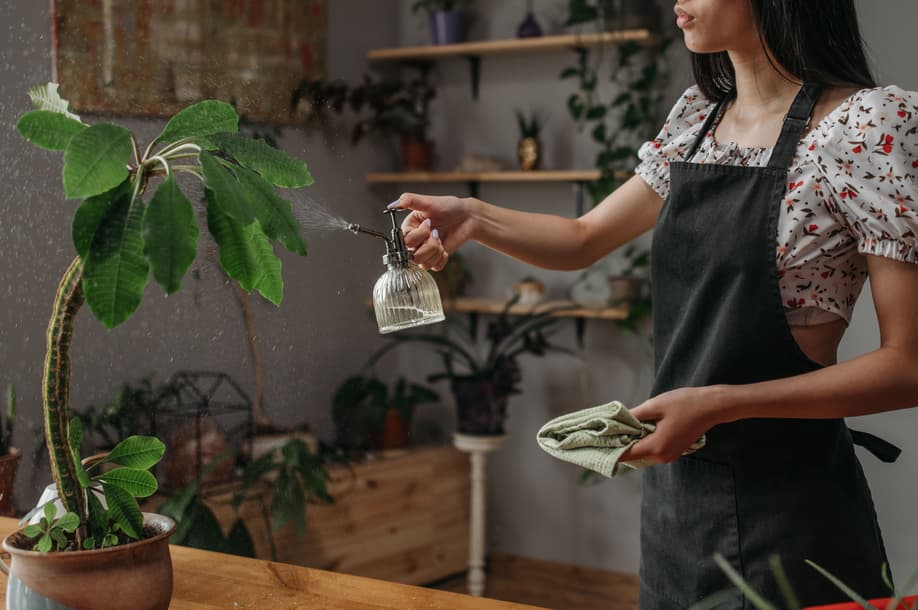
For a labelled foliar spray, pay attention to the locations where the identified pests are present. This may include the undersides of leaves, leaf joints, stems, and young shoots.
Use enough spray to reach the target areas without unnecessarily soaking the potting mix, surrounding furniture, or nearby plants. Avoid spraying flowers or other sensitive plant parts unless the label permits it.
If you are treating several plants, clean the sprayer as directed and avoid transferring pests between them.
Remember that many neem oil formulations work primarily through direct contact. Missing the areas where pests hide can reduce effectiveness, even when the rest of the plant looks thoroughly sprayed.
6. Apply It Under Suitable Conditions
Environmental conditions can influence how safely a plant tolerates an oil spray.
Avoid applying neem oil in direct sunlight, during excessive heat, or when the plant is water-stressed. Heat and unsuitable application conditions can increase the risk of foliage injury.
For indoor plants, choose a cool period when the plant can remain out of direct sun while the spray dries. Follow any temperature, ventilation, and drying instructions on the product label.
Where possible, treat plants outdoors in a suitable shaded location if the label permits it. If you must treat a plant indoors, provide appropriate ventilation and protect people, pets, surfaces, and other items from spray exposure.
Do not assume that an early-morning or evening application is automatically safe. The plant, the product formulation, and the surrounding conditions all matter.
7. Monitor Results Before Repeating Treatment
Neem oil is not an instant solution to every infestation. Some pests may survive an initial application, particularly if they were not directly reached by the spray or if their life stage is less susceptible to the product.
Check the plant regularly for live pests, fresh feeding damage, and new growth. Follow the product’s stated interval if another application is needed, and do not spray more frequently than the label permits.
If the infestation continues, reassess the pest identification and treatment method rather than automatically increasing the concentration.
You may need to combine suitable treatments, improve plant hygiene, or use a different product specifically labelled for the pest. The aim is to control the problem while causing as little harm as possible to the plant and its surroundings.
Common Mistakes to Avoid When Using Neem Oil
Even a suitable product can cause problems when used incorrectly. Avoid these common mistakes.
Using Too Much Neem Oil
A stronger mixture is not necessarily more effective. Excessive concentration can injure foliage and leave unwanted oily residue. Measure carefully and follow the labelled rate.
Spraying Plants in Direct Sunlight or High Heat
Oil-treated leaves can become damaged under unsuitable environmental conditions. Choose a suitable application period and observe the product’s temperature restrictions.
Treating Every Plant the Same Way
Houseplants vary in their sensitivity to oil-based products. A mixture tolerated by one species may damage another. Check the label and test unfamiliar plants before wider application.
Expecting Neem Oil to Fix Every Plant Problem
Yellow leaves, brown tips, wilting, and slow growth do not always indicate a pest infestation. Watering problems, poor drainage, unsuitable light, and root damage can produce similar symptoms.
Treating these problems with neem oil will not correct the underlying cause. Diagnose the issue before choosing a remedy.
Repeating Applications Without Checking the Plant
Repeated spraying can increase the risk of foliage injury, particularly when the plant is already stressed. Inspect the leaves after treatment and follow the permitted application interval.
Ignoring Safety Instructions
Neem oil is a pesticide when sold for pest-control use. Botanical origin does not make every formulation harmless. Follow the label’s precautions for handling, storage, ventilation, and exposure, and keep products away from children and pets.
Is Neem Oil Safe for All Indoor Plants?
No. Some plants are sensitive to oil-based sprays, and even plants that tolerate a product initially may develop damage under different conditions.
Exercise particular caution with succulents and other plants known to react poorly to oils. If the product label excludes a plant species or warns against use on it, choose another method.
Never assume that a product is safe simply because it is described as natural or organic. Its formulation, concentration, application method, and the condition of the plant all influence the risk.
If you are uncertain whether a particular houseplant can tolerate neem oil, consult the manufacturer or a qualified horticultural professional before applying it.
Can Neem Oil Be Used as a Preventive Treatment?
Neem oil should not automatically become part of every plant-watering routine. Preventive pesticide use may be unnecessary when plants are healthy and no target pest or disease is present.
A better starting point is to inspect new plants before introducing them to your collection, clean plant-care tools, remove dead plant material, and provide suitable light, water, and airflow.
If a pest problem develops, identify it first and determine whether nonchemical methods can control it. Consider a labelled neem product only when it is appropriate for the specific problem.
This targeted approach reduces unnecessary pesticide exposure and helps you identify the treatment that is most likely to work.
Frequently Asked Questions
1. Does neem oil have an expiry date?
Neem oil products can have a limited shelf life. Check the manufacturer’s expiry date, storage instructions, and guidance on whether the product remains suitable after opening. Do not rely on appearance alone to determine whether an old product is still effective.
2. Can neem oil be used on plant cuttings?
Do not assume that newly rooted cuttings or fresh propagation growth can tolerate neem oil. Young plant tissue may be sensitive, and recently established cuttings can be stressed. Use a product only if its label permits the intended application, and seek advice if you are unsure.
3. Can neem oil remove white mineral deposits from leaves?
Neem oil is not a suitable treatment for mineral deposits left by hard water. Those marks require a different approach, such as gently cleaning the foliage with an appropriate method for the plant. Spraying neem oil will not correct the cause of mineral buildup.
4. Should neem oil be stored in the refrigerator?
Follow the storage instructions printed on the product. Refrigeration is not universally required, and unsuitable storage conditions can affect a formulation. Keep the container tightly closed and away from direct sunlight, excessive heat, and places accessible to children or pets.
Conclusion
Learning how to use neem oil for plants involves more than mixing a solution and spraying the leaves. The most important steps are choosing the right product, identifying the pest correctly, following the label, testing a small area, and applying the treatment under suitable conditions.
Neem oil can help manage certain plant pests and diseases, but it is not suitable for every plant or every problem. Careful application and regular monitoring give you a better chance of controlling an infestation without damaging your houseplants.
For more help with plant health, read our guide to 8 Common Indoor Plant Pests and How to Eliminate Them and our article on 21 Common Indoor Plant Problems and How to Fix Them Fast. These guides can help you investigate the cause of a problem before deciding on a treatment.

About the Author: Emebu Blessing Oghale
Emebu Blessing Oghale is an expert SEO content writer, digital creator, and indoor gardening enthusiast based in Asaba, Nigeria. Combining horticultural principles with years of digital media experience, he founded Indoor Plant Guide to provide practical, beginner-friendly troubleshooting tips for plant parents across West Africa and beyond. When he isn’t cultivating tropical houseplants, he serves his local community as a pastor at Living Faith Church.

Hi Emebu,
This is another very useful guide from your desk for anyone who wants to keep their plants healthy and pest-free! I appreciate the step-by-step instructions, especially for beginners who may not know how to apply neem oil correctly. Frankly speaking, I never knew Neem oIl is this powerful in terms of plant pests control.
Happy to see you again bro, keep visiting and keep sharing.
This is very engaging and educative for indoor plant owners.
Thanks Emebu for your research and penning down this piece.
Hello Wuluhomes it is a pleasure having you here once again. One love!