
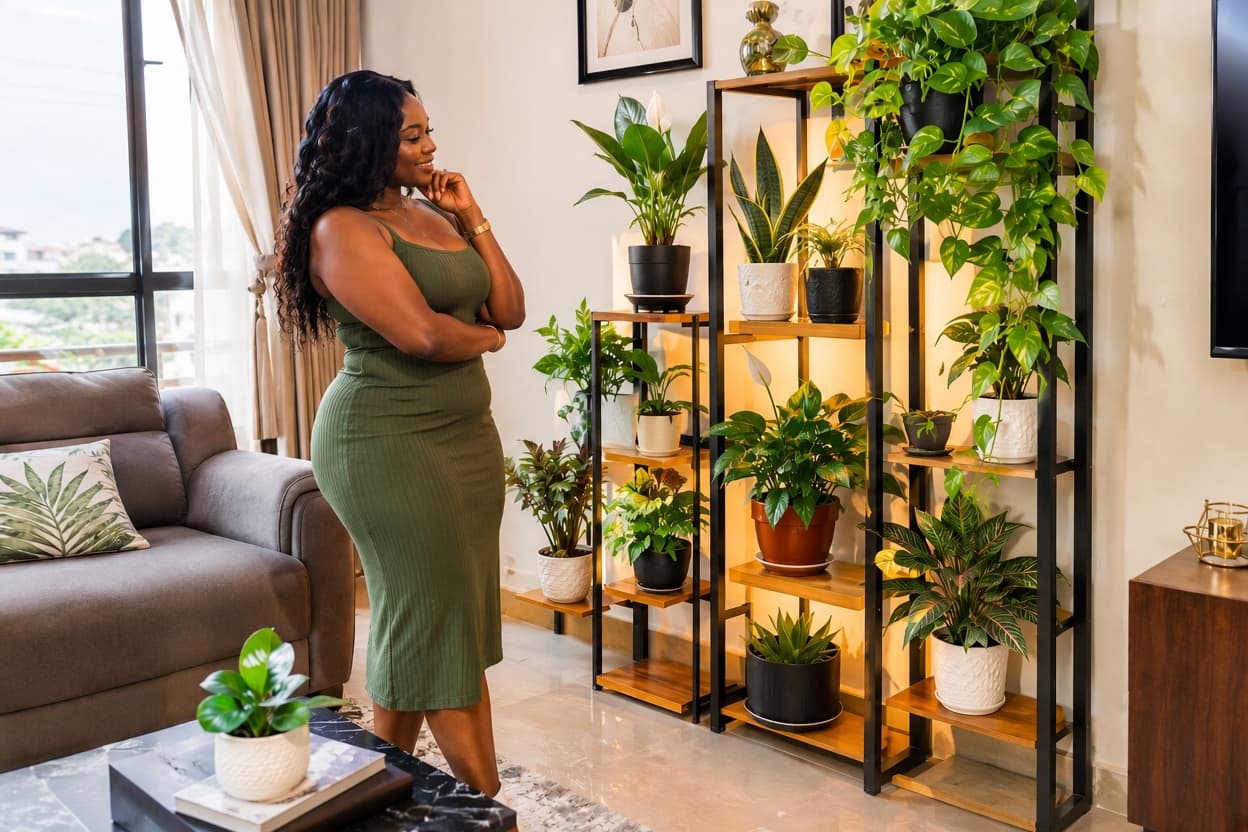
Living in a small apartment or having limited floor space does not mean you have to give up your indoor plant collection. By implementing the right indoor plant shelf ideas for small spaces, you can beautifully display your favorite plants, make use of empty walls and corners, and keep your room organized without overcrowding it.
These versatile design solutions range from simple floating shelves to movable plant stands and creative DIY displays. You will also learn how to choose a suitable design, position plants for adequate light, and prevent common problems such as water damage, unstable shelves, and overcrowding.
The best display is not necessarily the one that holds the most plants. It is the one that makes efficient use of your space while allowing each plant to grow in suitable conditions.
13 Indoor Plant Shelf Ideas for Small Spaces
Transform your compact layout with these 13 clever indoor plant shelf ideas for small spaces. Maximize blank walls and tight corners to create a thriving vertical garden.
1. Install Floating Plant Shelves
Floating shelves are a practical choice when you want to display plants without placing another piece of furniture on the floor. They attach to a wall using concealed or decorative brackets, creating a clean, uncluttered appearance.
You can install one shelf above a desk, beside a window or along an otherwise empty wall. Two or three shelves arranged vertically can accommodate a small collection without taking up much room.
Best plants to consider: Small pothos, spider plants, compact peperomias and other plants suited to the available light.
Practical tip: Check the shelf’s rated load, including the combined weight of the pots, wet growing medium and any decorative objects. Secure it using fixings appropriate for the wall material. Do not rely on adhesive strips for heavy plant displays unless the product is specifically rated for that load and application.
2. Create a Corner Plant Stand
An unused corner can become an attractive plant display without interfering with the main walking area. A corner plant stand fits against two walls and provides several levels for arranging pots.
This design works particularly well in small living rooms, bedrooms and home offices where a conventional shelf would take up too much wall space.
Choose a narrow stand with a stable base and enough separation between tiers for leaves to spread. If the corner receives little natural light, use plants that tolerate the actual light conditions rather than assuming every corner is suitable for greenery.
Safety first: Keep the largest and heaviest pots on the bottom tier. This helps lower the center of gravity and makes the stand less likely to tip.
3. Use a Ladder Plant Shelf
A ladder plant shelf provides several display levels within a relatively narrow footprint. Its stepped design also makes it easy to combine plants of different heights.
A freestanding ladder shelf is suitable for renters who want a display that can be moved when rearranging a room. Some models lean against a wall, while others have a self-supporting frame.
Arrange compact plants on the upper shelves and larger pots on the lower levels. Trailing plants can occupy an edge where their foliage will not obstruct another plant.
Follow the manufacturer’s instructions for stabilizing the unit. A leaning shelf should not be assumed safe simply because it looks balanced, particularly in homes with children or pets.
4. Build a Vertical Plant Display
A vertical plant display makes use of wall height instead of spreading pots across the floor. It can be arranged symmetrically for a formal appearance or staggered for a more relaxed look.
This option is useful when you have several small plants but limited horizontal space. It can also create a green focal point behind a reading chair or beside a desk.
Before installing the shelves, mark their positions on the wall and check that the arrangement leaves enough room for foliage to grow. Consider how you will reach each plant for watering, pruning and pest inspection.
Put plants that need frequent attention at a comfortable height. Avoid placing heavy pots high above seating areas or walkways.
5. Add a Window Plant Shelf
A window plant shelf can make productive use of an area that already receives daylight. It is particularly useful for compact plants that need brighter conditions than the middle of a room provides.
Depending on the window arrangement, you might use a narrow freestanding shelf beside it, a secure wall-mounted shelf or a properly supported windowsill extension.
However, a bright window is not automatically suitable for every houseplant. Direct sunlight through glass can scorch some foliage, while plants placed too far from a window may receive insufficient light. The Royal Horticultural Society explains these differences in its houseplant growing guide.
Observe the light throughout the day before choosing the plants. In Nigeria, also consider how strong afternoon sunshine heats the window area and whether the room becomes excessively hot.
6. Choose a Tiered Indoor Plant Stand
A tiered plant stand provides several levels on one piece of furniture. Unlike individual wall shelves, it can be repositioned when you need to clean, rearrange your room or adjust plants to changing light.
Look for a design with sufficiently wide shelves, a stable base and surfaces that can tolerate occasional moisture.
Tiered stands work well for mixed collections, but the plants should not be packed so closely together that their leaves overlap excessively or prevent airflow.
Ensure you arrange plants according to both height and light requirements. A tall plant should not cast a deep shadow over a smaller plant that needs brighter conditions.
7. Try a Wall-Mounted Plant Shelf
A wall-mounted plant shelf is similar to a floating shelf, but it may feature visible brackets, metal frames, rails or several attached compartments.
This design is worth considering if you want a decorative structure that can hold a coordinated group of plants. It also works well above a console table or along a narrow wall.
Choose a material that suits the room and can withstand the conditions around your plants. Metal, treated wood and appropriately finished shelving can all be useful, depending on construction quality and exposure to moisture.
Pro tip: Protect the wall from dripping water and damp pot bases. Water-resistant trays can help, but remove standing water after watering instead of leaving pots submerged.
8. Make a DIY Plant Shelf from Reclaimed Wood
A DIY plant shelf can be an economical option if you already have suitable timber, a sturdy frame or an unused piece of furniture.
You can create a simple two-tier stand, repurpose a small bookcase or build a narrow shelf that fits a specific wall. The advantage is that you can customize the dimensions to suit your room rather than trying to fit a standard design into an awkward space.
Before using reclaimed wood, check for rot, cracks, loose joints, protruding nails and signs of pest damage. Sand rough edges and use an appropriate finish if the wood will regularly come into contact with moisture.
If you do not have the tools or experience to build a secure structure, repurposing a sound existing shelf is often safer than constructing a tall stand from unsuitable materials.
9. Hang Plants from a Shelving Unit
Trailing plants can soften the straight lines of a shelving unit and create a fuller display without requiring extra floor space.
Plants such as pothos (Epipremnum aureum) and spider plants (Chlorophytum comosum) can produce cascading foliage under suitable growing conditions.
Place trailing pots near the edge of a stable shelf, allowing the stems to hang freely. Keep them away from doorways, hot equipment and places where people might brush against the foliage.
Practical tip: Do not let long stems cover neighboring plants completely. Trim or redirect growth when necessary, and inspect the hanging foliage regularly for pests.
If you prefer suspended pots rather than shelf-mounted containers, see PlantGuide’s related article, Hanging Plant Care: How to Keep Indoor Hanging Plants Healthy.
10. Turn a Narrow Bookcase into a Plant Display
A narrow bookcase can serve two purposes: storing everyday items and displaying houseplants. This is useful when you want greenery without adding another piece of furniture.
Reserve some shelves for plants and others for books or lightweight decorative objects. Avoid squeezing pots into spaces that are too small for watering or removing them for maintenance.
A bookcase with adjustable shelves can be especially useful because you can change the spacing as your collection grows.
Smart move: Use waterproof plant saucers and wipe up spills promptly. Keep books away from damp pots, and ensure that water cannot collect unnoticed on wooden shelves.
11. Use a Minimalist Plant Shelf
A minimalist plant shelf focuses on a few carefully selected plants rather than a large collection. This approach can make a small room feel more organized and reduce the visual clutter created by too many pots and accessories.
Choose a simple shelf with clean lines and leave space between containers. You might use matching pots, a consistent color scheme or plants with contrasting leaf shapes.
Minimalism does not mean choosing plants solely for appearance. Each plant still needs a position that meets its light and temperature requirements.
Practical tip: Start with three plants of different heights or growth habits. Add more only if the shelf remains easy to maintain and each plant has enough room.
12. Create a Compact Plant Display on a Desk or Console
If you cannot drill into walls or fit a tall plant stand, a desk or narrow console can provide a simple alternative.
Arrange two or three small pots at one end of the surface, leaving enough room for your normal activities. A shallow raised platform can introduce another level without requiring a full shelving unit.
This option is particularly practical for rented rooms, shared accommodation and home offices where flexibility matters.
Safety tip: Keep pots away from laptops, electrical sockets, extension leads and important documents. Choose containers that can be removed easily for watering, and avoid watering plants directly over electronic equipment.
13. Combine Shelves with a Small Plant Stand
You do not have to choose between wall shelves and a freestanding stand. Combining the two can create a coordinated display while using both vertical and floor space.
For example, place a compact tiered stand beneath two floating shelves. Use the lower stand for heavier pots and the upper shelves for smaller plants that are easy to reach.
This arrangement is particularly useful for people who want to grow their collection gradually. You can begin with one stand and add a shelf later if the space and light allow.
Practical tip: Plan the entire arrangement before installing anything. Leave room to remove pots, reach the upper shelves and move plants when their light requirements change.
How to Choose the Right Plant Shelf for Your Space
The best small-space plant shelf depends on your room dimensions, available light, budget and the number of plants you want to display.
| Shelf Type | Best Use | Main Consideration |
| Floating shelf | Empty walls and compact rooms | Wall strength and secure fixings |
| Corner stand | Unused corners | Stability and light availability |
| Ladder shelf | Several plants in a narrow area | Shelf depth and overall footprint |
| Window shelf | Plants needing brighter light | Direct sun and heat |
| Tiered stand | Flexible, movable displays | Load capacity and airflow |
| DIY shelf | Unusual spaces or limited budgets | Construction quality and moisture protection |
| Narrow bookcase | Combined storage and greenery | Water protection and shelf spacing |
Before purchasing or building a shelf, measure the available width, depth and height. Include the space needed for leaves, trailing stems and access for watering.
Also consider the total weight of your display. A pot that feels light when dry can become considerably heavier after watering, particularly when it contains a large volume of growing medium.
How to Arrange Plants on Small Shelves
A well-arranged display should look attractive without making plant care difficult.
Put plant health before appearance
Check the light reaching each shelf before deciding which plant belongs there. The amount of light available generally decreases as you move farther from a window, so an upper shelf is not automatically better for growth.
The Royal Horticultural Society recommends selecting houseplants for the conditions in which they will actually grow rather than choosing positions based only on decoration.
Mix plant heights and growth habits
A practical arrangement includes a few different forms:
• Upright plants: Use compact, upright-growing plants to establish the structure of the display.
• Bushy plants: Place these where their leaves have room to spread.
• Trailing plants: Position these near shelf edges where their stems will not obstruct other plants.
• Small plants: Use these to fill gaps without overcrowding the collection.
The goal is to create variation while leaving each plant enough space for healthy growth.
Leave room for watering and maintenance
A shelf packed tightly with pots can become difficult to maintain. You should be able to lift each pot, inspect the leaves, remove dead foliage and check the growing medium.
This matters especially in warm, humid conditions, where poor air movement and persistently wet surfaces can make routine maintenance more challenging.
Protect the shelf from water
Always consider where excess water will go after watering.
Use suitable saucers or removable trays, empty collected water and wipe up spills. Do not assume that a decorative waterproof-looking surface will withstand repeated moisture exposure.
If you are choosing containers for a new display, PlantGuide’s How to Choose the Right Pots for Indoor Plants: 9 Essential Tips is a relevant companion article.
Common Mistakes to Avoid with Small Space Plant Shelves
Even an attractive display can create problems when it is poorly planned.
1. Choosing plants before checking the light. A plant that needs bright light may decline on a decorative shelf in a dark corner. Assess the location first.
2. Overloading shelves. Account for the weight of pots, wet growing medium and water containers. Follow the shelf’s load rating and installation instructions.
3. Placing plants too close together. Crowding makes watering, pruning and pest inspections more difficult. Allow room for leaves and stems to develop.
4. Ignoring water damage. Repeated spills can stain timber, damage paint and affect some wall finishes. Use suitable protection and clean up excess water.
5. Putting heavy pots overhead. A high shelf is not the best location for a heavy container, especially above a bed, sofa or frequently used walkway.
6. Assuming every indoor corner is suitable for plants. A corner may save space but still receive too little daylight. Plants cannot grow indefinitely in complete darkness; use a suitable grow light if natural light is inadequate.
7. Forgetting about future growth. A small plant may eventually need more space. Choose shelving that allows you to reposition containers or remove plants as their size changes.
Are Plant Shelves Suitable for Small Nigerian Homes?
Yes. Indoor plant shelves are practical for many Nigerian homes, including self-contained apartments, single rooms, rented flats and compact home offices where floor space is limited.
You do not necessarily need expensive imported shelving to create an attractive display. A sturdy second-hand bookcase, a simple wooden rack or a well-built metal stand may work, provided it can safely support the pots and withstand occasional moisture.
Before positioning your plants, consider the conditions inside your home:
Strong sunlight: A shelf beside a west-facing or otherwise sun-exposed window may become hot during the afternoon. Observe the light and temperature before placing sensitive plants there.
Warm indoor conditions: Growing medium may dry faster in a warm, bright room than in a cooler location. Check the soil before watering rather than following a fixed schedule.
Limited ventilation: Avoid crowding plants against one another or placing wet pots on surfaces that cannot dry properly.
Rented accommodation: Freestanding ladder shelves and tiered stands can be useful when drilling into walls is not permitted.
Budget considerations: Compare the cost of a new shelf with a suitable second-hand unit or a simple DIY alternative. Whichever you choose, prioritize stability, load capacity and ease of cleaning.
The best arrangement is one that fits your available space, suits the light conditions and allows you to care for your plants without making the room difficult to use.
Frequently Asked Questions
1. What is the best plant shelf for a small apartment?
A floating shelf is a good option when floor space is limited and the wall can safely support the installation. A narrow ladder shelf or tiered stand may be better if you need a movable display or cannot drill into the wall.
2. How many plants should I put on one shelf?
There is no universal number. The right quantity depends on shelf dimensions, pot sizes, plant growth habits and light availability. Begin with a few plants and add more only when each can be maintained comfortably.
3. Can I put indoor plants on shelves without natural light?
A room does not have to receive direct sunlight, but plants still need suitable light for photosynthesis. Some houseplants tolerate lower-light conditions, while others need brighter positions. If natural light is insufficient, an appropriate horticultural grow light may help.
4. What is the cheapest way to display indoor plants in a small room?
Repurposing a stable bookcase, using an existing windowsill or building a simple shelf from suitable materials can reduce costs. Avoid saving money by using unstable furniture or inadequate wall fixings.
5. How do I prevent water from damaging my plant shelves?
Use suitable saucers or removable waterproof trays, check pots for leaks, empty collected water and wipe up spills. Make sure the shelf material and finish can tolerate the expected moisture exposure.
Conclusion
The best indoor plant shelf ideas for small spaces make use of vertical surfaces, narrow corners and existing furniture without sacrificing plant health or everyday convenience.
Start by measuring your room and checking the available light. Then choose a shelf that suits your space, supports the combined weight of your plants and allows you to water and maintain them easily. A small, well-planned display can be more successful than a crowded arrangement that is difficult to care for.

I’m Bon (aka Guider), a dedicated indoor gardening writer and houseplant specialist with years of hands-on experience cultivating diverse indoor flora. I author comprehensive, data-backed guides designed to help beginners master indoor plant care, including advanced soil science, precise watering schedules, lighting optimization, and pest troubleshooting. To ensure the highest level of accuracy and editorial integrity, every article integrates practical horticulture principles with peer-reviewed research from university extension services, botanical institutions, and trusted horticultural organizations.
Hello Bon,
I love these ideas! I live in a small space, so finding creative ways to display indoor plants without making the room feel crowded is really helpful. The shelf ideas are inspiring, especially for making better use of vertical space. Definitely gave me some ideas for my own home!
Thank you my guy, happy to seeing you again.