
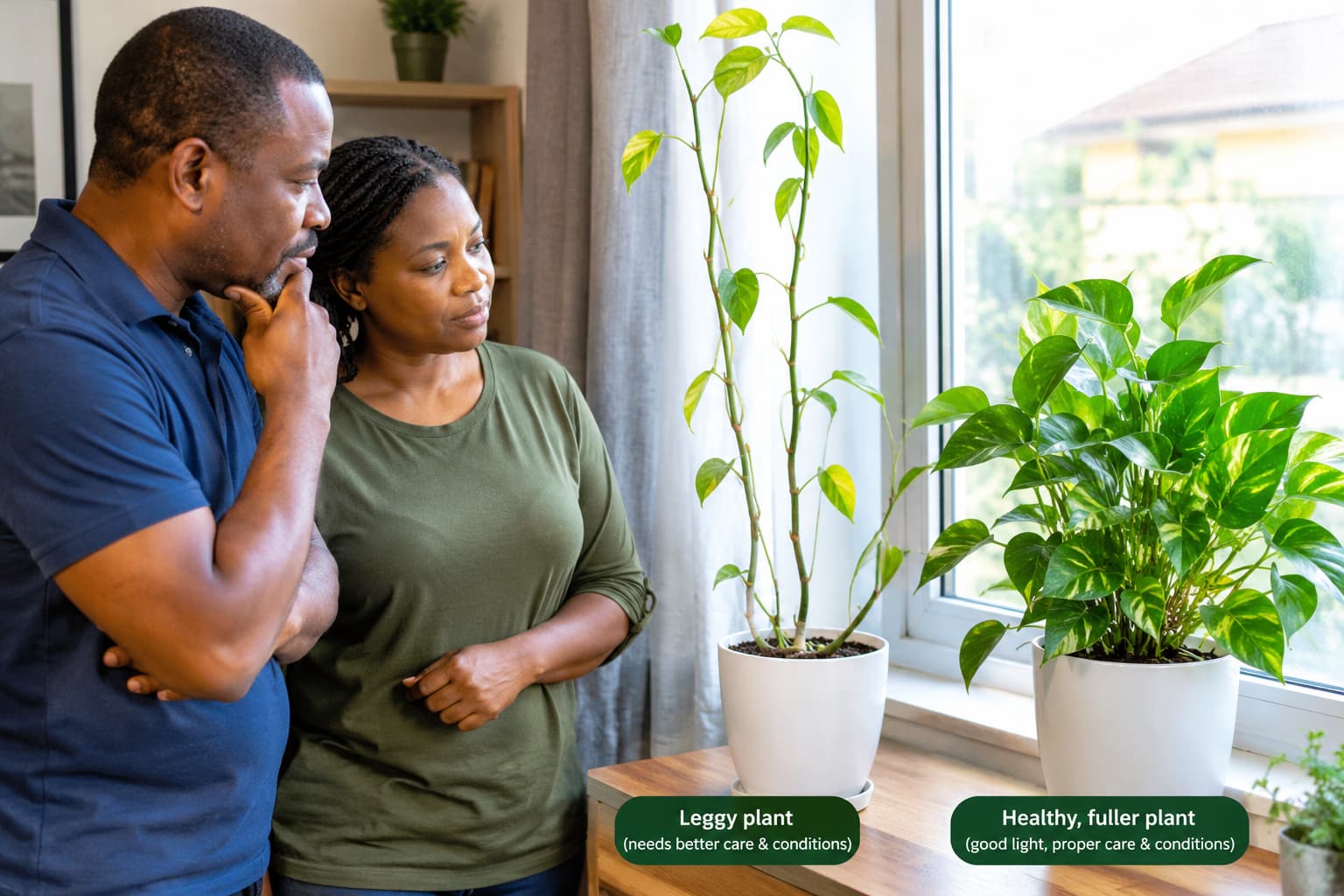
A houseplant that once looked compact and leafy can gradually develop long, thin stems, widely spaced leaves, and an uneven shape. If your plant looks stretched or sparse, learning how to fix leggy houseplants starts with understanding what causes this growth. Insufficient light is often the main culprit, but excess fertilizer, natural growth habits, and other growing conditions can also affect a plant’s appearance.
The good news is that many leggy houseplants can produce healthier, more compact growth after you correct the underlying problem. Better lighting, careful pruning, and appropriate feeding can help restore a balanced shape. However, the old stretched stems may not become compact again, so patience and new growth are important parts of the recovery process.
What Does It Mean When a Houseplant Becomes Leggy?
A leggy houseplant has unusually long or thin stems, large gaps between leaves, or fewer leaves than expected. Its growth may lean toward a window or another light source. Gardeners sometimes call this stretched growth etiolation, particularly when the plant develops weak, pale stems because it receives too little light.
Plants need light to make the sugars that fuel growth. When available light falls below what a species needs, the plant may stretch its stems and extend the spaces between leaves as it grows toward a brighter area. University of Minnesota Extension explains that insufficient light can cause spindly growth, fading leaf color, reduced flowering, and a noticeable lean toward the light source.
However, not every long stem signals a problem. Some climbing plants, trailing vines, and naturally open-growing species produce long stems as part of their normal growth. The important question is whether your plant’s shape has changed in a way that suggests unsuitable growing conditions.
Signs your houseplant may be too leggy
Look for these common clues:
• Long gaps between leaves: New leaves appear farther apart than they did on earlier growth.
• Thin, weak stems: Stems look stretched and may struggle to support the leaves.
• Uneven growth: Most new leaves and stems develop on the side facing a window.
• Smaller or paler leaves: New foliage may look less developed or lose some of its usual color.
• Sparse growth near the base: The plant has a long bare stem with most of its foliage near the top.
A plant does not need to show every symptom. A strong lean toward a window and unusually long spaces between leaves may provide enough reason to investigate its lighting.
Why Is My Houseplant Leggy?
Before trimming a plant, identify what caused its growth to become stretched. Pruning may improve its shape, but it will not solve a problem that continues to affect every new leaf and stem.
1. Insufficient light
Low light is one of the most common causes of leggy indoor growth. A room can appear bright to your eyes while providing too little light for a plant that needs moderate or bright indirect light.
Distance from a window matters, too. Light levels can drop sharply as you move deeper into a room, especially when buildings, curtains, roof overhangs, or nearby trees block sunlight.
2. Too much fertilizer
Excess fertilizer can encourage rapid, weak growth, particularly when a plant already receives insufficient light. Applying more fertilizer to a struggling plant does not automatically make it stronger.
A plant that receives enough light and balanced nutrition generally develops better growth than one pushed to grow quickly with excess feeding.
3. Natural growth habits
Pothos, heartleaf philodendrons, and other trailing plants naturally develop long vines. Some climbing plants also produce extended stems as they search for support.
In these cases, the goal may be to encourage branching, fill an empty pot, or guide the plant onto a support rather than shorten every stem.
4. Root or general plant stress
Damaged roots, poor drainage, persistent overwatering, and other growing problems can weaken a houseplant. Although these conditions do not always cause classic light-related legginess, they can contribute to sparse or unhealthy growth.
Check the soil, drainage holes, leaves, and stems before deciding that light is the only issue. If the plant also has yellowing leaves or wilting soil that stays wet, investigate its watering and root health.
How to Fix Leggy Houseplants: 7 Practical Ways
Let’s explore 7 practical ways to fix leggy houseplants and help your plants grow fuller, stronger, and healthier.
1. Move the Plant to Suitable Brighter Light
Start here if the plant has stretched toward a window or developed unusually long spaces between its leaves. Better light helps support stronger new growth and may prevent the next stems from becoming just as leggy.
Choose a position that matches the plant’s actual light requirements. Many tropical foliage plants grow well in bright, indirect light, while some species tolerate lower levels. Succulents and many flowering houseplants may need considerably more light.
How to improve the lighting:
• Identify the plant species, if possible, and check its light needs.
• Move it closer to a suitable window or remove an obstruction that blocks useful daylight.
• Watch how direct sunlight reaches the leaves throughout the day.
• Introduce stronger light gradually, especially if the plant has spent months in a dim corner.
• Check new growth over the following weeks for shorter spaces between leaves and stronger stems.
• Avoid moving a shade-adapted plant directly into harsh midday sunlight. Sudden exposure can scorch leaves, even when the plant needs more light overall.
What if the room has very little natural light?
Consider a suitable grow light if you cannot provide enough daylight. Choose a light intended for plant growth and follow the manufacturer’s guidance for distance and daily use. A lamp placed too far away may provide little benefit, while one placed too close may stress the foliage.
University of Georgia Extension explains that supplemental lighting can help make up for insufficient natural light. Remember that a plant described as low-light tolerant may survive in a dim room without maintaining dense, vigorous growth.
2. Prune Stretched Stems Carefully
Pruning removes excessively long growth and can encourage new shoots on suitable plants. It is one of the most effective ways to improve the shape of a leggy plant, provided you also correct the conditions that caused the problem.
Before cutting, identify the plant’s growth points. A node is the point on a stem where a leaf, bud, or branch emerges. On many branching houseplants, cutting just above a suitable node can encourage new shoots below the cut.
How to prune leggy houseplants:
• Use clean, sharp pruning scissors or shears.
• Identify the longest, sparsest stems and decide how much you can remove without leaving the plant severely depleted.
• Make a clean cut just above a healthy node when the plant responds well to this method.
• Remove dead or badly damaged growth where appropriate.
• Leave enough healthy foliage for the plant to continue making energy.
• Do not remove a large portion of a weak plant in one session. A severe cut can add stress, especially when the plant has damaged roots or is already struggling to grow.
Pruning also differs by plant type. Vining plants such as pothos often tolerate trimming well, while palms generally do not branch from cut trunks in the same way. Cutting off the growing tip of a palm may permanently damage that stem.
For more detailed cutting techniques, see our guide on How to Prune Indoor Plants the right ways for Healthy Growth.
3. Pinch Growing Tips to Encourage Branching
Pinching is a lighter form of pruning. Instead of cutting back a long stem, you remove a small amount of its growing tip to encourage side shoots in plants that respond to this method.
This technique can help some bushy foliage plants develop a fuller appearance. It is especially useful when a plant has begun to stretch but has not yet become severely bare.
Follow these steps:
• Locate the soft, actively growing tip of a suitable stem.
• Remove the tip with clean fingers or small, clean scissors.
• Check for new side shoots as the plant continues growing.
• Repeat selectively if the plant responds well and needs more shaping.
Pinching works because removing the main growing tip can reduce its influence over nearby buds. This effect, known as apical dominance, helps explain why some plants branch after their tips are removed.
However, not all houseplants respond in the same way. A single-stemmed plant may not produce multiple branches after pinching, so check the plant’s growth habit before using this method.
4. Rotate the Pot for More Even Growth
A plant receiving light mainly from one direction may develop a pronounced lean. Rotating the pot helps different sides receive light over time, which can encourage more balanced growth.
Turn the pot a small amount every week or two, adjusting the schedule to suit the plant and the available light. There is no universal rotation schedule that works for every species or room.
Rotation will not compensate for inadequate light. If the plant continues stretching despite regular turns, move it to a brighter suitable position or provide supplemental lighting.
Also, avoid repeatedly changing the plant’s location without a reason. A consistent growing position makes it easier to judge whether the plant is responding to your care.
5. Correct Fertilizer Use
Fertilizer supplies nutrients, but it cannot replace light. Feeding a plant heavily while it remains in a dim location may encourage weak growth rather than a compact, healthy shape.
Review your feeding routine before adding more nutrients. If you fertilize frequently or use a stronger solution than the product label recommends, reduce feeding to an appropriate level.
Use fertilizer more effectively:
• Choose a fertilizer suitable for the plant type.
• Follow the label’s dilution and application instructions.
• Feed mainly during active growth when the species benefits from it.
• Reduce or pause feeding when growth slows, according to the plant’s needs.
• Avoid fertilizing a severely stressed plant until you understand the cause of its decline.
A balanced approach is more useful than trying to force rapid growth. Once light, roots, and watering are suitable, appropriate nutrition can support the development of new leaves and stems.
Learn how to fertilize indoor plants the right way to encourage healthy growth, prevent nutrient deficiencies, and avoid overfertilizing. Follow this beginner-friendly step-by-step guide.
6. Check Watering, Drainage, and Root Health
Watering problems are not the main cause of classic light-related legginess, but poor root health can weaken a plant and interfere with recovery.
Roots need both moisture and oxygen. Soil that remains waterlogged for long periods can deprive roots of oxygen and increase the risk of root decay. On the other hand, repeated severe drying can stress plants that need more consistent moisture.
Check the soil before watering instead of following a fixed calendar. Different plants, pot sizes, soil mixes, temperatures, and light levels change how quickly the pot dries.
Look for these warning signs:
• Soil that stays wet for an unusually long time.
• A sour smell or visibly decaying roots.
• Wilting even though the soil remains wet.
• Water draining very slowly from the pot.
• Roots tightly circling the root ball or emerging through drainage holes.
If the roots appear healthy and the soil drains well, avoid repotting simply because the plant is leggy. Unnecessary repotting adds work and may stress a plant that needs better light instead.
When root problems are present, correct them before carrying out heavy pruning or encouraging rapid new growth. Our guide, How to Fix Root Rot in Houseplants: A Step-by-Step Guide, covers the signs and appropriate next steps.
7. Use a Grow Light When Natural Light Is Not Enough
A grow light can help when your home has few suitable windows, nearby buildings block daylight, or the plant must remain in an interior room.
For many houseplants, a white or full-spectrum LED grow light is a practical option. However, the best grow light for leggy houseplants depends on the species, the size of the plant, the area you need to illuminate, and the light’s actual output.
What to consider when choosing one:
• Coverage: Make sure the light reaches the whole plant, not just the tallest stem.
• Adjustable height: A movable lamp makes it easier to keep the light at a suitable distance as the plant grows.
• Output: Choose a light capable of providing the intensity the species needs.
• Timer: A timer helps maintain a regular light schedule.
• Heat: Keep the lamp far enough away to avoid overheating or damaging leaves.
Do not assume that a brighter-looking household bulb always provides adequate light for plant growth. Lamp design, output, distance, and the time the plant receives light all affect the result.
Many foliage plants benefit from a consistent daily light period, but requirements differ. Follow species-specific guidance and the light manufacturer’s instructions. Avoid leaving grow lights on around the clock because plants also need a dark period.
Once you improve the lighting, give the plant time to respond. New growth is a better indicator of success than the appearance of stems that stretched months earlier.
How to Make Leggy Plants Bushy Without Damaging Them
The right approach depends on the plant’s growth habit. Some plants produce side shoots after pruning, while others naturally grow as a single stem or develop long trailing vines.
Use the following guide to decide what to do.
| Plant Growth Habit | Practical Approach | Important Caution |
| Bushy foliage plants | Pinch or prune selected growing tips | Confirm that the species branches from the remaining nodes |
| Trailing vines, such as pothos | Trim long vines and root healthy cuttings if desired | Keep enough healthy foliage on the parent plant |
| Climbing philodendrons | Improve light and guide stems onto suitable support | Long growth may be natural rather than unhealthy |
| Palms | Improve light and remove only dead or damaged fronds | Do not cut the growing crown or expect a cut trunk to branch |
| Succulents | Improve light gradually and assess whether the stem can be trimmed or propagated | Sudden strong sunlight can scorch previously shaded growth |
Should you prune before or after improving the light?
For a mildly leggy but otherwise healthy plant, improve its lighting first or make a small adjustment alongside light pruning. This helps the next growth develop under better conditions.
If the plant has very long, bare stems, you may decide to prune more heavily. However, first check the species’ tolerance for cutting and make sure the roots and remaining foliage are healthy enough to support recovery.
Avoid cutting every stem to the same low height simply to create a rounded shape. Selective pruning often produces a more natural result and preserves more healthy leaves.
How to Propagate Leggy Houseplants From Cuttings
Sometimes a plant becomes so stretched that pruning the original plant alone will not give you the appearance you want. Propagation offers another option: use suitable stem cuttings to grow new plants, then add rooted cuttings back into the original pot when appropriate.
Pothos and many vining philodendrons are common candidates because their stems contain nodes that can produce roots under suitable conditions. Other houseplants require different propagation methods, so identify the species before cutting.
Steps for propagating a suitable stem cutting
1. Choose a healthy stem with at least one suitable node.
2. Use clean scissors to cut below the node, following the plant’s propagation requirements.
3. Remove any leaves that would sit below the waterline or in the propagation medium.
4. Place the cutting in clean water or a suitable moist propagation medium, depending on the species.
5. Provide suitable light and warmth while keeping the medium from becoming waterlogged.
6. Monitor for root development and signs of decay.
Not every cutting will root successfully, and rooting time varies with the plant and conditions. Some species root readily from stem cuttings, while others need a different method.
Once the cutting has developed suitable roots, pot it into an appropriate mix and continue caring for it according to its needs. You can grow it separately or plant several compatible rooted cuttings together to create a fuller-looking container.
Do not crowd a pot with too many plants simply to achieve instant fullness. Overcrowding can restrict airflow and increase competition for water, light, and root space.
How Long Does It Take for a Leggy Houseplant to Recover?
Recovery time depends on the plant species, its growing season, root health, and how much light it receives. A fast-growing vine may show new shoots sooner than a slow-growing ZZ plant or another naturally slow-growing species.
In many cases, you can judge the first signs of improvement by watching the newest leaves and stems rather than waiting for the whole plant to change shape.
What improvement looks like
Look for:
• New leaves appearing closer together.
• Stronger stems that support their leaves more easily.
• New side shoots after suitable pruning.
• More balanced growth across the plant.
• Foliage returning to its normal color when poor light was responsible for paling.
Keep in mind that the old stretched portions usually remain stretched. Better conditions improve the growth that follows; they do not normally shorten the spaces between leaves that have already developed.
Avoid making repeated major changes every few days. Give the plant a stable environment and assess its progress over several weeks, allowing more time for slow-growing species.
Common Mistakes to Avoid When Fixing Leggy Houseplants
Even well-intentioned care can make a struggling plant worse. Avoid these common mistakes while correcting the cause of stretched growth.
1. Moving the plant straight into harsh sunlight
A plant that has adapted to dim conditions may suffer leaf scorch if you suddenly expose it to strong direct sun. Increase light gradually and watch for bleached or brown patches.
2. Adding extra fertilizer to force growth
More nutrients do not compensate for inadequate light. Excess fertilizer can damage roots or encourage weak growth, so follow the product label and correct the growing conditions first.
3. Pruning without identifying the plant
A method that works for a branching vine may harm a palm or a plant with a single growing point. Identify the species and understand where new growth can emerge before making major cuts.
4. Watering on a fixed schedule
A leggy plant does not automatically need more water. Check the soil and the plant’s normal requirements instead of adding water every time it looks unhappy.
5. Expecting old stems to become compact
Once a stem has developed long spaces between leaves, those spaces usually remain. Judge your progress by the quality and shape of new growth, not by expecting the old stem to shrink.
How to Prevent Your Houseplants From Becoming Leggy Again
Prevention starts with matching each plant to a suitable growing location. A plant that needs bright indirect light may never maintain dense growth in a dark corner, even if you prune it regularly.
Before buying a new houseplant, consider the light available in the room where you plan to keep it. Choose a species that fits your conditions rather than relying on a label that simply says “low light.”
During routine care, look at the newest growth. If the spaces between leaves begin to lengthen, reassess the light before the plant becomes severely stretched.
Keep fertilizer use appropriate, water according to the plant’s needs, and prune selectively when the species benefits from it. These habits help maintain a healthier shape without forcing unnecessary growth.
For broader guidance on choosing suitable locations, watering, feeding, and routine maintenance, see Indoor Plant Care for Beginners: The Complete Guide.
Frequently Asked Questions
1. Can a leggy houseplant become full again?
Yes. Better lighting and suitable pruning can encourage fuller new growth. However, old stretched stems usually remain elongated, so the plant may not regain its original shape completely.
2. Can I fix a leggy plant without cutting it?
Yes. Improve the lighting, correct feeding problems, and rotate the pot if growth leans toward a window. These changes support healthier growth but will not shorten existing bare stems.
3. Should I remove all the leaves from a leggy stem?
No. Healthy leaves produce energy through photosynthesis. Remove only necessary growth and retain enough foliage to support recovery. Some cuttings need lower leaves removed, but the parent plant should not be stripped.
4. Can a leggy houseplant recover after losing most of its leaves?
Recovery depends on the species, root health, and remaining growing points. Some plants regrow from healthy nodes, while others struggle after severe damage. Check the plant’s condition before deciding whether to propagate it.
5. Do all indoor plants become leggy in low light?
No. Plants have different light needs and growth habits. Some tolerate low light better, but insufficient light can still cause slower growth or sparse foliage. Low-light tolerance does not guarantee compact growth.
6. Can a leggy plant still be healthy?
Yes. A leggy plant may remain alive and continue growing. However, weak stems, pale leaves, or slow growth can signal unsuitable conditions. Assess its foliage, roots, and growing environment to determine its overall health.
7. Why is my plant leggy even near a window?
Window proximity does not guarantee enough light. Curtains, glass, nearby buildings, and window direction affect light levels. Your plant may need brighter conditions, so assess its specific light requirements and current location.
8. Can air conditioning make houseplants leggy?
Air conditioning rarely causes legginess directly, but cold drafts, temperature changes, and dry air can stress plants. Check lighting first, then assess temperature and humidity against your plant’s needs.
9. Is a leggy houseplant more likely to break?
Thin, stretched stems may struggle to support heavy foliage, making some plants more vulnerable to bending or breaking. Suitable supports can help climbing plants, but correcting poor growing conditions remains important.
10. Can I use an ordinary LED bulb instead of a grow light?
Yes, some LED bulbs provide useful plant light, depending on their output, distance, and coverage. A suitable grow light offers more predictable results. Monitor new growth to determine whether the lighting meets your plant’s needs.
11. Is it better to replace a severely leggy houseplant?
Not always. If the roots and growing points remain healthy, improved care may help. Propagating healthy cuttings can also rebuild a fuller plant. Replacement may be practical when decay or damage is extensive.
Conclusion
The most effective way to fix leggy houseplants is to address the underlying cause before trying to reshape the plant. Start by evaluating its lighting conditions, then adjust pruning, feeding, and watering according to the species’ needs.
For additional guidance on diagnosing plant problems and improving growing conditions, explore University of Florida IFAS Extension’s Gardening Solutions for research-based gardening advice.
Once you have identified the problem, make one or two appropriate changes and keep the growing conditions consistent. Pruning and propagation can also help restore a fuller appearance when older stems have become bare. If you are new to houseplant care, our Indoor Plant Care for Beginners: The Complete Guide can help you build a stronger foundation for maintaining healthy indoor plants.
Be patient as your plant adjusts. Monitor its new leaves, stem growth, and overall appearance to determine whether your changes are working. With suitable light, proper watering, and species-appropriate care, many leggy houseplants can develop healthier, more attractive growth over time.

I’m Bon (aka Guider), a dedicated indoor gardening writer and houseplant specialist with years of hands-on experience cultivating diverse indoor flora. I author comprehensive, data-backed guides designed to help beginners master indoor plant care, including advanced soil science, precise watering schedules, lighting optimization, and pest troubleshooting. To ensure the highest level of accuracy and editorial integrity, every article integrates practical horticulture principles with peer-reviewed research from university extension services, botanical institutions, and trusted horticultural organizations.
Hi Bon,
Oh wow, thank you so much for this guide! I have a Monstera and a Pothos in my living room that have been looking so stretched out and sad lately, and I honestly had no idea why.
Your explanation about the plant “stretching” for light totally clicked for me. I’m definitely going to try pruning them this weekend to encourage some bushier growth—wish me luck!
Quick question though: when I chop off the leggy stems to propagate them, can I plant them directly back into the same pot once they root to make the main plant look fuller? Or is it better to give them their own separate pots?
Thanks again for the practical tips!
You can absolutely plant your rooted cuttings directly back into the same pot to create a fuller, bushier look! This is a fantastic, time-tested trick that works beautifully for both Pothos and Monstera.
I am so glad the guide helped you figure out why your green babies were looking a bit sad. Connecting the dots on “legginess” (etiolation) is a major lightbulb moment for any plant parent.
Before you start chopping this weekend, here are a few quick tips to ensure your propagation project is a massive success:
For Your Pothos: Pothos love this method. Once your cuttings have rooted in water (look for roots at least 2–3 inches long), just poke a hole in the soil of the mother plant and tuck them in.
Keep the soil slightly more damp than usual for the first week or two to help the water-loving new roots adjust to the soil.
For Your Monstera: This works for Monsteras too, but keep pot space in mind. Monsteras grow much larger root systems than Pothos. If the current pot is already tightly packed with roots, adding more stems might overcrowd it quickly.
If the pot has some wiggle room, go for it! If it’s tightly packed, you might want to give them their own small starter pots first, and then upgrade everyone to a larger shared pot next spring.