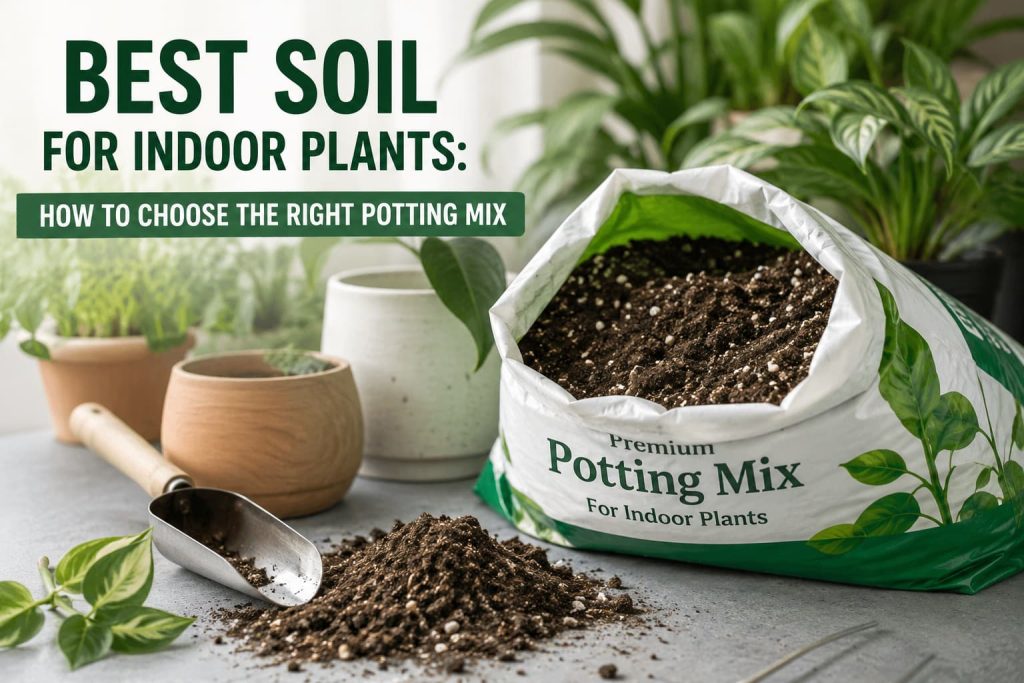
Choosing the best soil for indoor plants can seem simple until you stand in front of a garden center shelf and find bags labeled potting soil, potting mix, indoor mix, cactus mix, succulent soil, orchid mix, and all-purpose compost. Understanding the differences is essential because the best soil for indoor plants provides the right balance of drainage, moisture retention, and nutrients for healthy, thriving houseplants.
Which one should you buy?
The answer is more interesting than simply choosing the most expensive bag.
Indoor plants have different root systems and different moisture requirements. A cactus that prefers to dry between watering should not be planted in exactly the same medium as a moisture-loving fern. An aroid such as Monsteraa can appreciate a chunky, airy mix, while many ordinary foliage plants perform well in a quality general-purpose houseplant mix.
Keeping houseplants healthy requires more than occasional watering. Light, soil, humidity, feeding, pruning, repotting, and pest prevention all play important roles in plant health. This complete guide to indoor plant care brings these essentials together so beginners can understand what their houseplants need to grow strong and healthy.
The best soil for indoor plants is therefore a growing medium that provides the right balance of water retention, drainage, aeration, physical support and nutrients for the particular plant.
This guide explains exactly how to choose that medium, what common ingredients do, when to use or avoid garden soil, how to make your own DIY indoor potting soil, and how to match soil mixes to popular houseplants.
For many common houseplants, a quality indoor potting mix that retains some moisture while allowing excess water to drain and air to reach the roots is an excellent starting point. Plants with specialized needs may require a more open, gritty, chunky or moisture-retentive mix.
What Is the Best Soil for Indoor Plants?
For most common foliage houseplants, the best soil is not heavy soil dug from the garden.
Instead, use a quality potting mix formulated for container plants. Good indoor potting mixes are designed to provide a balance between water retention and drainage while maintaining enough pore space for roots to access oxygen.
This distinction matters because a plant growing in a garden bed has access to a much larger volume of soil. Water can move through the surrounding ground, roots can spread widely, and the soil environment is very different from the confined space of a flowerpot.
A container creates a completely different growing environment.
University of Illinois Extension explains that container growing media need to be well aerated and well drained while still retaining enough moisture for plant growth. Penn State Extension similarly recommends quality soilless potting mixes for houseplants rather than garden soil.
What should good indoor potting soil do?
A good growing medium should:
• Hold enough water for the plant’s needs
• Allow excess water to escape
• Provide air spaces around the roots
• Support the plant physically
• Provide or retain nutrients
• Resist becoming excessively compacted
• Remain structurally useful over time
• Match the requirements of the particular plant
There is no single perfect mix for every houseplant.
That is one of the most important principles to understand before buying or making soil.
What Makes a Good Indoor Potting Mix?
Many beginners think the best soil for indoor plants is simply ordinary garden soil or “dirt.” In reality, a quality indoor potting mix is a carefully balanced growing medium designed to create the ideal environment for healthy root development. Think of it as your plant’s home beneath the surface rather than just something that holds it upright.
Healthy roots require four essential things to thrive:
• Water to transport nutrients and support growth.
• Oxygen for root respiration and energy production.
• Nutrients to fuel healthy leaves, stems, flowers, and roots.
• Physical space that allows roots to expand without becoming compacted.
If the growing medium stays waterlogged for too long, the air pockets around the roots fill with water, reducing oxygen availability. Over time, this can weaken roots, encourage fungal diseases, and eventually cause root rot.
On the other hand, if the potting mix dries out too quickly, moisture-loving houseplants may struggle to absorb enough water, leading to wilting, brown leaf edges, slow growth, and unnecessary stress.
The best soil for indoor plants strikes the perfect balance between moisture retention, drainage, aeration, and nutrient availability. A balanced potting mix keeps roots healthy while supporting vigorous, long-lasting growth.
1. Good Drainage
Good drainage is one of the most important qualities of any indoor potting mix. It allows excess water to flow away from the root zone instead of remaining trapped around the roots, where it can cause suffocation and decay.
However, good drainage does not mean the soil should dry out immediately after watering.
Many people mistakenly believe that fast-draining soil should become bone dry within a few hours. In reality, the ideal potting mix retains enough moisture for roots to absorb what they need while allowing excess water to drain through the container’s drainage holes.
A well-draining mix should:
• Prevent water from pooling around the roots.
• Maintain small air pockets that supply oxygen to the root system.
• Hold enough moisture to keep plants hydrated between watering.
• Reduce the risk of root rot and fungal diseases.
• Encourage stronger, healthier root growth.
Ingredients such as perlite, coarse bark, pumice, coconut coir, and peat moss help create this balance by improving both drainage and moisture retention.
Ultimately, even the best soil for indoor plants cannot compensate for a pot without drainage holes or frequent overwatering. Healthy roots depend on both a quality potting mix and proper watering practices.
The right container can make a major difference to ZZ plant health, especially when it comes to drainage and root space. Learn more about choosing the right pots for indoor plants, including how to select the right size, material, and drainage system.
2. Adequate Aeration
Adequate aeration is another essential characteristic of the best soil for indoor plants. While roots absorb water and nutrients, they also need a continuous supply of oxygen to carry out respiration—a process that provides the energy required for healthy growth.
When a potting mix becomes compacted, the tiny air spaces between soil particles collapse. This restricts both airflow and water movement, making it difficult for roots to breathe and increasing the risk of root diseases. Poor aeration often results in slow growth, yellowing leaves, and weakened root systems.
A well-aerated potting mix should:
• Allow oxygen to reach the roots.
• Prevent soil from becoming overly compacted.
• Improve water movement throughout the container.
• Encourage vigorous root development.
• Reduce the likelihood of root rot caused by poor air circulation.
Ingredients such as perlite, pumice, coarse sand, pine bark, and rice hulls help create larger air pockets within the growing medium, keeping the soil loose and breathable. This is especially important for houseplants like Monstera, Philodendron, ZZ Plant, and Snake Plant, which thrive in airy potting mixes.
Ultimately, the best soil for indoor plants provides an ideal balance between moisture and oxygen, ensuring roots remain healthy throughout the growing season.
3. Moisture Retention
Although good drainage is essential, the best soil for indoor plants must also retain enough moisture to keep roots hydrated between watering. The goal is to provide a steady water supply without leaving the soil constantly wet.
A potting mix that drains too rapidly may dry out before plants can absorb sufficient moisture, particularly in warm homes, low-humidity environments, or during active growing seasons. On the other hand, excessive water retention can suffocate roots and promote fungal diseases.
A quality indoor potting mix should:
• Hold moisture evenly without becoming soggy.
• Keep roots hydrated between watering.
• Release water gradually as plants need it.
• Reduce watering frequency without encouraging waterlogging.
• Support healthy root growth during dry indoor conditions.
Materials such as coconut coir, peat moss, compost, worm castings, and leaf mold improve moisture retention while still allowing excess water to drain away. Each ingredient has different water-holding properties, which is why potting mixes vary depending on the plants they are designed for.
The best soil for indoor plants maintains consistent moisture levels that match each plant’s natural growing requirements. Moisture-loving plants like Peace Lilies and Ferns generally need a mix that holds more water than drought-tolerant plants such as succulents and cacti.
4. Nutrient Availability
Healthy indoor plants depend on a steady supply of nutrients, making nutrient availability another key feature of the best soil for indoor plants. While water and sunlight are essential, plants also require minerals to produce strong roots, healthy foliage, flowers, and new growth.
Most commercial potting mixes contain some form of plant nutrition, such as compost, worm castings, slow-release fertilizer, or organic matter. These ingredients provide nutrients during the early stages of growth, but they are gradually used up as the plant grows.
A nutrient-rich potting mix should:
• Supply essential nutrients for healthy growth.
• Support strong root and leaf development.
• Encourage greener foliage and vigorous growth.
• Promote flowering in blooming houseplants.
• Improve the plant’s overall health and resilience.
The primary nutrients found in many potting mixes include nitrogen (N) for leafy growth, phosphorus (P) for root development, and potassium (K) for overall plant health and disease resistance.
However, not all houseplants have the same nutritional needs. Fast-growing plants like Pothos and Monstera typically require more nutrients than slow-growing species such as Snake Plants or many succulents.
Even the best soil for indoor plants eventually loses nutrients over time, so regular fertilizing is still necessary for long-term plant health.
5. Physical Stability
A quality potting mix should not only nourish your plants but also provide long-lasting structural support. The best soil for indoor plants remains stable over time, holding the plant securely while allowing roots to spread naturally.
Some growing media break down quickly, becoming dense and compact after repeated watering. As this happens, drainage and aeration decline, making the soil less suitable for healthy root growth.
A physically stable potting mix should:
• Hold plants upright without shifting excessively.
• Maintain its structure after repeated watering.
• Resist excessive compaction.
• Continue providing air pockets for healthy roots.
• Support long-term container growing.
Ingredients such as pine bark, coconut husk chips, coarse composted bark, pumice, and perlite help maintain the structure of the mix for longer periods, especially in larger containers.
Physical stability becomes even more important for larger indoor plants like Rubber Plants, Fiddle Leaf Figs, Bird of Paradise, and Monstera, whose extensive root systems require a durable growing medium.
The best soil for indoor plants stays loose, supportive, and well-structured throughout its lifespan, reducing the need for frequent repotting.
6. Appropriate Texture
Texture is often overlooked, yet it plays a major role in determining whether you have the best soil for indoor plants. The size and arrangement of soil particles directly influence how water, air, and nutrients move through the root zone.
Different houseplants thrive in different soil textures. A chunky, coarse potting mix behaves very differently from a fine, moisture-retentive mix, and choosing the right texture can significantly improve plant health.
A suitable soil texture should:
• Match the watering needs of the plant.
• Allow proper drainage without drying too quickly.
• Promote healthy airflow around the roots.
• Prevent excessive soil compaction.
• Encourage vigorous root development.
Chunky ingredients such as orchid bark, pumice, lava rock, and large perlite create fast-draining mixes that are ideal for Monstera, Philodendrons, Hoyas, Anthuriums, and many other tropical plants.
By contrast, finer ingredients such as peat moss, coconut coir, compost, and fine vermiculite retain more moisture, making them better suited to plants that prefer consistently moist soil, including Peace Lilies, Calatheas, and Ferns.
Choosing the best soil for indoor plants means selecting a potting mix with a texture that closely matches your plant’s natural habitat. When the texture is right, roots receive the ideal balance of moisture, oxygen, and support, leading to healthier, faster-growing houseplants.
Don’t judge a potting mix solely by how dark or rich it looks. A very dark, heavy mix is not automatically better. For indoor plants, structure, drainage and aeration are just as important as organic matter.
Choosing the right houseplant can make indoor gardening much easier, especially when you’re just getting started. Whether you have bright windows or limited natural light, there are plants suited to different rooms and growing conditions. Explore our selection of the best indoor plants for adding beauty and greenery to your home throughout the year.
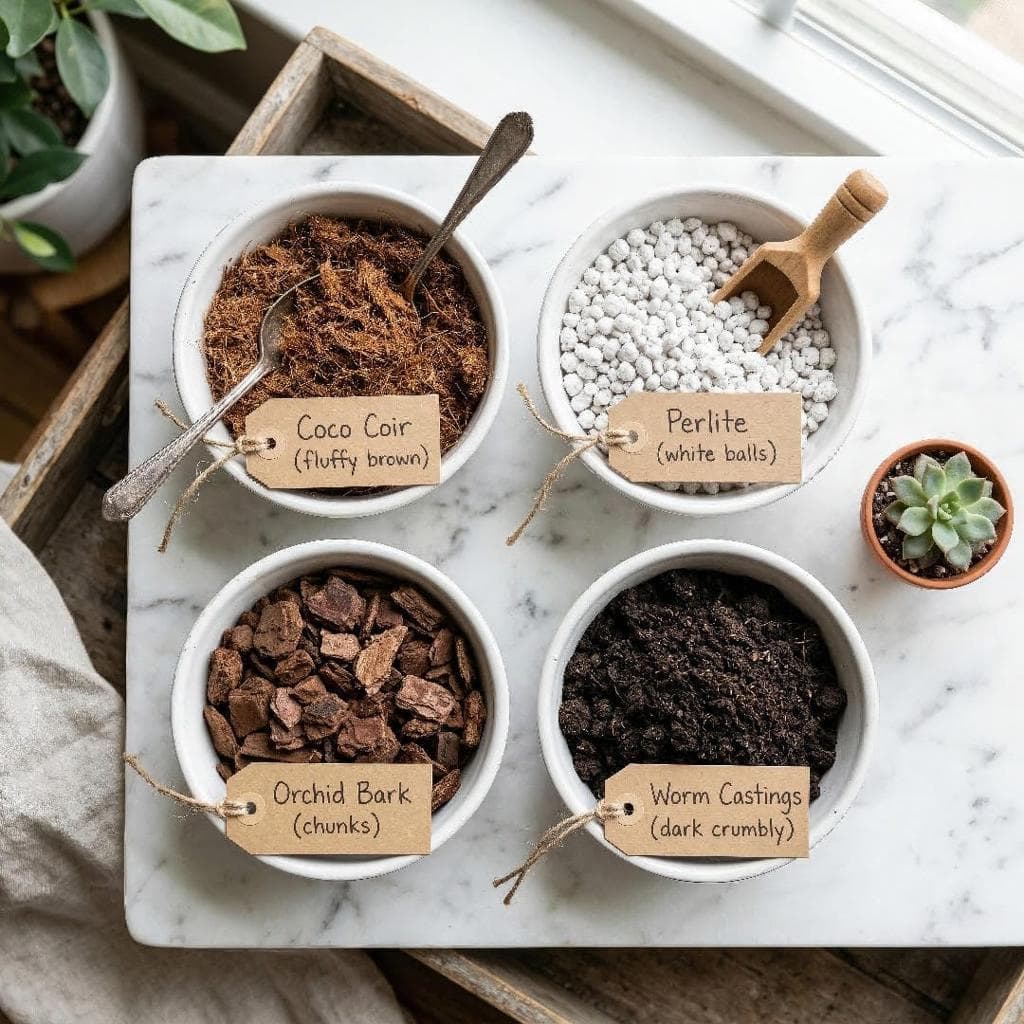
Best Ingredients for Indoor Plant Soil
Understanding the ingredients makes choosing an indoor potting mix much easier.
You do not need every ingredient available at the garden center. Each material serves a particular purpose.
1. Perlite for Indoor Plants
Perlite is a lightweight volcanic material commonly used to increase air space and improve drainage in growing media.
It is particularly useful when a mix holds too much water or becomes compacted.
University Extension guidance commonly identifies perlite or vermiculite as components of houseplant and container mixes because they help create suitable physical conditions for roots.
What perlite does
Perlite can:
• Increase pore space
• Improve drainage
• Reduce compaction
• Make a mix lighter
• Improve aeration around roots
• When should you add perlite?
Consider adding it when:
• The mix stays wet for too long
• You are growing plants that dislike wet roots
• The potting mix feels dense
• You are making a custom aroid or succulent mix
Avoid assuming that more perlite is always better. Excessive drainage can cause some plants to dry too quickly.
2. Coco Coir
Coco coir is made from coconut husk fibers and is widely used as a peat alternative or component of growing media.
It can hold moisture while contributing to a relatively lightweight growing medium.
It is useful in mixes for plants that need moisture retention without an extremely dense medium.
Peat Moss
Sphagnum peat moss has traditionally been widely used in potting mixes because of its ability to hold water while remaining relatively lightweight.
However, peat extraction has environmental considerations, and many gardeners now choose peat-free alternatives.
RHS guidance notes the increasing availability of peat-free growing media made from materials including coir, composted bark and other ingredients.
If purchasing a commercial mix, check the ingredient list rather than assuming all mixes are identical.
Orchid Bark
Orchid bark consists of pieces of bark used to create a coarse, airy structure.
It is especially useful for plants whose roots benefit from increased air movement and faster drainage.
Chunky bark is frequently incorporated into mixes for orchids and aroids.
Compost
Finished compost can contribute organic matter and nutrients to a growing medium.
However, compost should not automatically make up the majority of every houseplant mix.
Too much fine organic material can make a container mix overly moisture-retentive or prone to compaction.
RHS guidance describes compost as a material that can improve fertility, structure and water-holding capacity, while potting composts are specifically formulated for container growing.
Worm Castings
Worm castings are a form of processed organic material produced through vermicomposting.
They can be incorporated in relatively small amounts into some homemade mixes.
The important point is moderation.
A houseplant does not become healthier simply because more organic material is added.
How to Choose Soil for Indoor Plants
If you’re standing in a shop wondering which bag to choose, use this simple process.
Step 1: Identify the plant
Find out whether your plant is:
• A tropical foliage plant
• A succulent
• A cactus
• An orchid
• A fern
• An aroid
• An acid-loving plant
• Another specialized group
Step 2: Understand its moisture preference
Ask:
Does this plant prefer to dry somewhat between waterings, or does it prefer more consistent moisture?
This question can dramatically change the appropriate mix.
Step 3: Examine the ingredients
Look for a mix appropriate to the plant rather than relying entirely on marketing language.
Step 4: Consider your growing environment
A mix that works in a bright, warm room may behave differently in a dim, cool room.
Your watering habits also matter.
Step 5: Consider the pot
A container with drainage holes provides a fundamentally different environment from a sealed decorative pot.
Step 6: Observe the plant after repotting
The plant itself provides feedback.
If the mix stays saturated for an unusually long time, you may need a more open mix or different watering approach.
If it dries extremely quickly, you may need more moisture-retentive material or a different pot.
A Simple General-Purpose Indoor Plant Soil Recipe
For many common tropical foliage plants, try:
• 2 parts quality potting mix
• 1 part perlite
• 1 part coco coir or fine orchid bark
Mix thoroughly before planting.
This is a general starting recipe, not a universal rule. The ideal proportions depend on the materials you are using and the plant.
For example, a dense potting mix may need more aerating material than a naturally open mix.
How to make DIY soil for indoor plants:
• Gather clean, appropriate ingredients.
• Measure them by volume.
• Break apart compacted material.
• Mix everything thoroughly.
• Moisten the mix lightly if it is extremely dry.
• Fill the pot without compressing the medium heavily.
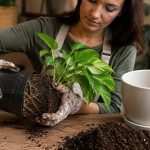
• Plant at the appropriate depth.
• Water thoroughly and allow excess water to drain.
Royal Botanic Gardens emphasizes creating a growing medium that is crumbly, drains well and still retains some moisture.
Best Soil Mix for Different Indoor Plants
Different plants evolved in different environments, so their root systems have different requirements.
These are starting points rather than rigid formulas. The plant’s cultivar, pot, climate and growing conditions can change what works best.
1. Best Soil for Pothos
Pothos generally performs well in a quality general-purpose indoor potting mix. If your mix is heavy or remains wet for too long, add perlite and/or bark to increase aeration.
Good starting mix:
• 2 parts potting mix
• 1 part perlite
• 1 part orchid bark
2. Best Soil for Monstera
Monstera benefits from an airy growing medium. A dense mix can remain wet around its roots longer than desirable.
Starting mix:
• 2 parts quality potting mix
• 1 part orchid bark
• 1 part perlite
The goal is a structure that retains some moisture without becoming muddy or compacted.
3. Best Soil for Snake Plants
Snake plants are drought-tolerant and generally do not appreciate persistently wet soil.
Use:
• Cactus or succulent mix
• Plus additional perlite or pumice if the base mix is dense
Allow the growing medium to dry substantially between watering.
4. Best Soil for Peace Lily
Peace lilies prefer more moisture than drought-tolerant plants such as snake plants and many succulents.
Use a quality houseplant mix that holds some moisture while still draining freely.
Avoid turning the mix into a constantly saturated environment.
5. Best Soil for Philodendron
Many philodendrons perform well in a loose, airy tropical mix.
A combination of potting mix, bark and perlite can provide a useful starting structure.
6. Best Soil for Succulents Indoors
Succulents generally need a fast-draining growing medium. A commercial cactus or succulent mix is often the easiest option for beginners.
If the mix feels heavy, add perlite, pumice or another suitable mineral component.
7. Best Soil for Orchids
Do not automatically put orchids in ordinary indoor potting soil.
Many commonly cultivated orchids, particularly epiphytic orchids such as Phalaenopsis, are normally grown in specialized coarse media rather than conventional soil.
An orchid bark-based mix is usually more appropriate.
Can You Use Garden Soil for Indoor Plants?
This is one of the most frequently asked questions by both new indoor and outdoor plant owners.
The short answer is no—ordinary garden soil is generally not suitable for indoor potted plants.
Although garden soil works well outdoors where natural organisms, rainfall, and large soil volumes help maintain balance, it behaves very differently inside a container. In pots, the soil has limited space to drain, dry, and receive fresh air. As a result, garden soil often becomes compacted, restricting root growth and increasing the risk of plant health problems.
Using garden soil indoors can lead to several issues, including:
• Poor drainage, causing water to remain around the roots for too long.
• Reduced aeration, limiting the oxygen roots need to stay healthy.
• Compacted soil, making it difficult for roots to spread and absorb water.
• Weed seeds, which may germinate inside your pots.
• Pests and insects, such as fungus gnats, ants, or soil-dwelling larvae.
• Plant diseases, including harmful fungi, bacteria, or other pathogens that may damage roots.
Because of these risks, garden soil rarely provides the conditions needed for healthy container-grown houseplants.
Instead, the best soil for indoor plants is a specially formulated potting mix. Unlike garden soil, a quality potting mix is lightweight, well-aerated, and designed to provide the ideal balance of drainage, moisture retention, and root support. Many commercial mixes also include ingredients such as perlite, coconut coir, peat moss, composted bark, and slow-release fertilizer to encourage healthy plant growth.
Can Garden Soil Ever Be Used?
In some cases, experienced gardeners may incorporate small amounts of sterilized garden soil into custom potting mixes for specific plants. However, this requires careful blending with ingredients that improve drainage and aeration, making it unsuitable for most beginners.
If you’re growing common houseplants such as Pothos, Snake Plant, Monstera, Peace Lily, Spider Plant, or Philodendron, you’ll achieve much better results by using a high-quality indoor potting mix rather than garden soil.
Illinois Extension specifically advises against using garden soil alone in containers because it can severely reduce drainage and aeration.
Penn State Extension likewise recommends a quality soilless potting mix for houseplants rather than garden soil.
There is an important nuance: some homemade container mixes can include mineral soil as one component.
That is different from filling an indoor pot entirely with soil dug from your backyard.
Potting Soil vs Potting Mix
The terms can be confusing.
In everyday gardening language, potting soil and potting mix are sometimes used interchangeably.
Technically, however, a potting mix may contain little or no mineral soil and instead consist of materials such as peat, coir, bark, compost, perlite or vermiculite.
University Extension publications describe many container mixes as “soilless” because they are designed specifically for container growing and may contain no field soil.
Which should you buy?
Don’t focus only on the label.
Read the ingredients.
Look for a product designed for container plants with a structure appropriate for your particular plant.
How to Improve Drainage in Indoor Plant Soil
If your soil remains wet for too long, don’t immediately assume you need more fertilizer or water.
First investigate the growing medium and container.
Ways to improve drainage:
• Add perlite.
• Add pumice where appropriate.
• Incorporate orchid bark for plants that benefit from a chunkier mix.
• Use a suitable cactus/succulent mix for drought-tolerant plants.
• Make sure the container has drainage holes.
• Avoid oversized pots.
• Don’t compress the mix tightly.
• Empty standing water from saucers and cachepots.
Container size matters because excessive soil around a small root system can remain wet for longer. Illinois Extension and UMN Extension both recommend avoiding unnecessarily oversized pots.
Drainage Holes Matter More Than Many Beginners Realize
A good growing medium cannot compensate for a container that traps excess water.
A drainage hole gives excess water somewhere to go.
Illinois Extension describes drainage holes as critical for allowing excess water to leave the container and helping maintain air around the roots.
If your decorative pot has no drainage hole, use it as a cachepot rather than planting directly into it.
Place the actual plant container—with drainage holes—inside the decorative container.
After watering, remove excess water from the outer container.
When Should Indoor Plant Soil Be Replaced?
There is no universal “replace every X months” rule.
Instead, inspect the plant and growing medium.
Consider repotting or refreshing the mix when:
• The soil has become compacted
• Drainage has deteriorated
• Organic material has significantly broken down
• Roots have filled the pot
• Roots are emerging from drainage holes
• The plant dries out unusually quickly
• Growth has slowed despite appropriate care
• The mix has developed persistent problems
Growing plants indoors doesn’t have to be complicated, even if you’re starting with little or no gardening experience. From choosing the right plants and containers to providing adequate light, water, and soil, this guide to indoor gardening for beginners walks you through the essential steps for creating a healthy indoor garden.
Some plants can remain in the same container for years if they remain healthy and the medium continues to function well.
Frequently Asked Questions About Indoor Plant Soil
1. What soil is best for indoor plants?
For many common houseplants, use a quality indoor potting mix that provides good drainage, adequate moisture retention and sufficient aeration. Specialized plants may need specialized mixes.
2. What is the best potting soil for indoor plants?
The best product depends on the plant. For general foliage plants, choose a quality container mix with a suitable balance of moisture retention and drainage.
3. Can I use regular potting soil for indoor plants?
Yes, if it is formulated for container plants and suits the plant’s moisture requirements.
4. Can I use garden soil for houseplants?
Avoid using ordinary garden soil by itself. It can become compacted and poorly drained in containers and may introduce pests or pathogens.
5. What is the difference between potting soil and potting mix?
The terms are often used inconsistently. Potting mixes may contain no mineral soil and instead use materials such as coir, peat, bark and perlite.
6. Is perlite good for indoor plants?
Yes. Perlite can increase pore space and improve drainage and aeration.
7. How much perlite should I add to indoor soil?
There is no universal percentage. A modest amount can improve a dense mix, while specialized plants may benefit from substantially more.
8. Is coco coir good for houseplants?
Yes. Coco coir can help retain moisture while contributing to a lightweight growing medium.
9. Can I use compost for indoor plants?
Yes, but use it appropriately. Excessive fine organic material can make some mixes too dense or moisture-retentive.
10. Should I put gravel in the bottom of my plant pot?
No. A gravel layer is not a reliable way to improve drainage and can interfere with water movement through the container.
11. Why is my indoor plant soil staying wet?
Possible causes include excessive watering, poor drainage, an oversized pot, a dense mix, low light, cool conditions or slow plant growth.
12. Why does my plant’s soil dry out so quickly?
The pot may be small, the plant may have a large root system, the container may be porous, the environment may be warm or dry, or the mix may be excessively fast-draining.
13. What soil is best for snake plants?
Use a fast-draining cactus or succulent mix. Additional perlite or pumice may help if the mix retains too much moisture.
14. What soil is best for pothos?
A quality general-purpose houseplant mix works well. Perlite and bark can be added if greater aeration is needed.
15. What soil is best for Monstera?
An airy, well-draining tropical mix containing potting mix, bark and an aerating material such as perlite is a useful starting point.
16. What soil is best for succulents?
A fast-draining cactus or succulent mix is usually appropriate.
17. What soil is best for orchids?
Most commonly grown epiphytic orchids need specialized orchid media rather than ordinary houseplant soil.
18. Can I make my own indoor potting soil?
Yes. DIY mixes allow you to adjust moisture retention, drainage and aeration to suit particular plants.
19. How often should indoor plant soil be replaced?
Replace or refresh it when the medium has degraded, compacted, drained poorly or no longer supports healthy root growth. Some plants need repotting more often than others.
20. Can I use the same soil for all indoor plants?
You can use a good general-purpose mix for many foliage plants, but specialized plants such as orchids, cacti and some succulents often perform better in media adapted to their needs.
21. Should indoor plant soil contain fertilizer?
Some commercial mixes contain fertilizer while others do not. Check the label and fertilize according to the plant’s needs rather than assuming every mix requires additional fertilizer.
22. Why does my indoor soil have white stuff on it?
A white crust can sometimes be mineral or fertilizer salt accumulation. Fungal growth can also appear on organic-rich, consistently moist surfaces. The appearance and texture help distinguish the possibilities.
23. Is dark soil automatically better?
No. Color is not a reliable measure of whether a growing medium is suitable.
24. Should I wet potting mix before repotting?
Lightly moistening very dry potting mix can help it absorb water more evenly. Penn State Extension specifically recommends moistening the mix before repotting.
Yellow leaves, drooping stems, brown leaf tips, pests, and slow growth can all signal that something isn’t right with your houseplants. Instead of giving up on a struggling plant, learn how to identify common indoor plant problems, understand what causes them, and apply practical solutions to help your plants recover.
Indoor Plant Soil Checklist for Beginners
Whether you’re just starting your indoor gardening journey or have been growing houseplants for years, it’s important to consider the following factors before selecting the best soil for indoor plants:
Before potting your plant, ask:
Plant:
• Do I know what species or type of plant I have?
• Does it prefer moist, moderate or dry conditions?
• Does it require a specialized growing medium?
Pot:
• Does the container have a drainage hole?
• Is the pot appropriately sized?
• Is the material appropriate for the plant?
Soil:
• Is the mix designed for container plants?
• Does it drain properly?
• Does it retain enough moisture?
• Is it sufficiently airy?
• Does it contain appropriate organic matter?
Before planting:
• Have I broken up compacted material?
• Have I mixed DIY ingredients thoroughly?
• Is the mix appropriately moist?
• Am I avoiding unnecessary gravel at the bottom?
After planting:
• Did I plant at the correct depth?
• Did I water appropriately?
• Did excess water drain from the container?
• Did I place the plant in suitable light?
• Am I monitoring the soil rather than watering according to a rigid calendar?
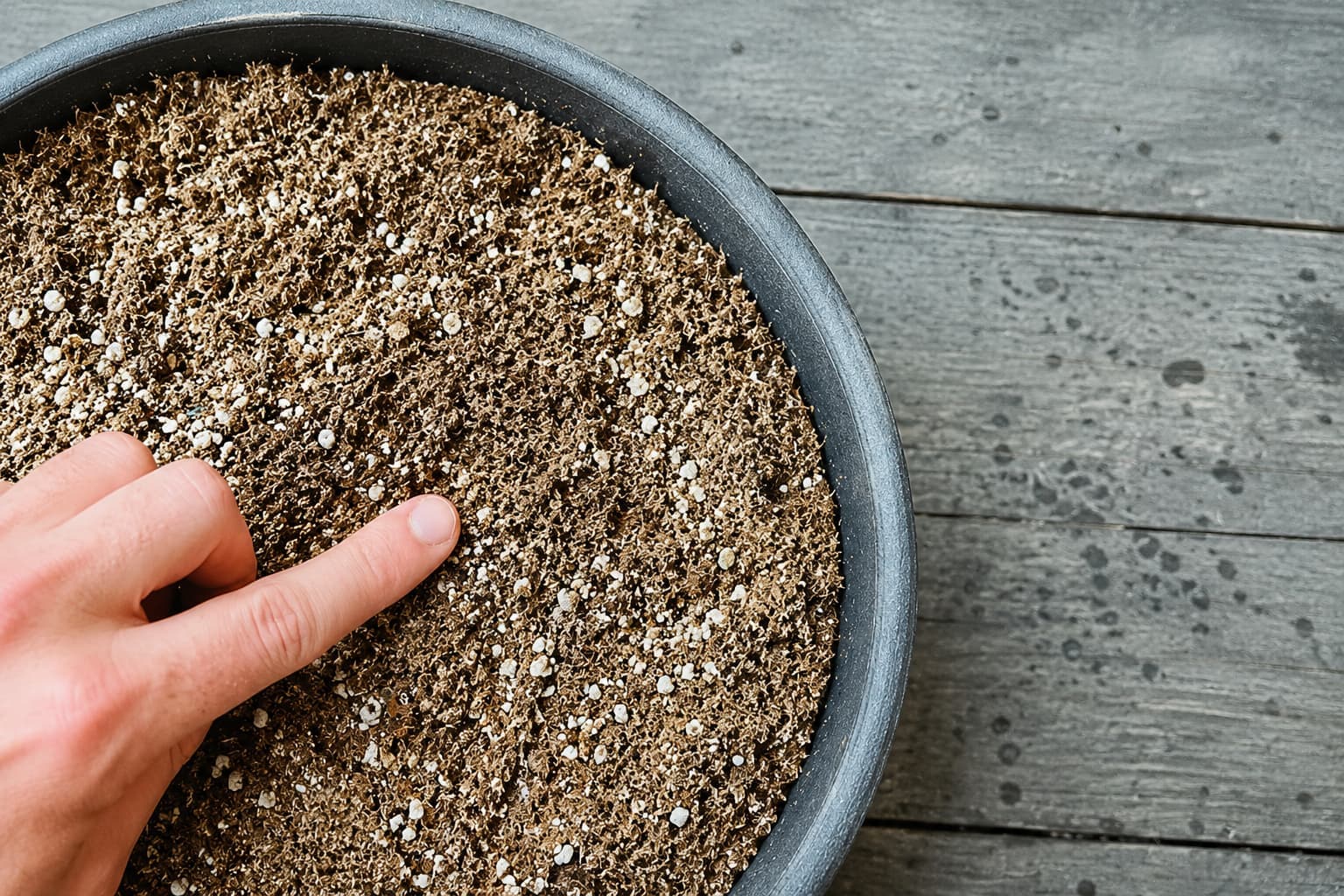
Common Indoor Plant Soil Mistakes
Let’s explore the 15 most common indoor plant soil mistakes that every plant owner should avoid when choosing the best soil for indoor plants:
• Mistake 1: Using garden soil straight from the yard
• Solution: Use a container-specific potting mix.
• Mistake 2: Choosing the heaviest soil because it looks rich
• Solution: Look at structure, drainage and ingredients.
• Mistake 3: Putting gravel at the bottom
• Solution: Use a properly formulated growing medium and a drainage hole.
• Mistake 4: Using one recipe for every plant
• Solution: Adjust the medium according to plant type.
• Mistake 5: Adding too much compost
• Solution: Use organic amendments in moderation.
• Mistake 6: Adding huge quantities of perlite
• Solution: Use enough to improve structure without making the mix excessively fast-draining.
• Mistake 7: Ignoring the pot
• Solution: Soil and container work together.
• Mistake 8: Using an oversized pot
• Solution: Choose a container appropriate for the root system.
• Mistake 9: Compressing the mix
• Solution: Fill the container firmly enough to support the plant, but don’t crush the pore spaces.
• Mistake 10: Assuming a plant is unhealthy because the soil looks dry
• Solution: Check the plant’s actual moisture requirements.
• Mistake 11: Assuming wet soil means healthy soil
• Solution: Remember that roots need oxygen as well as water.
• Mistake 12: Repotting unnecessarily
• Solution: Repot when the plant or growing medium shows a genuine need.
• Mistake 13: Buying soil without reading the label
• Solution: Examine the ingredients and intended use.
• Mistake 14: Ignoring environmental conditions
• Solution: Consider light, temperature, humidity and airflow.
• Mistake 15: Changing everything simultaneously
• Solution: Make controlled adjustments and observe the result.
How Soil Problems Can Become Plant Problems
Many indoor plant issues begin below the soil surface, long before visible symptoms appear on the leaves. That’s why choosing the best soil for indoor plants is one of the most important decisions you can make as a plant owner.
A healthy potting mix provides the right balance of moisture, drainage, aeration, and nutrients. When that balance is disrupted, the root system suffers first. Since roots are responsible for absorbing water, oxygen, and nutrients, any problem below the surface eventually affects the entire plant.
Poor-quality or unsuitable growing media can contribute to many of the most common indoor plant problems, including yellowing leaves, wilting, stunted growth, leaf drop, root rot, and increased susceptibility to pests and diseases.
Here are a few common examples of how soil problems develop into plant problems:
Dense, Compacted Soil
Dense soil → Poor aeration → Oxygen-starved roots → Weak root system → Slow or stunted growth
When soil becomes compacted, air pockets disappear, making it difficult for roots to breathe. As oxygen levels decline, roots become less efficient at absorbing water and nutrients, resulting in slow growth, yellow leaves, and an unhealthy plant.
Excessively Moisture-Retentive Potting Mix
Water-retentive mix → Constantly wet roots → Reduced oxygen → Root rot → Wilting and yellow leaves
A potting mix that remains wet for extended periods creates ideal conditions for fungal diseases that attack the roots. Ironically, plants with rotting roots often wilt because damaged roots can no longer absorb water effectively.
Extremely Fast-Draining Potting Mix
Fast-draining mix → Rapid drying → Frequent dehydration → Water stress → Brown leaf edges and drooping foliage
While good drainage is important, a mix that dries too quickly may not hold enough moisture for many houseplants. Plants repeatedly exposed to dry conditions often develop crispy leaf tips, curled leaves, slow growth, and reduced vigor.
Nutrient-Poor Potting Mix
Low nutrient levels → Nutrient deficiencies → Pale foliage → Reduced growth and weak stems
Even the best soil for indoor plants gradually loses nutrients as plants grow. Without regular fertilization or repotting into fresh potting mix, plants may begin showing signs of nutrient deficiencies such as yellow leaves, poor growth, and smaller new foliage.
Fertilizing at the right time and with the right amount can support healthy ZZ plant growth without causing fertilizer burn. For a broader explanation of feeding houseplants, see our guide on how to fertilize indoor plants the right way.
Poor Soil Structure
Collapsed soil structure → Reduced drainage and airflow → Root stress → Overall decline
As some potting mixes age, organic materials decompose and the soil becomes finer and denser. This reduces both drainage and aeration, making the growing environment less suitable for healthy roots.
Look Beyond the Leaves
When your indoor plant develops yellow leaves, wilts unexpectedly, grows slowly, or stops producing new foliage, don’t automatically assume it needs fertilizer. These symptoms can have many different causes, and applying fertilizer without identifying the real problem may do more harm than good.
Instead, inspect the plant’s entire growing environment before taking corrective action.
Check the following:
• Soil: Is the potting mix compacted, soggy, or excessively dry?
• Roots: Are they healthy, white, and firm, or brown, mushy, and rotting?
• Pot: Is the container the correct size, and does it have drainage holes?
• Drainage: Does excess water flow freely after watering?
• Watering: Are you watering too frequently or allowing the soil to dry out too much?
• Light: Is the plant receiving the right amount of natural or artificial light?
• Temperature: Is it exposed to cold drafts, heaters, or sudden temperature changes?
• Humidity: Does the surrounding air meet the plant’s moisture requirements?
• Pests: Are insects such as fungus gnats, spider mites, mealybugs, or scale insects present?
Remember, healthy foliage begins with healthy roots, and healthy roots depend on the best soil for indoor plants. By identifying soil-related problems early and creating the right growing conditions, you’ll prevent many common houseplant issues before they become serious.
For a broader troubleshooting guide, link naturally to[21 Common Indoor Plant Problems and How to Fix Them Fast.
How to Know If Your Soil Mix Is Working
The best soil for indoor plants doesn’t just look good—it supports healthy, consistent plant growth over time. Rather than judging a potting mix by its color or texture alone, pay close attention to how your plant responds.
A healthy potting mix creates the ideal environment for strong roots, balanced moisture, and steady growth. If your plant is thriving, chances are your soil is doing its job.
A suitable indoor potting mix should provide:
• Healthy root development with firm, white, actively growing roots.
• Balanced moisture retention, keeping roots hydrated without remaining waterlogged.
• Good drainage, allowing excess water to flow freely from the pot.
• Adequate aeration, ensuring roots receive the oxygen they need.
• Stable, consistent growth throughout the growing season.
• Healthy leaf development, including vibrant color and normal-sized new leaves.
• Appropriate drying time between watering based on your plant species. For example, succulents prefer soil that dries quickly, while Peace Lilies and Ferns benefit from longer moisture retention.
Observe What Happens After Watering
One of the easiest ways to evaluate whether you have the best soil for indoor plants is to observe how the potting mix behaves immediately after watering.
Ask yourself the following questions:
• Does water drain through the container within a reasonable amount of time?
• Does water pool on the soil surface instead of soaking in?
• Does the soil remain soggy and the pot feel unusually heavy for several days?
• Does the soil become bone dry within a day or two?
• Does the plant wilt even though the potting mix is still wet?
• Are there unpleasant odors coming from the soil, indicating possible root rot?
These observations provide valuable clues about your potting mix. They often reveal far more about soil health than simply looking at the color or texture of the growing medium.
If the soil drains well, dries at an appropriate rate, and supports healthy foliage and root growth, it’s likely the right choice for your plant.
When Should You Repot an Indoor Plant?
Repotting is an essential part of indoor plant care, but it shouldn’t be done simply because a certain number of months have passed. Many healthy houseplants can remain in the same container for several years if the potting mix is still in good condition and the roots have adequate space.
Instead of following a fixed schedule, look for signs that your plant has outgrown its container or that the potting mix is no longer providing the ideal growing environment.
Knowing when and how to repot is essential as your ZZ plant grows. If your plant has become root-bound or its pot no longer provides enough space, follow our guide on how to repot indoor plants without damaging the roots, or causing stress to the plant.
Don’t have a bright, sunny room? You can still create a beautiful indoor garden with plants that tolerate lower light conditions. Our guide to low light plants features 21 attractive options that can thrive without direct sunlight, making them ideal for bedrooms, offices, hallways, and other dimmer areas of your home.
Signs Your Indoor Plant May Need Repotting:
• Roots growing through the drainage holes, indicating the plant has become root-bound.
• Roots circling tightly around the root ball instead of spreading through the soil.
• The soil dries out much faster than usual, requiring frequent watering.
• Growth has slowed or stopped, even during the active growing season.
• Water runs straight through the pot without properly soaking into the potting mix.
• The growing medium has become compacted, reducing drainage and airflow.
• The original potting mix has broken down significantly, losing its structure and becoming dense or muddy.
• Salt or fertilizer buildup is visible on the soil surface or around the pot.
• The plant becomes top-heavy or unstable, making it difficult for the container to support its weight.
Repotting gives your plant fresh growing media, improved drainage, renewed nutrients, and more space for root development. Choosing the best soil for indoor plants during repotting helps reduce transplant stress and encourages healthier, more vigorous growth.
Remember, repot only when your plant shows genuine signs of needing a larger container or a fresh potting mix. Repotting too frequently can unnecessarily disturb the roots and temporarily slow growth.
Spring is often a convenient time for repotting because many plants are entering active growth, although indoor conditions and plant species matter more than the calendar alone.
Even healthy-looking houseplants can suddenly become infested with unwanted insects. Spider mites, mealybugs, scale insects, and other pests can damage leaves and weaken plants if left untreated. Learn how to identify common indoor plant pests, understand the signs of an infestation, and control them before they spread to your other plants.
Conclusion
Choosing the best soil for indoor plants is one of the most important decisions you can make for healthy, thriving houseplants. While light, watering, and humidity all play essential roles, none of them can compensate for a poor growing medium. Healthy plants begin with healthy roots, and healthy roots depend on the right balance of drainage, aeration, moisture retention, nutrients, and physical support.
Remember that there is no single potting mix that’s perfect for every houseplant. Tropical plants, succulents, orchids, ferns, and other indoor species all have different growing requirements. Understanding your plant’s natural habitat and choosing a suitable potting mix will help prevent common problems such as root rot, yellowing leaves, poor growth, and overwatering. For example, learning proper zz plant care, or snake plant care can help you understand why well-draining soil is essential for plants that are sensitive to excess moisture.
You don’t need to be a gardening expert to get it right. Start with a quality container potting mix, use a pot with proper drainage holes, monitor how the soil performs after watering, and make gradual adjustments based on your plant’s needs. Small changes to your growing medium can make a remarkable difference in your indoor plants’ long-term health.
We hope this guide has given you the confidence to choose the best soil for indoor plants and create the ideal growing environment for your houseplants. If you found this article helpful, consider sharing it with fellow plant lovers, and explore our other indoor gardening guides for more practical tips on choosing, growing, and caring for healthy houseplants all year round.
Sharing your home with curious cats or dogs doesn’t mean you have to give up your love of houseplants. Some plants are better choices for pet-owning households than others. Discover these pet-friendly indoor plants and learn how to create a greener home while making safer choices for your four-legged companions.

I’m Bon (aka Guider), an indoor gardening writer and houseplant enthusiast passionate about helping beginners successfully grow and care for indoor plants. I create practical, beginner-friendly guides covering indoor plant care, watering, lighting, soil, repotting, plant problems, and choosing suitable houseplants for different homes. My articles draw on research from trusted horticultural organizations, university extension resources, and botanical institutions, combined with practical plant-care principles and careful content review.



Hi Guider,
I am a first time visitor on this site, I must confess, this was really helpful, especially the explanation of why regular garden soil isn’t ideal for indoor plants. I also like how you broke down drainage, aeration, and moisture retention when choosing a potting mix. The practical tips make it much easier for beginners to avoid common soil-related problems.
Hi Austin, thanks for stopping by and sharing your thoughts! We really appreciate it. Hope to see you again soon. 🌱
Hi Bon,
I never realized how much the potting mix could affect the health of indoor plants. I used to think regular garden soil was fine until I started having problems with drainage and root rot. This guide makes it much easier to understand what to look for in a good indoor plant mix. Very helpful, especially for beginners!
Hello Rita, feel good seeing you drop a comment on this post.
Hello Bon,
I must honestly say, this is a very informative and well-written guide! As someone interested in keeping indoor plants healthy, I found the explanation of choosing the right potting mix particularly helpful. Many beginners focus on watering and sunlight but overlook how important the right soil is for healthy roots and proper drainage. I especially appreciate the practical guidance that makes it easier to understand what different indoor plants need. Definitely a valuable resource for every indoor plant lover!
Hi Gloria, I appreciate your time spent reading through my post, and dropping a comment, this is encouraging. Hope to seeing you again.
Hi Bon,
Honestly, i love indoor plants, and this article is really helpful, especially the explanation of why well-draining soil is important for indoor plants. I’ve struggled with overwatering a few of my houseplants before, so the tips on choosing the right soil mix make a lot of sense. Thanks for sharing such a useful and easy-to-understand guide!
Thanks for stopping by with a comment, hope to seeing you again Princess Pat