
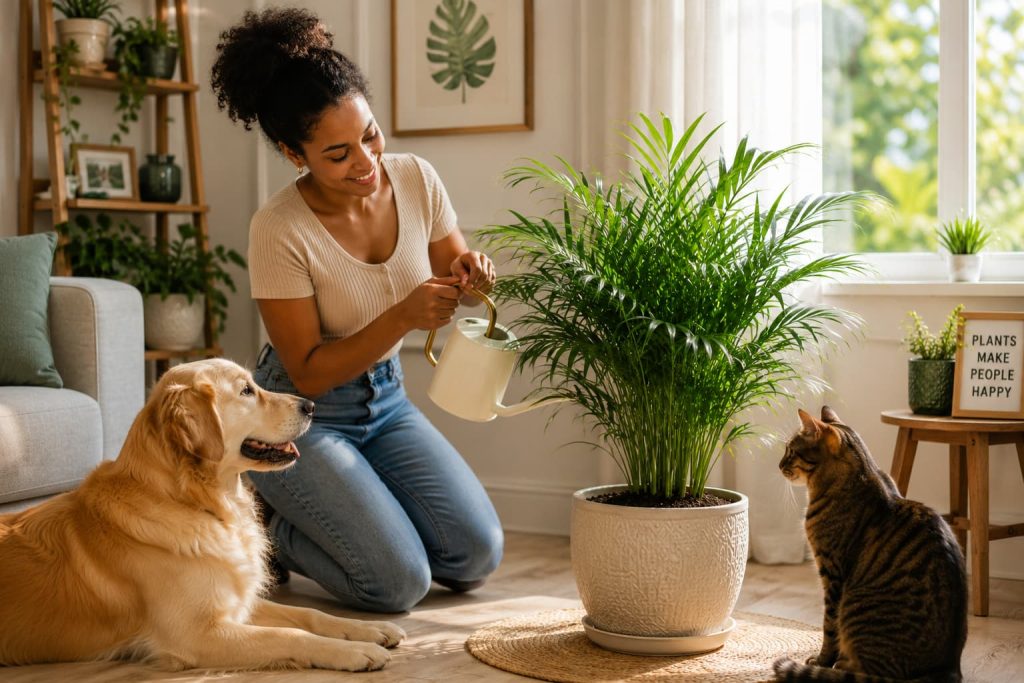
The parlor palm is one of those indoor plants that can make any room feel greener without demanding constant attention. Parlor palm care is simple, making it an excellent choice for beginners and busy plant owners. With its graceful, arching fronds and compact growth, it’s a popular choice for living rooms, bedrooms, offices, and other indoor spaces.
But “low maintenance” does not mean “no maintenance.”
A parlor palm can develop brown tips, yellow leaves, weak growth, or pest problems when its basic needs are overlooked. The good news is that most problems can be prevented by getting a few fundamentals right: filtered light, careful watering, a well-draining growing medium, warmth, reasonable humidity, and occasional feeding.
The plant commonly sold as a parlor palm is Chamaedorea elegans, a member of the palm family Arecaceae. Kew lists the species as native from Mexico through Central America, while the Royal Horticultural Society describes it as a compact tropical plant that performs well indoors in indirect light.
Want your indoor plants to stay green, healthy, and beautiful without constantly guessing what they need? Whether you’re caring for your first houseplant or struggling with yellow leaves, drooping, or slow growth, our Indoor Plant Care for Beginners: The Complete Guide walks you through the essential steps to help your plants thrive—right from the basics.
This guide explains parlor palm care from choosing the right location and watering correctly to diagnosing brown tips, yellow leaves, pests, and repotting problems.
Parlor Palm Care at a Glance
Get a quick overview of parlor palm care, including essential tips for light, watering, soil, humidity, temperature, feeding, and routine maintenance.
| Care Requirement | What Your Parlor Palm Needs |
| Botanical name | Chamaedorea elegans |
| Light | Bright, indirect or filtered light; tolerates some shade |
| Water | Water when the surface of the growing medium becomes dry |
| Soil | Well-draining, moisture-retentive potting mix |
| Temperature | Warm indoor conditions; avoid cold drafts |
| Humidity | Moderate humidity is beneficial |
| Fertilizer | Balanced liquid fertilizer during active growth |
| Repotting | Only when roots have substantially filled the container |
| Growth rate | Naturally slow |
| Common problems | Brown tips, yellow leaves, root problems, spider mites, scale and thrips |
The Cornell University College of Agriculture and Life Sciences recommends bright but indirect light, warmth, moderate humidity, well-drained growing media, and watering when the surface of the compost has become dry.
What Is a Parlor Palm?
The parlor palm, also spelled parlour palm, is Chamaedorea elegans. It is a small tropical palm with slender stems and attractive pinnate leaves made up of numerous narrow leaflets.
Unlike some palms that eventually require substantial outdoor space, parlor palms remain relatively compact indoors. The RHS notes that indoor plants are commonly around 30–60 cm tall, although larger specimens can develop over time.
They are naturally adapted to growing beneath taller vegetation, which helps explain why they cope with filtered light rather than requiring the intense direct sunlight preferred by many sun-loving plants.
A useful way to think about this plant is:
Bright room, filtered light, evenly managed moisture, warm temperatures, and good drainage.
That combination is much more important than following a rigid watering calendar.
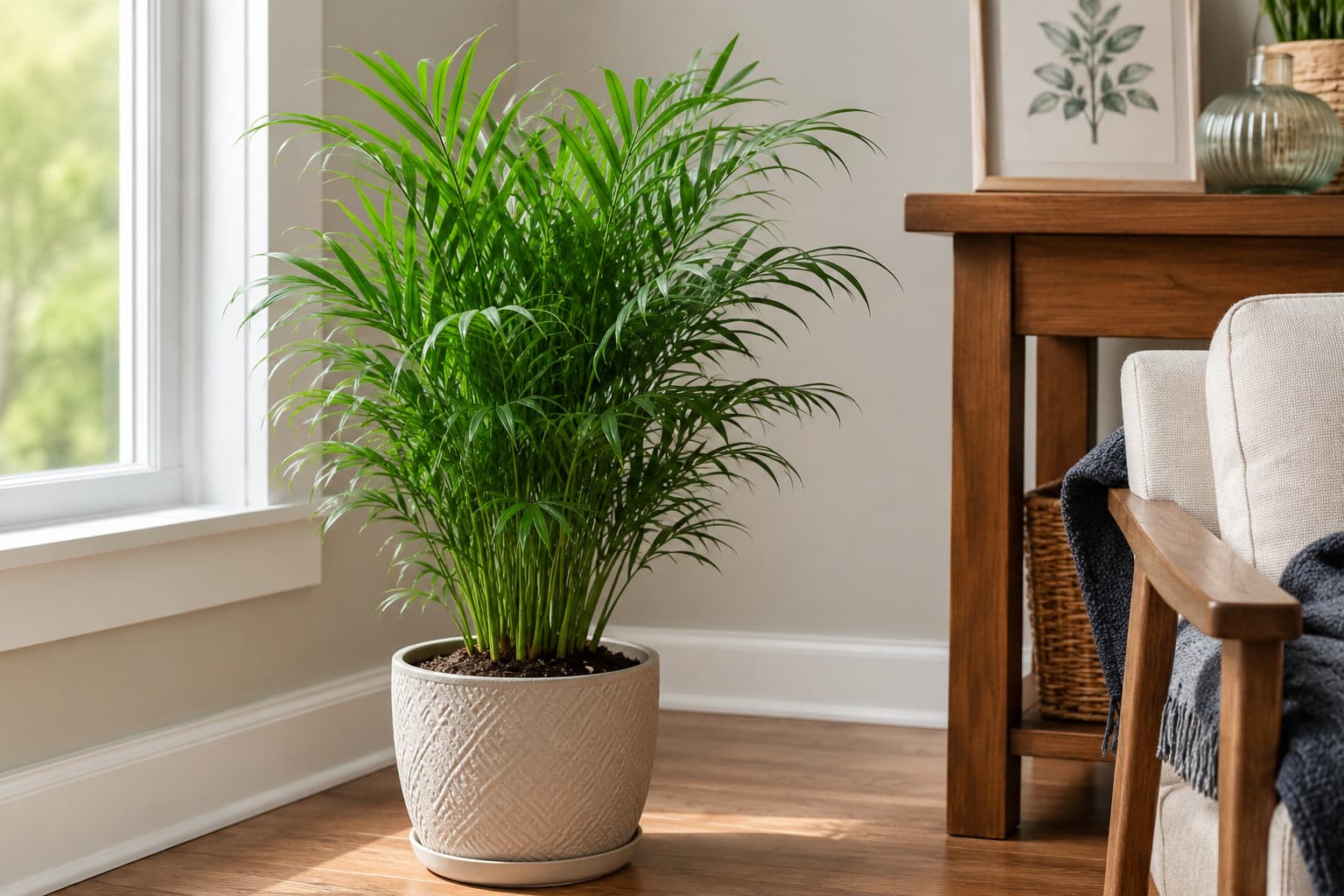
15 Proven Parlor Palm Care Tips
Master parlor palm care with 15 proven tips for healthy growth. Learn how to get watering, light, humidity, soil, feeding, and placement right for a lush, thriving indoor plant.
1. Give Your Parlor Palm Bright, Indirect Light
Getting the light right is one of the most important parts of parlor palm care.
The plant naturally grows in forest environments, so it is adapted to filtered rather than intense direct sunlight. The RHS recommends bright but indirect light and notes that partial shade is also tolerated, although growth may be slower. Missouri Botanical Garden similarly recommends filtered sun, part shade, or shade while advising against direct sun.
What good light looks like
A suitable indoor location might be:
• Near a bright window with a sheer curtain
• A few feet away from a sunny window
• In a bright room where direct afternoon sunlight does not fall strongly on the leaves
• Near an east-facing window where morning light is relatively gentle
Avoid placing the plant directly against a hot, intensely sunny window without protection.
Signs the light may be wrong
Too much direct light:
• Scorched or bleached-looking foliage
• Brown patches
• Crispy areas on leaves
Too little light:
• Slow or weak growth
• Pale or yellowing foliage
• Longer periods between producing healthy new fronds
The goal is not to keep the plant in darkness simply because it tolerates shade. Moderate to bright filtered light generally gives better indoor growth.
2. Water According to the Soil, Not the Calendar
One of the most common mistakes in parlor palm care is watering on a fixed schedule.
Instead of saying “water every Sunday,” check the growing medium first.
The RHS recommends watering when the surface of the compost has become dry and warns against leaving the plant sitting in water because prolonged wetness can contribute to root problems. Watering should also be reduced during periods when growth slows.
How to check before watering
Push your finger about 2–3 cm into the surface of the growing medium.
If it still feels noticeably moist, wait.
If the surface has dried and the upper layer feels only slightly moist or dry, check deeper before deciding. The exact interval will vary according to:
• Pot size
• Drainage
• Temperature
• Humidity
• Light level
• Growing medium
• Plant size
• Season
A plant in a bright, warm room may use water much faster than one in a dim, cool location.
How to water properly
When it is time to water:
1. Water slowly and evenly over the growing medium.
2. Continue until some water drains from the bottom.
3. Allow excess water to drain completely.
4. Empty water collected in the saucer or outer container.
5. Do not leave the pot standing in water.
This approach wets the root zone thoroughly without creating a permanently waterlogged environment.
Not sure when or how much to water your houseplants? Discover How to Water Indoor Plants Properly: Complete Beginner’s Guide and learn simple techniques to prevent overwatering, root rot, and thirsty, wilting plants.
3. Use a Well-Draining Growing Medium
The best soil for parlor palm is not simply the richest or darkest soil you can find.
The growing medium should hold enough moisture to support the roots while allowing excess water to drain away.
The RHS recommends a free-draining, peat-free growing medium and notes that parlor palms prefer acidic to neutral conditions.
A practical indoor mix can contain:
• Quality peat-free houseplant compost
• Coconut coir or another moisture-retentive component
• Perlite or another material that improves aeration and drainage
You do not need to create an elaborate recipe if you already have a good-quality commercial houseplant mix.
Why drainage matters
A poorly draining medium can stay wet around the roots for too long. This reduces the amount of air available around the root zone and can contribute to root deterioration.
At the opposite extreme, a very coarse medium that dries extremely quickly may force you into frequent watering.
The ideal is moisture without stagnation.
Choosing the wrong soil can quietly damage your houseplants. Discover Best Soil for Indoor Plants: How to Choose the Right Potting Mix and learn how to select a mix that supports healthy roots, drainage, and vigorous growth.
4. Choose a Pot With Drainage Holes
Even an excellent potting mix can cause problems if the container does not allow excess water to escape.
Choose a pot with at least one functional drainage hole.
A decorative outer pot can still be used, but the palm should ideally remain in a container that allows you to remove excess water after watering.
Avoid assuming that adding a thick layer of stones at the bottom of a pot will compensate for inadequate drainage. The more important solution is to use an appropriately sized container with a genuine drainage pathway.
The right pot can make all the difference to your plant’s health and growth. Learn How to Choose the Right Pots for Indoor Plants: 9 Essential Tips and avoid common mistakes that lead to poor drainage, root problems, and unhappy plants.
5. Keep the Palm Warm and Away From Harsh Drafts
Parlor palms are tropical plants and perform best in warm indoor conditions.
The RHS recommends temperatures around 20–27°C (68–80°F) during active growth and notes that the plant can tolerate cooler conditions when growth slows.
This does not mean your home must remain at a precise temperature at all times. The more practical lesson is to avoid placing the plant where temperatures fluctuate sharply.
Keep it away from:
• Strong air-conditioning vents
• Cold drafts
• Frequently opened exterior doors during cold weather
• Very hot heating appliances
• Locations where hot or cold air blows directly across the foliage
In warm climates such as Nigeria, excessive indoor heat is generally less concerning than direct hot sunlight combined with dry air and rapid moisture loss.
6. Maintain Reasonable Humidity
The parlor palm humidity requirements are less demanding than those of some tropical houseplants, but very dry air can contribute to brown leaf tips.
The American Horticultural Society (AHS) states that moderate humidity is beneficial and notes that dry air can contribute to browning at the leaf tips.
You do not necessarily need a humidifier.
Try these practical measures first:
• Keep the plant away from strong air-conditioning airflow.
• Group compatible plants together.
• Use a humidifier if your indoor environment is consistently very dry.
• Avoid allowing the growing medium to become extremely dry for prolonged periods.
What about misting?
Occasional misting may temporarily increase moisture around the foliage, but it should not be treated as a substitute for appropriate watering, good placement, and adequate root conditions.
If brown tips continue despite misting, investigate the whole growing environment rather than simply increasing misting frequency.
7. Don’t Ignore Brown Tips
Parlor palm brown tips are common, but the symptom does not point to one single cause.
Possible contributors include:
• Dry air
• Inconsistent watering
• Excessively dry soil
• Direct sunlight
• Hard water
• Root stress
• Accumulation of salts from water or fertilizer
The RHS specifically identifies underwatering, dry air, hard tap water, direct sunlight, and overwatering among possible causes of browning.
That is why simply cutting off brown tips without investigating the cause may solve the appearance but not the underlying problem.
A useful troubleshooting approach
Ask:
Are only the tips brown?
Look at humidity, watering consistency, water quality, and recent environmental changes.
Are large areas of the leaf turning brown or scorched?
Check for direct sunlight or severe moisture stress.
Are the leaves also yellowing and the soil staying wet?
Investigate possible overwatering and root problems.
Did browning begin after changing the water source?
Consider whether the new water contains a high mineral load.
The RHS recommends rainwater where possible and warns that regular use of hard tap water may contribute to problems because parlor palms prefer acidic conditions.
8. Understand What Yellow Leaves Are Telling You
Parlor palm yellow leaves can be frustrating because yellowing is a symptom rather than a diagnosis.
Possible causes include:
• Too little light
• Excessive watering
• Poor drainage
• Root stress
• Normal aging of older foliage
• General environmental stress
The first thing to determine is which leaves are yellowing and what the growing conditions are like.
If older leaves are gradually yellowing
An individual older frond may naturally decline as the plant produces and maintains newer growth.
If several leaves are yellowing at once
Look more closely at:
• Soil moisture
• Drainage
• Light
• Root condition
• Recent changes in location
• Watering frequency
Do not automatically add fertilizer when leaves turn yellow. Nutrient problems are only one possible explanation.
If the growing medium is constantly wet, correcting the moisture problem is more important than adding more nutrients.
Yellow leaves, drooping, brown tips, or slow growth? Discover 21 Common Indoor Plant Problems and How to Fix Them Fast and learn what’s really wrong—and the practical steps to get your plants healthy again.
9. Fertilize Lightly During Active Growth
Parlor palms are slow-growing plants, so heavy feeding is unnecessary.
The RHS recommends a balanced liquid fertilizer approximately monthly during the growing season. Missouri Botanical Garden likewise recommends monthly fertilization during active growth and reducing or stopping feeding during winter.
A sensible routine is:
1. Water appropriately.
2. Feed with a balanced houseplant fertilizer according to its label.
3. Avoid exceeding the recommended concentration.
4. Reduce or stop feeding when growth naturally slows.
More fertilizer does not automatically produce a healthier palm.
In fact, excessive fertilizer can contribute to salt accumulation in the growing medium and may worsen leaf-tip damage.
Want faster, healthier growth without risking fertilizer burn? Learn How to Fertilize Indoor Plants the Right Way (Step-by-Step Guide) and discover when, how much, and what type of fertilizer your plants actually need.
10. Repot Only When the Plant Actually Needs It
Parlor palms are slow growing and generally do not require frequent repotting.
The RHS specifically notes that they need repotting less often than many other houseplants and recommends repotting once the roots have filled the pot.
This is important because some indoor gardeners repot plants simply because they have owned them for a certain amount of time.
Instead, inspect the plant.
Signs your parlor palm may need repotting
Look for:
• Roots densely filling the container
• Roots emerging repeatedly through drainage holes
• Water moving through the pot unusually quickly because the root ball is densely packed
• The plant becoming unstable in its container
• The growing medium breaking down substantially
Do not automatically move a small palm into a dramatically larger pot.
An oversized container can hold more moisture than the root system can use, making moisture management more difficult.
How to repot a parlor palm
When repotting is genuinely necessary:
1. Choose a container only moderately larger than the current one.
2. Prepare a fresh, well-draining growing medium.
3. Carefully remove the palm from its existing pot.
4. Examine the roots without aggressively disturbing them.
5. Place the root ball at an appropriate depth.
6. Fill around the roots with fresh medium.
7. Water appropriately and allow excess water to drain.
8. Return the plant to suitable indirect light.
Ready to repot without stressing your plant? Learn How to Repot Indoor Plants Without Damaging the Roots (Step-by-Step Guide) and discover simple techniques for healthy roots, smoother transplanting, and stronger growth.
11. Prune Only Damaged or Dying Fronds
Parlor palms generally do not need regular shaping or aggressive pruning.
The University of Florida IFAS Extension (Gardening Solutions) recommends removing old, dying fronds at the base when necessary to keep the plant tidy.
If only the tips of a leaf are brown, you can trim the damaged portion for appearance. Use clean scissors and follow the natural shape of the leaflet rather than cutting deeply into healthy green tissue.
However, pruning cannot reverse damage that has already occurred.
If several new leaves continue developing brown or yellow tissue, focus on correcting the growing conditions.
Never remove healthy new growth just to make the plant look smaller.
Palms have limited growing points compared with many branching houseplants. Conservative pruning is usually the better approach.
12. Clean the Fronds Occasionally
Indoor plants collect dust, and parlor palm fronds are no exception.
Dust can make the foliage look dull and can interfere with the plant’s ability to receive light efficiently.
The RHS recommends occasionally wiping the leaves with a damp cloth.
To clean the plant:
• Support the leaflet gently with one hand.
• Wipe the surface with a clean, slightly damp cloth.
• Avoid harsh leaf-shine products.
• Check underneath the leaves for insects while cleaning.
This simple routine also gives you an opportunity to notice early signs of pests.
13. Inspect Regularly for Pests
Parlor palms are generally relatively trouble-free, but they are not completely immune to pests.
The RHS identifies red spider mites, scale insects, and thrips as potential problems. Missouri Botanical Garden also lists spider mites, scale, and mealybugs among pests to watch for on indoor plants.
Signs to look for
1. Spider mites
• Fine webbing
• Speckled or dull foliage
• Small moving dots, particularly on leaf undersides
2. Scale insects
• Small, fixed bumps attached to stems or leaves
• Sticky residue in some infestations
3. Mealybugs
• White, cottony-looking clusters
• Usually found around stems, leaf joints, or sheltered areas
4. Thrips
• Distorted or scarred new growth
• Silvery or damaged areas on foliage
Early detection makes management much easier.
If you discover an infestation, isolate the affected plant from other houseplants and inspect nearby plants as well.
Tiny pests can quickly turn healthy houseplants into struggling ones. Discover 8 Common Indoor Plant Pests and How to Eliminate Them and learn how to identify infestations early and get rid of pests effectively.
14. Avoid Sudden Environmental Changes
Plants respond to their environment, and parlor palms can show stress after abrupt changes.
For example, a palm that has been growing in filtered indoor light should not suddenly be placed outside in intense sunlight.
Likewise, a plant accustomed to moderate humidity can struggle when moved directly beside a strong air-conditioning vent.
When moving your palm:
• Change its location gradually when practical.
• Avoid sudden exposure to intense direct sunlight.
• Watch the soil moisture after changing locations.
• Reassess watering because light and temperature affect how quickly the growing medium dries.
This is especially useful when moving a plant between indoor and outdoor environments.
15. Give the Plant Time to Grow
Perhaps the most overlooked aspect of parlor palm care is its naturally slow growth.
The RHS describes the plant as slow growing and notes that its compact size and low maintenance are part of its appeal.
Do not assume something is wrong simply because your palm does not produce new fronds rapidly.
If the plant has:
• Healthy green foliage
• Appropriate light
• Good drainage
• Consistent moisture
• Warm conditions
• No significant pest infestation
then slow growth may simply be normal for the species.
A healthy parlor palm does not need to produce new leaves every few weeks to be thriving.
How to Create the Ideal Indoor Location for a Parlor Palm
Choosing the right location is an important part of parlor palm care. Use this simple decision process to find a comfortable spot where your plant can grow well indoors.
Step 1: Choose a Bright Room
Place your parlor palm in a room with plenty of natural daylight. Bright, indirect light is generally ideal for maintaining healthy foliage.
Step 2: Protect It From Harsh Direct Sun
Avoid placing the plant where strong sunlight falls directly on its leaves for extended periods. If necessary, filter intense sunlight with a sheer curtain or move the plant farther from the window.
Step 3: Check Airflow
Keep your parlor palm away from constant drafts. Air conditioners, heaters, and fans can create dry or fluctuating conditions that may stress the plant.
Step 4: Maintain a Stable Temperature
Choose a consistently comfortable indoor location rather than an area exposed to sudden temperature changes. Avoid placing the plant directly beside heating or cooling vents.
Step 5: Monitor the Plant for a Week
After choosing a location, observe the foliage for several days. Green, firm, healthy-looking leaves generally indicate that the spot is working well.
A Simple Parlor Palm Watering Routine
Instead of following a rigid weekly watering schedule, use this simple routine:
Check → Decide → Water → Drain → Recheck
Check
Feel the surface and upper layer of the growing medium. Avoid watering simply because a certain number of days have passed.
Decide
If the growing medium is still damp, wait before watering. If it has dried sufficiently, it is time to water.
Water
Water evenly until a small amount begins to drain from the bottom of the pot. This helps moisten the growing medium thoroughly.
Drain
Allow excess water to drain completely, then empty the saucer or outer container. Do not allow the pot to sit in standing water.
Recheck
Monitor the growing medium again later rather than automatically watering on the same day every week. Indoor temperature, light, humidity, and seasonal growth can all affect how quickly the plant dries out.
This parlor palm watering routine is more reliable than a fixed calendar because indoor growing conditions can change throughout the year. The Royal Horticultural Society (RHS) also recommends checking moisture before watering and reducing watering as growth slows.
Parlor Palm Brown Tips: Quick Diagnosis
| Symptom | Possible Cause | What To Check |
| Brown tips only | Dry air, inconsistent moisture, water quality | Humidity, watering, water source |
| Brown patches | Direct sun or moisture stress | Window exposure and soil |
| Brown leaves with wet soil | Root stress | Drainage and watering frequency |
| Yellow leaves with wet soil | Excess moisture/root problems | Drainage and soil moisture |
| Yellowing in dim locations | Insufficient light | Move closer to bright filtered light |
| Browning after changing location | Environmental change | Light, airflow and moisture |
| Browning after fertilizing | Excess salts or fertilizer stress | Feeding concentration and frequency |
These symptoms can overlap, so diagnose the whole growing environment rather than relying on one symptom alone.
Why Is My Parlor Palm Turning Yellow?
When you notice yellow leaves, work through these questions:
1. Is the soil staying wet for a long time?
If yes, investigate drainage and watering frequency.
2. Is the plant in a very dim location?
If yes, insufficient light may be contributing to poor growth and yellowing.
3. Are only the oldest leaves affected?
Aging foliage may naturally decline.
4. Has anything recently changed?
Consider a new location, watering routine, fertilizer, pot, or environmental condition.
5. Are there signs of pests?
Inspect both sides of the leaves and the stems.
Avoid treating every yellow leaf with fertilizer. Diagnosis should come before treatment.
Common Parlor Palm Care Mistakes to Avoid
Even though parlor palms are relatively low-maintenance houseplants, a few common care mistakes can lead to yellowing leaves, brown tips, weak growth, or root problems. Avoid these 10 mistakes to keep your plant healthy and attractive.
Mistake 1: Watering on a Fixed Weekly Schedule
Following a strict watering calendar can lead to overwatering or underwatering because indoor conditions change throughout the year.
Better approach: Check the growing medium before watering. Water when the upper layer has dried sufficiently rather than simply watering on a set day.
Mistake 2: Exposing the Plant to Harsh Direct Sunlight
Parlor palms tolerate lower-light conditions, but that does not mean they should be placed in strong, hot direct sunlight. Intense sun can scorch the foliage.
What to do instead: Choose bright, indirect or filtered light. Use a sheer curtain if the plant is near a sunny window.
Mistake 3: Keeping the Growing Medium Permanently Wet
Constantly wet soil can deprive roots of oxygen and increase the risk of root problems. More water does not necessarily mean better care.
Recommended approach: Let the upper layer of the growing medium dry appropriately before watering again, and avoid letting the plant sit in standing water.
Mistake 4: Using a Pot Without Drainage Holes
A container without proper drainage makes it difficult to control moisture and can leave excess water around the roots.
A better method: Use a pot with functional drainage holes and allow excess water to drain freely after watering.
Mistake 5: Repotting Too Frequently
Parlor palms are relatively slow-growing and do not need frequent repotting. Moving them into larger containers unnecessarily can also make moisture management more difficult.
How to care for it properly: Repot when the roots have substantially filled the existing container or when the growing medium has deteriorated.
Mistake 6: Fertilizing Whenever the Plant Looks Unhealthy
Yellow leaves, slow growth, and other symptoms do not automatically indicate a nutrient deficiency. Fertilizing without identifying the underlying problem can make matters worse.
The right approach: Check light, watering, drainage, roots, pests, and environmental conditions before adding fertilizer.
Mistake 7: Removing Entire Fronds Because of Brown Tips
Brown leaf tips do not necessarily mean that an entire frond is unhealthy. Removing otherwise healthy foliage can reduce the plant’s ability to photosynthesize.
Best care tip: Trim only the damaged portions for cosmetic reasons, or remove entire fronds when they are severely damaged, declining, or naturally dying.
Mistake 8: Placing the Plant Near Heating or Cooling Vents
Constant airflow from heaters, air conditioners, or fans can create dry or fluctuating conditions that stress the plant.
What works best: Keep your parlor palm away from direct drafts and choose a location with relatively stable indoor conditions.
Mistake 9: Ignoring Pests and Early Signs of Stress
Small pest infestations can become harder to manage if they go unnoticed. Changes such as yellowing, browning, wilting, or unusual spots may also signal an environmental or care problem.
Parlor palm care tip: Inspect the leaves and stems regularly, especially the undersides of leaves, and address unusual symptoms early.
Mistake 10: Changing the Plant’s Environment Too Often
Constantly moving a parlor palm from one location to another can make it difficult to determine what conditions it actually prefers.
For better results: Choose a suitable spot with stable light and temperature, then give the plant time to adjust before making further changes.
Parlor Palm Care Checklist
Use this quick parlor palm care checklist to assess your plant’s growing conditions and keep its basic needs on track.
Light
• Placed in a bright room
• Receives mostly indirect or filtered light
• Protected from harsh, prolonged direct sunlight
Watering
• Growing medium checked before watering
• Watered thoroughly when the plant needs it
• Excess water allowed to drain completely
• Pot is not left sitting in standing water
Soil and Pot
• Uses a well-draining growing medium
• Container has functional drainage holes
• Pot size is appropriate and not unnecessarily oversized
Temperature and Humidity
• Kept in comfortable, stable indoor temperatures
• Protected from harsh drafts
• Maintained with reasonable indoor humidity
• Not exposed to strong hot or cold airflow directly on the foliage
Fertilizing
• Balanced fertilizer used during active growth when needed
• Feeding reduced when growth slows
• Fertilizer applied according to the product label
Maintenance
• Leaves and stems checked regularly for pests
• Foliage cleaned occasionally to remove dust
• Damaged or declining fronds removed when necessary
• Plant inspected regularly for signs of stress
Repotting
• Repotted only when necessary
• Roots checked when repotting is being considered
• New container provides adequate drainage
Is the Parlor Palm Safe for Cats and Dogs?
If pet safety is important in your home, the Missouri Botanical Garden’s indoor plant reference lists Chamaedorea elegans as safe for children and pets.
That makes the parlor palm a useful option for households looking for an attractive indoor palm with a favorable pet-safety profile.
Nevertheless, pets should not be encouraged to chew on houseplants. Individual animals can also react differently to plant material, so preventing excessive plant consumption remains sensible.
Worried about your pets nibbling on your houseplants? Discover 12 Pet-Friendly Indoor Plants Safe for Cats and Dogs and find beautiful, low-risk options that can brighten your home while keeping curious pets safer.
Can a Parlor Palm Grow in Low Light?
Yes—but there is an important distinction between tolerating low light and thriving in low light.
Parlor palms are known for coping with relatively low indoor light. The RHS lists them among houseplants suitable for lower-light environments and notes that partial shade is acceptable.
However, extremely dim conditions can result in slow or weak growth.
If your palm is surviving but barely growing, try moving it gradually toward a brighter location with filtered light.
Do not compensate for a dark room by placing the plant suddenly into strong direct sun. Make environmental changes carefully.
Looking for plants that stay beautiful without demanding constant attention? Discover 21 Best Indoor Plants That Are Easy to Grow All Year Long and find beginner-friendly choices that can thrive with simple, consistent care.
How Long Can a Parlor Palm Live Indoors?
With suitable conditions, parlor palms can be long-lived houseplants.
Their slow growth is actually an advantage for indoor spaces because the plant does not rapidly outgrow its surroundings. The Royal Horticultural Society (RHS) describes the species as long lived and easy to grow.
The key is consistency rather than intensive care.
A palm that receives appropriate light, careful watering, good drainage, reasonable humidity, and occasional nutrition can remain attractive for years.
Frequently Asked Questions About Parlor Palm Care
1. How often should I water a parlor palm?
There is no reliable universal schedule. Water when the surface of the growing medium has dried sufficiently, then water thoroughly and allow excess water to drain. Check moisture again before the next watering.
2. Does a parlor palm need direct sunlight?
No. Bright, indirect or filtered light is generally preferable. Strong direct sunlight can scorch the foliage. Partial shade is tolerated, although growth may be slower.
3. Why are the tips of my parlor palm turning brown?
Brown tips can result from several factors, including dry air, inconsistent watering, direct sunlight, hard water, or root stress. Check the complete growing environment before deciding on a treatment.
4. Why is my parlor palm turning yellow?
Yellow leaves can be associated with insufficient light, excessive moisture, root problems, or normal aging of older foliage. Examine the soil, drainage, light, roots, and affected leaves before adding fertilizer.
5. What is the best soil for a parlor palm?
Use a well-draining growing medium that retains some moisture without becoming waterlogged. The RHS recommends a free-draining peat-free mix with acidic to neutral conditions.
6. Does a parlor palm need high humidity?
It does not necessarily require very high humidity, but moderate humidity is beneficial. Dry indoor air can contribute to brown leaf tips.
7. How often should I repot a parlor palm?
Repot infrequently and mainly when the roots have substantially filled the existing container. Parlor palms are slow growing and do not need frequent repotting.
8. Can parlor palms grow in bedrooms?
Yes. A bedroom can be suitable provided it has adequate indirect light, appropriate temperature, and reasonable watering conditions.
9. Can parlor palms grow in offices?
Yes. Their ability to tolerate relatively low indoor light and their compact growth make them suitable for many office environments.
10. Are parlor palms safe for cats and dogs?
The Missouri Botanical Garden’s indoor plant reference lists parlor palm as safe for children and pets.
11. Should I cut off brown leaves?
If a frond is substantially dead or dying, you can remove it. If only the tips are brown, trim the damaged portions for appearance while investigating the underlying cause.
12. Why isn’t my parlor palm growing?
Parlor palms are naturally slow-growing. Low light, root stress, inadequate nutrition, pests, or unsuitable moisture can further reduce growth. If the plant otherwise looks healthy, slow growth may simply be normal.
Conclusion
Successful parlor palm care is less about following a rigid schedule and more about understanding what your plant is telling you. Provide bright, filtered light, water when the growing medium has dried sufficiently, and use a well-draining mix in a container with drainage holes. Keep the plant in stable indoor conditions, maintain reasonable humidity, fertilize lightly during active growth, and inspect the foliage regularly.
When brown tips, yellow leaves, or slow growth appear, resist the temptation to immediately add fertilizer or water. Instead, look at the complete picture. Is the soil staying wet? Is the plant receiving enough indirect light? Has it been exposed to harsh sunlight, dry air, drafts, or pests? Has it recently been moved?
This diagnostic approach is far more useful than relying on a fixed care calendar. Because parlor palms are naturally slow-growing, patience also matters. A healthy plant does not need to produce new fronds constantly. With stable conditions and consistent care, this elegant tropical palm can remain a beautiful indoor plant for many years.
For reliable information beyond plant care, consult trusted organizations such as the National Center for Complementary and Integrative Health (NCCIH) for evidence-based health information and the American Society for the Prevention of Cruelty to Animals (ASPCA) for pet safety and animal welfare resources.

I’m Bon (aka Guider), an indoor gardening writer and houseplant enthusiast passionate about helping beginners successfully grow and care for indoor plants. I create practical, beginner-friendly guides covering indoor plant care, watering, lighting, soil, repotting, plant problems, and choosing suitable houseplants for different homes. My articles draw on research from trusted horticultural organizations, university extension resources, and botanical institutions, combined with practical plant-care principles and careful content review.


Hi Bon,
Truth be told, this is one of the most helpful parlor palm care guides I’ve come across. I especially liked the advice about watering according to the soil instead of following a fixed weekly schedule. The section on brown tips was also very useful because I’ve always assumed brown tips simply meant the plant needed more water. The troubleshooting tips make it much easier to figure out what’s actually wrong before taking action. Definitely saving this guide for future reference!
Hi Ashely, good to see you again, thanks for the encouraging words. Keep visiting, and keep sharing.