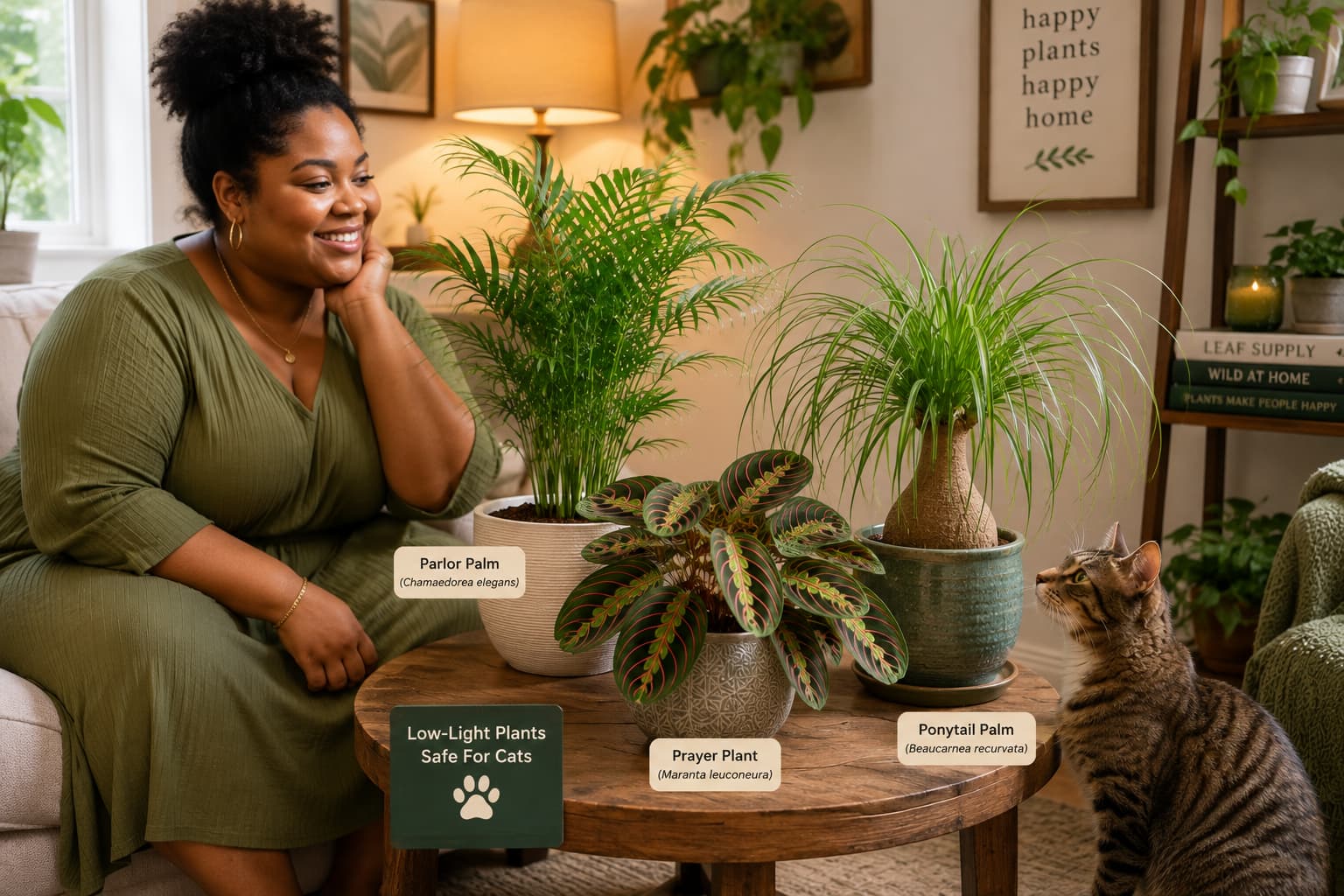
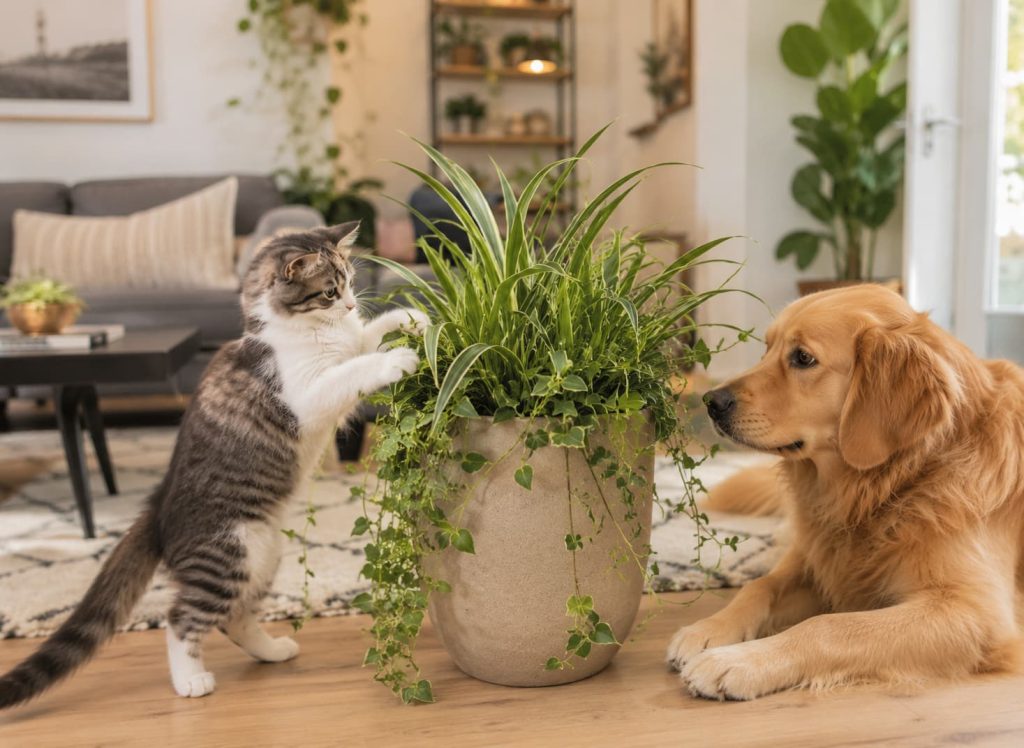
Sharing your home with both houseplants and pets doesn’t have to be a compromise. While some indoor plants can be toxic to cats and dogs, many pet-friendly indoor plants are completely safe when grown responsibly, allowing you to enjoy a lush, green home without putting your furry companions at unnecessary risk.
Whether you’re a first-time plant owner or an experienced indoor gardener, choosing non-toxic houseplants gives you peace of mind while enhancing your living space. From elegant foliage to low-maintenance favorites, there are plenty of beautiful options that thrive indoors and are considered safer for homes with curious pets.
In this guide, you’ll discover 12 of the best pet-friendly indoor plants that are safe for cats and dogs, along with their growing requirements, care tips, key benefits, and practical advice for choosing the right plant for your home and lifestyle.
What Are Pet-Friendly Indoor Plants?
Pet-friendly indoor plants are houseplants that are generally recognized as non-toxic to cats and dogs if accidentally nibbled or touched. Unlike certain ornamental plants that may contain harmful compounds, these plants are considered safer choices for households with pets, allowing you to enjoy indoor greenery with greater peace of mind.
However, “pet-friendly” does not mean pets should be encouraged to eat them. Chewing on any plant can still cause mild stomach upset, vomiting, or digestive discomfort in some animals, and excessive chewing may damage the plant. For this reason, it’s always best to discourage pets from nibbling on houseplants and to provide safe alternatives, such as pet grass or chew toys.
If you’re decorating a home shared with curious cats or playful dogs, choosing pet-friendly indoor plants is one of the simplest ways to create a beautiful living space while reducing the risk associated with toxic houseplants. The 12 plants featured in this guide are widely recognized as safe options that combine attractive foliage or flowers with easy indoor care, making them ideal for pet-loving households.
If you’re new to houseplants or want more low-maintenance options, don’t miss our guide to the 21 best indoor plants that are easy to grow. It features beginner-friendly varieties, practical care tips, and expert advice to help you choose plants that thrive indoors with minimal effort.
Why Choose Pet-Friendly Indoor Plants?
Houseplants add color, texture, and life to indoor spaces, but not every plant is suitable for homes with animals. Some popular species contain compounds that may cause stomach upset or irritation if chewed.
Choosing pet-friendly indoor plants offers several advantages such as:
• Greater peace of mind for pet owners
• Safer environments for curious cats and dogs
• More decorating flexibility
• Reduced worry about accidental nibbling
• Beautiful indoor greenery without unnecessary risks
While no plant should be treated as food for pets, selecting species recognized as non-toxic is a sensible first step.
What Makes an Indoor Plant Pet-Friendly?
A pet-friendly indoor plant is a plant that is generally recognized as non-toxic or low risk to cats and dogs if they accidentally nibble on its leaves or stems. Veterinary organizations, such as the ASPCA Animal Poison Control Center, maintain lists of plants that are considered safe for common household pets.
However, “pet-friendly” does not mean a plant is edible or that pets should be encouraged to chew it. Eating large quantities of any plant—even one considered non-toxic—can still cause mild digestive issues, such as vomiting, diarrhoea, or an upset stomach. For this reason, it’s always best to discourage pets from eating houseplants and to place them where they are less likely to be disturbed.
When choosing a pet-friendly indoor plant, consider these important factors:
• Verified Safety: Confirm that the plant is listed as non-toxic by a reputable source, such as the ASPCA or a trusted horticultural organization.
• Low Maintenance: Choose plants that match your experience level and the amount of care you can provide.
• Suitable Light Requirements: Select plants that will thrive in your home’s natural lighting conditions.
• Appropriate Size: Consider the plant’s mature height and spread to ensure it fits comfortably in your space.
• Pet Behavior: If your cat enjoys climbing or your dog likes chewing leaves, place plants on shelves, hanging planters, or sturdy stands to reduce temptation.
Ultimately, the best pet-friendly indoor plant is one that keeps both your plants and your pets healthy. By selecting non-toxic species, providing proper care, and supervising curious pets, you can enjoy a beautiful indoor garden with greater peace of mind.
Before Bringing Home Any Indoor Plant
It is very important to consider how curious your pets are. Every pet has a unique personality. Some cats are content to ignore houseplants, while others see dangling leaves as irresistible toys. Likewise, some dogs may never show interest in your indoor garden, whereas puppies and younger dogs often explore their surroundings by sniffing, chewing, or digging. Understanding your pet’s behavior before choosing indoor plants can help you create a safer and more enjoyable environment for everyone.
Even if you choose non-toxic indoor plants, frequent chewing, scratching, or digging can damage the plants and create unnecessary mess. In some cases, swallowing large amounts of plant material may still cause mild digestive discomfort, even when the plant itself is considered safe.
To protect both your plants and your pets, consider these practical tips:
• Place plants out of easy reach: Position them on sturdy shelves, plant stands, hanging baskets, or wall-mounted planters whenever possible, especially if you have curious cats or playful puppies.
• Observe your pet’s habits: Some pets lose interest in plants after a few days, while others remain persistent. Monitoring their behavior helps you decide where to place your plants.
• Provide safe alternatives: Cats often enjoy nibbling on cat grass or playing with interactive toys. Offering appropriate alternatives can reduce their interest in your houseplants.
• Redirect unwanted behavior gently: If your pet begins chewing or pawing at a plant, calmly redirect their attention to a toy or treat instead of using punishment. Positive reinforcement is usually more effective.
• Keep the area tidy: Remove fallen leaves, flowers, or stems promptly, as they may attract curious pets or become a choking hazard.
• Choose heavier pots for larger plants: Large dogs or energetic cats can accidentally knock over lightweight containers. Ceramic or weighted pots provide greater stability.
• Avoid placing plants along common pet pathways: Keep plants away from areas where pets frequently run, jump, or play to minimize accidental damage.
• Protect the soil: Some pets enjoy digging in potting soil.
• Protect Decorative Stones: Cover decorative stones that are small enough to be swallowed, coconut fiber mats, or plant pot covers can discourage this behavior while keeping the soil in place.
• Introduce new plants gradually: When bringing home a new houseplant, observe how your pet reacts during the first few days before deciding on its permanent location.
• Regularly inspect your plants: Check for chewed leaves, broken stems, or signs of stress so you can address problems early and keep your indoor garden looking its best.
By combining pet-friendly plant choices with thoughtful placement and a little training, you can enjoy a thriving indoor garden without constantly worrying about your furry companions. A few simple precautions will help keep both your plants healthy and your pets safe, allowing them to share your home comfortably.
Types of Indoor Plants That Are Pet-Friendly
The following plants are attractive, beginner-friendly, and widely recognized as safer options for households with cats and dogs.
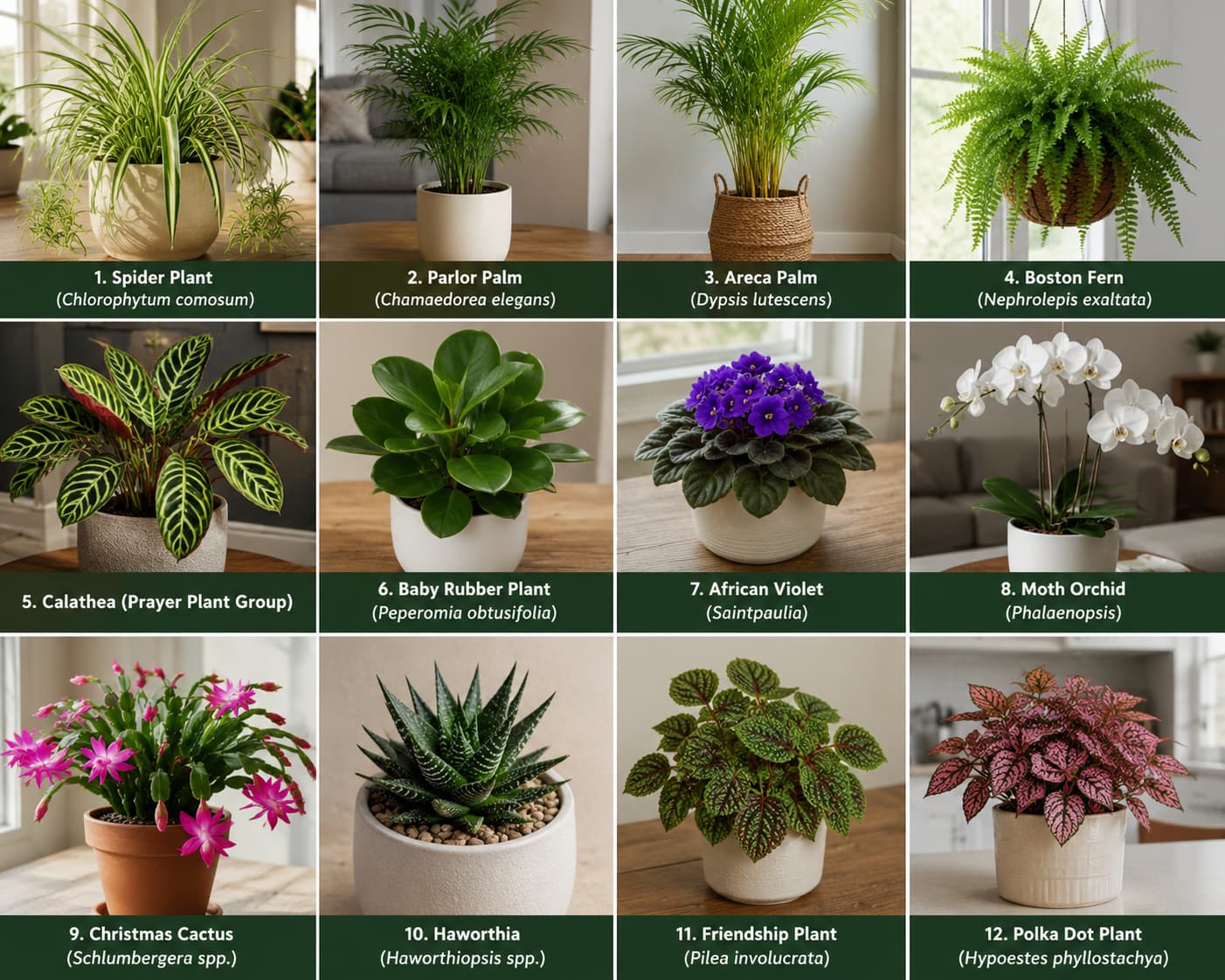
1. The Spider Plant (Chlorophytum comosum)
The Spider Plant (Chlorophytum comosum) is one of the most popular and beginner-friendly houseplants in the world. Loved for its graceful arching leaves, striking green-and-white variegation, and easy-care nature, it thrives in a wide range of indoor environments. As it matures, the plant produces long, slender stems with tiny baby plants—known as plantlets or “spiderettes”—that dangle elegantly from the mother plant, making it an eye-catching addition to shelves, hanging baskets, and plant stands.
Its adaptability, attractive appearance, and forgiving nature make it an excellent choice for both new and experienced indoor gardeners. Better still, the Spider Plant is widely recognized as non-toxic to cats and dogs, making it one of the safest and most popular houseplants for pet-friendly homes.
Best Places to Grow a Spider Plant
Thanks to its cascading foliage and adaptable growing habits, the Spider Plant thrives in a variety of indoor spaces, including:
• Living rooms
• Bedrooms
• Home offices
• Kitchens
• Bathrooms with bright, indirect light
• Hanging baskets near windows
• Shelves and plant stands
Benefits of Growing a Spider Plant
The Spider Plant is more than just an attractive houseplant. Some of its biggest advantages include:
• Beginner-friendly and exceptionally easy to grow
• Produces attractive cascading plantlets that are easy to propagate
• Adapts well to a variety of indoor lighting conditions
• Compact yet decorative, making it suitable for both small and large spaces
• Generally considered safe for cats and dogs
• Adds vibrant greenery and visual interest to any room
• Excellent choice for apartments, offices, and family homes
Why Pet Owners Love It
For households with curious cats and playful dogs, the Spider Plant offers valuable peace of mind. It is widely recognized as non-toxic to pets, making it a safer alternative to many common houseplants. Although it’s still best to discourage pets from chewing on any plant, the Spider Plant allows you to enjoy lush indoor greenery while creating a safer environment for your furry companions.
2. Parlor Palm (Chamaedorea elegans)
The Parlor Palm (Chamaedorea elegans) is one of the most elegant and enduring houseplants, cherished for its graceful, feathery fronds and compact growth habit. Native to the rainforests of Central America, this slow-growing palm has been a popular indoor plant since the Victorian era, when it was commonly displayed in parlors—giving rise to its familiar name.
Its ability to thrive in average indoor conditions, combined with its lush tropical appearance, makes it an excellent choice for beginners and experienced plant enthusiasts alike. Better still, the Parlor Palm is widely recognized as non-toxic to cats and dogs, making it an ideal addition to pet-friendly homes.
Best Places to Grow a Parlor Palm
Thanks to its compact size and adaptability, the Parlor Palm suits many areas of the home, including:
• Apartments
• Living rooms
• Bedrooms
• Home offices
• Reception areas
• Hallways with natural light
• Bright office spaces
Benefits of Growing a Parlor Palm
The Parlor Palm offers much more than beautiful foliage, and some of its biggest advantages include:
• Elegant, timeless appearance
• Slow-growing, requiring minimal pruning
• Easy to care for and beginner-friendly
• Fits comfortably in small and large spaces
• Generally considered safe for cats and dogs
• Creates a lush, tropical atmosphere indoors
• Excellent choice for homes, apartments, and offices
Why Pet Owners Love It
The Parlor Palm is widely recognized as non-toxic to cats and dogs, making it one of the safest palms for households with pets. Although pets should still be discouraged from chewing any houseplant, this elegant palm allows you to enjoy lush indoor greenery with greater confidence and peace of mind.
3. Areca Palm (Dypsis lutescens)
The Areca Palm (Dypsis lutescens), also known as the Butterfly Palm or Golden Cane Palm, is a stunning tropical houseplant admired for its elegant, arching fronds and lush, feathery foliage. Native to Madagascar, this fast-growing palm is an excellent choice for anyone looking to create a bold statement indoors. Its graceful appearance instantly adds warmth, texture, and a relaxed tropical feel to living spaces, making it a favorite among interior designers and plant enthusiasts alike.
Beyond its striking beauty, the Areca Palm is widely recognized as non-toxic to cats and dogs, making it a wonderful option for households that want to enjoy large indoor plants without compromising pet safety.
Best Places to Grow an Areca Palm
Because of its mature size and graceful spread, the Areca Palm thrives in spacious, well-lit areas, including:
• Large living rooms
• Sunrooms
• Bright hallways
• Home offices
• Conservatories
• Dining rooms with plenty of natural light
• Reception areas and entrances
Benefits of Growing an Areca Palm
The Areca Palm offers far more than tropical beauty. Some of its biggest advantages include:
• Creates a striking focal point in any room
• Elegant, feathery foliage adds a luxurious tropical feel
• Generally considered safe for cats and dogs
• Ideal for filling empty corners and larger indoor spaces
• Complements both modern and traditional interior styles
• Easy to care for once established
• Suitable for homes, apartments with bright light, and office environments
Why Pet Owners Love It
The Areca Palm is widely recognized as non-toxic to cats and dogs, making it one of the safest large indoor palms for pet-friendly homes. While it’s always best to discourage pets from chewing on houseplants, the Areca Palm allows pet owners to enjoy dramatic indoor greenery with greater confidence and peace of mind.
4. Boston Fern (Nephrolepis exaltata)
The Boston Fern (Nephrolepis exaltata) is a timeless houseplant celebrated for its lush, arching fronds and soft, cascading foliage. Its rich green leaves bring texture, movement, and natural elegance to indoor spaces, making it one of the most popular ferns for homes and offices. Although it requires slightly more attention than some low-maintenance houseplants, its classic beauty and rewarding growth make the extra care worthwhile.
The Boston Fern is also widely recognized as non-toxic to cats and dogs, making it an excellent choice for pet owners who want a vibrant, pet-friendly indoor garden.
Best Places to Grow a Boston Fern
Boston Ferns thrive in locations with bright, indirect light and higher humidity, making them well suited to:
• Bathrooms with bright windows
• Kitchens
• Living rooms with filtered sunlight
• Enclosed balconies
• Sunrooms
• Home offices with good natural light
• Covered patios in suitable climates
Benefits of Growing a Boston Fern
The Boston Fern is valued for both its beauty and versatility. Some of its key benefits include:
• Lush, cascading foliage creates a full, elegant appearance
• Generally considered safe for cats and dogs
• Adds softness and texture to indoor décor
• Perfect for hanging baskets and decorative plant stands
• Thrives in humid rooms such as bathrooms and kitchens
• Creates a refreshing tropical atmosphere indoors
• An excellent choice for gardeners looking to expand beyond beginner houseplants
Why Pet Owners Love It
For pet owners who enjoy lush, leafy houseplants, the Boston Fern is a reassuring choice. It is widely recognized as non-toxic to cats and dogs, allowing you to enjoy its beautiful cascading foliage while maintaining a safer environment for curious pets. Although pets should still be discouraged from chewing any plant, the Boston Fern remains one of the most trusted pet-friendly indoor plants available.
5. Calathea (Prayer Plant Group)
The Calathea, commonly known as the Prayer Plant, is one of the most visually striking types of indoor plants, prized for its bold foliage and intricate leaf patterns. Native to the tropical rainforests of South America, Calatheas are available in a variety of colors and markings, ranging from deep green and silver to rich purple undersides. One of their most fascinating characteristics is their daily leaf movement—each evening, the leaves gently fold upward as if in prayer before reopening with the morning light, giving rise to their popular nickname.
In addition to their remarkable beauty, Calatheas are widely recognized as non-toxic to cats and dogs, making them an excellent choice for pet owners who want vibrant, decorative foliage without compromising their pets’ safety.
Best Places to Grow a Calathea
Calatheas thrive in warm, humid environments with filtered light, making them ideal for:
• Living rooms with bright, indirect light
• Bedrooms
• Bathrooms with natural light
• Home offices
• Kitchens with good humidity
• Shelves and plant stands away from direct sunlight
Benefits of Growing a Calathea
The Calathea is admired for much more than its unique appearance. Some of its biggest advantages include:
• Stunning foliage with eye-catching patterns and colors
• Fascinating daily leaf movements that add visual interest
• Generally considered safe for cats and dogs
• Perfect for adding a tropical feel to indoor spaces
• Available in many beautiful varieties
• Makes an impressive focal point in home décor
• Ideal for plant lovers who enjoy caring for ornamental foliage
Why Pet Owners Love It
Calatheas are widely recognized as non-toxic to cats and dogs, allowing pet owners to enjoy their spectacular foliage with greater confidence. While they appreciate consistent care and higher humidity than some houseplants, their striking appearance and pet-friendly status make them a rewarding addition to any indoor plant collection.
6. Baby Rubber Plant (Peperomia obtusifolia)
The Baby Rubber Plant (Peperomia obtusifolia) is a compact, attractive houseplant loved for its thick, glossy leaves and exceptionally easy-care nature. Despite its common name, it is not related to the Rubber Plant (Ficus elastica). Instead, it belongs to the Peperomia genus and is well suited to smaller spaces, making it a popular choice for apartments, offices, and desktops.
Its fleshy leaves store water, allowing it to tolerate occasional missed watering better than many leafy houseplants. Combined with its tidy growth habit and attractive foliage, this makes the Baby Rubber Plant an excellent option for beginners. It is also widely recognized as non-toxic to cats and dogs, making it a safe and stylish choice for pet-friendly homes.
Best Places to Grow a Baby Rubber Plant
Thanks to its compact size and versatility, the Baby Rubber Plant fits comfortably into many indoor spaces, including:
• Home offices
• Desks and workstations
• Bedrooms
• Living rooms
• Kitchen countertops
• Bookshelves
• Apartment windows with bright, indirect light
Benefits of Growing a Baby Rubber Plant
The Baby Rubber Plant offers a variety of advantages that make it a favorite among indoor gardeners, including:
• Compact size that’s ideal for smaller spaces
• Thick, glossy foliage adds year-round beauty
• Generally considered safe for cats and dogs
• Easy to care for and beginner-friendly
• Tolerates occasional missed watering
• Fits beautifully into modern and minimalist interiors
• Excellent choice for desks, shelves, and tabletops
Why Pet Owners Love It
The Baby Rubber Plant is widely recognized as non-toxic to cats and dogs, making it one of the safest foliage plants for households with pets. Its compact growth, attractive leaves, and low-maintenance nature allow pet owners to enjoy beautiful indoor greenery without worrying about introducing a potentially harmful plant into their home.
7. African Violet (Saintpaulia)
The African Violet (Saintpaulia) is one of the most beloved flowering houseplants, admired for its vibrant blooms and compact size. Available in shades of purple, pink, blue, white, and even bi-colored varieties, African Violets can brighten indoor spaces with colorful flowers throughout much of the year when given proper care. Their neat growth habit and long flowering period make them a favorite for windowsills, coffee tables, and office desks.
In addition to their ornamental appeal, African Violets are widely recognized as non-toxic to cats and dogs, making them an excellent choice for pet owners who want to enjoy colorful indoor blooms without compromising their pets’ safety.
Best Places to Grow an African Violet
Thanks to their compact size and love of filtered light, African Violets thrive in many indoor locations, including:
• Windowsills with bright, filtered light
• Coffee tables
• Side tables
• Home offices
• Bedrooms
• Kitchen counters
• Small apartments and studio flats
Benefits of Growing an African Violet
African Violets are prized for both their beauty and ease of care. Some of their biggest advantages include:
• Produces colorful flowers for much of the year
• Compact size, perfect for smaller spaces
• Generally considered safe for cats and dogs
• Available in a wide range of flower colors and varieties
• Ideal for windowsills and tabletops
• Beginner-friendly with proper watering habits
• Adds year-round color to indoor spaces
Why Pet Owners Love It
African Violets are widely recognized as non-toxic to cats and dogs, making them one of the safest flowering houseplants for pet-friendly homes. Their compact size, continuous blooms, and colorful appearance allow pet owners to enjoy beautiful indoor flowers while maintaining a safer environment for curious pets.
8. Moth Orchid (Phalaenopsis)
The Moth Orchid (Phalaenopsis) is one of the most elegant and popular indoor flowering plants, admired for its graceful arching stems and long-lasting blooms. Unlike many orchid species that require specialized care, Moth Orchids are relatively easy to grow, making them an excellent choice for beginners and experienced plant lovers alike. Their stunning flowers, available in shades of white, pink, purple, yellow, and spotted varieties, can remain in bloom for two to four months, adding lasting beauty to any room.
Better still, the Moth Orchid is widely recognized as non-toxic to cats and dogs, making it a sophisticated yet pet-friendly addition to your indoor plant collection.
Best Places to Grow a Moth Orchid
Moth Orchids flourish in bright, indirect light and make beautiful decorative centerpieces in:
• Living rooms
• Dining rooms
• Bright home offices
• Bedrooms
• Entryways
• Kitchen islands with filtered sunlight
• Coffee and side tables
Benefits of Growing a Moth Orchid
Moth Orchids offer a combination of elegance and practicality that few flowering houseplants can match. Their benefits include:
• Stunning, long-lasting flowers that can bloom for several months
• Elegant appearance suitable for any interior style
• Generally considered safe for cats and dogs
• Relatively easy to care for compared to many orchid varieties
• Available in a wide range of colors and patterns
• Makes an impressive centerpiece or decorative accent
• Suitable for beginners willing to follow a simple care routine
Why Pet Owners Love It
For households with pets, the Moth Orchid offers the perfect balance of beauty and peace of mind. It is widely recognized as non-toxic to cats and dogs, allowing pet owners to enjoy spectacular, long-lasting blooms without introducing a potentially harmful plant into the home. With proper care, this elegant orchid can reward you with flowers that brighten your living space for months at a time.
9. Christmas Cactus (Schlumbergera spp.)
The Christmas Cactus (Schlumbergera spp.) is a charming flowering houseplant that brings vibrant color to indoor spaces, especially during the festive season. Unlike desert cacti, it is native to the tropical rainforests of Brazil, where it naturally grows on trees and rocky surfaces. Its arching, flattened stems and spectacular blooms in shades of pink, red, white, orange, or purple make it a favorite among indoor gardeners looking for a long-lasting flowering plant.
With proper care, a Christmas Cactus can live for decades and bloom year after year, making it both a beautiful and rewarding addition to your home. It is also widely recognized as non-toxic to cats and dogs, making it an excellent choice for pet-friendly households.
Best Places to Grow a Christmas Cactus
Christmas Cacti thrive in bright, indirect light and look beautiful in a variety of indoor settings, including:
• Living rooms
• Bright bedrooms
• Home offices
• Dining rooms
• Coffee tables
• Windowsills with filtered sunlight
• Shelves and decorative plant stands
Benefits of Growing a Christmas Cactus
The Christmas Cactus is valued for its colorful flowers and easy-going nature. Some of its biggest advantages include:
• Produces stunning pink, red, white, orange, or purple blooms
• Flowers during the festive season when many plants are dormant
• Long lifespan with proper care, often lasting for decades
• Generally considered safe for cats and dogs
• Beginner-friendly and relatively easy to maintain
• Adds vibrant color and seasonal interest to indoor spaces
• Makes an excellent gift or family heirloom plant
Why Pet Owners Love It
The Christmas Cactus is widely recognized as non-toxic to cats and dogs, making it one of the safest flowering houseplants for pet-friendly homes. While pets should still be discouraged from chewing on any plant, its colorful blooms and pet-friendly reputation allow homeowners to enjoy seasonal beauty with greater confidence and peace of mind.
10. Haworthia (Haworthiopsis spp.)
The Haworthia (Haworthiopsis spp.) is a compact succulent admired for its architectural form, thick fleshy leaves, and exceptional ease of care. Often mistaken for a miniature Aloe Vera, Haworthia forms attractive rosettes with textured green leaves that may feature white stripes, raised bumps, or translucent leaf tips, depending on the variety. Its small size and slow growth make it an excellent choice for desks, shelves, windowsills, and other limited spaces.
Unlike many succulents, Haworthia is widely recognized as non-toxic to cats and dogs, making it one of the safest succulent options for pet owners who want a modern, low-maintenance indoor plant.
Best Places to Grow a Haworthia
Haworthias are highly versatile and fit beautifully into small indoor spaces, including:
• Home offices
• Desks and workstations
• Bookshelves
• Windowsills with bright, indirect light
• Coffee tables
• Bedrooms
• Apartment living spaces
Benefits of Growing a Haworthia
The Haworthia is an excellent choice for busy plant owners and beginners alike. Some of its biggest advantages include:
• Very low-maintenance and beginner-friendly
• Compact size, perfect for small spaces
• Generally considered safe for cats and dogs
• Stores water in its thick leaves, making it drought tolerant
• Attractive modern appearance that suits any décor
• Slow-growing and easy to manage
• Excellent choice for desks, shelves, and succulent collections
Why Pet Owners Love It
Haworthia is widely recognized as non-toxic to cats and dogs, giving pet owners the opportunity to enjoy the beauty of succulents without the concern associated with some other popular varieties. Its compact size, hardy nature, and minimal watering requirements make it one of the easiest and safest indoor plants for homes shared with curious pets.
11. Friendship Plant (Pilea involucrata)
The Friendship Plant (Pilea involucrata) is a charming, compact houseplant admired for its richly textured, quilted leaves and vibrant green foliage, often accented with bronze or reddish tones. Native to the tropical regions of Central and South America, this attractive plant is perfect for adding color and texture to shelves, desks, and small indoor spaces. Its neat growth habit and manageable size make it an excellent choice for apartments and homes where space is limited.
The Friendship Plant is also widely recognized as non-toxic to cats and dogs, making it a wonderful option for pet owners who want a decorative foliage plant that’s both attractive and reassuringly safe.
Best Places to Grow a Friendship Plant
Thanks to its compact size and preference for bright, indirect light, the Friendship Plant grows well in a variety of indoor locations, including:
• Bookshelves
• Coffee tables
• Plant stands
• Bedrooms
• Home offices
• Living room side tables
• Apartment windows with filtered sunlight
Benefits of Growing a Friendship Plant
The Friendship Plant offers plenty of advantages for indoor gardeners, including:
• Beautiful textured and quilted foliage
• Compact growth that’s ideal for smaller spaces
• Generally considered safe for cats and dogs
• Easy to maintain with consistent care
• Adds color, texture, and visual interest to indoor décor
• Suitable for apartments, offices, and bedrooms
• Excellent choice for tabletop displays and decorative shelves
Why Pet Owners Love It
The Friendship Plant is widely recognized as non-toxic to cats and dogs, making it an excellent addition to pet-friendly homes. Its compact size and attractive foliage allow pet owners to enjoy lush indoor greenery while providing greater peace of mind around curious cats and playful dogs.
12. Polka Dot Plant (Hypoestes phyllostachya)
The Polka Dot Plant (Hypoestes phyllostachya) is a colorful foliage plant celebrated for its vibrant leaves decorated with eye-catching pink, red, white, or rose-colored speckles. Native to Madagascar, this cheerful houseplant instantly brightens indoor spaces and adds a playful splash of color to shelves, desks, and tabletops. Its compact growth habit makes it especially suitable for smaller homes, apartments, and offices where space is limited but style is important.
Better still, the Polka Dot Plant is widely recognized as non-toxic to cats and dogs, making it a colorful and pet-friendly choice for households with furry companions.
Best Places to Grow a Polka Dot Plant
The Polka Dot Plant thrives in bright, filtered light and fits beautifully into many indoor settings, including:
• Small apartments
• Children’s rooms
• Home offices
• Decorative tabletop displays
• Living room shelves
• Bedroom windowsills
• Plant stands with indirect sunlight
Benefits of Growing a Polka Dot Plant
The Polka Dot Plant is loved for its vibrant foliage and compact size. Some of its biggest advantages include:
• Colorful leaves available in pink, red, and white varieties
• Adds instant personality and contrast to indoor décor
• Generally considered safe for cats and dogs
• Compact size that’s perfect for smaller spaces
• Easy to grow with regular watering and bright, indirect light
• Encourages fuller growth with occasional pruning
• Excellent accent plant for shelves, desks, and tabletops
Why Pet Owners Love It
The Polka Dot Plant is widely recognized as non-toxic to cats and dogs, allowing pet owners to enjoy its colorful foliage with confidence. Its small size, vibrant appearance, and pet-friendly reputation make it an attractive choice for anyone looking to brighten their home while creating a safer indoor environment for curious pets.
10 Common Mistakes Pet Owners Make When Choosing Indoor Plants
Selecting an indoor plant based solely on its appearance can lead to unnecessary problems for both you and your pets. Some plants may struggle in your home’s environment, while others may not be suitable for curious cats or dogs. By understanding these common mistakes, you can build a thriving indoor garden that’s both beautiful and pet-friendly.
1. Assuming Every Houseplant Is Safe
One of the biggest mistakes new plant owners make is assuming that every houseplant is safe simply because it’s commonly sold in garden centers or supermarkets. In reality, many popular indoor plants contain compounds that may be harmful to cats or dogs if chewed or swallowed.
Before bringing any new plant home, take a few minutes to verify whether it is considered pet-friendly through reliable sources such as your veterinarian or reputable horticultural organizations. A little research can help you avoid unnecessary risks and give you greater peace of mind.
2. Forgetting That Pets Love to Explore
Cats love climbing, batting at dangling leaves, and squeezing into small spaces, while dogs often investigate new objects by sniffing or chewing them. Even if you’ve chosen non-toxic plants, curious pets can still damage leaves, knock over pots, or dig in the soil.
To protect both your plants and your pets:
• Place plants on sturdy shelves or plant stands where practical.
• Use hanging baskets for trailing plants.
• Provide cats with climbing towers and scratching posts.
• Offer safe chew toys or pet grass as alternatives.
• Redirect unwanted behavior calmly and consistently.
Thoughtful placement goes a long way toward keeping your indoor garden looking its best.
3. Ignoring Your Home’s Lighting Conditions
Buying a beautiful plant without considering your home’s lighting is one of the fastest ways to end up with unhealthy foliage. A plant that thrives beside a bright window may struggle in a dim hallway or windowless room.
Before purchasing a plant, evaluate how much natural light the intended location receives throughout the day. Matching the plant to the available light is far easier than trying to change your home’s environment later.
As a general guide:
• Bright windows suit flowering plants and many tropical species.
• Medium light works well for many foliage plants.
• Lower-light areas are better suited to naturally shade-tolerant varieties.
4. Overwatering Your Plants
Overwatering is the leading cause of indoor plant problems. Many beginners water according to a fixed schedule rather than checking whether the soil actually needs moisture.
Instead, allow the plant to tell you when it’s time to water. Insert your finger into the soil or use a moisture meter before watering. Many houseplants prefer the top layer of soil to dry slightly between watering.
Remember, it’s usually much easier to revive a slightly dry plant than one suffering from root rot caused by consistently wet soil.
5. Choosing High-Maintenance Plants
Not every plant fits every lifestyle. If you travel frequently, work long hours, or simply prefer low-maintenance gardening, demanding plants may quickly become frustrating.
Instead, consider reliable, beginner-friendly choices such as:
• Spider Plant
• Haworthia
• Cast Iron Plant
• Parlor Palm
These plants generally tolerate occasional missed watering and adapt well to average indoor conditions, making them excellent choices for busy households.
6. Using Pots Without Drainage Holes
A beautiful decorative pot may look attractive, but if it doesn’t allow excess water to escape, your plant’s roots can remain constantly wet. Poor drainage is one of the most common causes of root rot, fungal diseases, and declining plant health.
Whenever possible:
• Choose pots with drainage holes.
• Use a saucer to catch excess water.
• Empty standing water after watering.
• Place decorative cachepots around nursery pots rather than planting directly into containers without drainage.
Healthy roots are the foundation of a healthy houseplant.
7. Buying Plants Without Doing Any Research
Impulse purchases are common, especially when a plant looks beautiful in the shop. However, many homeowners later discover that the plant grows much larger than expected or requires care that doesn’t suit their home.
Before purchasing any houseplant, find out:
• Its mature size
• Light requirements
• Watering needs
• Humidity preferences
• Growth habit
• Pet safety
• Difficulty level
Spending just a few minutes researching a plant can save months—or even years—of frustration and help you choose one you’ll enjoy for a long time.
8. Ignoring Humidity Requirements
While many indoor plants adapt well to average household humidity, others naturally grow in tropical forests where the air is consistently moist. Plants such as Boston Ferns and Calatheas often develop brown leaf edges or dry tips if the surrounding air becomes too dry.
If your home has low humidity, especially during winter or in air-conditioned rooms, you can create a more suitable environment by:
• Grouping plants together.
• Using a room humidifier.
• Placing plants in naturally humid rooms, such as bathrooms with good natural light.
• Keeping plants away from heating vents and air conditioners.
Meeting a plant’s humidity needs often results in healthier foliage and stronger overall growth.
9. Letting Pets Dig in Plant Pots
Many cats enjoy digging through loose potting soil, while some dogs may paw at containers out of curiosity. This behavior can damage roots, scatter soil across your home, and stress the plant.
To discourage digging:
• Cover the soil surface with smooth decorative stones that are too large to swallow.
• Move plants to less accessible locations.
• Use heavier pots that are difficult to tip over.
• Give pets plenty of toys, enrichment activities, and designated digging or play areas.
Addressing the behavior early helps protect both your plants and your home.
10. Expecting Instant Growth
Many new plant owners expect their houseplants to grow quickly after bringing them home. In reality, most indoor plants grow gradually, and some naturally produce only a few new leaves each year.
Rather than focusing on rapid growth, pay attention to signs of good health, such as:
• New leaves emerging regularly
• Rich, vibrant foliage
• Strong stems
• Healthy root development
• Steady, consistent growth
Patience is one of the most important skills every indoor gardener can develop. With proper light, watering, and care, your plants will reward you with lasting beauty for many years.
Tips to Stop Pets from Chewing Houseplants
Even with pet-safe plants, preventing chewing helps protect both your pets and your plants.
Try these practical strategies:
• Place plants on elevated shelves or hanging planters.
• Rotate toys to keep pets mentally stimulated.
• Provide safe grass or chew alternatives for cats where appropriate.
• Train pets using positive reinforcement.
• Keep fallen leaves cleaned up promptly.
• Supervise young pets around new plants until they lose interest.
These simple habits can significantly reduce unwanted nibbling while helping your indoor garden flourish.
For trusted, university-backed gardening advice, explore UF/IFAS Gardening Solutions. Their expert resources cover houseplant care, plant selection, watering, pest management, propagation, and sustainable gardening practices. It’s a reliable source of science-based guidance for both beginner and experienced indoor gardeners.
Frequently Asked Questions (FAQs)
These answers are written to be concise and informative, making them suitable for featured snippets while addressing common search queries.
1. What types of indoor plants are safe for cats and dogs?
Some of the best types of indoor plants that are generally considered safe for cats and dogs include:
• Spider Plant
• Parlor Palm
• Areca Palm
• Boston Fern
• Calathea
• Baby Rubber Plant (Peperomia obtusifolia)
• African Violet
• Moth Orchid
• Christmas Cactus
• Haworthia
• Friendship Plant
• Polka Dot Plant
• Swedish Ivy
• Bamboo Palm
• Cast Iron Plant
Always verify the latest pet safety information from trusted veterinary sources before purchasing a new plant.
2. Can pets still chew pet-friendly plants?
Yes, and even though these plants are generally regarded as non-toxic, chewing large amounts of any plant material may cause mild digestive upset, such as vomiting or diarrhoea.
It’s always best to discourage pets from chewing houseplants.
3. Which pet-friendly indoor plant is easiest to care for?
For beginners, these plants are among the easiest to maintain:
• Spider Plant
• Haworthia
• Cast Iron Plant
• Parlor Palm
• Baby Rubber Plant
They tolerate occasional care mistakes and adapt well to normal indoor environments.
4. Which pet-friendly indoor plants grow well in low light?
Several plants perform well in moderate to lower light conditions, including:
• Cast Iron Plant
• Parlor Palm
• Friendship Plant
• Calathea (with some natural light)
Keep in mind that all plants need some light to grow, even those described as low-light tolerant.
5. Are succulents safe for cats and dogs?
Some succulents are considered pet-friendly, while others are not.
For example:
• Generally considered safer choices:
• Haworthia
Plants commonly avoided in pet households:
• Aloe Vera
• Jade Plant
Always identify the exact species before bringing a succulent into your home.
6. How often should I water pet-friendly indoor plants?
There isn’t a single watering schedule that suits every plant.
Instead:
• Check the soil regularly.
• Water when the top layer begins to dry (or allow it to dry completely for succulents like Haworthia).
• Adjust watering based on the season, humidity, and light levels.
7. Where should I place pet-friendly houseplants?
Choose locations that provide suitable light while reducing the temptation for pets to investigate.
Good options include:
• Plant stands
• Floating shelves
• Hanging baskets
• Bright windowsills that pets cannot easily access
Always ensure the placement matches each plant’s light requirements.
8. How do I know if a plant is pet-friendly?
Before buying any plant:
• Check the plant’s scientific name.
• Verify its safety using a trusted veterinary resource, such as the ASPCA’s Toxic and Non-Toxic Plants database.
• Purchase from reputable nurseries that clearly label plant varieties.
9. What should I do if my pet eats a houseplant?
If you suspect your pet has eaten any houseplant:
• Remove any remaining plant material from your pet’s mouth if it is safe to do so.
• Identify the plant if possible.
• Watch for symptoms such as vomiting, drooling, or unusual behavior.
• Contact your veterinarian promptly if you have concerns or if symptoms develop.
Quick identification of the plant helps your veterinarian provide appropriate advice.
For more research-based gardening advice, visit Penn State Extension. Their expert resources cover houseplant care, watering, plant propagation, container gardening, pest management, and common indoor plant problems. It’s a trusted source of practical, science-based guidance for both beginner and experienced indoor gardeners.
In Conclusion
Choosing the right Types of Pet-Friendly Indoor Plants doesn’t mean you have to compromise between a beautiful home and the wellbeing of your pets. By selecting species that are generally recognized as pet-friendly and providing the right light, water, and care, you can create a vibrant indoor garden that’s enjoyable for the whole household. Whether you prefer elegant palms, colorful flowering plants, hardy succulents, or lush ferns, there’s a pet-friendly option to suit every room, lifestyle, and level of gardening experience.
If you’re building an indoor plant collection, you may also enjoy these related guides:
The Ultimate Guide to Choosing, Growing & Caring for Pet-Friendly Indoor Plants
21 Best Indoor Plants That Thrive in Almost Every Home (Easy to Grow All Year)
These articles will help you choose, grow, and care for indoor plants with greater confidence.

I’m Bon (aka Guider), an indoor gardening writer and houseplant enthusiast passionate about helping beginners successfully grow and care for indoor plants. I create practical, beginner-friendly guides covering indoor plant care, watering, lighting, soil, repotting, plant problems, and choosing suitable houseplants for different homes. My articles draw on research from trusted horticultural organizations, university extension resources, and botanical institutions, combined with practical plant-care principles and careful content review.