
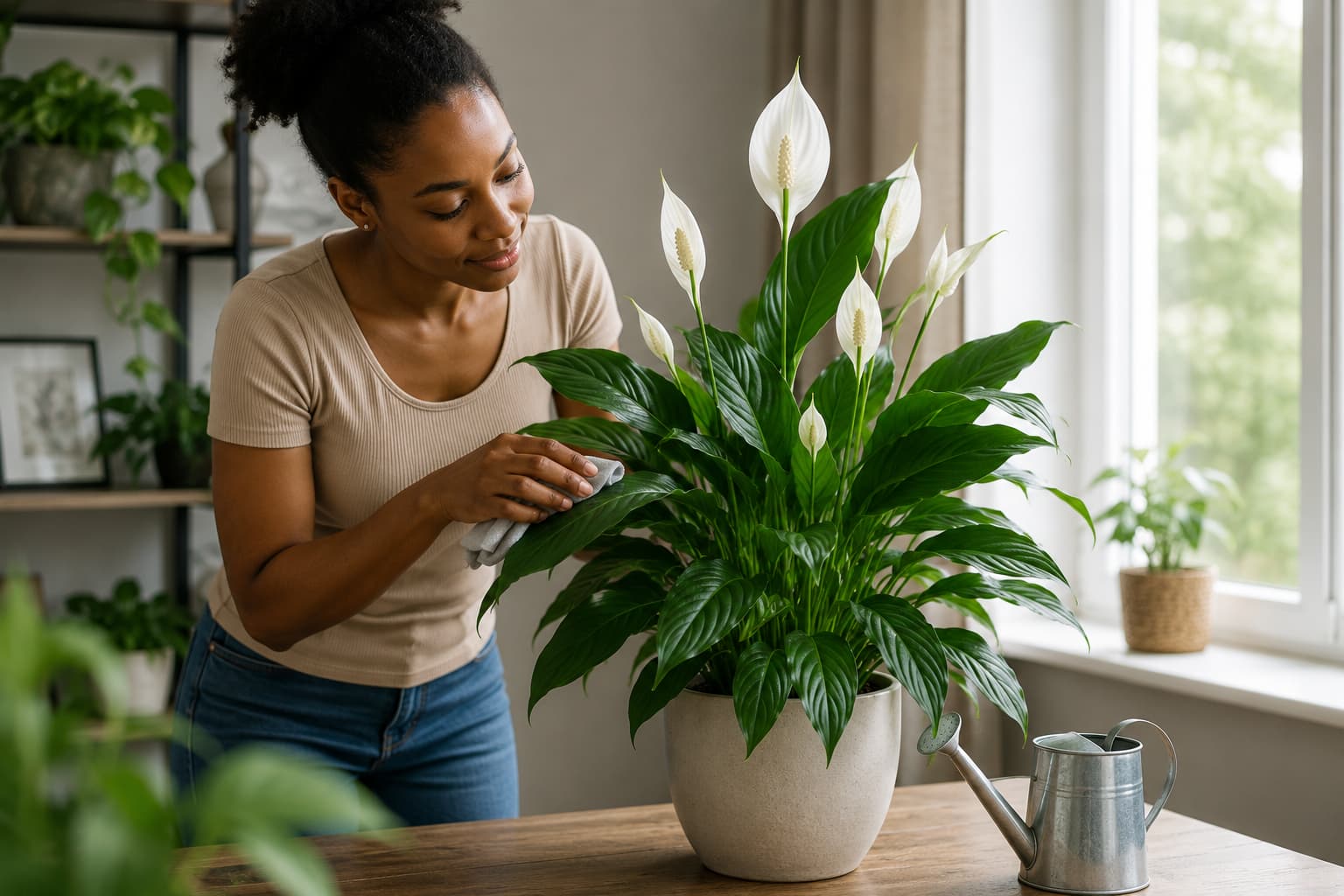
A peace lily can look almost indestructible when you first bring it home, but good peace lily care is still essential for keeping it healthy. Its glossy green leaves can tolerate lower light than many flowering houseplants, and the plant can dramatically droop when thirsty and recover quickly after watering.
But that does not mean peace lilies can thrive under any conditions. They still need the right balance of light, water, soil, humidity, temperature, and feeding to stay healthy and produce their elegant white flowers.
The biggest problems usually come from an imbalance between light, watering, drainage, temperature, humidity, and soil. Too much direct sunlight can scorch the leaves, while soil that stays wet for too long can damage the roots. A plant kept in very low light may survive but produce few or no flowers.
Good peace lily care is therefore less about following a rigid watering schedule and more about learning to read what the plant and its growing medium are telling you.
This guide explains how to care for a peace lily indoors, including its light requirements, watering needs, soil, feeding, humidity, repotting, pruning, flowering, and the most common problems beginners encounter.
Keep a peace lily in bright, indirect light; water when the upper few centimeters of the potting mix become dry; use a well-draining mix and a pot with drainage holes; keep it warm and away from harsh sunlight and cold drafts; and avoid allowing the roots to remain in waterlogged soil.
Growing healthy indoor plants is easier than it looks—but knowing where to start can make all the difference. Our guide indoor plant care for beginners is not just about watering your plants; it involves giving each plant the right amount of light, water, soil, humidity, temperature, and space to grow.
What Is a Peace Lily?
The peace lily belongs to the genus Spathiphyllum in the arum family, Araceae. Despite its common name, it is not a true lily.
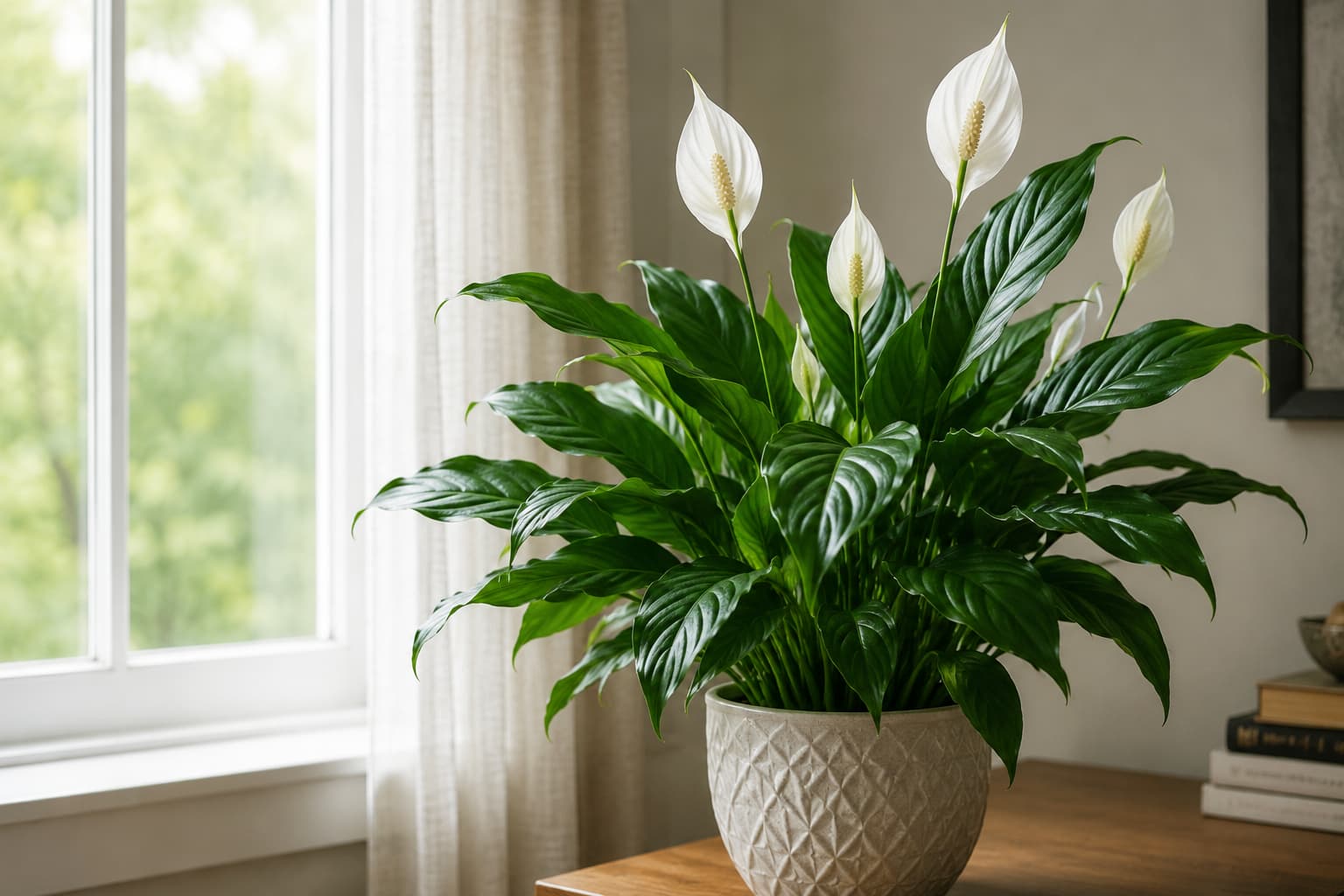
Peace lilies are tropical perennial plants associated with forest environments in tropical regions. Their large, glossy leaves and distinctive white structures make them popular indoor plants.
What people commonly call the “flower” is actually a spathe, a modified leaf surrounding a central structure called the spadix, where the tiny true flowers are found. The white spathe can gradually turn green as it ages.
Different Spathiphyllum species and cultivars vary considerably in size. Some remain relatively compact, while larger cultivars can become substantial floor plants.
For indoor growers, the important point is that peace lilies are tropical plants that generally appreciate warmth, indirect light, adequate moisture, and reasonable humidity.
Peace Lily Care at a Glance
| Care Factor | What a Peace Lily Generally Needs |
| Light | Bright, indirect or filtered light |
| Direct sun | Avoid strong direct sunlight |
| Water | Water when the upper layer of mix becomes dry |
| Soil | Moisture-retentive but well-draining potting mix |
| Pot | Container with drainage holes |
| Humidity | Moderate to higher humidity is beneficial |
| Temperature | Warm, stable indoor conditions |
| Fertilizer | Light feeding during active growth |
| Repotting | When roots become crowded or the mix deteriorates |
| Flowering | Good light and appropriate growing conditions |
| Difficulty | Generally beginner-friendly |
These are starting points rather than rigid rules. Indoor conditions vary, so your watering frequency, for example, may be very different from another grower’s.
11 Peace Lily Care Tips for Healthy Growth
Master peace lily care with these 11 simple tips for healthy growth. Learn how to provide the right light, water, soil, humidity, and feeding for a thriving peace lily indoors.
1. Give Your Peace Lily Bright, Indirect Light
One of the most important parts of peace lily care is getting the lighting right.
Peace lilies are often described as low-light plants, but low-light tolerant does not mean no-light.
They can survive in relatively low light, but growth is usually stronger when they receive bright, filtered or indirect light. The Royal Horticultural Society recommends bright, indirect light for strong growth and flowering, while Missouri Botanical Garden notes that peace lilies tolerate lower light but prefer bright filtered light.
What does bright, indirect light mean?
Think of a location where the plant receives plenty of daylight but the sun’s strongest rays do not fall directly on its leaves for extended periods.
Good locations may include:
• Near a bright window with a sheer curtain
• A short distance from a bright east-facing window
• Near a bright north-facing window where appropriate
• A bright room where the plant is protected from intense afternoon sun
In a very bright, hot environment, especially during intense afternoon sunlight, move the plant farther from the window or filter the light.
What happens with too much light?
Strong direct sunlight can scorch peace lily foliage. You may notice:
• Brown or bleached patches
• Crispy leaf areas
• Faded-looking foliage
• Rapid moisture loss from the potting mix
• What happens with too little light?
The plant may remain alive but grow slowly and produce fewer flowers.
This is especially important if your peace lily is healthy-looking but not blooming.
If your peace lily is receiving very little natural light, don’t automatically compensate by watering it more. Low light reduces the plant’s energy production and can also affect how quickly the growing medium dries.
If your home has limited natural light, these 21 best low light indoor plants for beginners. Discover hardy plants that can thrive in darker rooms with minimal fuss.
2. Learn How Often to Water a Peace Lily
There is no universally correct answer to how often to water a peace lily.
A fixed schedule such as “water every Sunday” can easily lead to overwatering or underwatering because the plant’s water requirements change with:
• Light intensity
• Temperature
• Humidity
• Pot size
• Potting mix
• Root development
• Season
• Air movement
Instead, use the condition of the potting mix as your guide.
The RHS recommends watering when the upper few centimeters of compost have dried, while Missouri Botanical Garden advises keeping the soil evenly moist but not soggy and allowing it to dry between waterings.
A simple watering method
1. Check the upper layer of the potting mix with your finger.
2. If the surface and upper layer have begun to dry, assess the plant’s overall condition.
3. Water thoroughly rather than giving only a tiny splash.
4. Allow excess water to drain through the bottom of the pot.
5. Empty any standing water from a saucer or decorative container.
The goal is moist but aerated soil, not permanently saturated soil.
Why small amounts of water can be a problem
Giving a plant a small amount of water every day can wet only part of the root zone. Depending on the pot and growing medium, some roots may remain dry while other areas stay persistently wet.
A thorough watering followed by appropriate drying is generally easier to manage.
3. Don’t Confuse a Drooping Peace Lily With a Dying Plant
Few houseplants are as dramatic as a thirsty peace lily.
A peace lily with drooping leaves can look severely wilted, sometimes appearing as though it is beyond recovery.
Underwatering is one possible cause. The RHS specifically notes that peace lilies can droop dramatically when they need water and may perk up after watering.
But drooping does not automatically mean the plant needs more water.
Peace lily leaves drooping can have several causes
Possible causes include:
• Dry potting mix
• Root damage
• Excessively wet soil
• Sudden temperature stress
• Very low humidity
• Transplant stress
• Poor root health
This distinction matters.
If the soil is extremely dry and the plant is drooping, watering may be appropriate.
If the soil is already saturated and the plant remains wilted, adding more water could make the underlying problem worse.
A useful diagnostic
Before watering a drooping peace lily, check the soil first.
Dry soil + drooping leaves: underwatering becomes more likely.
Wet soil + drooping leaves: investigate drainage, root health, and watering practices before adding more water.
This simple check can prevent one of the most common houseplant mistakes: treating every wilted plant with more water.
4. Use the Right Peace Lily Soil
Peace lilies need a growing medium that can hold enough moisture for their roots without remaining saturated for prolonged periods.
The University of Florida IFAS Extension (Gardening Solutions) recommends a rich organic potting medium, while Missouri Botanical Garden emphasizes well-drained soil that stays moist without becoming soggy.
A suitable indoor potting mix should provide a balance between:
• Moisture retention
• Drainage
• Air spaces around the roots
• Physical stability
• Organic matter
A commercial indoor potting mix can work well if it drains properly.
You can improve a dense mix with materials that increase aeration, such as perlite, depending on the characteristics of the base mix.
Avoid extremely heavy soil
Garden soil collected from outdoors is usually not the best default choice for a containerized indoor peace lily.
It can become compacted and may drain poorly in a pot.
For a deeper explanation of choosing and improving indoor potting mixes, see our guide to the best soil for indoor plants.
The goal is not maximum drainage
There is a common misconception that indoor plants need soil that drains as quickly as possible.
That’s not quite right.
Peace lilies appreciate moisture, so a mix that dries out almost immediately may be inconvenient. The goal is balanced drainage—water should move through the mix while the root zone still retains enough moisture between waterings.
5. Always Use a Pot With Drainage Holes
Good soil cannot compensate for a container that traps excess water.
A peace lily should ideally be grown in a container with drainage holes so excess water can escape.
This becomes especially important if you tend to water generously.
What about decorative pots?
You can place a nursery pot with drainage holes inside a decorative outer container.
Just remember to remove or empty the inner pot from standing water after watering when necessary.
Avoid choosing an oversized pot
A much larger pot holds more unused potting mix. That extra mix can remain wet for longer after watering.
The RHS recommends choosing a new pot only slightly larger when repotting because excessive pot size can leave the growing medium wet for too long and increase the risk of root problems.
For more detailed container advice, see how to choose the right pots for indoor plants.
6. Keep the Temperature Warm and Stable
Peace lilies are tropical plants, so warm indoor conditions generally suit them better than cold environments.
Missouri Botanical Garden gives a preferred daytime range around 68–85°F (20–29°C), while the RHS notes that ordinary indoor temperatures around 12–24°C (55–75°F) can be suitable, provided the plant is protected from cold drafts and temperature extremes.
The exact ideal temperature is less important for most home growers than avoiding stressful extremes.
Keep your peace lily away from:
• Cold drafts
• Air-conditioning outlets
• Very cold windows
• Hot radiators
• Strong heat sources
• Rapid temperature fluctuations
If you’re growing peace lilies in a hot climate such as Nigeria, temperature is usually less of a challenge than excessive direct sunlight, dry indoor air, poor ventilation, or inconsistent watering.
A bright room with filtered light and reasonable air circulation can provide a good environment.
7. Give It Adequate Humidity—But Don’t Obsess Over Misting
Peace lilies appreciate moderate humidity because they evolved in tropical environments.
Very dry air can contribute to brown leaf edges, particularly when combined with other stresses.
The RHS recommends increasing humidity when necessary and notes that dry air can contribute to browning.
Ways to increase humidity
You can:
• Group compatible houseplants together
• Use a humidifier
• Place the plant in a naturally humid room with adequate light
• Use a pebble tray appropriately
A humidifier is generally more controllable than repeatedly misting the leaves.
Does misting solve everything?
No.
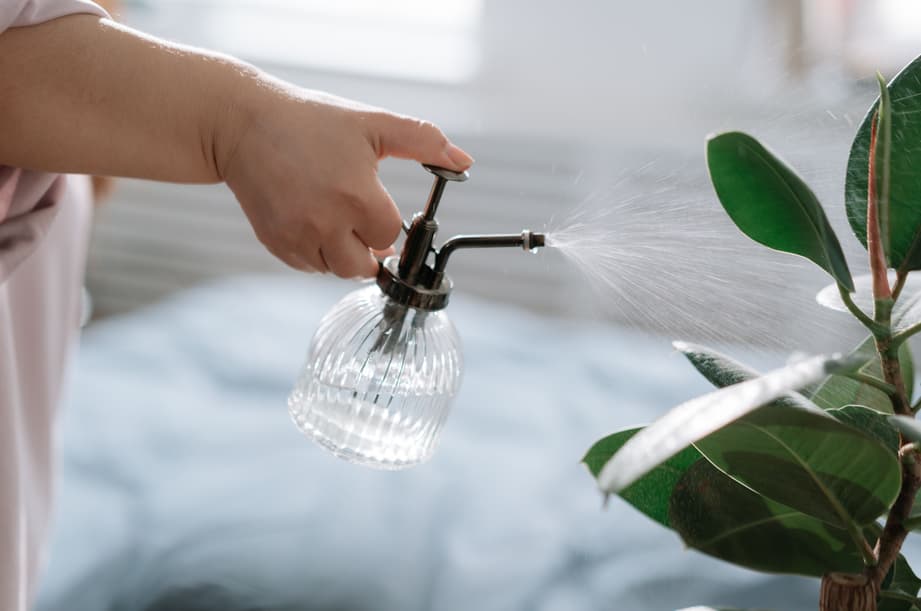
Misting may temporarily increase moisture around the foliage, but it is not a substitute for appropriate watering, good soil, adequate humidity, and proper placement.
If your peace lily repeatedly develops brown edges, investigate the whole growing environment rather than assuming humidity is the only cause.
8. Fertilize Lightly Rather Than Aggressively
Peace lilies are not heavy feeders.
Missouri Botanical Garden specifically describes their indoor fertility requirements as very low and warns that excessive fertilizer can burn leaf tips and roots.
This is important because beginners sometimes assume that more fertilizer means faster growth and more flowers.
It doesn’t work that way.
Too much fertilizer can cause salt accumulation in the growing medium and contribute to damaged roots and brown leaf tips.
A sensible approach
Use a balanced houseplant fertilizer according to its label directions, and avoid repeatedly applying stronger-than-recommended concentrations.
If the plant is actively growing, modest feeding can support foliage production and flowering.
If growth has slowed significantly, especially under low-light conditions, reduce feeding rather than trying to compensate for poor light with fertilizer.
For a more detailed explanation, see how to fertilize indoor plants properly.
9. Repot Only When the Plant Actually Needs It
Peace lilies do not need to be repotted every few months.
Repotting makes sense when:
• Roots are becoming crowded
• Water runs through unusually quickly because the root mass has filled the container
• The potting mix has deteriorated
• The plant is repeatedly becoming unstable
• The container is clearly too small for the root system
A root bound plant may also dry out much faster than expected.
How to repot a peace lily:
1. Choose a container only moderately larger than the current one.
2. Make sure it has drainage holes.
3. Prepare fresh, well-draining potting mix.
4. Remove the plant carefully from its current container.
5. Inspect the roots.
6. Loosen severely compacted outer roots gently if necessary.
7. Position the plant at approximately the same depth.
8. Fill around the root ball with fresh mix.
9. Water appropriately after repotting.
10. Return the plant to suitable indirect light.
Avoid burying the crown unnecessarily deeply.
For a more detailed step-by-step process, see how to repot indoor plants without damaging the roots.
10. Prune and Clean the Leaves Properly
Peace lilies naturally develop older leaves and spent flower structures.
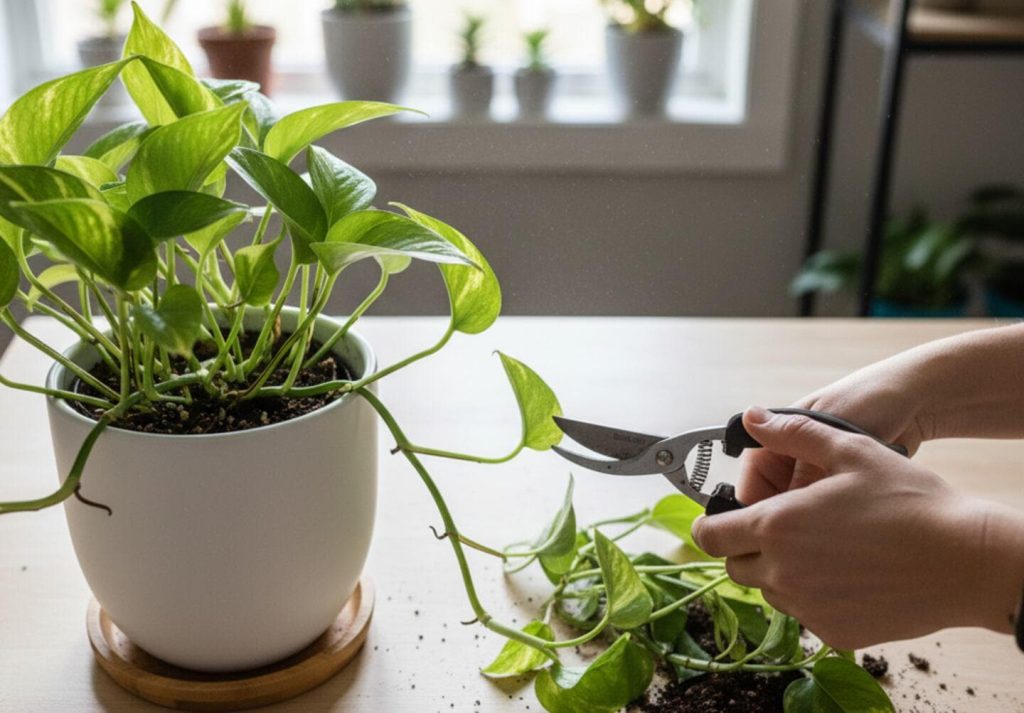
Removing damaged or dead material can improve the plant’s appearance and redirect attention toward healthy growth.
What to remove
You can prune:
• Completely yellow or dead leaves
• Severely damaged leaves
• Brown, spent flower stalks
• Old foliage that is clearly deteriorating
Use clean, sharp scissors or pruning shears.
Cut damaged foliage near its base rather than repeatedly trimming small brown sections from the same leaf.
Clean dusty leaves
Peace lily leaves are broad and can collect dust.
Gently wiping them with a clean, damp cloth can remove surface dust and improve the appearance of the foliage. The RHS also recommends wiping leaves with a damp cloth.
Avoid aggressive rubbing, which can damage delicate leaf surfaces.
11. Give Your Peace Lily Enough Light to Flower
One of the most frustrating situations is having a healthy-looking peace lily that refuses to bloom.
If the foliage is green and the plant appears reasonably healthy but produces no flowers, insufficient light is one of the first things to investigate.
The Chicago Botanic Garden identifies insufficient light as a common reason for failure to flower and recommends placing the plant near a window where it receives bright light without harsh direct summer sun.
Don’t solve a flowering problem with excessive fertilizer
More fertilizer is not necessarily the answer.
A plant needs sufficient light to produce the energy required for healthy growth. If light is inadequate, increasing fertilizer can create additional problems without solving the fundamental issue.
What about seasonal flowering?
Flower production can vary according to cultivar, maturity, light, temperature, and general growing conditions.
Also remember that the white spathes are not permanent. As they age, they may turn green and eventually decline. That does not necessarily mean something is wrong with the plant.
Peace Lily Leaves Turning Brown: Causes and Fixes
Brown leaves are among the most common peace lily problems.
But brown leaves are a symptom, not a diagnosis.
Several different environmental problems can produce similar symptoms.
| What You Notice | Possible Cause | What To Check |
| Brown, crispy edges | Dry air or inconsistent moisture | Humidity and watering |
| Brown patches after strong sunlight | Light stress | Move away from harsh direct sun |
| Brown/yellow foliage with wet soil | Excess moisture/root stress | Drainage and watering |
| Brown tips after heavy feeding | Fertilizer buildup | Fertilizer frequency and concentration |
| Older isolated leaf turning yellow/brown | Natural aging | Whether new growth is healthy |
| Brown foliage plus pests | Pest damage | Inspect leaves and stem |
The key is to look at the whole pattern, not one leaf.
For example, if several leaves develop brown edges while the plant is sitting beside a strong heat source, dry air becomes more plausible.
If the plant is constantly wet and several leaves are yellowing at the same time, excessive moisture deserves closer investigation.
Why Is My Peace Lily Drooping?
A drooping peace lily often needs water, but don’t water automatically.
Step 1: Check the soil
If the upper layer is dry and the plant is noticeably wilted, underwatering is a reasonable explanation.
Water thoroughly and allow excess water to drain.
Step 2: If the soil is wet, stop watering
A plant with wet soil should not receive additional water simply because the leaves are drooping.
Instead, investigate:
• Poor drainage
• A pot without drainage holes
• Oversized container
• Compacted soil
• Root damage
• Repeated overwatering
Step 3: Look for environmental stress
Also consider:
• Recent repotting
• Sudden temperature changes
• Strong sunlight
• Hot air from appliances
• Very dry indoor conditions
A useful habit is to diagnose before treating.
Why Is My Peace Lily Not Blooming?
If your peace lily produces leaves but no flowers, start with the basics.
1. Check the light
Move the plant to a brighter location with indirect light if it is currently in a dark corner.
2. Check general health
A severely stressed plant is unlikely to flower well.
Look for:
• Healthy new leaves
• Appropriate watering
• Healthy roots
• No significant pest infestation
• Suitable temperatures
3. Avoid excessive fertilizer
More fertilizer does not compensate for insufficient light.
4. Consider the plant itself
Different cultivars and individual plants can vary in flowering performance.
If your plant is young, recently repotted, stressed, or growing under poor conditions, flowering may take time.
Peace Lily Root Rot: What to Watch For
Root rot is not caused simply by “too much water” in isolation. The underlying problem is often prolonged poor aeration and excessively wet growing conditions, which can damage roots and create conditions favorable to root pathogens.
Warning signs can include:
• Persistent wilting despite wet soil
• Yellowing leaves
• Soft or deteriorating roots
• A consistently waterlogged potting mix
• Slow or declining growth
If you suspect root problems, remove the plant carefully and inspect the root system.
Healthy roots should generally be firm rather than mushy.
If substantial root damage is present, remove badly affected material with clean tools and repot into an appropriate fresh medium and container.
The most important long-term solution is correcting the environmental cause—not simply replacing damaged roots.
Common Peace Lily Care Mistakes to Avoid
Avoid these common peace lily care mistakes that can weaken your plant or prevent healthy growth. Learn what to stop doing and how to give your peace lily the right care indoors.
Mistake 1: Watering on a fixed schedule
Your plant does not know what day of the week it is.
Environmental conditions determine how quickly the potting mix dries.
Better approach: Check the growing medium before watering.
Mistake 2: Putting it in a dark corner
Peace lilies tolerate lower light, but they still need light for photosynthesis and healthy growth.
Better approach: Provide bright, indirect light whenever possible.
Mistake 3: Exposing it to harsh direct sunlight
A plant that tolerates low light is not necessarily adapted to intense direct sun.
Better approach: Filter strong sunlight or move the plant farther from the window.
Mistake 4: Leaving water in the saucer
Constantly wet roots have less access to air.
Better approach: Let excess water drain away.
Mistake 5: Using a huge pot
A larger pot isn’t automatically better.
Better approach: Increase pot size gradually as the root system requires it.
Mistake 6: Over fertilizing
More fertilizer can damage rather than improve a peace lily.
Better approach: Follow the fertilizer label and err toward moderate feeding.
Mistake 7: Treating every brown leaf as a watering problem
Brown leaves can result from multiple stresses.
Better approach: Look at the location, soil moisture, light, humidity, fertilizer use, and overall pattern of symptoms.
Mistake 8: Ignoring pests
Peace lilies are relatively trouble-free, but pests such as mealybugs and scale can occur. Missouri Botanical Garden lists both among potential problems.
Inspect the undersides of leaves and along stems if you notice:
• Sticky residue
• White cottony material
• Small insects
• Speckled foliage
• Distorted new growth
For broader pest-management guidance, see 8 common indoor plant pests and how to eliminate them.
A Simple Peace Lily Care Routine
You don’t need to constantly monitor your peace lily.
A simple routine is enough.
Weekly:
• Look at the leaves.
• Check for pests.
• Check the moisture level of the potting mix.
• Look for new growth.
• Check whether the plant is receiving appropriate light.
Every few weeks during active growth:
• Assess whether the plant needs feeding.
• Clean dusty leaves if necessary.
• Rotate the pot if growth is becoming strongly one-sided.
Every few months:
• Examine the roots if the plant is drying unusually quickly.
• Check whether the potting mix remains suitable.
• Assess whether the plant has outgrown its container.
Whenever something changes
Don’t automatically change everything at once.
If leaves begin turning brown, for example, investigate the likely cause before changing watering, fertilizer, light, soil, and humidity simultaneously.
Changing one variable at a time makes troubleshooting much easier.
Peace Lily Care for Homes in Hot Climates
Peace lilies can be grown successfully in warm climates, but indoor conditions can be very different from the tropical forest environments where the genus originated.
For homes in Nigeria and other warm regions, pay particular attention to light intensity and water loss.
A plant near a sunny window can receive much stronger light and heat than one placed several meters away from the same window.
If your room is very hot
Check your plant more frequently, but don’t automatically increase watering without checking the soil.
If sunlight is intense
Use curtains or filtered light rather than exposing the leaves to strong afternoon sun.
If indoor air is dry
Consider improving ambient humidity, especially if you consistently see crispy brown edges.
If you use air conditioning
Avoid placing the plant directly in the stream of cold, dry air.
The goal is not to reproduce a rainforest indoors. It is to create stable, suitable growing conditions.
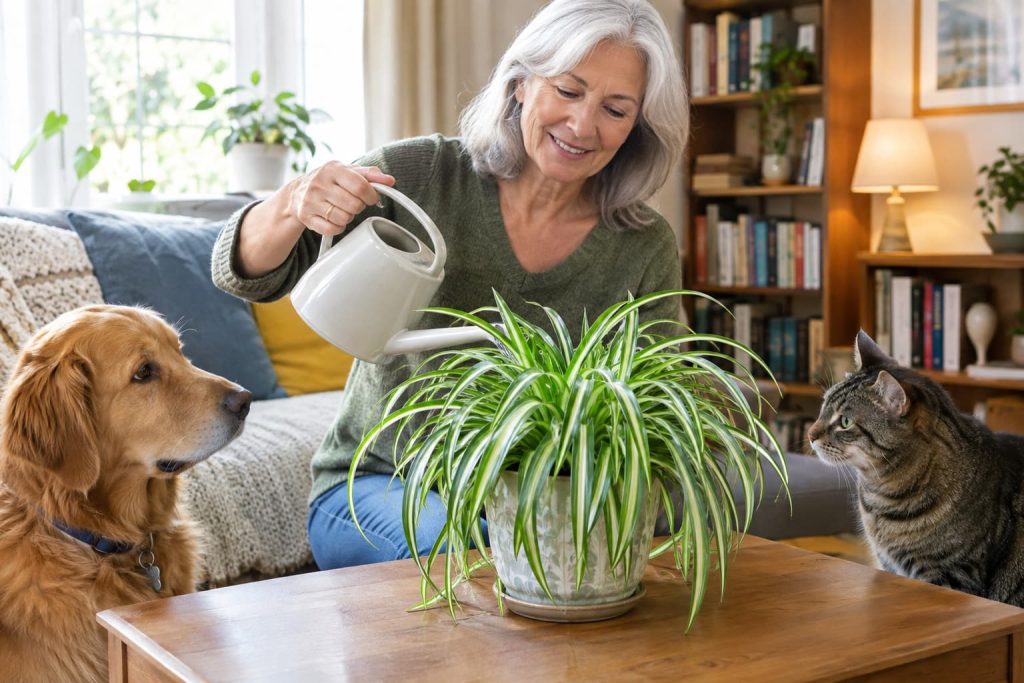
Is a Peace Lily Safe for Cats and Dogs?
This is an important consideration for pet owners. Looking for plants that can handle dim spaces and suit a cat-friendly home? Explore 15 low-light indoor plants safe for cats that can add greenery without compromising your pet’s well-being.
Peace lilies contain insoluble calcium oxalate crystals and are considered toxic to cats and dogs by the ASPCA. Chewing or ingesting the plant can cause oral irritation, pain, drooling, vomiting, and difficulty swallowing.
This is different from the severe kidney toxicity associated with some true lilies. Peace lilies are Spathiphyllum, members of the Araceae family, rather than true lilies in the genus Lilium.
If you have pets or young children, keep the plant somewhere they cannot chew or ingest it.
If ingestion occurs and symptoms are significant, seek advice from a veterinarian, poison-control service, or appropriate medical professional.
Have cats or dogs at home? Discover 12 pet-friendly indoor plants that are non-toxic to cats and dogs, helping you add natural beauty to your home while choosing plants with pet safety in mind.
Peace Lily Care Troubleshooting Guide
When something goes wrong, use the symptoms to narrow down the possibilities.
Leaves drooping
First check: Soil moisture.
• Dry soil → underwatering may be responsible.
• Wet soil → investigate root and drainage problems before watering again.
Leaves turning brown
First check: Light, moisture, humidity, and fertilizer.
• Crispy edges → consider dry air or inconsistent moisture.
• Scorched patches → investigate strong direct sunlight.
• Brown/yellow leaves with persistently wet soil → investigate excess moisture.
Leaves turning yellow
First check: Watering and root conditions.
Don’t assume yellow leaves automatically mean the plant needs fertilizer.
Plant not flowering
First check: Light.
A healthy peace lily grown in very low light may survive while producing little or no flowering.
Soil stays wet for a long time
First check: Drainage.
Inspect the pot, potting mix, container size, and watering frequency.
Plant wilts even though the soil is wet
First check: Roots.
Persistent wetness combined with wilting can indicate root stress.
How to Know Your Peace Lily Is Healthy
A healthy peace lily does not need to look perfect every day.
Look for:
• Firm, reasonably turgid foliage
• Consistent new growth
• Glossy green leaves
• Healthy roots
• A potting mix that dries appropriately between waterings
• No persistent pest infestation
• New leaves emerging normally
An occasional old leaf turning yellow is not necessarily a crisis.
Likewise, an occasional droop does not automatically mean disease.
What matters most is the overall trend.
If new growth is healthy and the plant is responding appropriately to normal care, you’re probably on the right track.
Final Peace Lily Care Checklist
Before assuming your peace lily has a serious problem, run through this checklist:
o Is the plant receiving bright, indirect light?
o Is it protected from harsh direct sunlight?
o Are you checking the soil before watering?
o Does the pot have drainage holes?
o Does excess water drain away?
o Is the soil moist but not persistently waterlogged?
o Is the plant protected from cold drafts and strong heat sources?
o Is the humidity reasonably suitable?
o Are you avoiding excessive fertilizer?
o Does the pot match the size of the root system?
o Have you checked for pests?
o If the plant isn’t flowering, have you checked its light first?
If most of these are in place, your peace lily has a strong foundation for healthy growth.
Frequently Asked Questions About Peace Lily Care
1. How often should you water a peace lily?
Water when the upper layer of the potting mix has begun to dry rather than following a rigid calendar. The exact interval depends on light, temperature, humidity, pot size, soil, and plant size.
2. How much light does a peace lily need?
Peace lilies tolerate lower light but generally perform better in bright, indirect or filtered light. Avoid strong direct sunlight, which can scorch the foliage.
3. Why is my peace lily drooping?
Underwatering is a common cause, but drooping can also occur when roots are stressed by excessively wet soil or other environmental problems. Always check the soil before watering.
4. Why are my peace lily leaves turning brown?
Possible causes include dry air, inconsistent watering, strong direct sunlight, fertilizer stress, and root problems. Examine the entire growing environment rather than treating the brown leaves alone.
5. Why is my peace lily not blooming?
Insufficient light is one of the most common factors to investigate. Move a plant growing in a very dark location to brighter indirect light, while avoiding harsh direct sun.
6. What is the best soil for a peace lily?
Use a quality indoor potting mix that retains some moisture but drains well and maintains air spaces around the roots. Avoid dense soil that stays saturated for prolonged periods.
7. Does a peace lily need direct sunlight?
No. Bright, indirect light is generally preferable. Strong direct sunlight can scorch the foliage.
8. Can peace lilies grow in low light?
They can tolerate relatively low light, but very low light can slow growth and reduce flowering. If your priority is healthy growth and blooms, provide brighter indirect light.
9. Should I mist my peace lily?
Misting can temporarily increase moisture around the foliage, but it is not a complete solution for dry indoor air. If humidity is consistently low, a humidifier or another reliable humidity-management method may be more effective.
10. Are peace lilies poisonous to cats and dogs?
Yes. The ASPCA identifies peace lilies (Spathiphyllum) as toxic to cats and dogs because they contain insoluble calcium oxalates that can cause oral irritation and gastrointestinal symptoms if chewed or swallowed.
Conclusion
Good peace lily care is surprisingly simple once you stop treating houseplant care as a fixed schedule.
Your plant doesn’t need a complicated routine. It needs the right environment and consistent observation.
Give it bright, indirect light, water when the growing medium begins to dry, use a well-draining pot and suitable potting mix, avoid prolonged waterlogging, provide warm conditions, and feed conservatively.
Most importantly, learn to interpret the plant’s signals.
A drooping peace lily may need water—but check the soil first. Brown leaves may indicate dry air—but they can also point to excessive sunlight, inconsistent moisture, fertilizer stress, or root problems. A plant that refuses to flower may not need more fertilizer; it may simply need more suitable light.
Once you understand these relationships, caring for a peace lily becomes much easier.
And that is the real secret to successful indoor gardening: don’t just react to symptoms—understand what is causing them.
Editorial note: Care recommendations can vary somewhat among Spathiphyllum species and cultivars and according to indoor conditions. The recommendations above are therefore presented as practical starting points rather than rigid rules. The most important variables to observe are light, soil moisture, drainage, temperature, and the plant’s response over time.

About the Author: Emebu Blessing Oghale
Emebu Blessing Oghale is an expert SEO content writer, digital creator, and indoor gardening enthusiast based in Asaba, Nigeria. Combining horticultural principles with years of digital media experience, he founded Indoor Plant Guide to provide practical, beginner-friendly troubleshooting tips for plant parents across West Africa and beyond. When he isn’t cultivating tropical houseplants, he serves his local community as a pastor at Living Faith Church.
Hi Bon,
I really enjoyed this! I’ve struggled with peace lilies before, especially with watering, so the practical tips here are very helpful. The explanation makes it much easier to understand what the plant actually needs to stay healthy and thriving. Definitely saving this for reference!
Hi Naomi, good to have you here with an encouraging comments. Thanks, and hoping to see you more often.