

Few houseplants make a room feel as instantly tropical as a healthy Monstera. With its large, glossy leaves, natural splits and holes, and vigorous climbing habit, this iconic plant can transform any indoor space. Learning proper Monstera indoor plant care is essential for keeping its foliage lush, healthy, and thriving year-round.
But a Monstera that looks spectacular in a plant shop can struggle once it comes home. Brown leaf edges, yellowing leaves, slow growth, small new leaves, and a plant that refuses to develop its characteristic splits are usually signs that one or more growing conditions need attention.
The good news is that Monstera deliciosa is relatively adaptable as a houseplant when its basic needs are understood. It is a tropical climbing vine native to Central America, where it grows in warm, humid forest environments.
The key to successful Monstera indoor plant care is not keeping the soil constantly wet or putting the plant in the darkest corner of your home. Instead, aim for a balance of bright indirect light, appropriate watering, a well-draining growing medium, warmth, adequate humidity, good nutrition, and physical support.
This guide explains the 11 most important care principles and how to recognize when your plant is telling you something is wrong.
New to houseplants? This indoor plant care for beginners guide covers watering, light, soil, humidity, feeding, and common problems to help your plants thrive.
What Is a Monstera Indoor Plant?
Monstera deliciosa is a tropical evergreen climbing vine in the arum family, Araceae. It is commonly called the Swiss cheese plant, although several other common names are also used. Despite the sometimes-used name “split-leaf philodendron,” Monstera is not a Philodendron.
In its natural environment, Monstera grows as a climbing plant. It can attach itself to trees using aerial roots and climb toward better light. Its growth habit explains why a mature indoor plant often looks much better when given a sturdy support rather than being allowed to sprawl across the floor or furniture.
Young Monstera leaves can look quite different from mature leaves. A juvenile plant may produce relatively small, solid leaves, while mature plants develop the characteristic holes and deep splits associated with the species.
Monstera Deliciosa at a Glance
| Care Factor | What Your Monstera Generally Needs |
| Light | Bright, indirect or filtered light |
| Water | Thorough watering followed by partial drying |
| Soil | Loose, fertile, well-draining mix |
| Temperature | Warm indoor conditions |
| Humidity | Moderate to high humidity is beneficial |
| Fertilizer | Balanced feeding during active growth |
| Support | Stake, trellis or moss/coir pole as the plant climbs |
| Pot | Container with adequate drainage |
| Pruning | Remove damaged or unhealthy growth as needed |
| Repotting | Usually when roots become crowded or the plant outgrows its container |
| Pet Safety | Toxic to cats and dogs if ingested |
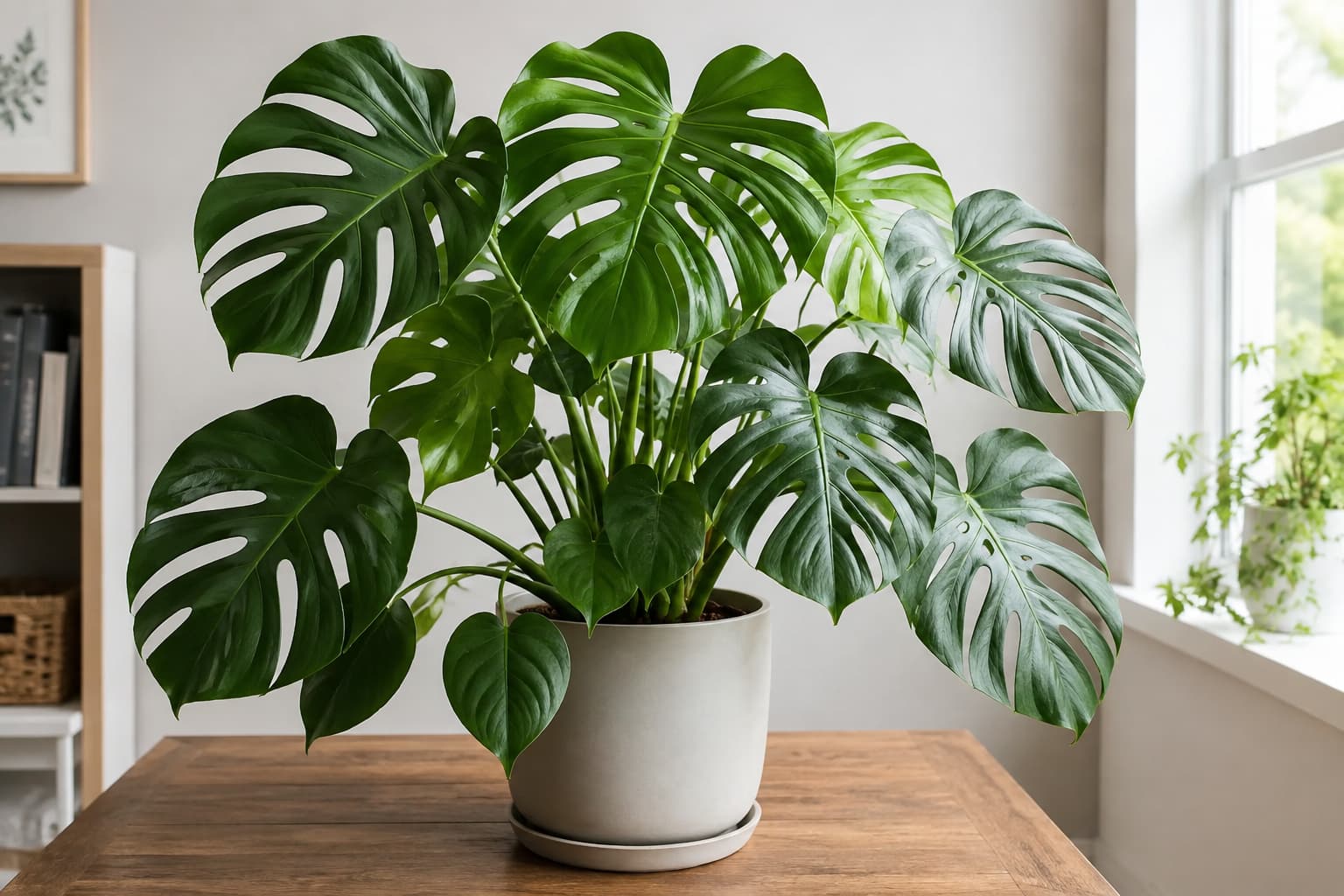
Monstera Indoor Plant Care: 11 Secrets to Growing a Healthy Plant
Let’s explore the 11 essential secrets to Monstera indoor plant care for growing lush, healthy foliage and keeping your Monstera thriving indoors.
1. Give Your Monstera the Right Amount of Light
Light is one of the most important factors in successful Monstera care indoors.
Monstera deliciosa naturally grows beneath a forest canopy, so it is adapted to filter light rather than the intense, uninterrupted sunlight that reaches an exposed outdoor location. University of Minnesota Extension describes it as an understory plant suitable for medium-light locations, while Missouri Botanical Garden recommends bright indoor light without strong direct sun.
The ideal indoor position
A good location is usually:
• Near a bright window
• A few feet away from harsh afternoon sunlight
• Behind a sheer curtain if the window receives intense sun
• In a room that receives several hours of bright ambient light
The exact distance from a window depends on the window orientation, glass, curtains, climate, and intensity of sunlight.
In a naturally bright room, your Monstera may thrive several feet away from a window. In a dim room, it may need to be considerably closer to the light source or receive supplemental grow lighting.
What happens when light is too low?
Insufficient light can contribute to:
• Slow growth
• Long gaps between leaves along the stem
• Smaller new leaves
• Weak or stretched growth
• Fewer characteristic leaf perforations
• Leaves remaining smaller than expected
University of Wisconsin horticulture notes that inadequate light can prevent Monstera from developing its characteristic leaf perforations.
What if the light is too intense?
Strong direct sunlight through glass can scorch leaves, particularly if a plant has not been gradually acclimated.
Signs may include:
• Pale or bleached patches
• Dry brown areas
• Crispy sections of leaves
Ensure you give your Monstera plenty of light, but protect it from prolonged, harsh direct sun.
What about variegated Monstera?
Variegated forms generally require more light than solid-green plants because areas with less chlorophyll contribute less to photosynthesis. North Carolina State Extension specifically notes that variegated cultivars need more sunlight than darker green cultivars.
However, more light does not mean exposing a variegated Monstera to intense midday sun without acclimation.
2. Water Thoroughly—But Don’t Keep the Soil Constantly Wet
One of the most common Monstera care mistakes is treating watering as a fixed weekly appointment.
Your plant does not necessarily need water every seven days.
The correct frequency depends on:
• Pot size
• Type of potting mix
• Drainage
• Temperature
• Humidity
• Light level
• Plant size
• Season
• Root development
University of Minnesota Extension recommends watering mature Monstera when the upper 1–2 inches of soil are dry, while North Carolina State Extension recommends allowing roughly the upper quarter to one-third of the growing medium to dry before watering.
These recommendations illustrate an important point: there is no universal Monstera watering calendar.
How to water a Monstera correctly
When the upper portion of the potting mix has dried sufficiently:
1. Pour water slowly and evenly over the soil.
2. Continue until water begins draining from the bottom of the container.
3. Allow excess water to drain completely.
4. Empty any water sitting in an outer cachepot or saucer.
5. Wait until the appropriate portion of the soil dries before watering again.
This is better than repeatedly giving the plant tiny amounts of water.
How often should you water a Monstera?
The honest answer is: when the soil and plant conditions indicate that it needs water—not simply because a certain number of days has passed.
In a warm, brightly lit room, your Monstera may dry faster. In a cool, dim room, the same plant may remain wet for much longer.
Why overwatering is dangerous
Overwatering does not simply mean “too much water once.”
The bigger problem is persistently waterlogged growing media, especially when drainage and aeration are poor.
Roots need oxygen as well as water. If the root zone remains saturated for prolonged periods, roots can become damaged and susceptible to rot.
University of Connecticut identifies root and stem rot as a Monstera problem and emphasizes appropriate watering, well-draining media, and avoiding standing water.
Remember that a Monstera likes moisture, but it does not want permanently saturated roots.
3. Use a Loose, Well-Draining Soil Mix
The best Monstera soil requirements are not about finding one magical recipe.
The goal is to create a growing medium that can:
• Hold enough moisture for the roots
• Drain excess water
• Maintain air spaces
• Provide organic matter
• Support healthy root growth
Missouri Botanical Garden recommends a peaty soil-based potting mix, while the University of Connecticut recommends a well-draining potting medium with high organic matter.
A practical Monstera potting mix
For a home gardener, a useful starting point is a quality indoor potting mix amended with materials that improve drainage and aeration.
For example:
• 2 parts quality indoor potting mix
• 1 part orchid bark
• 1 part perlite or another suitable aeration amendment
The exact proportions do not need to be treated as a scientific formula. Your climate, pot size, watering habits, and materials all influence how quickly the mix dries.
In a very humid environment, you may want a mix that drains particularly freely. In a dry indoor environment, you may retain somewhat more moisture.
Avoid heavy, compacted soil
A dense soil that stays wet for a long time can make watering difficult and increase the risk of root problems.
If water takes a very long time to drain through the pot, or the soil remains wet for many days despite warm conditions and adequate light, investigate the growing medium and drainage rather than simply watering less frequently.
For a deeper explanation of choosing indoor plant soil, see our guide to Best Soil for Indoor Plants survival.
4. Choose a Pot With Good Drainage
A beautiful decorative pot is not automatically a good plant pot.
For Monstera, drainage matters because excess water needs somewhere to go.
Choose a container with at least one functional drainage hole. The University of Minnesota also recommends gradually moving a growing Monstera into a somewhat larger container rather than jumping into an excessively large pot.
Does a Monstera need a large pot?
Not necessarily.
A pot that is dramatically larger than the root system can hold more unused wet soil than the plant can effectively use. This can make moisture management more difficult.
When repotting, choose a container only moderately larger than the current root ball.
Signs your Monstera may need repotting include:
• Roots emerging from drainage holes
• The plant becoming unstable because it has outgrown the container
• The growing medium drying extremely quickly
• The root system becoming densely crowded
• The plant showing signs of being severely pot-bound
For a step-by-step guide, see How to Repot Indoor Plants Without Damaging the Roots.
Cachepots and decorative containers
If your Monstera sits inside a decorative outer pot without drainage, remove the nursery pot when watering and allow excess water to drain before returning it.
Never assume that an attractive outer container provides adequate drainage simply because the plant appears healthy.
5. Give Your Monstera Warm, Stable Conditions
Monstera is a tropical plant, so it performs best in warm indoor conditions.
North Carolina State Extension gives an average preferred temperature range of about 60–85°F (16–29°C), while University of Wisconsin notes that growth stops below about 50°F (10°C).
For most homes, the practical lesson is simple:
Keep your Monstera comfortably warm and protect it from cold drafts and sudden temperature extremes.
Avoid placing it directly beside:
• Very cold windows
• Air-conditioning vents
• Strong heating vents
• Frequently opened exterior doors during cold weather
For indoor growers in warm tropical climates, including much of Nigeria, cold may be less of a concern than excessive heat combined with poor airflow, intense sunlight, or inconsistent watering.
6. Increase Humidity—But Don’t Ignore Airflow
Monstera naturally comes from humid tropical environments, and moderate to high humidity can support healthy foliage.
North Carolina State Extension describes Monstera as preferring high humidity, while University of Wisconsin describes it as preferring medium to high humidity.
However, “more humidity” is not the same as “seal the room and keep the leaves constantly wet.”
Practical ways to improve humidity
You can:
• Use a humidifier
• Group compatible houseplants together
• Keep the plant away from excessively dry air
• Place it in a naturally humid room where light is also adequate
A pebble tray may increase local humidity to some extent, although it should not be relied upon as a substitute for good environmental management.
Why airflow matters
Very humid conditions with poor air movement can create an environment where leaf diseases are more likely to become troublesome.
American Horticultural Society (AHS) notes that avoiding overcrowding and improving airflow can help reduce conditions associated with bacterial leaf spot.
The goal is balance: adequate humidity, but not stagnant, constantly wet foliage.
7. Feed Your Monstera During Active Growth
A Monstera that receives sufficient light, water, and root space can be a vigorous grower.
Fertilizer provides nutrients that support continued growth, but more fertilizer is not automatically better.
A sensible feeding approach
During active growth:
• Use a complete, balanced houseplant fertilizer according to its label.
• Apply it at the recommended dilution.
• Avoid repeatedly applying concentrated fertilizer.
• Reduce or stop routine feeding when growth naturally slows.
Your plant’s actual needs depend on the nutrient content of its potting medium, fertilizer formulation, light, growth rate, and watering practices.
Avoid the “more fertilizer = bigger leaves” trap
Excess fertilizer can cause salt accumulation and root stress.
If your Monstera is not growing well, do not automatically reach for more fertilizer.
First check:
• Is it receiving enough light?
• Is the root system healthy?
• Is the soil staying wet too long?
• Is the pot too small?
• Is the plant experiencing temperature stress?
• Are pests present?
Often, correcting the growing environment is more important than increasing fertilizer.
For a complete explanation of feeding houseplants, see How to Fertilize Indoor Plants the Right Way.
8. Give Your Monstera Something to Climb
This is one of the most overlooked aspects of Monstera care.
Monstera deliciosa is naturally a climbing vine. In its natural environment, it uses surrounding structures and aerial roots as it grows upward.
Without support, an indoor Monstera often sprawls sideways.
Good support options
Consider:
• A moss pole
• A coir pole
• A sturdy trellis
• A strong stake
• Another appropriately designed climbing structure
The support needs to be stable enough for the plant’s increasing size.
How to train the plant
As the stems grow:
• Position the support close to the main stem.
• Gently guide the plant toward it.
• Use soft plant ties where necessary.
• Avoid tying so tightly that the stem becomes constricted.
• Allow aerial roots to develop naturally.
The objective is not to force the plant into an unnatural shape. You are simply giving it the structure it would naturally encounter while climbing.
University of Wisconsin specifically recommends a strong support because Monstera can become vigorous and its stems may need support.
9. Understand Why Monstera Leaves Develop Holes and Splits
One of the most fascinating features of Monstera is its fenestrated foliage.
“Fenestration” refers to openings or holes in leaves. Mature Monstera deliciosa leaves can develop both internal holes and deep splits.
But here’s an important point:
A young Monstera does not necessarily have to produce split or perforated leaves immediately.
Juvenile plants commonly have smaller, less dramatically divided leaves. As the plant matures, its foliage can become increasingly characteristic of the species.
Why isn’t my Monstera splitting?
Possible reasons include:
• The plant is still young.
• Light is insufficient.
• Growth conditions are limiting maturity.
• The plant has not developed enough climbing structure.
• The particular plant or cultivar naturally produces different foliage.
Do not assume that adding fertilizer will suddenly make a young Monstera produce huge, heavily fenestrated leaves.
Light and maturity matter.
If your plant is healthy but young, patience may be more useful than trying increasingly aggressive care techniques.
10. Prune, Clean, and Inspect the Plant Regularly
Monstera does not require constant pruning, but occasional maintenance can improve its appearance and help you identify problems early.
When to prune
Remove:
• Dead leaves
• Severely damaged leaves
• Diseased tissue where appropriate
• Unwanted growth that interferes with the plant’s shape
Use clean, sharp pruning tools and make deliberate cuts rather than tearing leaves or stems.
Should you cut off brown leaf tips?
If only a small section of a leaf is brown and dry, you can leave it alone or trim the damaged section for appearance.
But pruning the brown part does not solve the underlying cause.
Brown edges may be associated with factors such as:
• Inconsistent moisture
• Excessively dry conditions
• Root problems
• Salt accumulation
• Environmental stress
• Physical damage
Look at the whole growing environment before assuming that the brown tissue itself is the problem.
Clean large leaves carefully
Monstera’s large leaves collect dust.
A gentle wipe with a clean, damp cloth can remove surface dust and improve the appearance of the foliage.
Avoid using household oils, mayonnaise, milk, or leaf-shine products simply to make leaves glossy. These products are unnecessary and may interfere with the normal surface of the foliage.
11. Check for Pests and Problems Before They Become Severe
Even a well-cared-for Monstera can develop pest or disease problems.
Regular inspection is therefore part of good Monstera plant care.
Look at:
• The undersides of leaves
• Leaf joints
• New growth
• Stems
• Areas around aerial roots
• The soil surface
Common houseplant pests may include:
• Spider mites
• Mealybugs
• Scale insects
• Thrips
Early detection makes management much easier.
For a broader troubleshooting resource, see 8 Common Indoor Plant Pests and How to Eliminate Them.
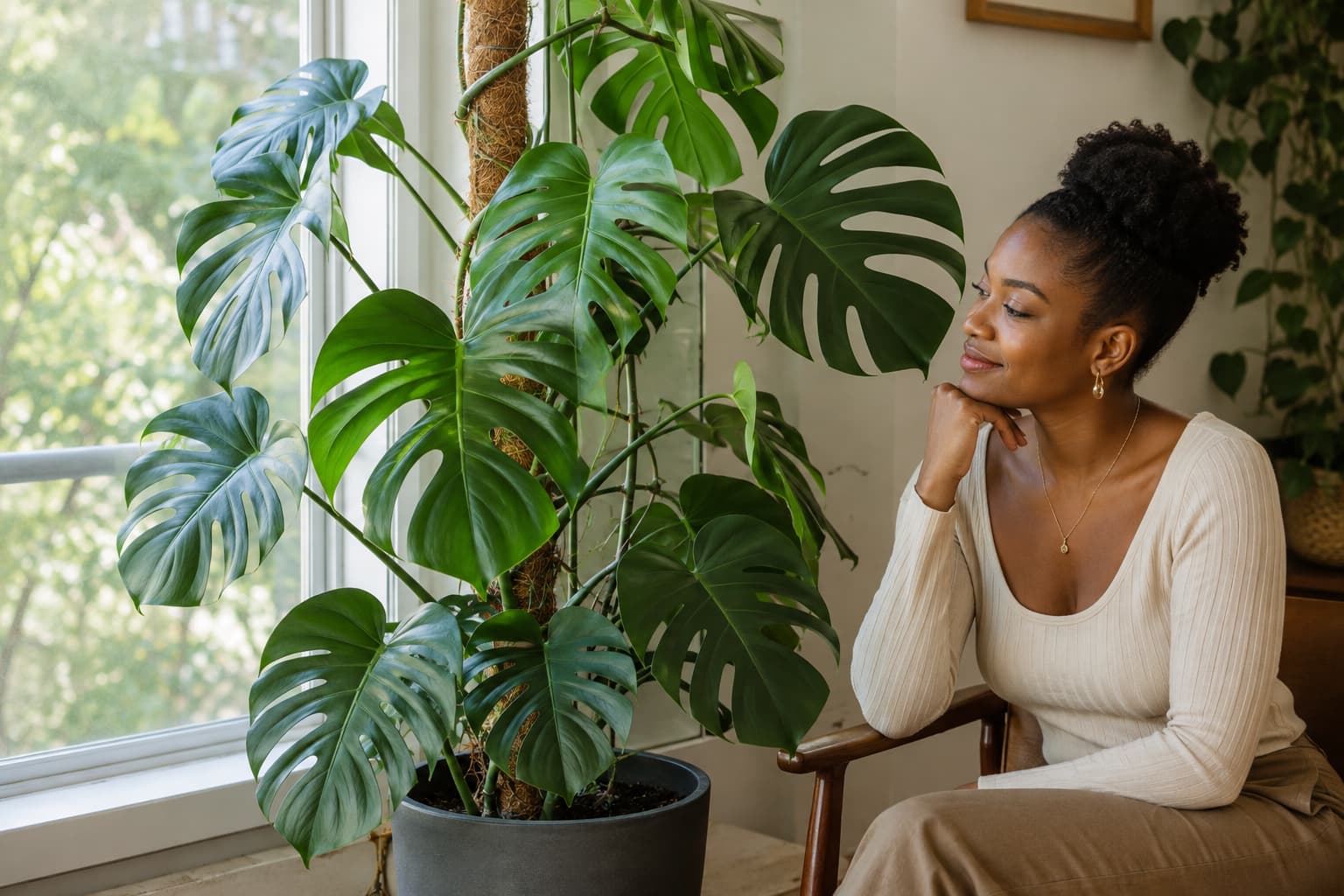
Why Is My Monstera Turning Yellow?
Yellow leaves can have several causes, so avoid diagnosing the plant from leaf color alone.
Potential causes include:
• Excessive moisture
• Poor drainage
• Root stress
• Natural aging of older leaves
• Inadequate light
• Nutritional problems
• Environmental stress
The pattern matters.
One old lower leaf turns yellow
If the plant is otherwise healthy and producing new growth, an occasional older leaf turning yellow may simply be part of normal leaf aging.
Several leaves turn yellow
Investigate the root zone and watering pattern first.
Ask:
• Is the soil staying wet for a long time?
• Does the pot drain properly?
• Is the plant receiving enough light?
• Does the container hold far more soil than the root system needs?
If multiple leaves are yellowing while the soil remains persistently wet, overwatering or poor drainage deserves particular attention.
Why Are My Monstera Leaves Turning Brown?
Brown leaves can have different causes.
Brown, crispy edges
Possible contributors include:
• Dry conditions
• Inconsistent watering
• Salt accumulation
• Root stress
• Environmental fluctuations
Brown or black soft areas
Soft, rapidly worsening tissue is more concerning and can be associated with disease or prolonged moisture problems.
University of Connecticut identifies bacterial leaf spot, anthracnose, and root and stem rot among potential Monstera problems.
Avoid automatically misting affected leaves. UConn specifically notes that misting and wounding can increase the spread of anthracnose.
Why Is My Monstera Drooping?
Drooping does not automatically mean your Monstera needs water.
Check the soil before reaching for the watering can.
If the soil is very dry
The plant may be experiencing water stress.
Water thoroughly and allow excess water to drain.
If the soil is wet
Do not add more water simply because the leaves are drooping.
Instead, investigate:
• Root health
• Drainage
• Pot size
• Soil structure
• Temperature
• Light
A plant suffering from root damage can sometimes droop even though its soil is wet.
This is one reason diagnosing Monstera problems requires looking at the whole plant system, not one symptom in isolation.
Why Is My Monstera Not Growing?
Slow growth can be frustrating, particularly when you bought a plant expecting rapid tropical growth.
Before adding fertilizer, check the basics.
1. Light
Is the plant actually receiving bright enough light?
2. Root system
Is the plant severely root-bound, or are its roots damaged?
3. Watering
Does the soil remain wet for too long?
4. Temperature
Is the plant exposed to cold conditions or dramatic fluctuations?
5. Nutrition
Has the plant been receiving appropriate nutrition during active growth?
6. Season
Growth naturally varies with environmental conditions.
7. Plant maturity
A young Monstera will not necessarily produce the giant leaves of a mature specimen.
Correcting the limiting factor is usually more effective than trying to stimulate growth with excessive fertilizer.
How to Get Bigger Monstera Leaves
Large leaves are the result of several conditions working together.
Focus on:
Good light + healthy roots + adequate nutrition + consistent moisture + warmth + climbing support + time
Do not focus on fertilizer alone.
A Monstera that receives insufficient light may remain relatively small even if it is heavily fertilized.
Likewise, a plant with damaged roots cannot make good use of additional fertilizer.
A mature climbing Monstera that receives adequate light and support has a better opportunity to produce increasingly impressive foliage.
How to Repot a Monstera Without Stressing It
Repotting is useful when the plant genuinely needs more root space or the existing growing medium has deteriorated.
A good time to repot is generally when you see clear signs that the existing container is no longer appropriate.
Step-by-step:
1. Choose a container only moderately larger than the existing one.
2. Make sure it has drainage holes.
3. Prepare fresh, well-draining potting mix.
4. Gently remove the plant from its old container.
5. Inspect the roots.
6. Remove obviously dead or severely damaged roots with clean tools.
7. Position the plant at approximately the same depth.
8. Fill around the root ball with fresh mix.
9. Water appropriately after repotting.
10. Place it back in suitable light and avoid unnecessary additional stress.
University of Minnesota Extension recommends increasing the pot size incrementally and gives about two inches wider as a useful guide when moving a rooted plant into a larger container.
How to Propagate a Monstera
Monstera is relatively straightforward to propagate, but there is one detail beginners frequently miss:
A leaf alone cannot produce a new Monstera plant. The cutting needs a node.
A node is a section of the stem containing the growth structures from which new roots and shoots can develop.
University of Minnesota Extension specifically notes that Monstera cuttings need a node and that leaf or petiole-only cuttings will not produce new growth.
Basic stem-cutting method:
1. Select a healthy stem containing at least one viable node.
2. Use a clean, sharp cutting tool.
3. Take the cutting with the node intact.
4. Root it in water or an appropriate propagation medium.
5. Keep it warm and in bright, indirect light.
6. Maintain appropriate moisture without allowing the medium to remain stagnant and waterlogged.
7. Once a healthy root system develops, transfer it to a suitable potting medium.
University of Minnesota reports that roots can develop within a few weeks under suitable propagation conditions, although the timeline varies with environmental conditions and the cutting.
Can You Grow Monstera in Water?
Yes, Monstera cuttings can be rooted in water.
Water propagation can be convenient because you can see the developing roots. However, water propagation is different from growing a mature Monstera permanently in water.
For propagation:
• Keep the node submerged.
• Keep leaves above the water where possible.
• Change the water when it becomes cloudy.
• Move the cutting into an appropriate growing medium after adequate roots develop.
University of Minnesota Extension lists water as one method for rooting Monstera cuttings.
Is Monstera Safe for Cats and Dogs?
No. Monstera deliciosa is considered toxic to cats and dogs if ingested.
The ASPCA identifies insoluble calcium oxalates as the toxic principle and lists signs such as oral irritation, intense burning or irritation of the mouth, excessive drooling, vomiting, and difficulty swallowing.
Therefore, if you have pets that chew plants, keep Monstera somewhere they cannot access.
This is especially important because Monstera is sometimes incorrectly grouped with “pet-friendly” indoor plants simply because it is a common houseplant.
For pet-safe alternatives, see 12 Pet-Friendly Indoor Plants Safe for Cats and Dogs.
A Simple Weekly Monstera Care Checklist
You do not need to fuss over your Monstera every day.
Instead, develop a simple inspection routine.
Once or twice a week
o Check the soil moisture before watering.
o Inspect leaves for pests.
o Look beneath leaves for insects or webbing.
o Check new growth.
o Look for yellowing, browning, or unusual spots.
o Rotate the plant if its growth is becoming strongly one-sided.
o Check that the support is stable.
o Remove fallen leaves and debris from the soil surface.
When watering is necessary
o Water thoroughly.
o Allow excess water to drain.
o Empty standing water from the saucer or cachepot.
o Do not water again until the appropriate portion of the soil has dried.
This simple routine is more reliable than following a rigid “water every Sunday” schedule.
Monstera Indoor Plant Care Mistakes to Avoid
Let’s quickly examine these top 10 mistakes to avoid when caring for your Monstera plant.
Mistake 1: Keeping the soil constantly wet
Monstera appreciates moisture but does not need saturated soil continuously.
Mistake 2: Putting it in a dark corner
Monstera tolerates moderate indoor light, but insufficient light can limit growth and leaf development.
Mistake 3: Assuming yellow leaves always mean underwatering
Yellowing can have several causes. Check the soil and roots before watering again.
Mistake 4: Fertilizing a struggling plant excessively
Fertilizer cannot compensate for poor light, damaged roots, or bad drainage.
Mistake 5: Using a pot without drainage
A decorative container is not a substitute for proper drainage.
Mistake 6: Expecting every young leaf to have holes
Juvenile Monstera leaves may lack the dramatic fenestrations seen on mature foliage.
Mistake 7: Letting a climbing plant sprawl indefinitely
A suitable support allows Monstera to express its natural climbing habit.
Mistake 8: Propagating a leaf without a node
A leaf or petiole by itself cannot produce a new Monstera plant.
Mistake 9: Ignoring pests until damage becomes obvious
Inspect the underside of leaves and new growth regularly.
Mistake 10: Assuming more humidity is always better
Humidity should be balanced with good airflow and appropriate watering.
Monstera Indoor Plant Care: The Ideal Setup
If you want a simple formula for setting up a healthy Monstera, think of the plant in terms of its natural growth strategy.
Light
Place it somewhere bright with filtered or indirect light.
Water
Water thoroughly when the upper part of the potting mix has dried sufficiently.
Soil
Use a loose, organic-rich, well-draining growing medium.
Pot
Choose the suitable pots for indoor plants with functional drainage holes, and avoid unnecessarily oversized containers.
Temperature
Keep the plant warm and protect it from cold drafts.
Humidity
Moderate to high humidity is beneficial, particularly in dry indoor environments.
Support
Give climbing stems a sturdy structure.
Nutrition
Feed appropriately during active growth rather than applying excessive fertilizer.
Maintenance
Inspect, clean, prune, and check for pests regularly.
These principles are more useful than memorizing a rigid watering schedule because they allow you to adjust care to your actual growing environment.
Monstera Care for Homes in Nigeria
For Nigerian indoor gardeners, some Monstera care principles deserve special attention.
A warm climate can be an advantage because Monstera naturally prefers warm conditions. However, warmth can also increase the rate at which the plant uses water, particularly in bright rooms.
At the same time, indoor spaces may have very different conditions depending on ventilation, air conditioning, window exposure, and humidity.
In a hot, bright room
Your Monstera may dry out faster, so check soil moisture more frequently.
In an air-conditioned room
Cold, dry airflow can create a very different environment from a warm tropical room. Keep the plant away from direct air-conditioning drafts.
During very wet periods
Do not automatically increase watering because the weather is warm. Indoor humidity and evaporation rates can vary considerably.
In a poorly ventilated room
Avoid keeping leaves constantly wet and improve air circulation.
The important principle is to observe the plant and growing medium rather than watering according to the calendar.
Frequently Asked Questions About Monstera Care
1. How often should I water a Monstera?
Water when the upper portion of the potting mix has dried sufficiently rather than following a fixed schedule. University of Minnesota recommends watering mature Monstera when the top 1–2 inches of soil are dry.
2. Does Monstera need direct sunlight?
Not necessarily. Bright, filtered or indirect light is generally a safer choice indoors. Strong direct sunlight can scorch foliage, particularly when the plant has not been acclimated.
3. Why are my Monstera leaves not splitting?
The plant may be young, receiving insufficient light, or not yet mature enough to produce highly fenestrated leaves. Juvenile Monstera leaves naturally differ from mature foliage.
4. What is the best soil for Monstera?
Use a loose, fertile, well-draining mix that retains some moisture while maintaining good aeration around the roots. A quality indoor potting mix amended with materials such as orchid bark and perlite can provide a useful starting point.
5. Does Monstera need a moss pole?
It does not strictly require a moss pole, but a sturdy support can be very useful because Monstera is naturally a climbing vine. A trellis, stake, coir pole, or other suitable support can also work.
6. Can Monstera grow in low light?
It can tolerate moderate indoor light, but very low light can limit growth and prevent the development of characteristic leaf fenestrations.
7. Why are my Monstera leaves turning yellow?
Yellow leaves can result from several factors, including excessive moisture, poor drainage, root problems, natural aging, inadequate light, or other stresses. Examine the whole growing environment before deciding what correction is needed.
8. Is Monstera poisonous to cats?
Yes. The ASPCA lists Monstera deliciosa as toxic to cats and identifies insoluble calcium oxalates as the toxic principle.
9. Can I propagate Monstera from one leaf?
Not from a leaf alone. A successful Monstera cutting needs a stem node containing the appropriate growth structures.
10. How big can Monstera get indoors?
Monstera is a vigorous climbing plant. North Carolina State Extension notes that although it can become very large in nature, it commonly remains around 6–8 feet in many home environments.
Conclusion
Growing a lush and healthy Monstera does not require complicated treatment or constant attention. The key to successful Monstera indoor plant care is creating the right environment and consistently getting the basics right. For reliable horticultural guidance, you can also explore resources from University of Wisconsin–Madison Extension and Iowa State University Extension and Outreach.to mention just a few.
Instead, aim to recreate the broad conditions a tropical climbing Monstera is naturally adapted to: warmth, bright filtered light, consistent moisture with excellent drainage, good airflow, and reliable climbing support. Resources from Colorado State University Extension and Virginia Cooperative Extension can also provide broader guidance on plant health, growing conditions, and horticultural practices.
When these fundamentals are in place, your Monstera is far more likely to produce the large, vibrant, and healthy foliage that makes it one of the most rewarding choices for indoor plants.
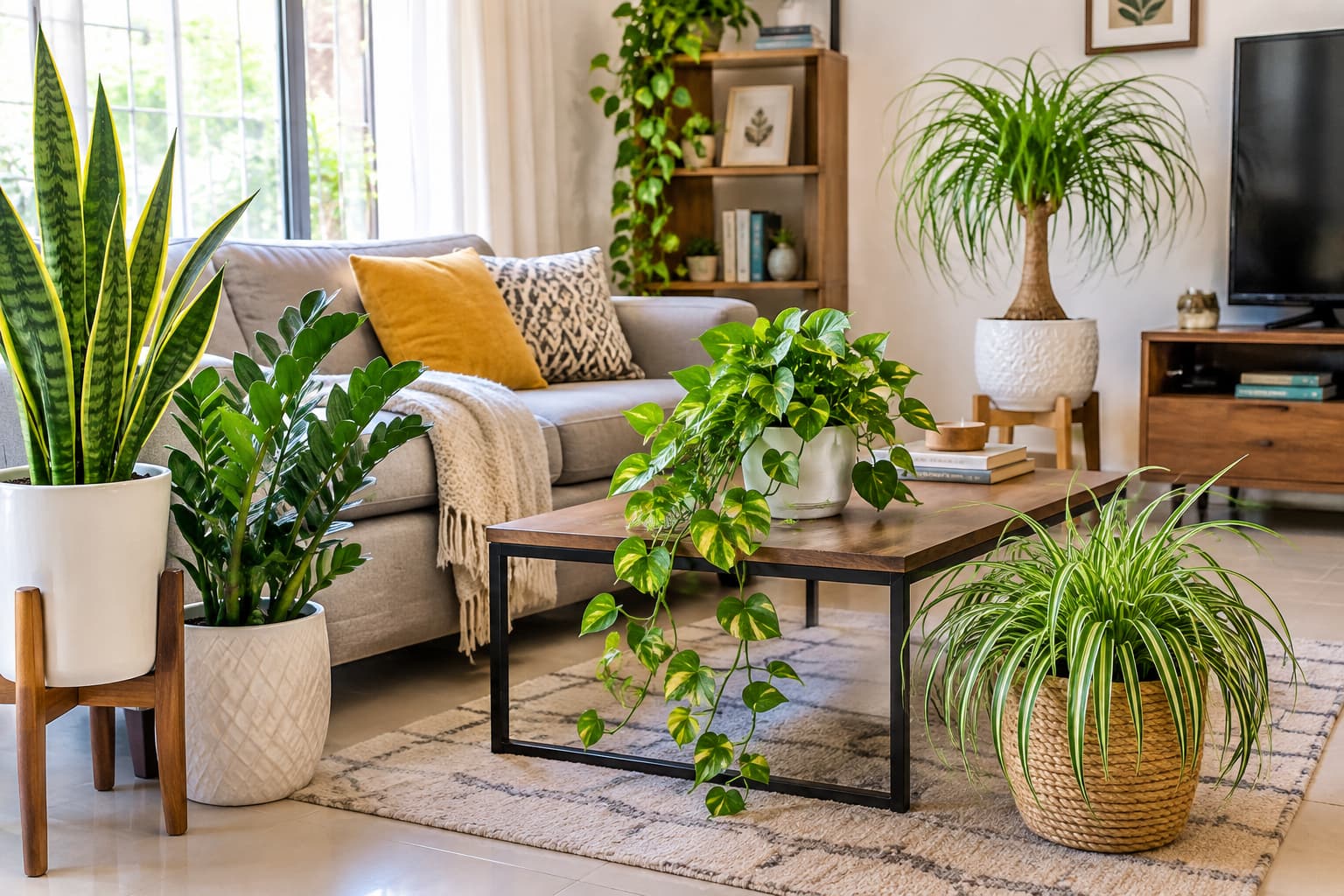
If you enjoy growing tropical indoor plants, then explore our helpful guides on best Peace Lily Care tips, 13 Secrets of Pothos Plant Care, as well as our detailed ZZ Plant Care Secrets guide for growing a healthy indoor plant. These well-researched resources provide practical tips for keeping other popular houseplants healthy, attractive, and thriving indoors. With consistent Monstera indoor plant care, even beginners can enjoy lush, impressive growth for years to come.

I’m Bon (aka Guider), an indoor gardening writer and houseplant enthusiast passionate about helping beginners successfully grow and care for indoor plants. I create practical, beginner-friendly guides covering indoor plant care, watering, lighting, soil, repotting, plant problems, and choosing suitable houseplants for different homes. My articles draw on research from trusted horticultural organizations, university extension resources, and botanical institutions, combined with practical plant-care principles and careful content review.



Hi Bon,
As a fellow Monstera lover, I really enjoyed this! 🌿 These tips are practical and easy to follow, especially the reminders about bright indirect light, proper watering, and giving the plant something to climb. My Monsteras always look their best when I get those basics right. Definitely a helpful guide for anyone wanting a lush, healthy indoor Monstera!
Hi Rita, good to have you as the first person to read, and comment on my just published post, thanks for stopping by. I will appreciate it if you can repeat the visit.