Not every home is filled with bright, sunny windows—and that’s perfectly fine. Many beautiful low light plants for beginners naturally thrive in shaded forests and adapt exceptionally well to indoor spaces with limited sunlight. In this guide, you’ll discover the best low-light houseplants, learn how to care for them, and find the perfect plant for every room in your home.
If you’re new to houseplants, we recommend starting with our Indoor Plants: The Ultimate Guide to Choosing, Growing & Caring, where you’ll learn how to choose the right plants, understand their growing requirements, and build a thriving indoor garden with confidence.
What Are Low light plants for beginners?
Low light plants for beginners are houseplants that can grow well in areas receiving limited natural sunlight. While they still need some light to survive, they don’t require hours of direct sun and are often ideal for apartments, offices, bedrooms, hallways, and other rooms with shaded windows.
These plants have evolved to grow beneath forest canopies, where sunlight is filtered through taller trees. As a result, they’re well adapted to indoor environments and are often easier to care for than sun-loving plants.
Why Choose Low light plants for beginners?
Low light houseplants are an excellent choice for both beginners and experienced plant enthusiasts. They require less demanding growing conditions and can bring life to spaces where many other plants struggle.
Some of the biggest benefits include:
• Thrive in rooms with limited natural light
• Ideal for apartments and offices
• Generally easy to maintain
• Suitable for beginners
• Available in a wide range of sizes and foliage colors
• Help create a calm, natural indoor environment
• Many tolerate occasional watering mistakes
Whether you’re decorating a cosy bedroom or brightening a dim hallway, there’s a low-light plant that will suit your space.
What Does “Low Light” Really Mean?
One of the biggest misconceptions about indoor gardening is that “low light” means “no light.”
It doesn’t.
Low light refers to areas that receive indirect or filtered daylight but little or no direct sunshine.
Examples include:
• Rooms with north-facing windows
• Hallways with natural daylight
• Offices with bright artificial lighting
• Corners several feet away from a window
• Bedrooms with filtered morning light
If you can comfortably read a book during the day without turning on a light, there’s usually enough light for many low-light houseplants.
Important: No houseplant can survive indefinitely in complete darkness. Even the most shade-tolerant plants need some natural or artificial light to stay healthy.
How to Choose the Best Low light plants for beginners
Before buying a houseplant, consider where it will live. Choosing the right plant for your environment makes care much easier and helps ensure long-term success.
1. Consider Your Available Space
Some plants remain compact, while others gradually grow into impressive statement plants.
For example:
Small spaces:
• ZZ Plant
• Chinese Evergreen
• Snake Plant
• Peace Lily
Larger spaces:
• Cast Iron Plant
• Rubber Plant
• Monstera (in brighter low-light conditions)
Think About Your Daily Lifestyle
If you’re a very busy person, or travel often, choose plants that tolerate occasional neglect.
Excellent low-maintenance choices include:
• Snake Plant
• ZZ Plant
• Cast Iron Plant
• Pothos
• Chinese Evergreen
If you enjoy regular plant care, you may appreciate species such as Boston Ferns or Prayer Plants that benefit from more consistent watering and humidity.
2. Check Humidity Levels
Some low-light plants are surprisingly adaptable, while others appreciate higher humidity.
Plants that enjoy average household humidity:
• Snake Plant
• ZZ Plant
• Cast Iron Plant
• Chinese Evergreen
Plants that prefer higher humidity:
• Boston Fern
• Prayer Plant
• Peace Lily
Matching plants to your home’s conditions will reduce maintenance and encourage healthier growth.
Top 21 Best Low light plants for beginners
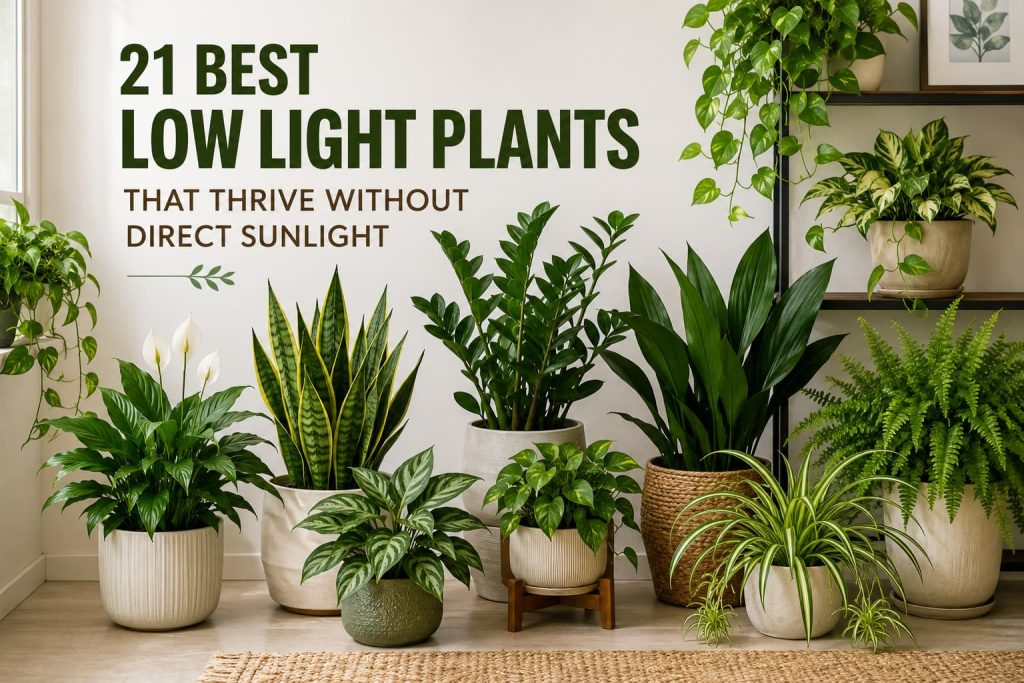
Let’s explore the 21 best low-light plants that thrive indoors without direct sunlight, making them perfect for homes and offices with limited natural light.
1. Snake Plant (Sansevieria)
The Snake Plant is widely regarded as one of the best low light plants for beginners. Its upright, sword-shaped leaves add structure to any room, while its ability to tolerate neglect makes it incredibly forgiving.
Why You’ll Love It:
• Extremely low maintenance
• Thrives in low light
• Handles occasional missed watering
• Long-lasting and durable
• Excellent for homes and offices
Care Tips
• Light: Low to bright indirect light
• Water: Allow the soil to dry completely before watering.
2. ZZ Plant (Zamioculcas zamiifolia)
The ZZ Plant is famous for thriving where many other houseplants struggle. Its glossy leaves and underground rhizomes allow it to store water, making it one of the easiest plants to maintain.
Why You’ll Love It:
• Very drought tolerant
• Excellent for offices
• Grows well in low light
• Attractive glossy foliage
• Requires little attention
Care Tips:
• Light: Low to medium indirect light
• Water: Water only after the soil has dried.
3. Chinese Evergreen (Aglaonema)
Chinese Evergreen is admired for its beautiful patterned foliage and remarkable tolerance of lower light conditions. It’s a favorite among beginners because it combines colorful leaves with easy care.
Why You’ll Love It:
• Beautiful variegated foliage
• Tolerates shade
• Slow-growing
• Excellent desk or office plant
• Beginner-friendly
Care Tips:
• Light: Low to medium indirect light
• Water: Water when the top layer of soil begins to dry.
4. Cast Iron Plant (Aspidistra elatior)
As its name suggests, the Cast Iron Plant is incredibly resilient. It tolerates low light, inconsistent watering, and temperature fluctuations better than most houseplants, making it an excellent choice for busy households.
Why You’ll Love It:
• Extremely hardy
• Thrives in shaded rooms
• Long lifespan
• Low maintenance
• Ideal for beginners
Care Tips:
• Light: Low to medium light
• Water: Allow the soil to dry slightly between watering.
5. Pothos (Epipremnum aureum)
Pothos is one of the most versatile trailing houseplants available. While it grows fastest in bright, indirect light, it adapts surprisingly well to lower-light environments and looks stunning in hanging baskets or on shelves.
Why You’ll Love It:
• Fast-growing vines
• Easy to propagate
• Great for hanging baskets
• Beginner-friendly
• Attractive heart-shaped leaves
Care Tips:
• Light: Low to bright indirect light
• Water: Water when the top few centimetres of soil feel dry.
6. Peace Lily (Spathiphyllum)
Peace Lily is prized for its elegant white blooms and glossy green foliage. It also provides a useful visual cue by drooping slightly when it needs water, making it easier for beginners to learn a watering routine.
Why You’ll Love It:
• Elegant flowers
• Attractive foliage
• Grows well indoors
• Beginner-friendly
• Suitable for shaded rooms
Care Tips
• Light: Medium to low indirect light
• Water: Keep the soil lightly moist but never waterlogged.
7. Spider Plant (Chlorophytum comosum)
Spider Plants have remained popular for generations because they’re adaptable, fast-growing, and easy to maintain. Their arching leaves and baby plantlets make them an attractive addition to shelves, hanging baskets, and plant stands.
Why You’ll Love It:
• Produces baby plants
• Fast-growing
• Easy to propagate
• Beginner-friendly
• Adaptable to different indoor conditions
Care Tips:
• Light: Low to bright indirect light
• Water: Water when the top inch of soil feels dry.
8. Heartleaf Philodendron (Philodendron hederaceum)
Heartleaf Philodendron is one of the easiest trailing houseplants to grow. Its cascading vines and glossy, heart-shaped leaves bring a touch of greenery to shelves, bookcases, and hanging baskets. It adapts well to lower light, making it a favorite for beginners.
Why You’ll Love It:
• Attractive trailing vines
• Easy to grow
• Fast-growing
• Excellent for hanging baskets
• Beginner-friendly
Care Tips:
• Light: Low to bright indirect light
• Water: Water when the top 2–3 cm of soil feels dry.
9. Dracaena
Dracaena is a versatile houseplant available in many varieties, each featuring long, elegant leaves in shades of green, cream, or red. It adapts well to indoor environments and grows happily in rooms with moderate to low light.
Why You’ll Love It:
• Modern architectural appearance
• Available in many varieties
• Low maintenance
• Suitable for homes and offices
• Helps brighten indoor spaces
Care Tips
• Light: Low to medium indirect light
• Water: Allow the top layer of soil to dry before watering.
10. Parlor Palm (Chamaedorea elegans)
Parlor Palm has been a favorite houseplant for generations because of its graceful, feathery fronds and ability to thrive in lower light conditions. It’s an excellent choice for adding a tropical feel to living rooms, bedrooms, and offices.
Why You’ll Love It:
• Elegant tropical appearance
• Compact growth
• Low-light tolerant
• Easy to maintain
• Pet-friendly
Care Tips:
• Light: Low to medium indirect light
• Water: Keep the soil lightly moist without overwatering.
11. English Ivy (Hedera helix)
English Ivy is a beautiful trailing plant that looks stunning spilling from shelves or hanging baskets. With occasional pruning, it develops lush, cascading vines that add character to indoor spaces.
Why You’ll Love It:
• Attractive trailing growth
• Excellent hanging plant
• Easy to shape and prune
• Compact when young
• Classic indoor favorite
Care Tips:
• Light: Low to bright indirect light
• Water: Keep the soil slightly moist but not soggy.
12. Prayer Plant (Maranta leuconeura)
Prayer Plants are admired for their colorful patterned leaves that fold upward each evening, giving them their distinctive name. They appreciate higher humidity but reward good care with striking foliage.
Why You’ll Love It:
• Beautiful decorative leaves
• Unique leaf movement
• Great tabletop plant
• Compact growth
• Eye-catching colors
Care Tips
• Light: Low to medium indirect light
• Water: Keep soil evenly moist.
• Humidity: Moderate to high humidity.
13. Boston Fern (Nephrolepis exaltata)
Boston Fern produces lush, arching fronds that instantly soften any indoor space. Although it requires slightly more attention than some other low-light plants, its elegant appearance makes the extra effort worthwhile.
Why You’ll Love It:
• Dense green foliage
• Elegant appearance
• Excellent hanging plant
• Adds a tropical feel
• Great for humid rooms
Care Tips:
• Light: Bright to medium indirect light
• Water: Keep soil consistently moist.
• Humidity: High humidity preferred.
14. Lucky Bamboo (Dracaena sanderiana)
Despite its name, Lucky Bamboo isn’t actually bamboo. It grows happily in water or soil and is often chosen for its simple appearance and easy maintenance, making it perfect for homes and offices.
Why You’ll Love It:
• Compact size
• Very easy to maintain
• Can grow in water
• Great office plant
• Modern decorative look
Care Tips:
• Light: Low to medium indirect light
• Water: Keep roots covered with clean water if grown hydroponically, or water moderately when grown in soil.
15. Rubber Plant (Ficus elastica)
The Rubber Plant is admired for its thick, glossy leaves and elegant upright growth. While it grows fastest in bright, indirect light, it adapts surprisingly well to lower-light rooms, making it an excellent statement plant for living rooms and offices.
Why You’ll Love It:
• Large decorative foliage
• Elegant modern appearance
• Long lifespan
• Easy to prune
• Makes an impressive indoor tree
Care Tips:
• Light: Medium to low indirect light
• Water: Water when the top few centimetres of soil are dry.
16. Monstera Deliciosa (Swiss Cheese Plant)
Although Monstera thrives in bright, indirect light, it can tolerate lower-light conditions with slower growth. Its large, split leaves make it one of the most recognizable and stylish houseplants available.
Why You’ll Love It:
• Stunning tropical foliage
• Fast-growing in ideal conditions
• Excellent statement plant
• Beginner-friendly
• Perfect for modern interiors
Care Tips:
• Light: Medium to bright indirect light
• Water: Allow the top 5 cm of soil to dry before watering.
• Humidity: Moderate to high humidity.
17. Peacock Plant (Calathea makoyana)
The Peacock Plant is famous for its beautifully patterned leaves that resemble peacock feathers. While it requires slightly more attention than some low-light plants, its striking foliage makes it a rewarding choice.
Why You’ll Love It:
• Highly decorative leaves
• Compact growth
• Excellent tabletop plant
• Tropical appearance
• Eye-catching foliage
Care Tips:
• Light: Low to medium indirect light
• Water: Keep soil evenly moist.
• Humidity: High humidity preferred.
18. Maidenhair Fern (Adiantum)
Maidenhair Fern is loved for its soft, delicate foliage that brings elegance to indoor spaces. It thrives in humid environments and rewards consistent care with lush, graceful growth.
Why You’ll Love It:
• Soft, delicate leaves
• Beautiful cascading growth
• Adds texture to indoor displays
• Perfect for bathrooms
• Elegant appearance
Care Tips:
• Light: Medium indirect light
• Water: Keep soil consistently moist.
• Humidity: High humidity required.
19. Dieffenbachia (Dumb Cane)
Dieffenbachia is a popular houseplant known for its large, variegated leaves and ability to brighten shaded rooms. It grows well indoors with minimal maintenance when provided with consistent watering and indirect light.
Why You’ll Love It:
• Bold patterned foliage
• Fast-growing
• Excellent floor plant
• Easy to care for
• Brightens darker rooms
Care Tips:
• Light: Low to medium indirect light
• Water: Water when the top layer of soil begins to dry.
Note: Keep Dieffenbachia out of reach of children and pets, as its sap can be irritating if chewed or handled improperly.
20. Arrowhead Plant (Syngonium podophyllum)
Arrowhead Plant is a versatile indoor favorite with attractive arrow-shaped leaves that become more decorative as the plant matures. It adapts well to lower light and can be grown as either a compact tabletop plant or a trailing vine.
Why You’ll Love It:
• Attractive foliage
• Compact or trailing growth
• Easy to propagate
• Beginner-friendly
• Adaptable to many indoor spaces
Care Tips:
• Light: Low to medium indirect light
• Water: Water when the top few centimetres of soil feel dry.
21. Devil’s Ivy (Golden Pothos)
Often called Devil’s Ivy, Golden Pothos deserves another mention because it remains one of the most dependable low light plants for beginners available. Its trailing vines, colorful variegated leaves, and forgiving nature make it ideal for beginners and busy homeowners alike.
Why You’ll Love It:
• Extremely adaptable
• Fast-growing
• Beautiful trailing vines
• Easy propagation
• Low maintenance
Care Tips:
• Light: Low to bright indirect light
• Water: Allow the soil to dry slightly between watering.
Looking beyond low-light varieties? Explore our 21 Best Indoor Plants for Every Home All Year Round to discover beginner-friendly houseplants for bright rooms, offices, apartments, and every corner of your home.
How to Care for Low light plants for beginners
Growing low light plants for beginners successfully doesn’t mean ignoring them. Although these houseplants are adaptable, they still need the right balance of light, water, humidity, and nutrients to stay healthy.
Once you’ve chosen the right low-light plants, proper care becomes the key to long-term success. Our Indoor Plant Care: The Complete Beginner’s Guide to Healthy Houseplants explains watering, fertilizing, humidity, pruning, repotting, and other essential techniques that help indoor plants stay healthy year-round.
1. Water Only When Necessary
One of the biggest mistakes people make is assuming that low-light plants need frequent watering. In reality, plants growing in lower light usually use water more slowly.
Before watering:
• Check the top 2–5 cm of soil.
• Water only when it feels dry.
• Empty excess water from trays after watering.
Overwatering remains the most common cause of houseplant problems.
2. Keep Leaves Clean
Dust can accumulate on leaves over time, reducing the amount of light they absorb.
Every few weeks:
• Wipe broad leaves gently with a damp cloth.
• Remove damaged or yellowing foliage.
• Inspect for pests while cleaning.
Clean leaves not only look better but also support healthier growth.
3. Rotate Your Plants
Even low-light plants naturally grow towards their light source.
Rotate pots about a quarter turn every one to two weeks to encourage even, balanced growth and prevent leaning.
4. Feed During the Growing Season
Most low-light houseplants benefit from a balanced fertilizer during spring and summer.
Avoid overfeeding, especially during winter when many plants grow more slowly.
5. Repot When Needed
Repot your plant when:
• Roots emerge through drainage holes.
• Water drains unusually quickly.
• Growth slows significantly.
• The plant becomes root-bound.
Fresh potting mix provides new nutrients and gives roots additional space to grow.
Common Mistakes to Avoid When Growing Low light plants for beginners
Even the toughest houseplants can struggle if they’re not cared for properly. Avoid these common mistakes to keep your low-light plants healthy and thriving.
1. Assuming Low Light Means No Light
Low-light plants tolerate limited sunlight, but they still need natural or artificial light to grow. A completely dark room isn’t suitable for any houseplant.
2. Overwatering
Because plants grow more slowly in lower light, they usually require less water. Always check the soil before watering instead of following a fixed schedule.
3. Using Heavy Garden Soil
Outdoor garden soil often becomes compacted in containers. Use a quality indoor potting mix that drains well and allows roots to breathe.
4. Ignoring Humidity
Some tropical plants, such as Boston Ferns and Calatheas, prefer higher humidity. Dry indoor air may cause brown leaf tips or curling foliage.
5. Forgetting to Clean the Leaves
Dust reduces the amount of light leaves can absorb. Wipe broad leaves gently with a damp cloth every few weeks to keep them healthy.
The University of Florida IFAS Extension – Gardening Solutions is a trusted resource for science-based gardening advice tailored to Florida’s unique climate. From plant selection and lawn care to sustainable landscaping and vegetable gardening, it provides practical, research-backed guidance to help gardeners create healthy, thriving landscapes.
Frequently Asked Questions (FAQs)
1. What are the best low light plants for beginners for beginners?
Snake Plant, ZZ Plant, Pothos, Chinese Evergreen, Spider Plant, and Cast Iron Plant are among the easiest low-light houseplants because they tolerate occasional watering mistakes and adapt well to typical indoor conditions.
2. Can low light plants for beginners survive without sunlight?
No. Although they tolerate lower light levels, all plants require some form of light to produce energy through photosynthesis. If natural daylight is very limited, a grow light can provide additional support.
3. Which low light plant needs the least maintenance?
The ZZ Plant and Snake Plant are widely considered two of the easiest houseplants to maintain because they tolerate low light, drought, and occasional neglect.
4. Are low light plants for beginners good for offices?
Yes. Many low-light plants perform well in offices because they adapt to fluorescent or LED lighting and require relatively little maintenance. ZZ Plants, Snake Plants, Chinese Evergreens, and Parlor Palms are excellent choices.
5. How often should I water low light plants for beginners?
Watering frequency depends on the plant species and indoor conditions. As a general rule, water only when the top few centimetres of soil feel dry.
Key Takeaways:
• Low-light plants thrive in rooms with limited natural sunlight.
• They still require some light to remain healthy.
• Matching plants to your home’s conditions improves long-term success.
• Overwatering is the most common cause of problems.
• Use well-draining potting mix and containers with drainage holes.
• Rotate plants regularly for balanced growth.
• Clean leaves periodically to maximize light absorption.
• Inspect plants often for signs of pests or disease.
Practical Action Steps
If you’re ready to create a thriving indoor garden, follow these simple steps:
• Identify rooms with low or indirect natural light.
• Choose beginner-friendly low-light plants that suit your space.
• Use pots with drainage holes and a quality indoor potting mix.
• Water only when the soil begins to dry.
• Rotate plants every couple of weeks for even growth.
• Wipe leaves regularly to remove dust.
• Feed plants during spring and summer.
• Monitor your plants and adjust care as they grow.
Small, consistent care routines will reward you with healthier, more attractive houseplants throughout the year.
The New York Botanical Garden is one of the world’s leading botanical institutions, spanning 250 acres in the Bronx. Renowned for its breathtaking seasonal displays, diverse plant collections, and world-class horticultural research, it offers an inspiring destination for gardeners, nature lovers, and families alike.
In Conclusion
The best low light plants for beginners prove that you don’t need a bright, sun-filled home to enjoy beautiful indoor greenery. By choosing species that naturally tolerate lower light levels and following a few simple care practices, you can successfully grow healthy houseplants in apartments, offices, bedrooms, hallways, and other shaded spaces.
Whether you prefer the sculptural beauty of a Snake Plant, the glossy leaves of a ZZ Plant, or the graceful fronds of a Parlor Palm, there’s a low-light plant to suit every home and lifestyle. Start with one or two easy-care favorites, observe how they respond to your environment, and gradually expand your collection as your confidence grows.
For more expert advice, continue reading our Indoor Plant Care: The Complete Beginner’s Guide to Healthy Houseplants, where you’ll learn how to water, feed, repot, and maintain your indoor plants throughout the year.

I’m Bon (aka Guider), an indoor gardening writer and houseplant enthusiast passionate about helping beginners successfully grow and care for indoor plants. I create practical, beginner-friendly guides covering indoor plant care, watering, lighting, soil, repotting, plant problems, and choosing suitable houseplants for different homes. My articles draw on research from trusted horticultural organizations, university extension resources, and botanical institutions, combined with practical plant-care principles and careful content review.