
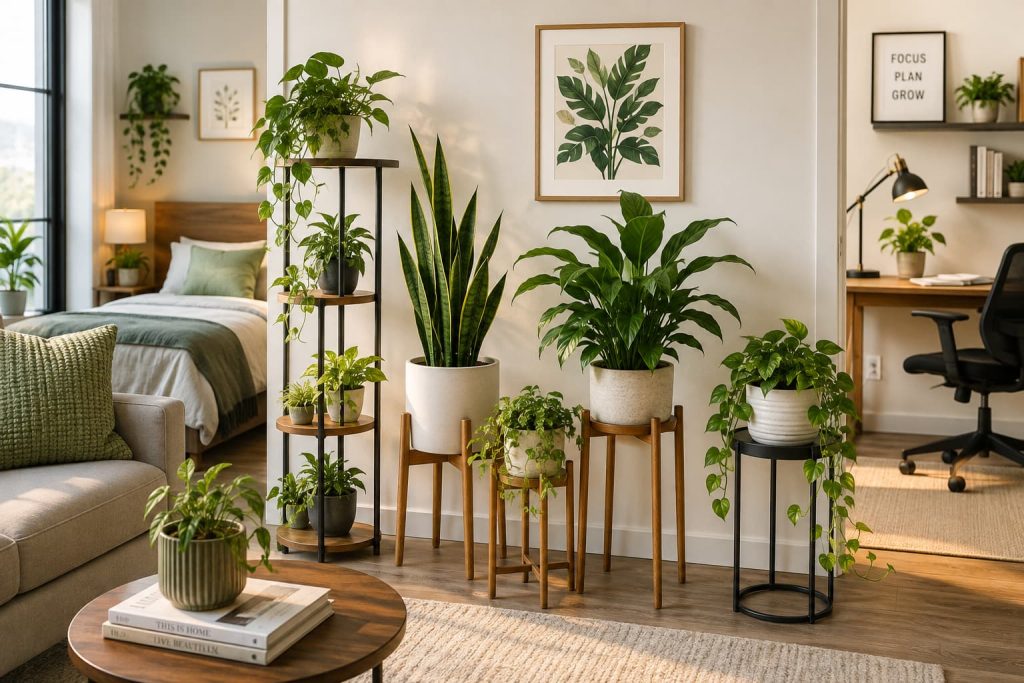
A well-chosen plant stand indoor setup can do much more than make a room look attractive. The right stand can lift plants closer to available light, keep foliage away from crowded surfaces, create visual layers, make better use of small spaces, and turn an ordinary corner into an intentional indoor garden.
But choosing an indoor plant stand is not simply about picking the tallest or most attractive design. You also need to consider the plant’s size, pot weight, available floor space, light conditions, stability, material, maintenance needs, and the room where the stand will be placed.
A beautiful stand in the wrong location can leave a plant struggling for light. An unstable tall stand can become a safety problem. And a stand that looks perfect in a showroom may be impractical when loaded with several heavy, recently watered plants.
This guide covers 15 practical indoor plant stand ideas for living rooms, bedrooms, offices, and small spaces, followed by a buying guide to help you choose the right stand for your plants.
What is the best indoor plant stand?
For most homes, the best indoor plant stand is one that is stable, appropriately sized for the pots it will carry, suited to the room, and positioned where the plants receive the light they actually need.
For a single medium-to-large plant, a sturdy single-tier stand is often the simplest choice. For several smaller plants, a tiered stand can create a compact display. Tall stands work particularly well for plants with trailing or upright growth when the room has enough vertical space.
The most important rule is this: choose the stand around the plant’s needs rather than choosing a plant simply because it fits the stand.
Benefits of an Indoor Plant Stand
An indoor plant stand can improve both the appearance and practicality of your indoor garden. Its main benefits include:
1. Makes better use of limited space: Vertical stands allow you to display several plants without spreading them across tables, shelves, and floors.
2. Creates visual height and balance: Raising plants off the floor can add different levels to a room and make a plant collection look more intentional.
3. Helps position plants for suitable light: A stand can make it easier to move a plant closer to an appropriate light source. However, the stand itself does not improve light conditions; the location still needs to meet the plant’s requirements.
4. Keeps plants organized: A dedicated display area can prevent plants from becoming scattered around a room.
5. Highlights attractive plants: A good stand can turn a distinctive plant into a focal point in a living room, bedroom, or office.
6. Makes small plants easier to see: Raising smaller plants can bring them closer to eye level instead of leaving them hidden behind furniture.
7. Creates room for plant collections: Multi-tier stands can accommodate several smaller plants while keeping them in one organized area.
8. Can improve access for maintenance: When positioned correctly, a stand can make it easier to inspect leaves, rotate plants, remove dead foliage, and monitor pests.
9. Adds decorative value: The stand itself can complement the room’s furniture and interior style.
10. Provides flexibility: Freestanding stands can generally be repositioned more easily than built-in shelving when you need to change your plant arrangement.
15 Best Plant Stand Indoor Ideas
Choosing the right indoor plant stand depends on more than appearance. The best option should complement your room, support the size and weight of your plant, provide enough space for growth, and work with the plant’s light and maintenance needs. The following ideas cover different room types, plant sizes, styles, and space requirements, so you can find an arrangement that works for your home or office.
1. Tall indoor plant stand for a living-room corner
A tall plant stand can transform an unused living-room corner into a vertical focal point.
This works particularly well when you want to raise a plant above furniture without taking up much floor area. A tall stand can also help create visual height alongside sofas, cabinets, curtains, or shelving.
Good candidates include plants with upright or arching foliage, such as snake plants, ZZ plants, and some palms, provided the available light suits the species.
Best for:
• Empty corners
• Beside sofas
• Near suitable windows
• Rooms with high ceilings
• Creating vertical interest
Avoid placing a tall, top-heavy arrangement where it can easily be knocked over. The taller the stand and plant combination, the more important stability becomes.
2. Small indoor plant stand for compact spaces
A small indoor plant stand is one of the easiest ways to add greenery when floor space is limited.
Instead of placing another pot on a crowded table or windowsill, a compact stand can give a small plant its own dedicated position.
This is particularly useful in apartments, narrow hallways, small bedrooms, and compact home offices.
Look for a stand with a footprint that leaves enough clearance for people to walk around it. A stand should improve the use of space—not create an obstacle.
For small-space inspiration, see our guide to 15 Best Indoor Plants for Small Spaces and Apartments.
3. Tiered indoor plant stand for multiple plants
A tiered indoor plant display stand is ideal when you want to display several plants in one compact area.
The advantage is vertical organization. Instead of spreading six small pots across different tables and shelves, a tiered stand can group them into one deliberate display.
However, don’t automatically put the largest plant at the top.
A practical arrangement is usually:
• Smaller plants on upper levels
• Medium plants in the middle
• Heavier plants on lower levels
This helps keep the centre of gravity lower and can make the display more stable.
Also consider the mature size of the plants. A display that looks spacious when the plants are young can become crowded as foliage expands.
4. Plant stand for living room beside a bright window
If your living room receives good natural light, placing an appropriate plant stand near a window can create an attractive plant display while giving suitable plants access to brighter conditions.
But avoid assuming that every indoor plant wants direct sunlight.
Light requirements vary considerably between species. Some foliage plants tolerate lower light, while others need brighter conditions to maintain healthy growth.
If you move a shade-tolerant plant abruptly into strong direct sunlight, its leaves may scorch. Plants that need to be moved into brighter conditions should generally be acclimated gradually.
A plant stand should therefore be positioned according to the plant’s light requirements—not simply because a particular window looks attractive.
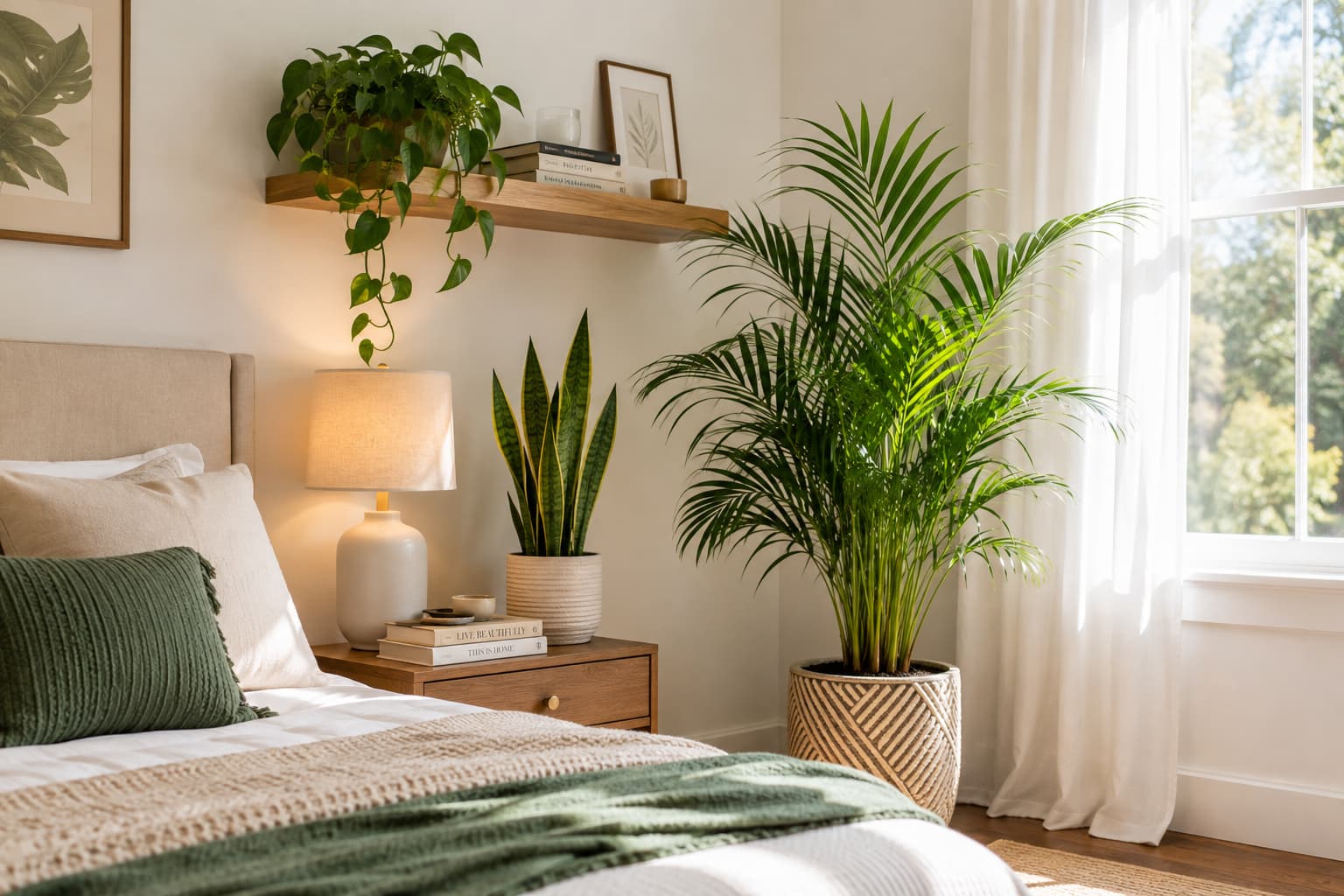
5. Plant stand for bedroom beside the bed
A plant stand for bedroom use should be compact, stable, and easy to maintain.
Rather than placing a large stand immediately beside the bed, consider a position where it doesn’t interfere with movement, curtains, doors, or cleaning.
Small plants can work particularly well on compact stands. If your bedroom has limited natural light, choose plants known to tolerate those conditions rather than assuming that any popular houseplant will thrive there.
Our guide to 21 Best Indoor Plants for Bedrooms can help you choose plants suited to bedroom environments.
Good bedroom placement options include:
• Beside a suitable window
• In an unused corner
• Near a dresser
• Beside—but not obstructing—the bed
• In a reading corner
Keep watering practical. If reaching the plant requires moving furniture every time you need to water it, maintenance will eventually become inconvenient.
6. Tall plant stand behind or beside furniture
A tall indoor plant stand can be used to create height behind a low cabinet, beside a sofa, or next to other furniture.
This technique works especially well when the room contains several horizontal surfaces but lacks vertical interest.
However, leave enough space for the plant’s foliage to grow naturally.
Don’t force a large plant into a narrow gap simply because the stand fits there. Leaves need adequate room, and overcrowding can make watering, cleaning, pruning, and pest inspection more difficult.
7. Indoor plant display stand for a collection of small plants
If you have several small plants, an indoor plant display stand can function almost like a miniature vertical garden.
You can combine plants with different shapes:
• Upright foliage
• Compact bushy plants
• Trailing plants
• Plants with broad leaves
• Plants with narrow architectural leaves
The goal is contrast without overcrowding.
For example, a trailing pothos can soften the edge of a rigid metal stand, while an upright snake plant can provide vertical structure.
Remember that different plants may have different watering and light requirements. Grouping them visually does not mean they should all receive identical care.
8. Wooden indoor plant stand for a natural look
Wooden stands can complement homes with natural, rustic, minimalist, or warm interior styles.
They work particularly well with leafy plants because the natural material can visually connect the greenery with other wood elements in the room.
Before buying a wooden stand, consider:
• Maximum weight capacity
• Moisture resistance
• Construction quality
• Stability
• Surface protection
• Ease of cleaning
Water can occasionally spill during plant care, so don’t assume every wooden stand is suitable for repeated exposure to moisture.
Use a waterproof saucer or other appropriate protection beneath pots when necessary, while ensuring that excess water does not remain trapped around the base.
9. Metal plant stand for modern interiors
A metal plant stand indoor arrangement can provide a cleaner, more contemporary appearance.
Metal stands are particularly useful when you want the plants themselves to remain the visual focus rather than the stand.
They can work well with:
• Minimalist interiors
• Modern living rooms
• Home offices
• Apartments
• Small plant collections
The important consideration is construction quality. A lightweight decorative stand may be appropriate for a small pot but unsuitable for a large ceramic container filled with moist potting mix.
Always consider the combined weight of the pot + moist growing medium + plant, not merely the empty pot.
10. Multi-tier plant stand for a small apartment
A multi-level stand can be an excellent space-saving solution when floor area is limited.
Instead of placing plants across multiple surfaces, you can use vertical space.
This is especially useful in apartments where every square metre matters.
However, make sure the stand does not block walkways or prevent windows, doors, vents, or curtains from functioning properly.
Also remember that plants are living objects, not permanent decorations. They grow.
A stand that works for a 20-cm plant today may become unsuitable when that plant doubles in size.
11. Corner plant stand for an unused space
Corners are often underused areas in indoor rooms.
A corner plant stand can turn one of these spaces into a dedicated plant zone without requiring a large piece of furniture.
This can work particularly well with:
• Snake plants
• ZZ plants
• Compact palms
• Pothos
• Philodendrons
• Other appropriately sized houseplants
The plant still needs suitable light, however. A dark corner is not automatically a good location for a plant simply because the plant stand fits there.
If the corner is far from windows, choose a plant that tolerates the available light or consider appropriate supplemental lighting.
12. Plant stand for office desks and workspaces
A plant stand for office use can help introduce greenery without occupying the main working surface.
For a home office, a narrow stand beside the desk may be more practical than placing a large pot directly on the desk.
Consider:
• Desk and chair movement
• Computer cables
• Air-conditioning or heating
• Window light
• Watering access
• Risk of spills
• Available floor space
For office plant choices, see our guide to 15 Best Indoor Plants for Offices That Thrive with Minimal Care.
The best office plant arrangement is one that adds greenery without interfering with your work.
13. Floating-height plant display with a trailing plant
A stand doesn’t always have to support a plant with upright growth.
Trailing plants can be particularly attractive when raised above eye level or positioned where their stems can cascade naturally.
Pothos is one example of a commonly grown trailing houseplant, although its light and watering requirements still need to be considered.
Avoid positioning trailing plants where vines create a trip hazard or interfere with doors, windows, fans, or electrical equipment.
A plant stand should frame the plant—not create a new household hazard.
14. Grouped plant stands at different heights
Instead of using one large stand, consider grouping two or three stands of different heights.
This can create a more natural visual arrangement than placing every plant at exactly the same level.
For example:
Tall plant → medium plant → low plant
The arrangement can create depth and make a collection appear more intentional.
However, leave enough space between plants to inspect leaves and stems. Crowded plant displays can make it harder to notice early signs of pests or disease.
This matters because regular inspection is an important part of indoor plant care.
For troubleshooting help, see 21 Common Indoor Plant Problems and How to Fix Them Fast.
15. Minimalist single-plant stand
Sometimes the best plant stand ideas indoor are the simplest.
A single plant on a well-proportioned stand can become a focal point without making the room feel crowded.
This approach works particularly well for statement plants with distinctive foliage.
Choose the stand according to the mature size and weight of the plant.
A small stand under a large, top-heavy plant can look visually unbalanced and may be unstable. Likewise, a very large stand underneath a tiny plant can overwhelm the display.
The objective is proportion.
How to Choose the Best Indoor Plant Stand
The best indoor plant stand isn’t necessarily the tallest, most decorative, or most expensive option. It should work with your plant, pot, available space, light conditions, and daily maintenance routine.
Before buying one, consider these factors.
1. Consider the plant’s size and growth habit
Start with the plant rather than the stand.
A compact plant may look lost on a large stand, while a mature Monstera or other broad-growing plant can quickly overwhelm a narrow stand.
Consider both the plant’s current size and expected mature size. Upright plants may work well with taller stands, while trailing plants can benefit from elevated positions that give their stems room to cascade.
2. Check the weight capacity
Don’t calculate the weight using the empty pot alone.
The final arrangement includes:
Pot + growing medium + water + plant
A ceramic pot containing moist growing medium can be surprisingly heavy. If the stand has a manufacturer’s weight rating, make sure the complete arrangement stays comfortably within that limit.
For multi-tier stands, also check whether the weight rating applies to each shelf or the entire unit.
3. Choose a stable design
Stability becomes increasingly important as the stand gets taller.
A narrow, lightweight stand carrying a large plant can be more vulnerable to tipping than a lower stand with a broad base.
Look for:
• A solid, stable base
• Secure joints
• Appropriate shelf support
• Good weight distribution
• A design suitable for the plant’s height and weight
If children or pets are present, give stability even greater priority.
4. Measure your available space
Before purchasing, measure the area where you intend to place the stand.
Check:
• Available floor width
• Available depth
• Ceiling clearance
• Distance from furniture
• Walking space
• Window and curtain clearance
Don’t forget to account for the plant’s foliage, not just the stand itself.
A stand may physically fit into a corner while the mature plant eventually grows into a walkway.
5. Match the stand to the plant’s light requirements
A plant stand can help you position a plant in a more suitable location, but the stand itself doesn’t provide the light the plant needs.
Before deciding where to put the stand, consider whether the plant prefers:
• Bright indirect light
• Direct sunlight
• Moderate light
• Lower-light conditions
This is particularly important when positioning a stand near a window. Some plants tolerate or prefer brighter light, while others can suffer leaf damage when suddenly exposed to intense direct sunlight.
6. Think about watering and drainage
Choose a location where you can comfortably water the plant.
A beautiful plant stand hidden behind a sofa may become frustrating if you have to move furniture every time you water.
Also consider what happens when excess water drains from the pot.
Use appropriate drainage protection to prevent water from damaging:
• Floors
• Carpets
• Furniture
• Wooden stands
If you’re choosing a new container at the same time, our guide to Pots for Indoor Plants: How to Choose the Right Pot can help you choose a suitable pot and drainage setup.
7. Consider the stand’s height
Height should complement both the plant and the surrounding furniture.
A tall stand can add vertical interest to a living room, while a shorter stand may work better beside a bed or desk.
Think about the finished height of the entire arrangement, not just the stand.
A 60-cm stand supporting a 100-cm plant creates a very different visual effect from the same stand supporting a small 30-cm plant.
8. Choose a material suited to your environment
Wood, metal, plastic, and composite stands can all work indoors, but they have different characteristics.
Consider:
• Moisture exposure
• Weight
• Durability
• Appearance
• Ease of cleaning
• Construction quality
Don’t choose a material solely because it matches your furniture. Structural strength and practicality should come first.
9. Think about future growth
One of the easiest mistakes is choosing a stand based only on the plant’s current size.
A young plant may fit perfectly today but become too large within a relatively short period.
Before buying, ask:
Will this stand still work when my plant is significantly larger?
Planning for growth can save you from replacing the stand later.
10. Make maintenance easy
The best indoor plant stand should make plant care easier—not harder.
You should be able to:
• Inspect the leaves
• Rotate the plant
• Remove dead foliage
• Check for pests
• Water the plant
• Clean around the pot
If the arrangement makes basic maintenance difficult, reconsider its location or design.
Quick decision guide
1. Choose a tall stand → when you need vertical height and have a stable location.
2. Choose a small stand → when floor space is limited or the plant is compact.
3. Choose a tiered stand → when displaying several small plants.
4. Choose a wide, sturdy stand → when supporting a large or heavy plant.
5. Choose a narrow stand → when space is limited, provided it remains stable.
6. Choose a lower stand → when the plant is tall, heavy, or top-heavy.
The simplest rule to remember
Choose the plant first, then choose the stand.
The right stand should safely support the plant, fit the room, work with its light requirements, allow convenient maintenance, and leave enough room for future growth.
What Material Is Best for an Indoor Plant Stand?
There is no single best material for every room.
1. Wood
Best for: warm, natural interiors.
Advantages:
• Natural appearance
• Works well with leafy plants
• Often suits minimalist and rustic rooms
Potential drawbacks:
• Can be vulnerable to prolonged moisture
• Quality varies considerably
• May require more care
2. Metal
Best for: modern and minimalist interiors.
Advantages:
• Clean appearance
• Often visually lightweight
• Many shapes and designs available
Potential drawbacks:
• Some lightweight designs may not support heavy pots
• Metal finishes can vary in durability
3. Plastic or Composite Materials
Best for: lightweight arrangements and budget-conscious setups.
Advantages:
• Lightweight
• Easy to clean
• Often inexpensive
Potential drawbacks:
• Some designs may look less substantial
• Weight capacity varies
Whatever material you choose, prioritize structural stability over appearance.
Where Should You Place an Indoor Plant Stand?
The best location depends on the plant.
Near a window
Suitable for plants that need brighter conditions, provided direct sunlight is appropriate for the species.
Do not assume that placing a plant directly against glass is automatically beneficial.
Some plants can be damaged by intense direct sun, while others may not receive enough light farther into the room.
In a living room
Living rooms provide many possibilities:
• Beside sofas
• Near suitable windows
• In corners
• Beside cabinets
• Around reading areas
Keep pathways clear.
In a bedroom
Choose a location that doesn’t interfere with:
• Bed access
• Curtains
• Doors
• Cleaning
• Ventilation
In an office
Avoid locations where watering could damage electronics or where foliage interferes with your workspace.
In a dark corner
Be careful.
A plant stand does not solve inadequate light.
If the location doesn’t provide enough usable light for the plant, the stand simply places the struggling plant in a more attractive position.
How High Should an Indoor Plant Stand Be?
There is no universal ideal height, instead, choose height according to the followings:
1. Plant size: Choose a stand height that suits the plant’s overall size, keeping tall plants stable and smaller plants easy to see and care for.
2. Pot size: Consider the pot’s height and width when choosing a stand. A sturdy surface should support the pot securely without making the setup look crowded.
3. Room proportions: Match the stand to the room’s size and layout. A properly scaled stand can make your indoor plants look balanced without overwhelming the space.
4. Viewing angle: Choose a height that puts the plant where you can easily enjoy it. The best stand makes leaves and foliage visible without constant bending or reaching.
5. Available light: Consider how much natural light the plant needs. Stand height can affect its position near windows, so avoid blocking light or placing plants too far away.
6. Stability: Choose a sturdy stand that can safely support the plant and pot. Taller stands need extra stability to prevent heavy plants from tipping or falling.
7. Furniture height: Consider nearby tables, shelves, and other furniture. A stand that complements existing heights creates a more balanced and intentional indoor display.
For a small plant beside a sofa, a moderately raised stand may bring the foliage into a comfortable viewing position.
For a tall floor plant, raising it too high may make the arrangement awkward and unstable.
The finished height of the plant + pot + stand matters more than the stand’s advertised height alone.
How Many Plants Should You Put on One Stand?
That depends on the stand’s design and load capacity.
A single-tier stand is often best for one statement plant.
A multi-tier stand can hold several smaller plants, provided:
• The shelves can support their combined weight
• Plants have enough space
• Foliage isn’t excessively crowded
• Each plant receives suitable light
• Watering remains practical
Don’t sacrifice plant health simply to create a fuller display.
Plants with different environmental requirements may look good together but need different watering or light routines.
Plant Stand Indoor Ideas for Different Plant Types
The plant should influence the stand you choose.
1. Snake plants
Snake plants have an upright growth habit, making them suitable for stands that emphasize vertical height.
Avoid choosing a narrow, unstable stand simply because the plant itself is relatively narrow.
For simple, practical growing advice, see our Snake Plant Care: The Complete Beginner’s Guide to learn how to give your snake plant the right light, water, soil, and care.
2. ZZ plants
ZZ plants can work well as medium-sized statement plants.
Their weight and eventual spread should be considered when selecting a stand.
Learn how to keep your indoor ZZ plant healthy and thriving with these 11 ZZ Plant Care Secrets, covering the basics of light, watering, soil, and everyday care..
3. Pothos
Trailing pothos can work beautifully on raised stands where the stems have room to cascade.
Avoid allowing the vines to obstruct walkways or furniture.
For practical care advice, explore our 13 well-detailed Pothos Plant Care Secrets for Fuller, Healthier Growth.
4. Monstera
Monsteras can become large and broad, so they are not automatically suitable for small decorative stands.
A mature plant may need substantial floor space and a strong support structure.
Want to keep your Monstera lush and healthy? Explore these 11 Monstera Indoor Plant Care Secrets to Growing a Lush, Healthy Plant] for practical care advice.
5. Peace lily
Peace lilies can look attractive on medium-height stands, but their eventual size and foliage spread should be considered.
For simple, practical care advice, read our 11 Simple Peace Lily Care Guide to Keep Your Plant Thriving and learn how to provide the right light, water, soil, and nutrients.
6. Aloe Vera
Aloe Vera generally has a compact form, but its leaves can become heavy and wide.
A sturdy low-to-medium stand may be more practical than a narrow tall stand.
For simple, practical guidance, explore our detailed 15 Aloe Vera indoor plant care tips, benefits, and growing secrets, covering light, watering, soil, feeding, and healthy growth.
7 Common Indoor Plant Stand Buying Mistakes
Buying an indoor plant stand seems simple, but the wrong choice can harm your plants, waste space, or create safety issues. Avoid these 7 common mistakes.
1. Buying for appearance alone: A beautiful stand is useless if it cannot safely support the plant.
2. Ignoring the pot’s weight: Always consider the weight of the complete arrangement.
3. Choosing a stand that is too tall: Height can increase instability.
4. Blocking natural light: Don’t position the stand where a large plant prevents another plant from receiving needed light.
5. Overcrowding the shelves: Plants need room for growth and maintenance.
6. Forgetting watering access: A stand hidden behind furniture may look attractive but become difficult to maintain.
7. Treating plants like permanent decorations: Plants grow, spread, lean, trail, and change their light requirements as their size changes.
Choose a stand that leaves some room for growth.
A Simple Indoor Plant Stand Buying Checklist
Before buying an indoor plant stand, check:
• Maximum weight capacity
• Pot diameter compatibility
• Overall stand dimensions
• Base stability
• Shelf spacing
• Material and moisture resistance
• Room available
• Plant’s mature size
• Plant’s light requirements
• Ease of watering
• Ease of cleaning
• Safety around children and pets
• Whether the stand blocks windows or walkways
This simple checklist can prevent many common purchasing mistakes.
Best Indoor Plant Stand by Room
| Room | Recommended Stand Style | What To Prioritize |
| Living room | Tall, single-tier or tiered | Appearance, stability, proportion |
| Bedroom | Small or medium single-tier | Compact size, easy maintenance |
| Office | Narrow or compact stand | Space efficiency, spill prevention |
| Small apartment | Multi-tier | Vertical space, stability |
| Large living room | Tall statement stand | Scale and visual balance |
| Corner | Tall or corner-style | Stability and available light |
| Plant Collection | Multi-tier display | Weight distribution and spacing |
How to Create a Beautiful Indoor Plant Display
You don’t need expensive furniture or dozens of plants.
Start with one strong focal point.
Then add smaller plants at different heights.
For example:
Tall plant → medium plant → trailing plant → small accent plant
This creates visual variation while avoiding a flat display.
You can also combine different leaf shapes. A narrow-leaved upright plant beside a broad-leaved plant creates more visual contrast than several plants with nearly identical foliage.
However, don’t group plants solely according to appearance. Light and watering requirements still matter.
A visually perfect grouping is not successful if half the plants are receiving unsuitable conditions.
When a Plant Stand Is Better Than a Plant Shelf
A plant stand is often preferable when you want:
• A freestanding display
• Easy repositioning
• A single focal plant
• Vertical height
• A dedicated location for a large pot
A wall shelf may be preferable when:
• Floor space is extremely limited
• You have several very small plants
• The wall can safely support the required load
• You want to keep the floor clear
For renters or people who prefer not to drill into walls, freestanding plant stands can offer more flexibility.
How to Keep Plants Healthy on a Stand
A plant stand improves presentation, but it doesn’t replace proper plant care.
Continue monitoring:
1. Light
Check whether the plant receives enough usable light for its species.
2. Water
Water according to the plant and growing medium rather than according to a fixed calendar. Container conditions, temperature, light, and plant type all affect watering needs.
3. Drainage
Ensure excess water can escape through drainage holes.
4. Soil
Use an appropriate growing medium for the plant.
Our guide to Best Soil for Indoor Plants: How to Choose the Right Potting Mix will help you choose the right growing medium for your indoor plants, while explaining how good soil supports proper drainage, healthy roots, and stronger growth.
5. Fertilizer
Plants in containers eventually depend on appropriate feeding because their root systems have access to a limited volume of growing medium. Follow the needs of the particular plant and growing medium.
Learn how to give your indoor plants the nutrients they need with our How to Fertilize Indoor Plants the Right Way guide.
6. Pests
Inspect leaves, stems, and the surface around pots regularly.
A beautiful display should never make it harder to notice pests.
If you notice tiny insects, sticky leaves, webbing, or damaged foliage, our 8 Common Indoor Plant Pests and How to Eliminate Them guide can help you identify the problem and take action.
Frequently Asked Questions
1. What is the best indoor plant stand?
The best indoor plant stand is one that safely supports the plant and pot, fits the available space, remains stable, and allows the plant to receive appropriate light and care.
2. Are tall indoor plant stands safe?
They can be, provided they have a stable base, are not overloaded, and are positioned away from areas where they can easily be knocked over. Tall arrangements require particular attention to stability.
3. What is the best plant stand for a living room?
A tall single-plant stand, tiered stand, or well-proportioned decorative stand can work well in a living room. Choose based on the size of the plant, available light, and room layout.
4. What is the best plant stand for a bedroom?
A compact or medium-height stand is usually practical for bedrooms. Choose a location that doesn’t obstruct movement, curtains, doors, or cleaning.
5. Can I put several plants on one indoor plant stand?
Yes, if the stand is designed to carry their combined weight and the plants have enough space. Check the manufacturer’s weight rating for each shelf where applicable.
6. Can a plant stand improve plant growth?
A plant stand itself does not make a plant grow better. However, raising a plant can help you position it in a location with more suitable light or better airflow. The actual benefit depends on the plant and its environment.
7. Should indoor plant stands be near windows?
They can be, especially for plants that require brighter light, but the correct distance depends on the species and the intensity of the light. Some plants can suffer leaf damage if suddenly exposed to strong direct sunlight.
8. How do I stop an indoor plant stand from tipping?
Use a stable stand with an appropriately wide base, avoid overloading upper shelves, place heavier arrangements lower where appropriate, and keep the stand away from busy walkways.
For additional plant-care information, explore the University of Florida IFAS Extension Gardening Solutions resources for science-based guidance on growing and caring for plants.
Conclusion
The best plant stand indoor is not necessarily the biggest, tallest, or most expensive one. It is the one that makes sense for your plant, your space, and its growing needs.
A small stand can transform an unused corner. A tiered stand can turn several small plants into a compact indoor garden, while a tall stand can add height and visual interest to a living room. A simple single-plant stand can even make one beautiful specimen the focal point of an entire space.
Before buying, think beyond appearance. Consider the plant’s mature size, pot weight, light requirements, watering needs, available space, and the stand’s stability. For additional guidance on choosing suitable conditions for indoor plants, Texas A&M AgriLife Extension provides helpful horticultural resources.
Most importantly, remember that the stand should serve the plant—not the other way around.
When the right plant, pot, stand, and location work together, your indoor display becomes both attractive and practical while giving your plants a better environment to thrive.

I’m Bon (aka Guider), an indoor gardening writer and houseplant enthusiast passionate about helping beginners successfully grow and care for indoor plants. I create practical, beginner-friendly guides covering indoor plant care, watering, lighting, soil, repotting, plant problems, and choosing suitable houseplants for different homes. My articles draw on research from trusted horticultural organizations, university extension resources, and botanical institutions, combined with practical plant-care principles and careful content review.


Hello Bon,
I must say, this is such a helpful and inspiring collection of indoor plant stand ideas! I love how the different styles show that you don’t need a large space to create a beautiful indoor plant display. Great ideas for anyone looking to add more greenery and personality to their home.
Hello Mr. Joe, great having you read my article, and dropping a comment, keep visiting, and keep sharing.