Finding the best water for houseplants is critical to their long-term health, as sensitive varieties easily struggle with the excessive minerals, salts, and disinfectants found in typical tap water. However, you don’t need to default to buying expensive bottled water, and even rainwater isn’t a universally perfect solution for every indoor garden.
For most indoor gardeners, the best water is one that is reasonably clean, suitable for the plant’s needs, and practical to use consistently. Tap water works well for many houseplants, while filtered, rainwater, distilled, and bottled water each have specific advantages and limitations.
This guide compares five common water sources, explains how water quality affects indoor plants, and helps you choose an appropriate option without spending money unnecessarily.
Looking for the best water for houseplants? Check out our Indoor Plant Care for Beginners: The Complete Guide to master watering, soil, and lighting essentials!
What Makes Water Suitable for Houseplants?
Before comparing water types, it helps to understand what plants actually need from their water.
Water performs several essential functions in a plant. It transports dissolved nutrients, maintains cell pressure that keeps leaves and stems firm, supports photosynthesis, and helps roots absorb minerals from the growing medium.
But plants do not benefit from every substance dissolved in water. The quality of irrigation water depends on its mineral content, acidity or alkalinity, salinity, and potential contaminants.
Water-Quality Factors for Indoor Plants
Water quality can affect indoor plant health, especially when the same water is used repeatedly over months or years. Understanding a few basic water-quality factors can help you make better watering decisions and determine whether your tap water is suitable for your houseplants.
1. pH
Water pH indicates whether water is acidic or alkaline. Most indoor plants can tolerate a reasonably broad pH range, but consistently unsuitable water can affect nutrient availability. The effect also depends on the potting mix, because irrigation water can gradually influence the growing medium and the conditions around the roots.
2. Total Dissolved Solids (TDS)
Total dissolved solids (TDS) measure the amount of dissolved material in water, including minerals and salts. A higher TDS reading does not automatically mean the water is unsuitable for houseplants. However, repeated watering with mineral-rich water can cause salts to accumulate in the potting mix, particularly when drainage is poor.
3. Water Hardness
Water hardness is mainly determined by dissolved calcium and magnesium. These minerals are not inherently harmful and are essential plant nutrients in appropriate amounts. Very hard water, however, can leave mineral deposits on soil, pots, and leaves and may gradually affect the growing medium when used continuously.
4. Alkalinity
Alkalinity describes the ability of water to resist changes in pH. Water with high alkalinity can gradually increase the pH of the potting mix when used repeatedly. This may affect the availability of certain nutrients, particularly for indoor plants that grow best in slightly acidic conditions.
5. Chlorine and Chloramine
Municipal tap water may contain chlorine or chloramine to control microorganisms. Most established houseplants tolerate the concentrations normally found in treated drinking water. However, plant sensitivity varies, and chloramine is more persistent than chlorine. If a particular plant consistently reacts poorly to tap water, water quality may be one factor worth investigating.
6. Sodium and Other Dissolved Ions
Sodium and other dissolved ions can become a concern when they accumulate in container soil over time. Excessive sodium can affect root water uptake, soil structure, and nutrient balance. This is more relevant when using mineral-rich water repeatedly, especially in containers where excess water and dissolved salts cannot drain away effectively.
Mineral Content and Salt Accumulation
Water naturally contains dissolved minerals, including calcium and magnesium. These minerals are not necessarily a problem, but excessive mineral content can contribute to salt accumulation in the potting mix.
Salt buildup may sometimes appear as a white or pale crust on the soil surface or around the edges of a container. Regular drainage can help carry some accumulated salts away from the root zone.
What Water Quality Means for Your Houseplants
There is no single type of water that is best for every indoor plant. The suitability of tap water depends on its mineral content, treatment, and other characteristics, as well as the plant species and growing conditions.
For most houseplants, ordinary tap water may be perfectly adequate. If plants repeatedly develop problems such as mineral deposits, damaged leaf tips, or unexplained nutrient deficiencies, water quality can be one of the factors worth checking alongside light, watering habits, drainage, and potting mix.
The 5 Best Types of Water for Houseplants Compared
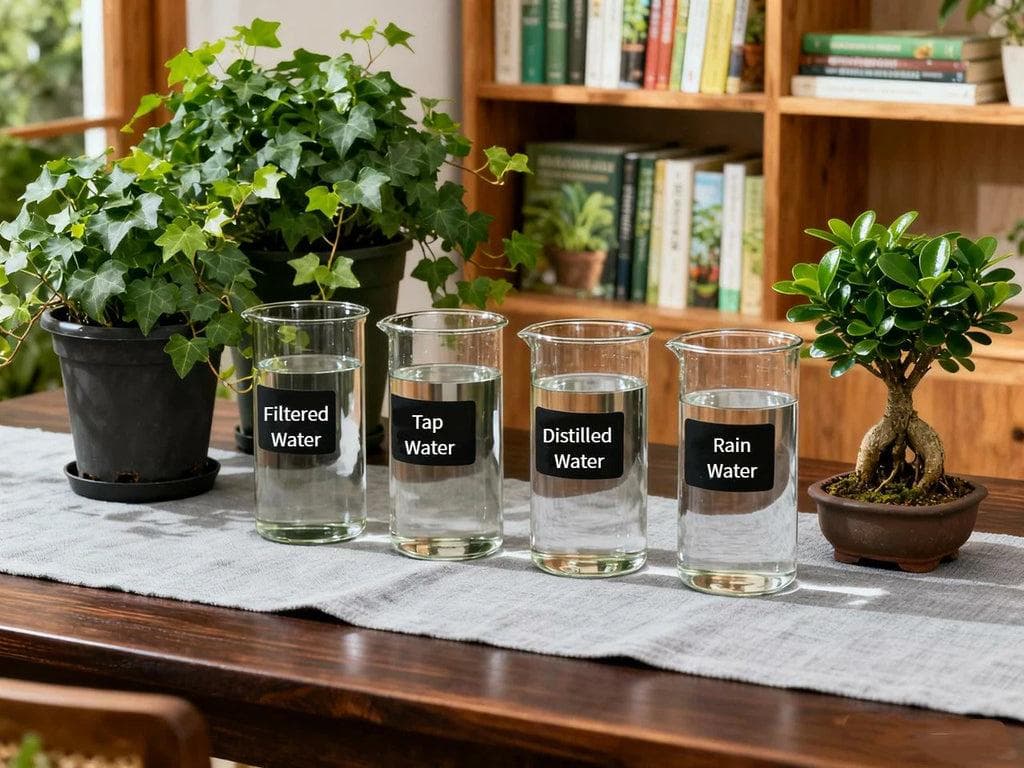
There is no single water source that is ideal for every indoor plant and every household. The following comparison considers everyday suitability, potential benefits, limitations, and when each option makes sense.
It is important to understand that “Best” does not mean the water contains the most nutrients or has the lowest mineral content. A suitable irrigation source provides water without creating unnecessary problems for the plant or growing medium.
1. Tap Water
For many households, tap water is the most practical starting point. Municipal tap water is generally treated for human consumption, and numerous common houseplants grow perfectly well when watered with it.
Plants such as pothos, snake plants, ZZ plants, spider plants, and many palms can often tolerate ordinary tap water when the water quality is reasonable and watering practices are appropriate.
However, tap water quality differs significantly between locations.
Water supplied to a home may contain varying amounts of dissolved minerals, disinfectants, and other substances. Private well water can also differ from municipal supplies.
Navigating Houseplant Water Quality in Nigeria
While global plant care guides frequently recommend using distilled or purified water, this is rarely practical or cost-effective for indoor gardeners in Nigeria. Instead, you need to understand how our common local water sources impact your plants:
• Borehole Water: If your compound relies on a borehole system, be aware that underground water tables can vary wildly in mineral density. Heavy minerals can accumulate in your potting soil over time, leaving a white, crusty residue on the surface or pot edges. If your sensitive plants (like Peace Lilies) show crispy brown tips from borehole water, flush the soil out thoroughly once a month with rainwater.
• Municipal Tap Water: Chemically treated city water often contains high levels of chlorine or water-treatment agents. Sensitive houseplants can experience chemical leaf burn from this.
The local fix: Fill a clean bucket or water container with your tap water and leave it uncovered for 24 hours before using it. This allows the harsh chlorine gases to evaporate cleanly into the air.
• Rainwater Harvesting (The Best Choice): During the heavy rainy season, make it a habit to collect rainwater in clean basins or buckets. Rainwater is entirely free of chemicals, naturally soft, and slightly acidic—making it the ultimate superfood for tropical indoor plants.
Advantages of tap water
• Readily available.
• Usually inexpensive.
• Easy to use consistently.
• Often suitable for a wide range of common houseplants.
• Contains calcium and magnesium in some water supplies.
When tap water may cause problems
Long-term use of mineral-rich water can contribute to salt accumulation in containers. Some plants are also more sensitive to mineral buildup or particular water constituents than others.
Possible warning signs include:
• White mineral deposits on the soil surface.
• Crusty residue around pot rims.
• Brown leaf tips that persist despite appropriate watering and light.
• Reduced growth in plants known to be sensitive to water quality.
These symptoms are not proof that tap water is responsible. Over fertilizing, dry air, root problems, excessive sunlight, and inconsistent watering can produce similar symptoms.
Should you stop using tap water?
Not automatically.
If your houseplants are growing well, producing healthy new leaves, and showing no recurring signs of salt accumulation, there may be no horticultural reason to replace your tap water.
This water is best suited for most common indoor plants in homes with reasonably suitable water.
2. Filtered Water for Indoor Plants
Filtered water is a useful middle-ground option for gardeners who want to improve water quality without purchasing distilled water regularly.
However, the word filtered covers several different technologies. A basic carbon filter, reverse-osmosis system, and sediment filter do not remove the same substances.
What can water filters remove?
Depending on the filter design, filtration may reduce:
• Chlorine.
• Certain unpleasant tastes and odors.
• Sediment.
• Some dissolved contaminants.
Reverse osmosis can remove a much broader range of dissolved substances than a basic carbon filter.
This distinction matters because a filter that improves drinking-water taste may not significantly reduce mineral content.
Is filtered water better than tap water?
It can be, particularly when your household water contains substances that a particular plant is sensitive to.
But filtered water is not automatically superior for every houseplant. If your tap water is already suitable, switching to filtered water may provide little noticeable benefit.
What to check before buying a filter:
1. Identify the problem you want to solve.
2. Check which substances the filter is certified to reduce.
3. Determine whether it reduces dissolved minerals or only improves taste and odor.
4. Consider replacement-filter costs.
5. Avoid assuming that every pitcher filter produces low-mineral water.
Most suitable for indoor gardeners who want a convenient alternative to tap water or need to address a known water-quality concern.
3. Rainwater
Rainwater is often a useful irrigation source because it generally contains fewer dissolved minerals than many groundwater supplies.
For indoor gardeners, collected rainwater can be especially helpful when tap water is hard or contains substantial dissolved salts.
However, rainwater quality depends on where it falls, how it is collected, and how it is stored.
Why rainwater can benefit indoor plants
Rainwater typically begins with relatively low concentrations of dissolved minerals. As a result, it may reduce the rate at which certain mineral residues accumulate in potting soil compared with some hard-water sources.
This can be useful for plants that are sensitive to mineral buildup.
Is collected rainwater always safe?
No.
Rainwater can pick up contaminants from:
• Roofing materials.
• Gutters.
• Bird droppings.
• Dust and airborne pollution.
• Dirty storage containers.
For this reason, collection and storage practices matter.
How to collect rainwater more responsibly
• Use a clean collection container intended for water storage.
• Avoid collecting runoff that has passed over dirty surfaces.
• Keep storage containers covered to reduce contamination.
• Do not store water in containers that previously held chemicals.
• Discard water that develops an unusual smell, visible contamination, or signs of deterioration.
Rainwater collected in a clean environment may be suitable for many houseplants, but untreated rainwater should not automatically be considered sterile or contaminant-free.
This type of water is best for gardeners with access to cleanly collected rainwater, particularly where tap water is mineral-rich.
4. Distilled Water for Houseplants
Distilled water is produced by boiling water and collecting the condensed vapor, leaving behind most dissolved minerals and many other nonvolatile substances.
It is sometimes recommended for sensitive houseplants because it contains very little dissolved mineral content.
However, low-mineral water is not automatically more nutritious or healthier for every plant.
Plants need mineral nutrients, including calcium and magnesium, and these normally come from the growing medium, fertilizer, and sometimes irrigation water.
When distilled water makes sense
Distilled water may be useful when:
• Your household water has a high mineral content.
• A plant repeatedly shows suspected mineral-related problems.
• You are following a specific care recommendation for a sensitive species.
• You use a controlled fertilization routine that supplies necessary nutrients.
A common misunderstanding about distilled water
Some gardeners assume that because distilled water is exceptionally pure, it must be the best choice for every houseplant.
That conclusion is too broad.
If you use distilled water exclusively, the plant still needs access to essential nutrients through an appropriate potting mix and fertilizer program. Distilled water itself does not supply a complete nutrient solution.
Distilled water for houseplants is best suited for specific water-quality situations, sensitive plants, or gardeners who understand how to manage nutrient supply.
5. Bottled Water
Yes, bottled water can be used to water houseplants, but its suitability depends on the type.
Not all bottled water is chemically identical. Some products contain relatively low mineral levels, while others are naturally mineral-rich or enhanced with additional minerals.
Types of bottled water
| Types | What to consider |
| Purified water | May have undergone filtration, distillation, or reverse osmosis |
| Spring water | Mineral content varies according to its source |
| Mineral water | May contain substantial dissolved minerals |
| Distilled bottled water | Usually contains very few dissolved minerals |
For houseplants, the label can provide useful information, particularly if it lists total dissolved solids (TDS), calcium, magnesium, or other mineral concentrations.
Is bottled water better than tap water?
Not necessarily.
If your tap water is suitable for your plants, bottled water may offer no meaningful horticultural advantage. Buying it regularly can also become unnecessarily expensive.
Bottled water becomes more practical when:
Your available water is unsuitable for a particular plant.
You need a temporary alternative.
You can identify a product with appropriate mineral content.
You are caring for a sensitive plant and want more predictable water characteristics.
Bottled water is very suitable for occasional use, specific water-quality needs, or situations where another suitable water source is unavailable.
Which Water Is Best for Different Houseplants?
The best water for indoor plants depends partly on their tolerance for mineral accumulation and the conditions in their growing medium.
It is useful to distinguish between plants that tolerate ordinary household water and those that may benefit from closer attention to water quality.
Common houseplants that often tolerate tap water
Many popular indoor plants can grow successfully with ordinary tap water when the water is reasonably suitable and the potting mix drains properly.
Examples include:
• Snake plants.
• ZZ plants.
• Pothos.
• Spider plants.
• Peace lilies.
• Cast iron plants.
This does not mean every specimen will respond identically. Water composition, plant variety, pot size, fertilizer use, and local growing conditions can change the outcome.
For plant-specific watering guidance, consult our guides to Snake Plant Care, ZZ Plant Care, and Spider Plant Care for more information.
Plants that may need more careful water-quality management
Some plants are less forgiving of mineral accumulation or particular water conditions.
Examples can include certain carnivorous plants, some orchids, and other sensitive species.
However, sensitivity varies by species and growing method. A plant should not automatically be given distilled water simply because it is considered delicate.
It is important to start with the water available to you, observe how the plant responds, and investigate water quality when there is a consistent, evidence-based reason to do so.
How to Choose the Best Water for Your Houseplants
Instead of automatically purchasing a new water source, work through the following decision process.
Step 1: Identify your current water source
Are you using:
• Municipal tap water?
• Borehole water?
• Well water?
• Rainwater?
• Filtered water?
In Nigeria, household water sources can vary considerably, so identifying the source is a useful first step.
Step 2: Consider whether the water is hard
Hard water contains elevated concentrations of calcium and magnesium.
Hardness is not the same as toxicity. However, repeated use of hard water can contribute to mineral deposits in containers, depending on the overall water chemistry and evaporation rate.
If you suspect hard water, a water-quality report or appropriate testing can provide more useful information than guessing from leaf symptoms alone.
Step 3: Check for recurring signs of mineral accumulation
Look for:
• White crust on the potting mix.
• Mineral residue around drainage holes.
• Persistent leaf-tip browning alongside other possible water-quality indicators.
• A pattern that affects several plants watered from the same source.
These signs warrant investigation, not an automatic assumption that the water is the sole cause.
Step 4: Consider the plant’s specific requirements
A drought-tolerant snake plant and a sensitive carnivorous plant should not necessarily receive the same water-management strategy.
Research the actual species rather than relying on generalized advice.
Step 5: Choose the simplest suitable solution
If tap water works, continue using it.
If mineral buildup is a concern, consider a suitable filter, cleanly collected rainwater, or another practical alternative.
If a sensitive plant requires low-mineral water, distilled or appropriately treated water may be more suitable.
The goal is not to find the most expensive water. It is to find a source that supports healthy growth without creating unnecessary expense or maintenance.
Does Tap Water Hurt Houseplants?
Tap water can contribute to plant problems in certain circumstances, but it is inaccurate to claim that tap water is inherently harmful to indoor plants.
The outcome depends on the water’s composition, the plant species, the growing medium, and how frequently mineral residues accumulate.
Chlorine and chloramine
Municipal water may contain chlorine or chloramine as disinfectants.
These substances are used to control harmful microorganisms in drinking-water systems. Their presence does not automatically mean the water is unsuitable for plants.
Chlorine can dissipate from standing water under certain conditions, but letting water sit overnight is not a dependable method for removing chloramine or dissolved minerals.
This is an important distinction because some traditional plant-care advice recommends leaving tap water in an open container for 24 hours.
That practice may reduce some chlorine under suitable conditions, but it does not solve every water-quality issue.
When should you investigate your tap water?
Consider testing or researching your water supply when:
• Several plants show recurring symptoms.
• You notice substantial mineral deposits.
• Your water has an unusual odor or appearance.
• You grow plants known to be sensitive to mineral-rich irrigation water.
• You suspect a change in your household water source.
Do not automatically blame tap water for every brown leaf tip. Incorrect watering, fertilizer buildup, poor drainage, pests, and environmental stress can produce similar symptoms.
How to Make Tap Water Safer for Plants
If you want to continue using tap water but suspect quality issues, several practical steps may help.
1. Obtain a water-quality report or test
Where available, check information about:
• Hardness.
• Total dissolved solids.
• pH.
• Chlorine or chloramine.
• Other relevant contaminants.
For private wells or boreholes, laboratory testing can provide useful information about the water’s mineral and chemical composition.
2. Use an appropriate filter
Choose filtration based on the substance you want to reduce.
A basic carbon filter and a reverse-osmosis system have different capabilities. Read the manufacturer’s specifications rather than assuming every filter removes minerals or disinfectants.
3. Flush accumulated salts from suitable potting mixes
If a plant is growing in a well-draining container with drainage holes, occasional thorough watering can help carry some accumulated soluble salts out of the pot.
This process is often called leaching.
However, it should be done carefully:
• Ensure excess water can drain freely.
• Do not leave the pot sitting in runoff.
• Avoid saturating plants that are already suffering from root problems.
• Consider the plant’s moisture requirements.
Leaching is not a substitute for correcting consistently poor water quality or excessive fertilizer use.
4. Review your fertilizer routine
Fertilizers contain soluble salts. Excessive application can contribute to salt buildup even when the irrigation water itself is suitable.
If mineral deposits are appearing, examine both your water source and fertilizer practices.
5. Consider rainwater or low-mineral water where appropriate
If testing confirms that your water is unsuitable for a particular plant, changing the water source may be more effective than relying on informal treatments.
Understanding the Best Water pH for Houseplants
Water pH is another factor worth understanding, although it is frequently misunderstood.
The pH scale describes how acidic or alkaline a substance is:
• Below 7: Acidic.
• 7: Neutral.
• Above 7: Alkaline.
Most houseplants can tolerate a moderately broad range of irrigation-water pH, particularly when the potting mix has suitable buffering capacity.
Does every houseplant need a specific water pH?
No.
The pH that matters to a plant is not simply the pH of the water poured into its pot. It is also influenced by the growing medium, fertilizer, root-zone chemistry, and the plant’s specific nutrient requirements.
A water pH of 7 does not automatically mean a plant will suffer, just as acidic water is not automatically beneficial.
When does pH deserve attention?
Investigate pH when:
• A plant displays persistent nutrient-deficiency symptoms despite adequate fertilization.
• You are growing a species with specialized soil requirements.
• Your water is unusually alkaline or acidic.
• You use a growing medium that requires careful nutrient management.
For most beginners growing common houseplants, consistent watering, suitable light, good drainage, and avoiding fertilizer excess are more important starting points than constantly adjusting water pH.
How to Water Houseplants Without Creating New Problems
Choosing suitable water is only part of successful irrigation.
Even excellent water can cause problems when applied incorrectly.
Water thoroughly when the plant needs it
For many houseplants, water should be applied evenly to the potting mix until a little excess drains from the bottom.
This helps moisten the root zone rather than wetting only the upper surface.
However, watering frequency should depend on the plant, pot size, growing medium, light, temperature, and humidity.
Do not follow a rigid watering calendar
A plant may need water sooner during hot, bright conditions and less frequently during cooler or darker periods.
Check the growing medium and the plant’s condition instead of watering automatically every Monday or Friday.
For a more detailed explanation, read How to Water Indoor Plants Properly: Complete Beginner’s Guide.
Allow excess water to drain
Containers should have appropriate drainage, and excess water should not remain trapped around the roots.
Poor drainage can deprive roots of oxygen and increase the risk of root damage.
Avoid constantly wetting the leaves unnecessarily
Although some plants tolerate misting or occasional leaf wetting, repeatedly wetting foliage without a clear purpose can create conditions favorable to certain leaf diseases, particularly where air circulation is poor.
Focus irrigation on the growing medium unless the plant has a specific reason to receive foliar moisture.
Common Mistakes When Choosing Water for Houseplants
Choosing the right water for houseplants is not simply about finding the purest or most expensive option. Water quality, plant sensitivity, growing conditions, and watering habits all matter. Avoiding these common mistakes can help you choose a suitable water source without making unnecessary changes to your plant-care routine.
Mistake 1: Assuming Bottled Water Is Always Better
Bottled water varies considerably in mineral content and may contain more dissolved minerals than your tap water. Some bottled waters are relatively mineral-rich, so the label alone does not tell you whether the water is better for your houseplants.
What to do instead: Consider the water’s mineral content and characteristics rather than assuming bottled water is automatically the best choice.
Mistake 2: Treating All Water Filters as the Same
Different water filters are designed to address different water-quality concerns. A basic filter intended to improve taste may not significantly reduce hardness, dissolved salts, or other substances that could matter to sensitive plants.
The key point: Match your filtration method to the specific water-quality issue you are trying to address rather than assuming every filter produces the same type of water.
Mistake 3: Assuming Leaving Tap Water Overnight Removes Everything
Allowing tap water to stand may reduce some chlorine through evaporation, depending on the conditions. However, it does not reliably remove chloramine, dissolved minerals, salts, or other persistent substances.
Keep in mind: If your tap water is unsuitable for a particular plant, use an appropriate filtration method or another suitable water source instead of relying solely on standing water.
Mistake 4: Blaming Every Brown Leaf Tip on Water Quality
Brown leaf tips can have many causes besides water quality. Inconsistent watering, low humidity, excessive fertilizer salts, poor root conditions, temperature stress, and other environmental factors can produce similar symptoms.
Check the whole environment: Examine moisture, humidity, light, drainage, roots, and fertilizer practices before changing your plant’s water source.
Mistake 5: Using Distilled Water Without Considering Plant Nutrition
Distilled water contains very few dissolved minerals. While this can make it useful in certain situations, using distilled water does not eliminate the plant’s need for essential nutrients.
Remember: If you regularly use distilled water, make sure your potting mix and fertilization routine provide the nutrients your plant needs.
Mistake 6: Assuming Rainwater Is Always Pure
Rainwater can be a useful water source for houseplants, but collected rainwater is not automatically free from contaminants. Roofing materials, dirty gutters, storage containers, airborne pollutants, and other environmental factors can affect its quality.
For safer collection: Use a clean collection system and suitable storage containers. Avoid using rainwater that has become visibly contaminated or has been stored under poor conditions.
Mistake 7: Ignoring Salt Buildup in the Potting Mix
Repeated watering with mineral-rich water can contribute to salt accumulation in containers. Over time, these salts may build up around the roots and sometimes appear as a white or pale crust on the soil surface or container.
Watch for buildup: Make sure your pots have adequate drainage and flush the growing medium when appropriate. If salt accumulation happens repeatedly, consider whether your water source is contributing to the problem.
Mistake 8: Changing Water Sources Without Identifying the Problem
Switching from tap water to bottled, filtered, rainwater, or distilled water without understanding the actual problem can make plant care unnecessarily complicated. Yellow leaves, brown tips, and slow growth can have many causes unrelated to water quality.
Before making a change: Consider the plant species, watering habits, potting mix, drainage, light, humidity, fertilizer use, and symptoms together. Changing the water source makes the most sense when there is evidence that water quality is contributing to the problem.
Frequently Asked Questions
These questions address additional practical concerns that are not covered in the main sections above.
1. Can I use water from a dehumidifier to water houseplants?
It is generally better to avoid using dehumidifier water for edible plants or sensitive houseplants unless its cleanliness and suitability are established. The collection tank and internal components may harbor microorganisms or residues.
For routine indoor plant care, a known-clean water source is preferable.
2. Is boiled water good for houseplants?
Once cooled, boiled water may be used for some houseplants, but boiling does not remove dissolved minerals and may concentrate them if water evaporates.
Boiling should not be treated as a universal purification method for irrigation water.
3. Can I use aquarium water for indoor plants?
Water from a freshwater aquarium may contain nutrients from fish waste and other biological processes. However, its suitability depends on water chemistry, salt content, medications, and the aquarium’s maintenance routine.
Avoid using water from saltwater aquariums for ordinary houseplants unless you have a specific, appropriate application.
4. Is refrigerator water safe for houseplants?
Filtered refrigerator water can be suitable if the filter is maintained and the water is appropriate for the plant.
The fact that water comes from a refrigerator does not automatically make it better than tap water.
5. Can I water houseplants with water from an air conditioner?
Air-conditioner condensate may contain dust, microorganisms, or residues from internal components and collection systems.
It is safer to use a clean, known-suitable water source rather than assume condensate is appropriate for all plants.
6. Is water from cooking vegetables good for houseplants?
Plain, cooled water left from cooking unsalted vegetables may be used in some circumstances, but it is not necessary for routine houseplant care.
Avoid water containing salt, oil, spices, or other cooking additives that may harm the growing medium or roots.
7. Can I use leftover drinking water from a bottle on my plants?
Yes, provided the water is clean and has not been contaminated with sugary drinks, chemicals, or other substances.
There is no need to waste ordinary drinking water simply because it has been sitting in a clean bottle.
8. Does water temperature matter when watering indoor plants?
Room-temperature water is a practical choice for most houseplants.
Extremely hot or freezing water can stress roots and tissues. Avoid using water at temperature extremes, especially when watering sensitive plants.
9. Can water stored in plastic containers become unsuitable for plants?
Water storage safety depends on the container’s material, cleanliness, previous contents, exposure to heat, and storage duration.
Use clean containers intended for water storage and avoid containers that previously held pesticides, fuel, detergents, or other chemicals.
10. Is water from a borehole suitable for houseplants?
Borehole water can be suitable, but its mineral composition varies by location.
Testing for hardness, dissolved solids, and other relevant properties can help determine whether it is appropriate for your plants.
11. Should I change my plant’s water source when introducing a new houseplant?
Not necessarily.
First, identify the plant’s actual requirements and observe how it responds to your existing water. A change may be useful if the species is known to be sensitive or if your water has a documented quality issue.
Conclusion
The best water for houseplants is not automatically distilled, bottled, or rainwater. For many indoor gardeners, ordinary tap water can be perfectly suitable when its quality is appropriate for the plants being grown. What matters most is understanding your water source and how your plants respond over time.
If mineral buildup, salt accumulation, or plant sensitivity becomes a concern, filtered water, properly collected rainwater, or another low-mineral water source may be worth considering. The Royal Botanic Gardens, Kew also provides practical horticultural information that can help you make informed decisions about plant care and water use.
Start with the water you already have, observe your plants carefully, and make changes based on their needs and the characteristics of your water rather than assumptions. For additional research-based guidance on irrigation water quality and its effects on plants and growing media, see the Oregon State University Extension Service.

I’m Bon (aka Guider), a dedicated indoor gardening writer and houseplant specialist with years of hands-on experience cultivating diverse indoor flora. I author comprehensive, data-backed guides designed to help beginners master indoor plant care, including advanced soil science, precise watering schedules, lighting optimization, and pest troubleshooting. To ensure the highest level of accuracy and editorial integrity, every article integrates practical horticulture principles with peer-reviewed research from university extension services, botanical institutions, and trusted horticultural organizations.