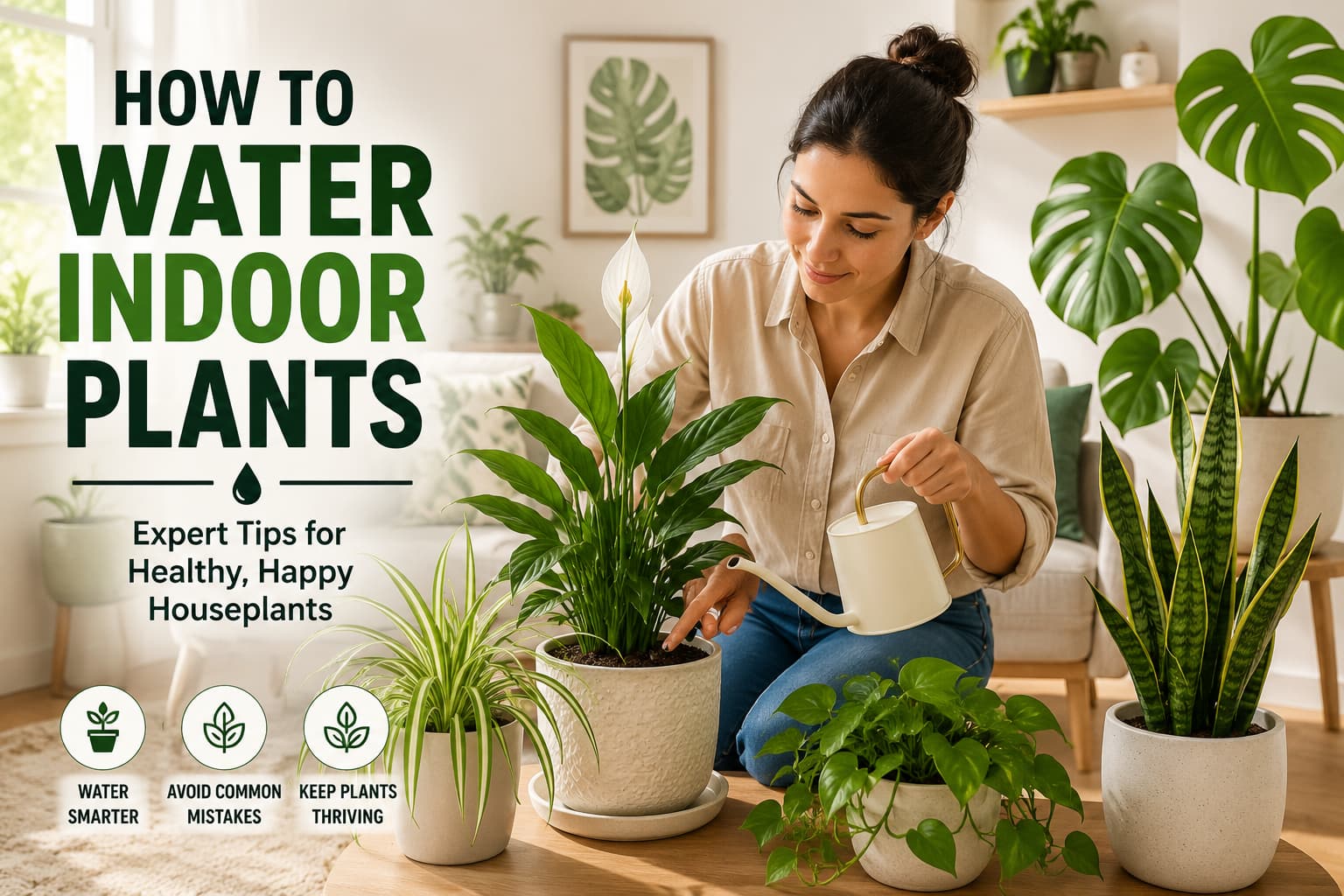
Knowing how to water indoor plants is one of the most important skills for keeping houseplants healthy and thriving. While indoor plants bring beauty, freshen the air, and create a relaxing atmosphere, improper watering is one of the biggest reasons they struggle or die. Whether you’re growing a snake plant, pothos, peace lily, or succulent, understanding when and how much to water makes all the difference. In this guide, you’ll learn how to water indoor plants correctly, avoid common watering mistakes, and keep your plants vibrant all year round.
The reason is surprisingly simple: watering mistakes.
Many people believe that watering indoor plants is as easy as pouring water into a pot every few days. In reality, proper watering is a skill that depends on understanding your plant’s needs, its growing environment, the season, the soil, and even the type of container it’s growing in.
In fact, horticultural experts consistently identify improper watering as one of the leading causes of houseplant decline. While underwatering can leave plants dehydrated and stressed, overwatering is often even more damaging because it deprives roots of oxygen and encourages root rot.
Learning how to water indoor plants properly is therefore one of the most valuable skills any indoor gardener can develop.
Whether you own a hardy Snake Plant, a lush Monstera, an elegant Peace Lily, or a collection of tropical foliage plants, understanding the principles of watering will help them thrive for years.
In this comprehensive indoor plant watering guide, you’ll learn:
• Why water is essential for healthy plant growth
• How indoor plants absorb and use water
• The best ways to tell when a plant needs watering
• How often different houseplants should be watered
• Common watering mistakes and how to avoid them
• The warning signs of overwatering and underwatering
• Seasonal watering adjustments
• Practical watering tips used by experienced indoor gardeners
By the end of this guide, you’ll be able to water your indoor plants with confidence and avoid the mistakes that cause most houseplants to struggle.
Why Indoor Plants Need Water
Indoor plants need water to produce food through photosynthesis, transport nutrients, maintain healthy cells, regulate temperature, and support root and leaf growth. Without adequate water, even the healthiest plant will gradually decline.
Water is far more than something that simply keeps soil moist. It is involved in almost every biological process that allows a plant to survive.
Let’s look at why water is so important.
1. Water Powers Photosynthesis
Photosynthesis is the remarkable process through which plants create their own food.
Using sunlight, carbon dioxide from the air, and water absorbed by the roots, plants produce glucose—the sugar that fuels growth—and release oxygen into the atmosphere.
Without sufficient water, photosynthesis slows dramatically. As a result, plants produce less energy, grow more slowly, and become weaker over time.
2. Water Carries Nutrients
Healthy soil contains essential nutrients such as:
• Nitrogen
• Phosphorus
• Potassium
• Calcium
• Magnesium
• Iron
These nutrients dissolve in water before they can be absorbed by plant roots.
If the soil remains excessively dry, nutrient uptake becomes difficult even if the soil itself is fertile.
Think of water as the transportation system that delivers nutrients throughout the plant.
3. Water Keeps Plant Cells Firm
Have you ever noticed a drooping plant that suddenly looks healthy again after watering?
This happens because water creates turgor pressure, the internal pressure that keeps plant cells firm and upright.
When a plant loses too much water:
• leaves wilt
• stems droop
• growth slows
• flowers may fall
Maintaining proper hydration allows plants to stay strong and support new growth.
4. Healthy Roots Depend on Proper Watering
Roots absorb both water and oxygen.
Many beginners assume more water always means healthier roots.
The opposite is often true.
When soil remains constantly saturated, air pockets disappear.
Without adequate oxygen, plant roots begin to suffocate, creating ideal conditions for harmful fungi and other disease-causing organisms to multiply, leading to one of the most common houseplant problems—root rot—so healthy watering practices are essential for maintaining the proper balance between soil moisture and oxygen.
5. Water Helps Plants Regulate Temperature
Plants naturally lose water through tiny pores in their leaves called stomata.
This process, known as transpiration, cools the plant much like perspiration cools the human body.
When water is scarce, transpiration slows, making plants more vulnerable to heat stress.
6. Water Supports New Growth
Every new:
• leaf
• stem
• flower
• root
requires water during development.
Plants that receive consistent, appropriate watering produce:
• healthier foliage
• stronger roots
• better flowering
• improved resistance to stress
Did You Know?
A plant that appears to need fertilizer may actually be suffering from inconsistent watering. Correcting watering habits often restores healthy growth without adding extra fertilizer.
7. Water Helps Move Food Throughout the Plant
After photosynthesis produces glucose (plant sugar), water helps transport this food from the leaves to other parts of the plant where it is needed for growth, repair, and energy storage.
This movement occurs through specialized tissues called the xylem and phloem, which act like the plant’s internal plumbing system.
Without enough water, sugars cannot be distributed efficiently, causing growth to slow and reducing the plant’s ability to develop healthy leaves, roots, flowers, and stems.
8. Water Supports Seedlings and Young Plants
Young plants contain a higher percentage of water than mature plants and have smaller root systems, making them especially sensitive to drying out.
Consistent moisture during the early stages of growth helps seedlings:
• establish strong roots
• develop healthy leaves
• produce sturdy stems
• adapt more successfully to their environment
Allowing young plants to dry out too often can stunt their growth and make them more susceptible to pests, diseases, and environmental stress.
Understanding How Indoor Plants Use Water
Understanding how indoor plants use water is just as important as knowing how to water indoor plants. Once water enters the soil, it begins a remarkable journey through the plant, supporting nearly every process needed for healthy growth and survival.
Knowing how water moves through a plant also explains why different species have different watering requirements and why environmental conditions can dramatically affect how often they need water.
How Water Moves Through an Indoor Plant
After water enters the potting mix, thousands of tiny root hairs absorb it through a natural process called osmosis. These microscopic root hairs greatly increase the root’s surface area, allowing the plant to absorb both water and dissolved nutrients efficiently.
From the roots, water travels upward through specialized tubes called xylem, which transport water from the roots to every part of the plant.
The water is then distributed throughout the plant to support:
• Leaves
• Stems
• Flowers
• Developing buds
• Growing roots
• New shoots
Without this continuous flow of water, plants cannot produce energy, grow properly, or maintain healthy tissues.
What Does Water Do Inside a Plant?
1. Transporting Nutrients
Water dissolves essential minerals in the potting mix, allowing the roots to absorb nutrients such as nitrogen, phosphorus, potassium, calcium, magnesium, and iron.
These nutrients are then carried throughout the plant to support healthy leaves, strong stems, root development, flowering, and overall growth.
Without enough water, nutrient deficiencies can occur even when the soil contains plenty of nutrients.
2. Supporting Cell Expansion
Every new leaf, stem, flower, and root begins as tiny developing cells.
As these cells absorb water, they expand, allowing the plant to grow larger and produce healthy new foliage.
This is one reason why plants often look fuller, healthier, and more vibrant after proper watering.
3. Maintaining Leaf Health
Leaves continuously lose water through tiny pores called stomata during a process known as transpiration.
The roots constantly replace this lost moisture to keep leaves firm, green, and functioning efficiently.
When water loss exceeds water absorption, plants begin showing signs of stress, including:
• Wilting
• Curling leaves
• Brown leaf edges
• Crispy leaf tips
• Premature leaf drop
Maintaining the right balance between water loss and water uptake is essential for healthy foliage.
4. Supporting Continuous Growth
Healthy plants are constantly balancing the amount of water they absorb with the amount they lose through transpiration.
Several environmental factors influence this balance, including:
• Warm temperatures increase water use.
• Bright sunlight speeds up transpiration.
• Low humidity causes moisture to evaporate more quickly.
• Air conditioning and indoor heating can dry the soil faster.
• Good air circulation increases evaporation.
• Cooler temperatures and shorter winter days reduce water consumption.
These changing conditions explain why a plant that needs watering every few days during summer may only need water every couple of weeks during winter.
5. Supporting Flowering and New Growth
Water is essential for producing new leaves, flowers, buds, and roots.
Plants that receive consistent watering are more likely to:
• Produce lush foliage
• Develop stronger root systems
• Bloom more reliably
• Recover more quickly from stress
• Resist pests and diseases more effectively
Inconsistent watering, on the other hand, can slow growth, reduce flowering, and weaken the plant over time.
6. Helping Plants Recover from Stress
Whether a plant has recently been repotted, pruned, or exposed to changes in light or temperature, adequate water plays an important role in recovery.
Proper hydration helps transport nutrients to damaged tissues, supports new root growth, and enables the plant to adapt more quickly to environmental changes. However, overwatering a stressed plant can do more harm than good, so it’s important to check the soil before watering.
Why Every Plant Has Different Water Needs
No two houseplants use water at exactly the same rate.
A plant’s watering needs depend on several factors, including:
• Plant species
• Pot size
• Potting mix
• Light intensity
• Temperature
• Humidity
• Air circulation
• Season
• Growth stage
For example, a fast-growing Peace Lily in a bright room will usually need water much more often than a slow-growing Snake Plant in a shaded corner.
How to Tell When Your Indoor Plants Need Water
One of the biggest mistakes beginners make is watering their indoor plants on a fixed schedule. While a calendar can serve as a helpful reminder, it should never be the only factor that determines when you water. Every houseplant has unique moisture requirements, and factors such as the plant species, pot size, potting mix, light levels, humidity, temperature, and season all affect how quickly the soil dries.
The healthiest indoor plants are watered based on soil moisture, not the date on a calendar. Learning to recognize the signs that your plant actually needs water will help you avoid both overwatering and underwatering.
Below are some of the most reliable ways to determine when it’s time to water your indoor plants.
1. The Finger Test (Best for Beginners)
The finger test is one of the simplest, quickest, and most dependable ways to check soil moisture. It requires no special equipment and works well for most common houseplants.
How to Do It:
Insert your index finger about 2–5 cm (1–2 inches) into the potting mix.
• If the soil feels dry at that depth, it’s usually time to water.
• If it still feels cool or slightly damp, wait another day or two before checking again.
Different plants prefer different moisture levels. Succulents and cacti should dry out much more than tropical plants before watering.
Never judge soil moisture by the surface alone. The top layer often dries much faster than the soil around the roots.
2. Use a Soil Moisture Meter
A soil moisture meter measures how wet or dry the growing medium is beneath the surface, making it especially useful for beginners who aren’t yet confident judging soil moisture by touch.
Simply insert the probe into the soil near the root zone and read the moisture level according to the manufacturer’s instructions.
Advantages:
• Fast and easy to use
• More consistent than guessing
• Excellent for beginners
• Ideal for people with large collections of houseplants
• Helpful for deep pots where finger testing is difficult
Limitations:
• Requires occasional cleaning for accurate readings
• Results may vary in very coarse or chunky potting mixes
• Should be used alongside visual observations rather than as the only guide
3. Lift the Pot
Many experienced indoor gardeners can estimate soil moisture simply by lifting the pot.
Freshly watered soil is much heavier than dry soil because of the water it contains.
After watering the same plant several times, you’ll begin to recognize the difference between a well-watered pot and one that needs moisture.
Advantages:
• Surprisingly accurate
• Completely free
• No tools required
• Helps develop your understanding of your plant’s watering needs
Limitations:
• Difficult with large or heavy containers
• Requires some experience
4. Observe the Soil
The appearance and texture of potting mix change noticeably as it dries.
Dry Soil Often:
• Appears lighter in color
• Feels loose or crumbly
• Pulls slightly away from the edges of the pot
• Produces little resistance when touched
Moist Soil Usually:
• Appears darker
• Feels cool to the touch
• Holds together when gently squeezed
• Remains evenly distributed around the roots
Regularly observing the soil helps you become familiar with your plant’s normal watering cycle.
5. Watch Your Plant’s Leaves
Your plant often provides visual clues when its water needs are changing. However, leaf symptoms should always be confirmed by checking the soil because both overwatering and underwatering can produce similar signs.
Common Signs Your Plant May Need Water:
• Slight drooping or wilting
• Curling leaves
• Brown or crispy leaf edges
• Dry leaf tips
• Dull or faded foliage
• Slower-than-normal growth
• Premature flower or leaf drop
If the soil is dry and these symptoms are present, your plant likely needs watering.
Important: Never assume drooping always means the plant is thirsty. Overwatered plants can wilt too because damaged roots are unable to absorb water efficiently.
6. Use a Wooden Skewer or Chopstick
A clean wooden skewer, chopstick, or bamboo stick can help you check moisture deep within the pot.
Insert it into the soil near the center of the container and leave it for a few minutes before removing it.
If the Skewer Comes Out:
• Dry and clean: The soil is likely dry enough to water.
• Damp with soil attached: Wait a little longer before watering.
• Very wet or muddy: The plant doesn’t need water yet.
This method is particularly useful for larger pots where finger testing cannot reach the root zone.
7. Check the Weight of Hanging Baskets
If you grow hanging indoor plants such as Spider Plants, Pothos, or String of Pearls, gently lifting the basket can quickly reveal how much moisture remains in the soil.
A lightweight basket usually indicates that much of the water has been used, while a heavy basket still contains plenty of moisture.
With practice, this becomes one of the quickest ways to judge watering needs.
8. Consider the Environment
Even healthy plants use water at different rates depending on their surroundings.
Your plant may need water more frequently when:
• Temperatures are warm
• Sunlight is bright
• Indoor heating or air conditioning is running
• Humidity is low
• The plant is actively growing during spring and summer
It will usually need less water during:
• Cool weather
• Short winter days
• Dormant or slow growth periods
• High humidity
Always consider these factors before watering.
Which Method Is Best?
No single technique works perfectly in every situation. Most experienced indoor gardeners combine several methods before deciding whether to water.
For example, you might:
• Check the soil with your finger.
• Lift the pot to judge its weight.
• Observe the color and texture of the soil.
• Look for changes in the leaves.
• Consider recent weather and indoor conditions.
Using multiple indicators provides a much more accurate picture of your plant’s water needs than relying on any single method.
How Often Should You Water Indoor Plants?
One of the most common questions new plant owners ask is:
“How often should I water my indoor plants?”
The honest answer is:
There is no universal watering schedule.
Indoor plants don’t all consume water at the same rate. Some may need watering every few days during summer, while others can go several weeks before requiring more moisture.
Rather than watering every three, five, or seven days, successful indoor gardeners evaluate the factors that influence how quickly their plants use water.
The best watering schedule is determined by your plant, its growing conditions, and the moisture level of the soil—not the calendar.
Let’s explore the most important factors.
1. Plant Species
Different plants evolved in different climates around the world, so their watering needs vary considerably.
Drought-Tolerant Plants
Plants that naturally grow in deserts or dry regions have adapted to survive long periods without rainfall. They store water in their leaves, stems, or roots and prefer the soil to dry out between waterings.
Examples include:
• Snake Plant (Sansevieria)
• ZZ Plant
• Aloe Vera
• Jade Plant
• Cacti
• Most succulents
Overwatering these plants is far more common than underwatering and is one of the leading causes of root rot.
Moisture-Loving Plants
Plants native to tropical forests generally prefer evenly moist soil because they naturally grow in humid environments with regular rainfall.
Examples include:
• Peace Lily
• Boston Fern
• Prayer Plant
• Calathea
• Maidenhair Fern
Although these plants appreciate consistent moisture, they should never sit in waterlogged soil.
Always research the watering needs of each plant species rather than treating every houseplant the same.
2. Pot Size
The size of the container has a major influence on how long moisture remains in the soil.
Small pots contain less potting mix, so they dry out much faster than larger containers.
For example:
• A 10 cm (4-inch) pot may require watering twice as often as a 25 cm (10-inch) pot.
Large pots retain moisture longer because they hold more soil around the roots.
However, placing a small plant in an oversized pot can cause the soil to stay wet for too long, increasing the risk of root rot.
3. Pot Material
The material your container is made from affects how quickly water evaporates.
Terracotta Pots:
• Porous clay allows moisture to escape.
• Excellent airflow around the roots.
• Soil dries more quickly.
• Ideal for succulents and cacti.
Plastic Pots:
• Hold moisture for longer periods.
• Require less frequent watering.
• Lightweight and inexpensive.
Glazed Ceramic Pots:
• Moderate water retention.
• Attractive appearance.
• Suitable for many common houseplants.
Self-Watering Pots:
Self-watering containers supply moisture from a built-in reservoir, helping maintain more consistent soil moisture.
They work well for some tropical plants but should still be monitored to prevent overwatering.
4. Potting Mix
Not all potting mixes retain water equally.
A well-draining potting mix provides the right balance between moisture retention and oxygen around the roots.
For example:
• Chunky aroid mixes containing bark, perlite, and coco chips drain rapidly.
• Standard indoor potting mixes hold moderate moisture.
• Peat- or coco coir-based mixes generally retain water for longer.
Choosing the right growing medium is just as important as learning how to water indoor plants properly.
5. Light Levels
Light directly affects how much water a plant uses.
Plants growing in bright, indirect light or several hours of morning sun photosynthesize more actively and usually consume water faster.
Plants kept in low-light conditions grow more slowly and require less frequent watering because the soil dries more gradually.
6. Temperature
Warm indoor temperatures increase evaporation from both the soil and the leaves.
Plants located near:
• South-facing windows
• Heating vents
• Fireplaces
• Sunny balconies
often need water more frequently than plants growing in cooler parts of the home.
During heatwaves, check soil moisture more often than usual.
7. Humidity
Humidity determines how quickly moisture evaporates from plant leaves through transpiration.
Low Humidity:
• Faster moisture loss
• Soil dries more quickly
• More frequent watering may be needed
High Humidity:
• Slower evaporation
• Soil stays moist longer
• Longer intervals between watering
This is why tropical plants often appreciate both higher humidity and consistently moist soil.
8. Airflow
Air movement speeds up evaporation from both the soil surface and the leaves.
Plants growing near:
• Ceiling fans
• Open windows
• Air conditioners
• Heating vents
usually dry out faster than plants kept in more sheltered locations.
Always monitor these plants more closely.
9. Seasonal Changes
Indoor plants rarely use the same amount of water throughout the year.
Spring
As daylight increases, most plants begin actively producing new leaves and roots.
Increase watering gradually as growth resumes.
Summer
Warm temperatures and longer days cause many houseplants to use water more quickly.
Check soil moisture more frequently during hot weather.
Autumn
Growth begins slowing.
Reduce watering as the days become shorter.
Winter
Many indoor plants enter a resting period.
Because they grow more slowly, they require much less water.
Always allow the soil to reach the appropriate level of dryness before watering again.
10. Plant Size and Growth Stage
Large, mature plants generally use more water than smaller plants because they have more leaves, larger root systems, and greater overall biomass.
Fast-growing plants also consume more water than dormant or slow-growing ones.
For example, a mature Monstera in active growth may require watering far more often than a young cutting in a small pot.
11. Root Health
Healthy roots absorb water efficiently, while damaged or diseased roots cannot.
A plant suffering from root rot may appear wilted even though the soil is wet because the roots are unable to take up moisture.
Before watering a struggling plant, always check whether poor root health—not dry soil—is the real issue.
12. Indoor Environment
Every home creates a unique growing environment.
Factors such as insulation, heating, cooling systems, room orientation, and the amount of natural sunlight all influence how quickly potting soil dries.
Two identical plants growing in different rooms of the same house may need completely different watering schedules.
Step-by-Step Guide: How to Water Indoor Plants Properly
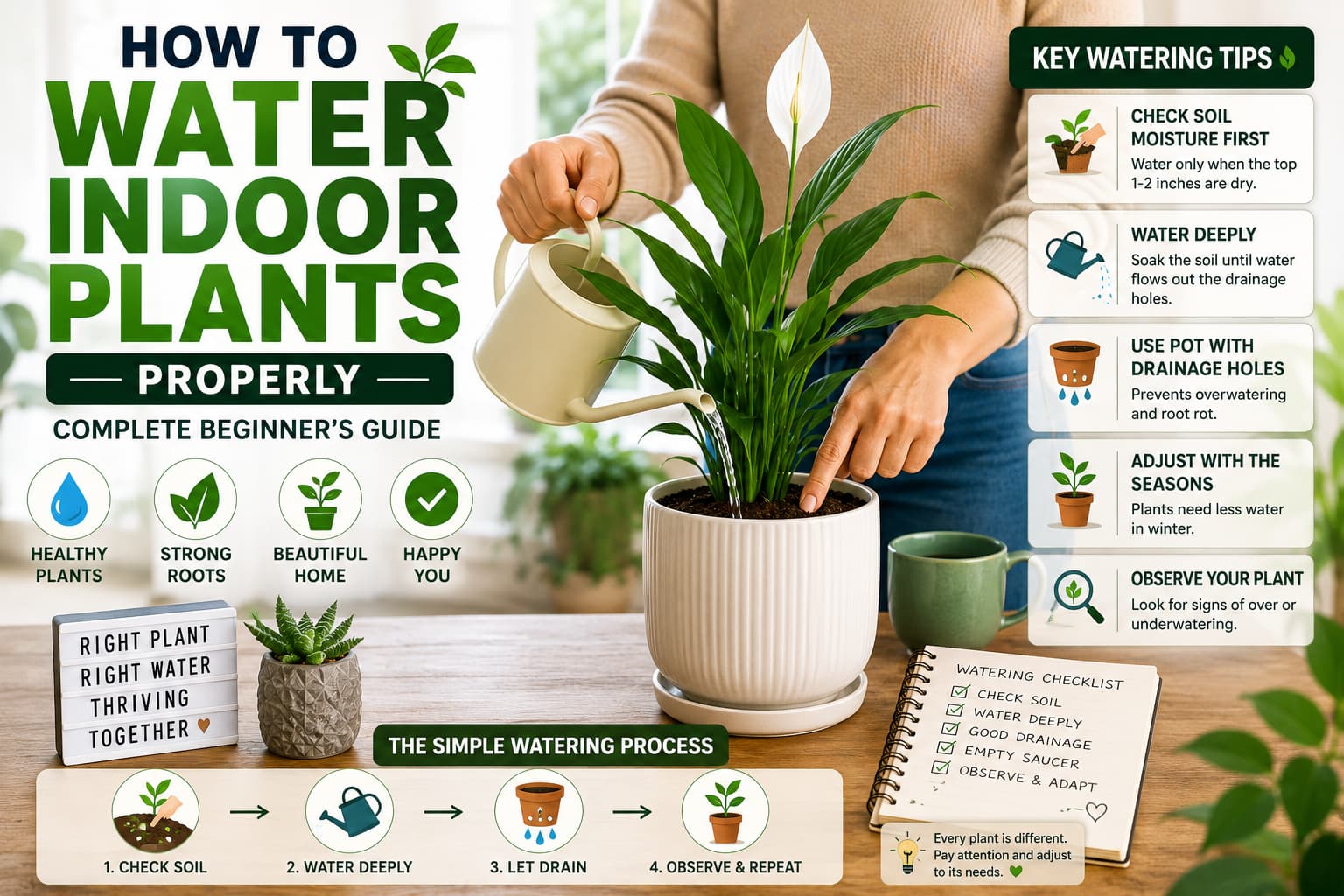
Learning how to water indoor plants properly is one of the most important skills for keeping your houseplants healthy. Proper watering isn’t just about adding water to the pot—it’s about ensuring the roots receive enough moisture without becoming waterlogged.
Following the correct watering technique encourages deeper root growth, prevents common problems like root rot and underwatering, and helps your indoor plants thrive throughout the year.
Follow these simple steps every time you water your plants.
Step 1: Check the Soil Moisture First
Never water automatically or simply because it’s a certain day of the week.
Before reaching for the watering can, always check whether the plant actually needs water.
You can do this by:
• Inserting your finger 2–5 cm (1–2 inches) into the soil
• Using a soil moisture meter
• Lifting the pot to judge its weight
• Checking the appearance and texture of the potting mix
Different plants require different moisture levels, so always let the condition of the soil—not your calendar—guide your watering decisions.
The soil surface often dries much faster than the root zone. Always check below the surface before watering.
Step 2: Use Room-Temperature Water
The temperature of the water matters more than many people realize.
Very cold water can temporarily shock the roots of tropical plants, while extremely hot water may damage delicate root tissues.
Room-temperature water is generally the safest choice for most indoor plants because it closely matches the temperature of their growing environment.
If using tap water, allowing it to sit overnight may also help dissipate chlorine in some water supplies.
Sensitive plants such as Calatheas, Prayer Plants, and some orchids often perform better with filtered, distilled, or rainwater if your tap water is hard or heavily treated.
Step 3: Water Slowly and Evenly
Rather than pouring all the water into one spot, water slowly around the entire surface of the potting mix.
Slow watering allows the soil to absorb moisture evenly instead of allowing water to rush down the sides of the pot or straight through dry soil.
Pay particular attention to watering around the root zone so that every part of the root system receives adequate moisture.
Avoid splashing excessive water onto the leaves unless the plant specifically benefits from occasional rinsing to remove dust.
Step 4: Water Until Excess Water Drains Out
Continue watering until water begins flowing freely from the drainage holes at the bottom of the pot.
This indicates that the entire root ball has been thoroughly moistened.
Deep watering provides several important benefits:
• Ensures even moisture reaches all the roots.
• Encourages roots to grow deeper into the pot.
• Flushes excess fertilizer salts from the soil.
• Helps prevent dry pockets within the potting mix.
• Promotes healthier, stronger root development.
Never stop watering after adding only a small amount, as this often wets only the top layer of soil while leaving deeper roots dry.
Step 5: Empty the Saucer
After watering, allow the pot to drain for about 10–15 minutes.
Then empty any excess water that has collected in the saucer, tray, or decorative outer pot.
Leaving the pot sitting in standing water keeps the lower roots constantly wet, reducing oxygen around the root system and increasing the risk of:
• Root rot
• Fungal diseases
• Fungus gnats
• Poor root development
Healthy roots need both moisture and oxygen to thrive.
Step 6: Return the Plant to Its Growing Location
Once excess water has drained away, return the plant to its usual growing location.
Indoor plants adapt to their environment over time, including the available light, temperature, and humidity.
Avoid moving plants unnecessarily after watering, as frequent relocation can cause stress and interfere with healthy growth.
If you’ve recently moved a plant to a brighter or warmer location, monitor the soil more closely because it may dry out faster than before.
Step 7: Observe Your Plant Over the Next Few Days
Watering doesn’t end when you put away the watering can.
Over the following days, pay attention to how your plant responds.
Healthy plants often show signs of proper hydration by:
• Producing firm, upright leaves
• Developing vibrant foliage
• Showing steady new growth
• Maintaining healthy stems and flowers
If leaves continue to wilt despite moist soil, investigate other possible causes such as overwatering, root rot, poor drainage, pests, or insufficient light.
Regular observation helps you fine-tune your watering routine and recognize problems before they become serious.
Common Watering Mistakes to Avoid
Even experienced plant owners occasionally make mistakes. Avoid these common watering habits:
• Watering on a fixed schedule instead of checking the soil.
• Giving small amounts of water too frequently.
• Allowing pots to sit in standing water.
• Using containers without drainage holes.
• Ignoring seasonal changes in water requirements.
• Assuming all houseplants have the same watering needs.
• Watering immediately after noticing drooping leaves without checking the soil first.
Correct watering is based on observation, not routine.
Quick Watering Checklist
Before watering any indoor plant, ask yourself:
✔️ Is the soil dry enough for this plant?
✔️ Am I using room-temperature water?
✔️ Am I watering slowly and evenly?
✔️ Will excess water drain from the pot?
✔️ Have I emptied the saucer after watering?
✔️ Am I considering the current season and growing conditions?
If you can answer “Yes” to each question, you’re following one of the best practices for watering indoor plants properly.
Remember, the goal isn’t to water more often—it’s to water more accurately. Consistently checking the soil, understanding your plant’s needs, and adjusting for seasonal and environmental changes will produce healthier roots, stronger growth, and more resilient indoor plants over the long term.
What Is the Best Water for Indoor Plants?
Many beginners wonder whether tap water is safe for houseplants.
The answer depends on your local water quality.
| Water Type | Advantages | Considerations |
| Tap Water | Convenient and widely available | Some areas have high chlorine, fluoride, or mineral levels. |
| Rainwater | Naturally soft and free of most additives | Collect only from clean, safe sources. |
| Filtered Water | Reduces some impurities | Suitable for sensitive plants if available. |
| Distilled Water | Very low in dissolved minerals | Useful for plants sensitive to mineral buildup but lacks beneficial minerals. |
| Well Water | May contain natural minerals | Quality varies by location; testing may be helpful. |
If your tap water contains noticeable chlorine, allowing it to sit uncovered overnight may help some chlorine dissipate, although this does not remove all water-treatment chemicals used by municipalities.
Watering Different Types of Indoor Plants
Every plant has unique moisture needs. Understanding these differences helps prevent both overwatering and underwatering.
| Plants | Watering Guidance |
| Snake Plant | Allow the soil to dry almost completely before watering. |
| Spider Plant | Water when the top 2–3 cm of soil feels dry. |
| Pothos | Let the top layer dry before watering thoroughly. |
| Monstera | Keep soil lightly moist but never waterlogged. |
| Peace Lily | Water when leaves begin to lose slight firmness or the topsoil dries. |
| ZZ Plant | Allow most of the potting mix to dry between waterings. |
| Philodendron | Water after the top few centimeters of soil dry. |
| Rubber Plant | Water when the upper soil becomes dry to the touch. |
| Chinese Evergreen | Prefers evenly moist soil without standing water. |
| Boston Fern | Keep soil consistently moist but not soggy. |
| Aloe Vera | Allow soil to dry thoroughly before watering. |
| Succulents | Water deeply but infrequently. |
| Cacti | Water sparingly, especially during cooler months. |
| Orchids | Water only after the growing medium begins drying. |
| Prayer Plant | Maintain lightly moist soil and avoid complete drying. |
Every indoor plant has unique watering needs based on its natural habitat and growth habits. If you’re still deciding which houseplants are right for your space, explore our Indoor Plants: The Ultimate Guide to Choosing, Growing & Caring to learn about popular indoor plant varieties, their light requirements, and essential care tips.
Seasonal Watering Guide for Indoor Plants
Knowing how to water indoor plants also means adjusting your watering routine throughout the year. Changes in temperature, humidity, daylight hours, and plant growth all affect how quickly the soil dries. Instead of following a fixed schedule, adapt your watering habits to each season to keep your houseplants healthy.
Spring: Increase Watering Gradually
As days become longer and temperatures rise, most indoor plants come out of their dormant period and begin producing new leaves and roots.
- Check the soil more often.
- Increase watering gradually as active growth resumes.
- Begin fertilizing if your plants are entering their growing season.
Summer: Water More Frequently
Summer is the peak growing season for most houseplants. Warmer temperatures, brighter sunlight, and faster evaporation cause soil to dry out more quickly.
• Check soil moisture every few days.
• Water thoroughly when the top 1–2 inches of soil feel dry (depending on the plant).
• Monitor plants near sunny windows or in air-conditioned rooms, as they may dry out faster.
Autumn: Slow Down Watering
As daylight hours shorten, plant growth begins to slow and water requirements decrease.
• Allow the soil to dry slightly more between waterings.
• Reduce watering frequency to prevent overly wet soil.
• Continue checking moisture rather than watering on a fixed schedule.
Winter: Water Sparingly
Many indoor plants enter a resting or dormant phase during winter, meaning they use much less water.
• Water only when the soil has dried to the appropriate depth for your plant.
• Avoid keeping the soil constantly wet, as this increases the risk of root rot.
• Moisture-loving plants should never be allowed to dry out completely.
The best watering schedule isn’t determined by the calendar—it’s determined by your plant’s growth stage and the condition of the soil. Checking soil moisture regularly is far more reliable than watering on the same day every week.
Indoor Plant Watering Schedule
The table below provides a general watering guide for some of the most popular houseplants. Remember that these are starting points—not strict rules. Always check the soil before watering.
| Indoor Plants | Typical Watering Frequency | Signs It Needs Water | Signs of Too Much Water |
| Snake Plants | Every 2–4 weeks | Wrinkled leaves, dry soil | Yellow leaves, mushy roots |
| Spider Plants | Every 7–10 days | Brown leaf tips, light pot | Yellow leaves, soggy soil |
| Peace Lily | Every 5–7 days | Drooping leaves | Yellow leaves, root rot |
| Monstera | Every 7–10 days | Dry topsoil, curling leaves | Black stems, yellow foliage |
| Pothos | Every 7–14 days | Drooping vines | Soft stems, leaf drop |
| ZZ Plants | Every 2–3 weeks | Wrinkled stems | Yellowing leaves |
| Rubber Plants | Every 7–10 days | Dry topsoil | Leaf drop, root rot |
| Philodendron | Every 7–10 days | Slight drooping | Yellow leaves |
| Chinese Evergreen | Every 7–14 days | Dry soil | Soft stems |
| Boston Fern | Every 3–5 days | Dry fronds | Brown crown, mold |
| Aloe Vera | Every 2–3 weeks | Thin leaves | Mushy base |
| Succulents | Every 2–4 weeks | Wrinkled leaves | Rotting stems |
| Cacti | Every 3–5 weeks | Slight shrinking | Black spots, rot |
| Orchids | Every 7–14 days | Silvery roots | Black roots |
| Prayer Plants | Every 5–7 days | Curling leaves | Yellow leaves |
Please understand that watering frequency changes depending on temperature, humidity, light, pot size, and soil type. Use this table as a guideline rather than a strict schedule.
How to Fix an Overwatered Indoor Plant
Overwatering is one of the most common reasons indoor plants struggle or die. Ironically, many plant owners overwater because they believe they’re helping their plants.
When soil stays wet for too long, oxygen levels around the roots decrease, making it difficult for the roots to breathe. Over time, this creates ideal conditions for root rot and other fungal diseases.
Fortunately, if caught early, many overwatered plants can recover with proper care.
Signs Your Indoor Plant Is Overwatered
Before taking action, confirm that overwatering is actually the problem.
Common signs include:
• Yellowing leaves
• Wilting despite wet soil
• Soft or mushy stems
• Brown or black roots
• A sour or unpleasant smell coming from the pot
• Mold growing on the soil surface
• Fungus gnats around the plant
• Slow or stunted growth
• Constantly wet or waterlogged potting mix
Keep in mind that several of these symptoms can resemble underwatering, so always check the soil before watering again.
Step-by-Step: How to Fix an Overwatered Plant
1. Stop Watering Immediately
The first step is simple—stop adding water.
Allow the potting mix to dry to the appropriate moisture level for your particular plant before watering again.
Resist the temptation to “balance things out” by adding more water.
2. Move the Plant to a Brighter, Well-Ventilated Location
If appropriate for your plant species, place it somewhere with bright, indirect light and good air circulation.
Improved airflow helps excess moisture evaporate more quickly from the soil.
Avoid placing stressed plants in harsh, direct sunlight, which may increase stress and scorch weakened leaves.
3. Remove Dead or Damaged Leaves
Trim away yellow, brown, or mushy leaves using clean, sterilized scissors or pruning shears.
Removing damaged foliage allows the plant to direct more energy toward producing healthy new growth.
4. Check the Roots
If symptoms continue after the soil begins drying, gently remove the plant from its pot and inspect the roots.
Healthy roots are usually:
• White
• Cream-colored
• Firm
• Fresh-smelling
Roots affected by rot are often:
• Brown or black
• Soft or mushy
• Slimy
• Foul-smelling
5. Prune Away Rotten Roots
Using clean, sterilized scissors or pruning shears, remove all black, mushy, or diseased roots.
Only healthy, firm roots should remain.
Disinfect your tools before and after pruning to reduce the risk of spreading disease.
6. Repot if Necessary
If root rot is extensive or the potting mix remains soggy, repot the plant into fresh, well-draining potting mix.
Choose a clean container with adequate drainage holes.
Avoid reusing old soil that may still contain harmful fungi or bacteria.
7. Ensure Proper Drainage
Always grow indoor plants in containers with drainage holes.
Drainage allows excess water to escape, helping maintain the right balance between moisture and oxygen around the roots.
If using a decorative cachepot, never allow water to collect at the bottom for extended periods.
8. Resume Watering Carefully
Only water again after confirming that the soil has dried to the appropriate depth for that plant.
From this point forward:
• Check soil moisture before every watering.
• Avoid following a fixed watering schedule.
• Adjust watering based on the season and growing conditions.
A soil moisture meter can be especially helpful for beginners who are still learning when their plants actually need water.
Most indoor plants recover more successfully from slight underwatering than from prolonged overwatering. When in doubt, check the soil before reaching for the watering can.
Signs of Underwatering Indoor Plants
Although overwatering is more common, underwatering can also weaken indoor plants by reducing photosynthesis, nutrient transport, and healthy cell function.
Fortunately, underwatered plants often recover quickly when watered correctly.
Common Symptoms of Underwatering
Dry Soil
The potting mix feels dry several centimeters below the surface and may begin pulling away from the sides of the pot.
Drooping or Wilting Leaves
Without enough water, plant cells lose turgor pressure, causing the entire plant to appear limp, weak, or lifeless.
Brown Leaf Tips and Edges
Leaves often develop dry, crispy edges as moisture becomes scarce.
Some plants may also develop brown patches or scorched-looking leaves.
Curling Leaves
Many plants naturally curl or fold their leaves to reduce water loss during drought stress.
This is one of the plant’s natural survival mechanisms.
Slow or Stunted Growth
Insufficient water limits photosynthesis, nutrient transport, and cell expansion, slowing the production of new leaves, stems, flowers, and roots.
Premature Leaf Drop
Some plants shed their oldest leaves to conserve moisture for newer growth when water becomes limited.
Dry, Lightweight Pot
A severely underwatered plant often feels much lighter than normal because most of the moisture has evaporated from the potting mix.
How to Revive an Underwatered Plant
Most underwatered plants recover well if rehydrated before permanent damage occurs.
1. Water Slowly and Thoroughly
Add water gradually until excess water drains from the bottom of the pot.
Slow watering allows dry potting mix to absorb moisture more evenly.
2. Rehydrate Extremely Dry Soil
Very dry potting mix sometimes becomes water-repellent, causing water to run straight through the container.
If this happens:
• Water slowly several times.
• Allow a few minutes between each watering.
• Continue until the soil absorbs moisture evenly.
For severely dry plants, you can also soak the pot in a container of water for 15–30 minutes, allowing the potting mix to rehydrate from the bottom before letting it drain completely.
3. Increase Humidity if Needed
If indoor air is extremely dry, especially during winter heating or hot weather, increasing humidity can reduce moisture loss while the plant recovers.
A humidifier or pebble tray can be particularly helpful for tropical houseplants.
4. Remove Severely Damaged Leaves
Trim away leaves that are completely brown, dry, or dead.
However, keep any leaves that still contain green tissue, as they continue producing energy for the plant.
5. Return to a Consistent Watering Routine
Once your plant begins recovering, return to checking soil moisture regularly instead of watering on a fixed schedule.
Consistency—not frequency—is the key to healthy indoor plant care.
Avoid swinging between long dry periods and excessive watering.
A recovering plant may not bounce back overnight. Give it time to produce new roots and healthy foliage, and continue monitoring soil moisture closely to avoid repeating the same watering mistakes.
Quick Comparison: Overwatering vs. Underwatering
| Overwatering | Underwatering |
| Soil stays wet | Soil feels dry |
| Yellow leaves | Brown, crispy leaf edges |
| Mushy roots | Dry, brittle roots |
| Soft stems | Wilted, limp foliage |
| Root rot | Slow growth due to dehydration |
| Fungus gnats or mold | Dry, compacted potting mix |
This comparison can help beginners identify the problem more accurately before deciding whether their plant needs water or simply needs time to dry out.
Most watering problems can be prevented simply by checking soil moisture before reaching for the watering can.
Frequently Asked Questions (FAQs)
1. Should I water indoor plants every day?
No. Most indoor plants do not require daily watering. Water only when the growing medium has reached the appropriate dryness for that species.
2. Is tap water safe for houseplants?
In many areas, yes. However, some sensitive plants may perform better with filtered or rainwater if your tap water contains high levels of minerals or treatment chemicals.
3. What time of day is best for watering?
Morning is generally the best time because plants have the entire day to absorb moisture.
4. Can I mist my indoor plants instead of watering them?
No. Misting may temporarily increase humidity around some plants, but it does not replace watering the roots.
5. How can I tell if my plant has root rot?
Signs include yellow leaves, mushy stems, black roots, unpleasant odors, and consistently wet soil.
6. Should all indoor plants dry out between waterings?
No. Tropical plants like Boston Ferns and Prayer Plants prefer more consistent moisture, while succulents and cacti need much drier conditions.
7. Does a larger pot mean less watering?
Generally, yes. Larger pots hold more soil and therefore retain moisture longer.
8. Can overwatering kill a plant?
Yes. Persistent overwatering can cause root rot, which may become fatal if not corrected.
9. Is rainwater better than tap water?
Rainwater is naturally soft and free of many treatment additives, making it a good choice when collected safely.
10. Should I water immediately after repotting?
Most plants benefit from a light watering after repotting to help settle the potting mix around the roots, but avoid saturating the soil unnecessarily.
11. How much water should I give an indoor plant?
Water until excess water drains from the bottom of the pot. This ensures the entire root ball is evenly moistened. Avoid giving only small amounts of water, which may leave deeper roots dry.
12. Can I water my indoor plants with ice cubes?
Although some people use ice cubes for certain orchids, most houseplants respond better to room-temperature water. Ice cubes can expose roots to sudden temperature changes and may not distribute moisture evenly.
13. Why are my plants leaves turning yellow after watering?
Yellow leaves can be caused by overwatering, underwatering, poor drainage, insufficient light, or natural aging. Check the soil moisture and growing conditions before assuming your plant needs more water.
14. Should I remove excess water from the saucer after watering?
Yes. Empty the saucer 15–30 minutes after watering to prevent the roots from sitting in standing water, which can lead to root rot and other moisture-related problems.
15. Can indoor plants recover from underwatering?
Many indoor plants recover if watered promptly after the soil becomes too dry. However, repeated or prolonged underwatering can permanently damage roots, leaves, and stems, making recovery more difficult.
16. Should I use warm or cold water for indoor plants?
Room-temperature water is generally the best choice. Extremely hot or cold water can stress plant roots and reduce their ability to absorb moisture efficiently.
17. How do I know when my indoor plant needs water while I’m away on vacation?
Before leaving, water your plants thoroughly if they need it, group moisture-loving plants together, and move them away from direct sunlight to reduce water loss. For longer trips, consider using self-watering pots, watering spikes, or asking someone to check your plants.
In Conclusion
Learning how to water indoor plants properly is one of the most valuable skills any plant owner can develop. While it may seem simple, proper watering involves understanding your plant’s natural habitat, monitoring soil moisture, adjusting for seasonal changes, and recognizing the early signs of stress.
Rather than watering on a fixed schedule, observe your plants and let their growing conditions guide your decisions. A Snake Plant will have very different watering needs than a Boston Fern, and even the same plant may need more or less water depending on the season, light levels, humidity, and potting mix.
Remember that healthy roots are the foundation of healthy plants. Providing the right amount of water—not too much and not too little—helps roots absorb oxygen, nutrients, and moisture efficiently, leading to stronger growth, healthier foliage, and longer-lasting houseplants.
Don’t be discouraged if you make mistakes. Every experienced indoor gardener has overwatered or underwatered a plant at some point. The important thing is to learn from those experiences and observe how your plants respond over time.
With patience, consistency, and the techniques in this guide, you’ll develop the confidence to care for a wide variety of indoor plants successfully.
What’s Next?
Now that you’ve learned how to water indoor plants properly, continue building your indoor gardening knowledge with these helpful guides:
Recommended Reading
Continue expanding your indoor gardening knowledge with these helpful beginner-friendly guides.
🌿 Indoor Gardening for Beginners: The Complete Step-by-Step Guide
If you’re just getting started, our Indoor Gardening for Beginners guide walks you through choosing the right location, containers, potting soil, lighting, and care routine to help your houseplants thrive.
🌱 Indoor Plant Care: The Complete Beginner’s Guide to Healthy Houseplants
Build a solid care routine with our Indoor Plant Care Guide, where you’ll learn how to water, fertilize, prune, repot, and maintain healthy houseplants throughout the year.
🪴 Indoor Plants: The Ultimate Guide to Choosing, Growing & Caring
Not sure which plants to buy? Explore our guide to the Best Indoor Plants and discover species that match your home, lighting conditions, and gardening experience.
🌤️ 21 Best Low-Light Indoor Plants That Thrive Without Direct Sunlight
If your home doesn’t receive much sunlight, these Low-Light Indoor Plants can brighten your space while thriving in offices, apartments, bedrooms, and other dimly lit areas.
🐾 12 Pet-Friendly Indoor Plants Safe for Cats and Dogs
Want greenery that’s safer for your furry companions? Discover our favorite Pet-Friendly Indoor Plants that are both attractive and easier to grow around cats and dogs.
🍂 21 Common Indoor Plant Problems and How to Fix Them Fast
If your houseplants develop yellow leaves, root rot, leaf drop, or slow growth, this guide to Common Indoor Plant Problems will help you identify the cause and restore your plants to good health.
🐛 8 Common Indoor Plant Pests and How to Eliminate Them Naturally
Protect your houseplants by learning how to identify and control Indoor Plant Pests, including fungus gnats, mealybugs, spider mites, aphids, scale insects, and whiteflies before they spread.
Frequently Used Watering Terms (Glossary)
| Term | Meaning |
| Drainage | The ability of excess water to leave the pot through drainage holes. |
| Root Rot | A disease caused by prolonged waterlogged soil that damages roots. |
| Moisture Meter | A tool used to estimate soil moisture levels. |
| Potting Mix | A specially formulated growing medium designed for container plants. |
| Transpiration | The process by which plants lose water through their leaves. |
| Turgor Pressure | Water pressure inside plant cells that keeps stems and leaves firm. |
| Dormancy | A period of slowed growth, usually during cooler months. |
| Humidity | The amount of moisture in the surrounding air. |
Quick Reference: Watering Do’s and Don’ts
✅ Do:
• Check soil moisture before watering.
• Water thoroughly until excess drains from the bottom.
• Use containers with drainage holes.
• Adjust watering according to the season.
• Match watering frequency to each plant species.
• Observe your plants regularly for changes.
❌ Don’t:
• Water on a rigid calendar.
• Leave pots standing in water.
• Ignore yellowing or drooping leaves.
• Assume every plant has the same watering needs.
• Overwater during winter.
• Use heavy garden soil in indoor containers.
The guidance in this article aligns with recommendations and educational resources from respected horticultural organizations, including:
Royal Botanic Gardens, Kew
Royal Horticultural Society (RHS)
Missouri Botanical Garden
Readers are encouraged to consult these organizations for additional plant-specific information and ongoing horticultural research.
Final Call-to-Action
Healthy indoor plants start with informed care—and proper watering is one of the most important habits you can develop. Use the techniques in this guide to build a routine based on observation rather than guesswork.
If you found this article helpful, consider sharing it with fellow plant enthusiasts or anyone beginning their indoor gardening journey. You can also explore our growing library of practical guides covering indoor plant care, plant selection, common plant problems, and solutions to help your houseplants thrive all year round.

About the Author: Emebu Blessing Oghale
Emebu Blessing Oghale is an expert SEO content writer, digital creator, and indoor gardening enthusiast based in Asaba, Nigeria. Combining horticultural principles with years of digital media experience, he founded Indoor Plant Guide to provide practical, beginner-friendly troubleshooting tips for plant parents across West Africa and beyond. When he isn’t cultivating tropical houseplants, he serves his local community as a pastor at Living Faith Church.