
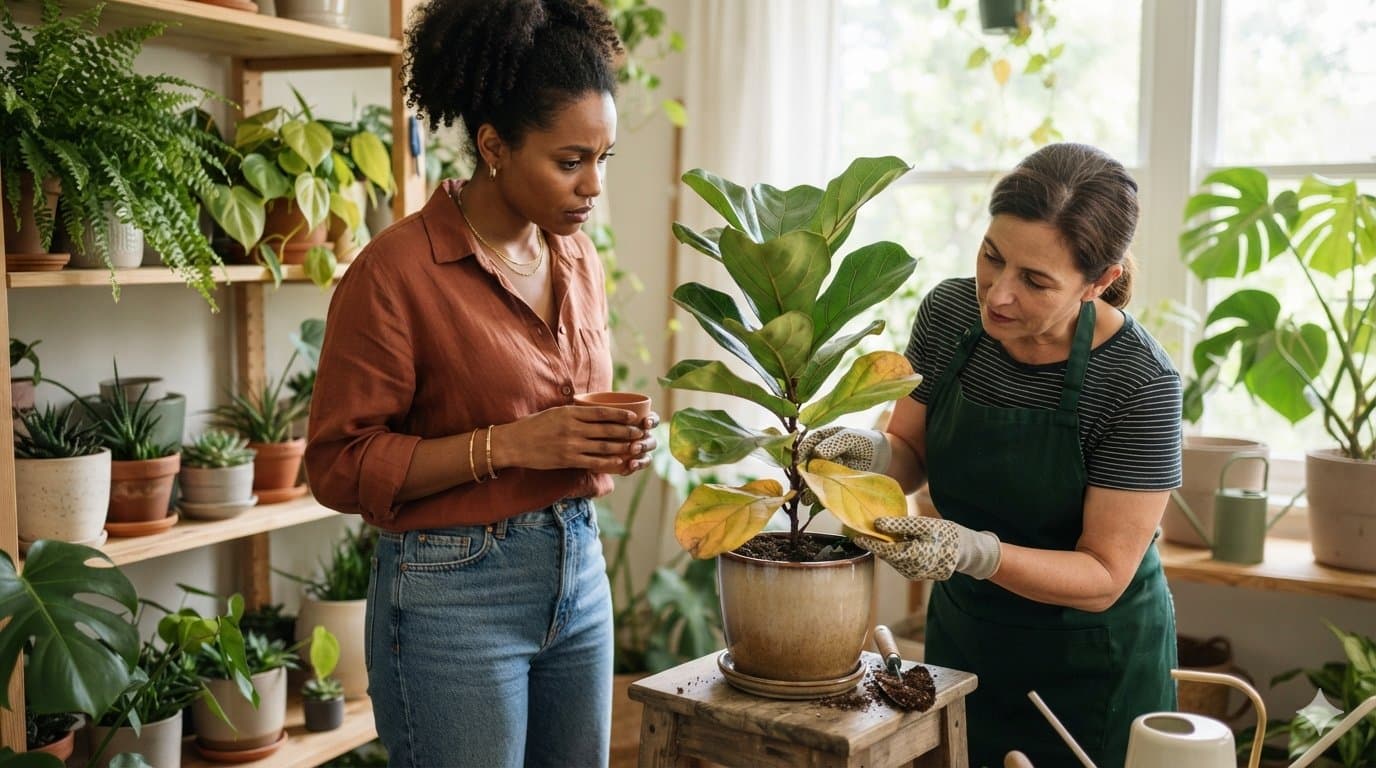
Why are my plant leaves turning yellow? If you’re seeing yellow leaves on a houseplant, the cause could be overwatering, underwatering, poor lighting, root problems, nutrient deficiencies, pests, or natural aging. The key is to identify the pattern of yellowing before changing how you care for the plant.
The most useful way to answer “why are my plant leaves turning yellow?” is to look at the pattern of yellowing and what is happening around the plant—not to reach immediately for fertilizer or more water. Extension specialists emphasize that yellowing commonly reflects environmental or cultural stress, particularly problems involving moisture, light, roots, and nutrition.
This guide shows you how to distinguish those possibilities, what to check first, and what to change without creating another problem.
For a complete indoor plant care guide, explore this beginner-friendly resource covering watering, light, soil, feeding, repotting, pruning, and maintaining healthy houseplants.
What Indoor Plants Yellow Leaves Actually Mean
Healthy green foliage contains chlorophyll, the pigment responsible for much of the leaf’s green color. When chlorophyll is lost, the tissue can appear yellow. Horticulturists commonly use the term chlorosis for abnormal yellowing caused by a reduction of chlorophyll.
Chlorosis can have several causes, including poor drainage, damaged roots, unsuitable soil conditions, nutrient deficiencies, and environmental stress. Importantly, the same visible symptom can result from very different underlying problems.
That is why treating every yellow leaf as a fertilizer deficiency is risky.
For example:
• A plant sitting in constantly wet soil may develop yellow lower leaves because excess moisture damages roots.
• A plant receiving insufficient light may gradually lose normal leaf color and growth.
• A nutrient deficiency can cause characteristic yellowing patterns.
• A newly moved plant may temporarily yellow while adapting to a different environment.
• An old lower leaf may simply be reaching the end of its useful life.
The location, pattern, speed, and accompanying symptoms give you much more information than the yellow color alone.
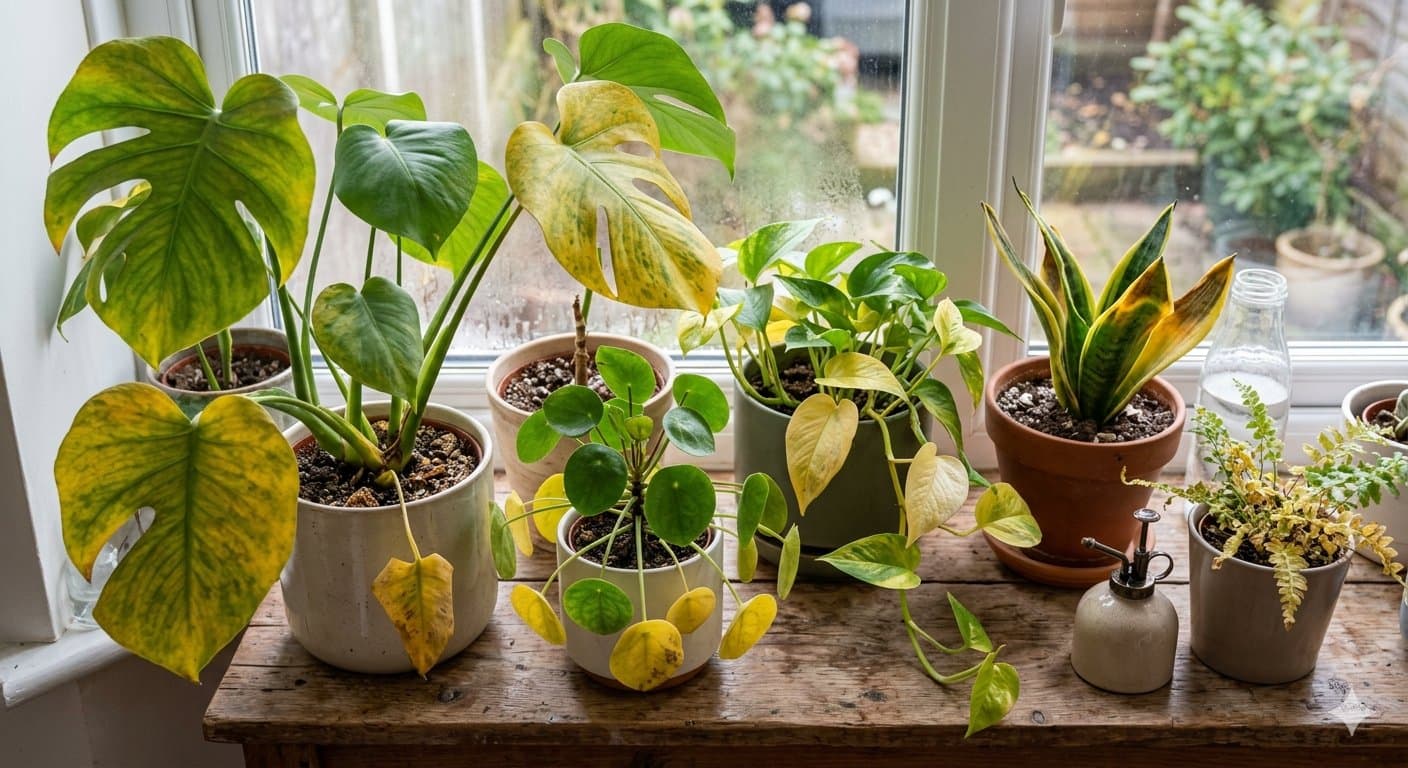
8 Common Reasons Indoor Plant Leaves Turn Yellow
Now that we know what indoor plant leaf yellowing looks like, let’s dive into the big question: why does it happen? Here are the 8 major causes of yellow leaves and exactly how to fix them.
1. Overwatering Is a Common Cause
If you are wondering why are my plant leaves turning yellow, check the soil before adding more water.
Overwatering does not simply mean pouring an unusually large amount of water onto a plant once. More often, it means the roots remain in excessively wet conditions because the plant is being watered too frequently, the pot drains poorly, or the growing medium retains too much moisture.
Excess water reduces the amount of oxygen available around roots. Damaged roots can then struggle to take up water and nutrients properly, so the plant can develop symptoms that look surprisingly similar to drought stress. Yellowing or wilting of lower and inner leaves is a common symptom of excess moisture.
Signs that point toward overwatering
Look for a combination of:
• Yellowing that begins on lower or inner leaves
• Soil that remains wet for an unusually long time
• A pot without adequate drainage
• A musty or persistently waterlogged growing medium
• Wilting despite wet soil
• Dark, soft or deteriorating roots when the root system is inspected
Do not diagnose overwatering from one yellow leaf alone. Check the moisture condition and the rest of the plant.
What to do
Stop watering simply because the calendar says it is time.
Check the moisture of the growing medium and allow it to reach the appropriate dryness for that particular plant before watering again. Most houseplants should not be managed according to a rigid watering schedule because water requirements change with plant species, pot size, growing medium, temperature, humidity, and light.
If the soil stays wet for too long, investigate the drainage rather than merely watering less often.
2. Underwatering Can Also Cause Yellow Leaves
It is easy to assume that yellow leaves always mean too much water. They do not.
A plant that repeatedly becomes too dry can also become stressed, and leaves may yellow, brown, curl, wilt, or eventually drop. Underwatering becomes particularly likely when the growing medium is very dry and the plant is visibly losing firmness.
A useful clue is the condition of the soil.
If the growing medium is extremely dry, has pulled away from the sides of the container, and the plant is wilted, lack of water becomes more plausible. University of Maryland Extension notes that very dry media may require several applications of water to become thoroughly rehydrated.
What to do
Check the soil before watering rather than relying on a fixed timetable.
For many houseplants, feeling the growing medium several centimeters below the surface gives a better indication than checking only the top layer. However, succulents, cacti, moisture-loving plants, and plants in different potting mixes require different approaches.
The goal is not to keep the soil permanently wet or bone dry.
It is to provide the moisture level appropriate for the species and its growing conditions.
Learn how to water indoor plants properly with this beginner-friendly guide covering watering frequency, soil moisture, common mistakes, and signs of overwatering or underwatering.
3. The Plant May Not Be Getting Enough Light
Light affects photosynthesis, growth, and normal leaf coloration. When an indoor plant receives less light than it requires, growth may become weak or stretched, foliage can lose color, and leaves may eventually yellow or fall.
Low light can be particularly confusing because the plant may remain alive for quite some time while gradually declining.
A plant that looked healthy near a bright nursery display may behave differently after being placed deep inside a room. Indoor light levels can be substantially lower than outdoor light, even when the room appears bright to human eyes.
Look for these clues
Low light becomes more likely when yellowing occurs alongside:
• Slow growth
• Long spaces between leaves
• Stretched or leaning stems
• Smaller new leaves
• Pale foliage
• Leaf drop
• A plant positioned far from its main light source
What to do
Move the plant gradually toward a location that better matches its light requirements.
Do not automatically place a low-light plant in harsh direct sunlight. Some indoor plants can suffer leaf scorch when exposed suddenly to intense sun. Strong light and heat can cause pale, bleached areas that later become brown and brittle.
The correct solution is appropriate light, not simply more light.
4. Too Much Sunlight Can Damage Leaves
The opposite problem is also possible.
Some plants adapted to lower light conditions can develop sunburn when suddenly exposed to intense direct sunlight. Strong sunlight and heat can break down chlorophyll and damage leaf tissue. The affected area may look pale, bleached, or faded before becoming brown and brittle.
This is especially relevant when a plant has recently been moved:
• From a shaded room to a sunny window
• From indoors to an outdoor patio
• From a nursery or greenhouse into strong sun
• From filtered light to direct afternoon sunlight
What to do
If yellowing or bleaching appears primarily on the side exposed to intense sunlight, consider excessive light rather than immediately increasing water or fertilizer.
Move the plant to a more suitable location or introduce brighter conditions gradually.
This distinction matters because adding more sunlight to a plant already suffering from excessive light can worsen the damage.
Looking for easy plants for low-light spaces? Explore these 21 best low-light indoor plants for beginners, including options that thrive with limited natural light.
5. Nutrient Deficiency May Cause Yellowing
Plants require mineral nutrients for normal growth, and insufficient availability can produce yellowing foliage.
However, nutrient deficiency should not be your first diagnosis simply because a leaf is yellow.
The pattern matters.
University of Illinois Extension notes that nutrient-related chlorosis can vary depending on the nutrient involved and where the yellowing begins. Iron deficiency, for example, commonly affects younger leaves first, while some other nutrient deficiencies are more apparent on older foliage. Nutrient availability can also be affected by soil conditions and damaged roots.
Signs that make nutrition worth investigating
Consider a nutrient issue when:
• Yellowing is occurring across multiple leaves
• Growth is weak
• The plant has not been fertilized for an extended period when its species normally requires feeding
• The growing medium has been depleted
• The yellowing follows a recognizable pattern
• Watering and light appear appropriate
Don’t respond with a heavy dose of fertilizer
More fertilizer is not automatically better.
Excess fertilizer can damage roots and cause browning or dieback along leaf tips and margins.
If nutrition is genuinely the problem, use a fertilizer appropriate for the plant and follow its label directions. Correcting the growing conditions should come before aggressive feeding.
Learn how to fertilize indoor plants correctly with this step-by-step guide covering fertilizer types, timing, application methods, and common feeding mistakes.
6. Root Problems Can Prevent Healthy Leaves
Roots are easy to ignore because they are hidden, but they have a direct connection to what you see above the soil.
Damaged roots cannot function normally. Root problems may develop from prolonged excess moisture, poor drainage, disease, physical damage, or other unfavorable growing conditions.
A plant with unhealthy roots may show:
• Yellowing leaves
• Wilting even when the soil is wet
• Poor growth
• Leaf drop
• General decline
University of Maryland Extension notes that healthy roots are generally light-colored and firm, while roots affected by root rot can become dark and soft.
When should you inspect the roots?
Consider checking them when:
• The soil stays wet for an unusually long time
• The plant is yellowing and wilting simultaneously
• Adjusting watering has not helped
• There is a persistent decline despite reasonable light
• The plant has a history of poor drainage
Do not repeatedly disturb healthy plants just to inspect their roots. Root inspection is most useful when the symptoms and growing conditions make a root problem plausible.
If root rot is the culprit, check out our comprehensive guide on how to fix root rot in houseplants the proper way to nurse your plant back to health.
7. Low Humidity Can Contribute to Leaf Stress
Humidity is often blamed for every damaged leaf, but it should be considered in context.
Some indoor plants are more sensitive to dry air than others. Low humidity can contribute to foliage stress, particularly when combined with other unfavorable conditions such as heat, drafts, or inadequate moisture.
University of Florida IFAS Extension notes that many indoor environments have lower humidity than many foliage plants prefer, while also pointing out that humidity needs differ among plants.
However, humidity is not usually the first thing to blame for generalized yellow leaves.
If the soil is constantly wet, increasing humidity will not solve the underlying problem. Likewise, if a plant is severely underwatered, a humidifier does not replace proper watering.
Consider humidity when you also notice:
• Dry or crispy leaf edges
• Brown leaf tips
• Increased moisture loss
• A plant positioned close to heating or cooling equipment
• A species known to prefer higher humidity
For a plant with yellow leaves, investigate watering, light, roots, and nutrition before assuming humidity is the main cause.
The Nigerian Climate Factor: Why Local Houseplant Leaves Turn Yellow
While global plant guides usually blame yellow leaves strictly on overwatering or low light, growing indoor plants in Nigeria comes with unique environmental shocks. If your houseplants are suddenly losing their green color, it is often tied directly to our seasonal shifts:
1. The Harmattan Shock (Sudden Humidity Drops)
Around December, the dry, dusty Harmattan winds sweep across Nigeria, causing indoor humidity levels to plummet overnight.
• The Symptom: Tropical plants like Calatheas, Fittonias, or Peace Lilies will react to this sudden dry air by developing yellowing edges that quickly turn crisp and brown.
• The Fix: Do not increase your soil watering, as this can rot the roots. Instead, increase atmospheric moisture. Group your indoor plants closely together to create a micro-climate, or set their pots on a shallow tray filled with water and pebbles to raise localized humidity.
2. Dust Suffocation on Leaf Tissues
The fine layer of dust that enters our homes during the dry season does more than mess up your furniture—it chokes your plants.
• The Symptom: Leaves turn a pale, sickly yellow and stop growing. When dust blankets the leaf surface, it blocks the plant’s tiny breathing pores (stomata) and stops it from absorbing ambient indoor light.
• The Fix: Take a soft, damp microfiber cloth and gently wipe the dust off both the tops and bottoms of the leaves once every two weeks. For sturdy plants like Monsteras or Snake Plants, you can move them out to the veranda or shower and wash the foliage down with clean water.
3. Borehole Mineral Accumulation
If you regularly water your indoor plants with untreated compound borehole water, highly concentrated salts and heavy minerals can build up inside the confined space of a small pot.
• The Symptom: Lower leaves turn completely yellow and drop off, and you might notice a white, crusty salt ring forming on the top of your soil or around the inside edge of your clay or plastic pots.
• The Fix: Flush the potting medium. Take your plant outside or to a sink and pour clean, collected rainwater through the soil until it runs freely out of the bottom drainage holes for a couple of minutes. This washes away the built-up mineral salts.
Discover how to increase humidity for indoor plants, in 10 practical ways, from simple home methods to effective humidity-control solutions for healthier growth.
8. Natural Aging Can Make Older Leaves Yellow
Not every yellow leaf indicates that your plant is sick.
Plants naturally replace older foliage. When an older leaf is being retired, it may gradually lose its green color before falling away.
This is especially reasonable when:
• Only one or a few of the oldest leaves are affected
• New growth looks healthy
• The plant continues producing normal foliage
• There is no widespread discoloration
• The yellowing progresses gradually rather than rapidly
The important distinction is isolated aging versus a spreading pattern.
If several leaves across the plant suddenly begin turning yellow, do not dismiss the problem as natural aging. Look for an environmental or cultural cause.
How to Diagnose Yellow Leaves Before Changing Anything
When you see yellowing, resist the urge to immediately water, fertilize, repot, or move the plant.
Instead, work through a short diagnostic sequence.
Step 1: Look at which leaves are affected
Are the yellow leaves:
• Mostly older leaves?
• Mostly new leaves?
• Scattered throughout the plant?
• Concentrated on one side?
The location can provide useful clues.
For example, yellowing of older leaves can occur with overwatering, certain nutrient deficiencies, natural aging, and root-related problems. Yellowing of young leaves can point toward different nutritional or environmental issues.
Step 2: Feel the growing medium
Do not water automatically.
Check whether it is:
• Very dry
• Slightly moist
• Wet
• Remaining wet for an unusually long period
Then consider whether that moisture level is appropriate for the particular plant.
Step 3: Examine the light
Ask:
• How far is the plant from its main window?
• Has its location recently changed?
• Does direct sunlight hit the affected foliage?
• Has a curtain, building, or seasonal change altered the amount of light?
Both insufficient and excessive light can cause foliage problems.
Step 4: Check the roots when justified
If watering conditions are suspicious and the plant is declining, inspect the root system.
Healthy roots are generally firm and light-colored, while dark, soft roots can indicate rot.
Step 5: Inspect the leaves and stems for pests
Look carefully at:
• Leaf undersides
• Leaf joints
• New growth
• Stems
• Areas around leaf veins
Some sap-feeding pests can cause yellowing and weakened growth. University of Illinois Extension notes that aphids, for example, can cause yellowing, while spider mites can produce foliage symptoms and are often found on leaf undersides.
Step 6: Think about recent changes
Ask yourself what changed during the last few weeks.
Perhaps you:
• Moved the plant
• Repotted it
• Changed its watering routine
• Put it outside
• Brought it indoors
• Changed its light exposure
• Started or increased fertilizing
• Placed it near a fan, heater, or air conditioner
Environmental transitions can cause temporary yellowing or leaf drop. Newly moved plants can need time to adjust to different light and humidity conditions.
Learn how to repot indoor plants step by step while protecting the roots and leaves, choosing the right pot and soil, and helping your plant adjust after repotting.
Yellow Leaves: A Quick Diagnostic Table
| What You Notice | Possible Cause | What to Investigate First |
| Lower leaves yellow while soil stays wet | Excess moisture | Drainage and watering frequency |
| Plant is yellow and soil is extremely dry | Underwatering | Root-zone moisture |
| Yellowing with stretched growth | Insufficient light | Plant location |
| Pale or bleached areas facing strong sun | Excessive light | Sun exposure |
| Young leaves yellow while older leaves remain green | Possible nutrient issue | Nutrient availability and soil conditions |
| Yellowing plus wilting in wet soil | Root damage | Roots and drainage |
| Brown tips accompanying yellowing | Watering, salts, drafts or other stress | Moisture and growing conditions |
| One old leaf gradually turns yellow | Natural aging | Overall plant health |
| Yellowing plus insects or stippling | Pest activity | Leaf undersides and stems |
| Yellowing after moving the plant | Environmental adjustment | Previous and current conditions |
These are diagnostic clues, not guaranteed diagnoses. Different species can respond differently to the same stress, and several problems can occur simultaneously.
How to Fix Yellow Leaves Without Making the Problem Worse
Once you have a reasonable diagnosis, make one or two targeted changes rather than changing everything at once.
If the soil is too wet
Allow the growing medium to dry to the level appropriate for the species before watering again.
Check that excess water can drain from the container and that the pot is not sitting in collected water.
If the roots are already damaged, simply changing the watering schedule may not be enough. Severely affected roots may need treatment or removal.
Learn how to choose the best soil for indoor plants with practical guidance on potting mixes, drainage, aeration, moisture retention, and the needs of different houseplants.
If the plant is too dry
Water thoroughly when the plant actually needs it rather than giving tiny amounts repeatedly.
If the growing medium has become extremely dry and water immediately runs down the sides or out of the drainage holes, the mix may not be absorbing water evenly. Rehydration may require repeated applications rather than a single quick watering.
If light is the problem
Move the plant toward a location that provides the appropriate intensity without exposing it suddenly to damaging direct sun.
A plant that has been growing in low light should not necessarily be transferred directly into intense midday sunlight.
If nutrition is the problem
Confirm that nutrition is genuinely implicated before fertilizing.
Use an appropriate houseplant fertilizer according to the product directions. Avoid the common mistake of applying extra fertilizer in an attempt to make yellow leaves green again quickly.
Damaged or yellow leaves do not necessarily return to their original appearance after the underlying problem is corrected. The more useful sign is healthy new growth.
If the roots are damaged
Address the cause of the root stress first.
A plant cannot be restored simply by treating the leaves while the root system continues to deteriorate.
If you find substantial root damage, follow a careful root-rot treatment process rather than repeatedly watering or fertilizing the plant.
If the plant has recently been moved
Give it time to acclimate if the new conditions are otherwise appropriate.
Some houseplants experience yellowing or leaf drop after a significant environmental change, particularly when moving between very different light conditions.
What to Do With Yellow Leaves
A yellow leaf does not always need to be removed immediately.
If the leaf is only slightly yellow and the plant is otherwise healthy, first determine what is causing the change.
Once a leaf is substantially damaged or clearly dying, removing it can improve the plant’s appearance and prevent the plant from continuing to maintain tissue that is no longer useful.
Use clean, sharp cutting tools and avoid unnecessary damage to healthy stems and leaves.
Most importantly, removing yellow leaves does not fix the underlying cause.
If the plant continues producing new yellow leaves, the environmental or physiological problem still needs attention.
Common Mistakes When Treating Yellow Leaves
Before we go further, let’s look at some common mistakes plant owners make when dealing with yellowing leaves.
1. Watering every time you see yellow
This is one of the easiest mistakes to make.
Yellowing does not automatically mean the plant needs water. If excess moisture caused the problem, adding more water can worsen root stress.
2. Adding fertilizer immediately
Yellow leaves can result from nutrient problems, but they can also result from watering, light, roots, pests, environmental changes, and natural aging.
Fertilizing without identifying the cause can add another stressor.
3. Moving the plant into harsh sunlight
A plant suffering in low light may benefit from brighter conditions, but sudden exposure to intense sunlight can scorch foliage.
Increase light appropriately rather than assuming maximum sunlight is always better.
4. Repotting every yellow plant
Repotting can be useful when a container or growing medium is genuinely contributing to the problem, but it also disturbs roots.
Do not repot solely because one leaf has changed color.
5. Cutting off every yellow leaf
Removing symptoms without identifying the cause does not stop new leaves from yellowing.
Diagnose first; prune second.
6. Treating all plants the same way
A succulent, fern, pothos, peace lily, and orchid do not have identical moisture or light requirements.
The correct diagnosis always depends partly on the plant species and its growing conditions.
When Yellow Leaves Are a Sign of a Bigger Problem
Occasional yellowing does not necessarily mean a plant is in serious trouble.
The situation deserves closer attention when:
• Yellowing is spreading rapidly
• Many leaves are affected at once
• The plant is simultaneously wilting
• The soil remains wet for prolonged periods
• Roots are dark and soft
• New growth is abnormal
• There are visible pests
• Leaves are developing extensive spots or lesions
• The plant has stopped growing
• Yellowing continues despite correcting an obvious environmental problem
When multiple symptoms occur together, avoid treating each symptom separately.
For example, yellow leaves + wet soil + wilting points toward a different investigation than yellow leaves + very dry soil + crispy margins.
That combination of clues is more useful than the leaf color alone.
Yellow Leaves and Brown Leaves Are Not Always the Same Problem
Yellowing and browning can occur during the same decline, but they do not necessarily represent the same stage or cause.
A stressed leaf may first lose its normal green coloration and later develop brown, dead tissue if the underlying stress continues. Iowa State University Extension and Outreach notes that persistent stress can cause yellow leaves to become brown.
Brown tips, however, can also be associated with improper watering, cold drafts, insect activity, or excessive fertilizer.
So if your main symptom is actually brown leaf tips or widespread brown foliage, do not assume the same diagnosis applies.
For more solutions, explore these 21 common indoor plant problems and learn practical ways to identify the cause and fix issues affecting your houseplants.
A Simple 10-Minute Yellow-Leaf Check
If you need a quick starting point, work through this checklist:
1. Identify the plant: Know its normal light and moisture requirements.
2. Look at the yellow leaves: Are they old, new, scattered, or concentrated in one area?
3. Check the soil: Is it excessively wet or very dry?
4. Check drainage: Can excess water escape freely?
5. Look at the light: Is the plant too far from a window or exposed to harsh direct sun?
6. Inspect the leaves: Look for insects, stippling, spots, or other unusual markings.
7. Consider recent changes: Think about moving, repotting, watering, fertilizing, or seasonal changes.
8. Check the roots if warranted: Especially when the plant is yellowing and wilting despite wet soil.
9. Correct the most likely cause: Avoid changing five variables simultaneously.
10. Watch the new growth: Healthy new leaves are a better indication of recovery than expecting damaged leaves to become green again.
Frequently Asked Questions (FAQs)
1. Can yellow leaves turn green again?
Sometimes the remaining yellow tissue may recover if the cause is corrected early, but severely damaged leaf tissue may not return to its original color. Focus on whether new growth develops normally rather than expecting every damaged leaf to recover.
2. Should I quarantine a plant with yellow leaves?
Yellowing alone does not automatically mean the plant has a contagious problem. However, if you also find insects or symptoms suggesting a pest or disease, separating the plant from others can reduce the risk of spread while you identify the problem.
3. Can tap water make houseplant leaves yellow?
It can be a consideration for certain sensitive plants when the water contains problematic levels of minerals or other substances, but yellow leaves alone are not enough to establish tap water as the cause. Check watering, light, roots, and nutrition first.
4. Why are only the bottom leaves turning yellow?
Older lower leaves naturally age, but lower-leaf yellowing can also occur with excessive moisture and some nutrient problems. Look at the soil condition and whether new growth remains healthy before deciding that the change is normal.
5. Can a dirty plant leaf turn yellow?
Dust can interfere with the plant’s ability to use light efficiently and can make foliage look dull, but widespread yellowing should not automatically be blamed on dirty leaves. Persistent yellowing warrants a broader environmental check.
6. Do yellow leaves mean a plant has a disease?
Not necessarily. Yellowing is a general stress symptom and can result from nonliving environmental conditions such as water, light, root, temperature, or nutritional problems. Pests and diseases are possible causes, but they are only part of the diagnostic picture.
7. Can cold temperatures cause yellow leaves?
Cold stress can damage indoor plants and contribute to foliage discoloration or leaf drop, particularly when a tropical plant is exposed to unsuitable temperatures or drafts. Consider recent temperature changes if yellowing appeared after a cold event or relocation.
8. Should yellow leaves be used for compost?
Healthy plant leaves can generally be composted, but leaves from plants affected by a known disease or serious pest infestation may be better disposed of according to local guidance rather than added to a home compost system.
9. Can yellow leaves attract pests?
The yellow color itself is not necessarily what causes an infestation. However, a stressed plant may be more vulnerable to pest problems, and some sap-feeding insects can themselves contribute to yellowing. Inspect the undersides of leaves and new growth when symptoms appear.
10. Why do some variegated plants naturally have yellow areas?
Variegated foliage naturally contains areas with reduced chlorophyll, producing patterns of white, cream, yellow, or pale green. Those areas should not automatically be treated as chlorosis. Compare the plant’s current pattern with the normal coloration of its cultivar.
11. Is yellowing always visible before a leaf falls off?
No. A leaf can sometimes drop after stress without going through a prolonged yellowing stage that is obvious to the grower. Sudden environmental changes, pests, root problems, and other stresses can contribute to leaf drop, so the timing and other symptoms matter.
Conclusion
When asking “why are my plant leaves turning yellow?” start with diagnosis rather than treatment. Check the affected leaves, soil moisture, drainage, light levels, roots, pests, and recent environmental changes before deciding what your plant needs. For reliable plant-care information, you can also consult the Missouri Botanical Garden for additional guidance on plant identification and care.
The most important lesson is that yellowing leaves are a symptom shared by many different problems. Correcting the underlying cause—rather than simply adding water, fertilizer, or sunlight—is what gives your plant the best opportunity to produce healthy new growth. If you are dealing with other symptoms as well, explore our guide, Solve Common Indoor Plant Problems With Expert Troubleshooting Guides, for practical help identifying and addressing common houseplant issues.

I’m Bon (aka Guider), a dedicated indoor gardening writer and houseplant specialist with years of hands-on experience cultivating diverse indoor flora. I author comprehensive, data-backed guides designed to help beginners master indoor plant care, including advanced soil science, precise watering schedules, lighting optimization, and pest troubleshooting. To ensure the highest level of accuracy and editorial integrity, every article integrates practical horticulture principles with peer-reviewed research from university extension services, botanical institutions, and trusted horticultural organizations.
Hi Bon,
I must say this was really helpful! I’ve noticed yellowing leaves on a few of my indoor plants and wasn’t sure whether I was overwatering or underwatering them. I especially like how you explained the different causes instead of assuming it’s always a watering problem.
Definitely going to check the soil and lighting before making any changes. Thanks for sharing!
Hi Seabed, thanks for your visit, and comment, hope to see you more.