
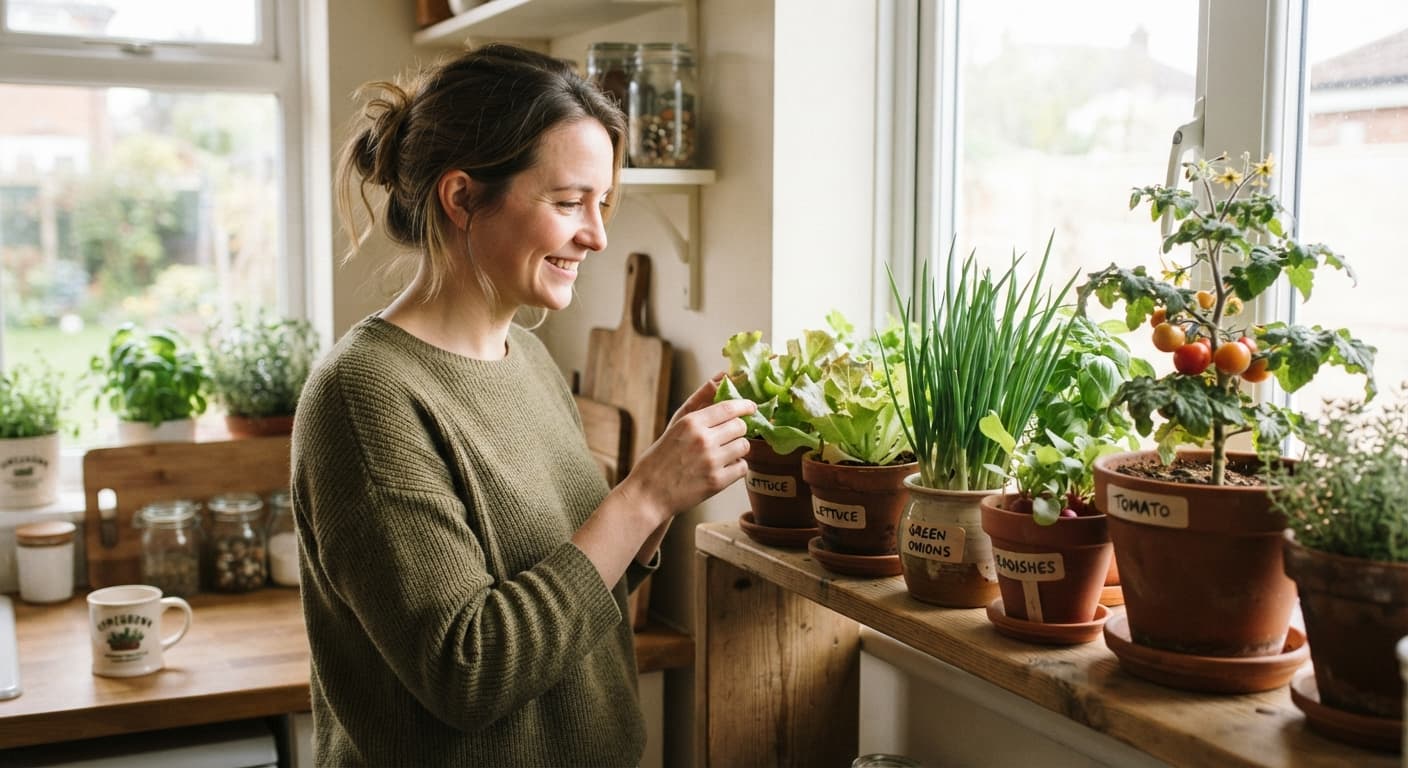
Learning how to grow vegetables indoors allows you to enjoy fresh, homegrown produce even if you have no garden, limited outdoor space, or an unpredictable growing season. With the right vegetables, adequate light, suitable containers, and proper watering, you can create a productive indoor vegetable garden in your home. The key is to choose crops that match your available space, lighting conditions, and level of experience.
Some vegetables, such as lettuce and radishes, adapt well to containers and relatively compact growing spaces. Others, including tomatoes and peppers, need stronger light, more root room, and additional attention before they produce a harvest. Choosing the right crops from the beginning can save you money, prevent disappointment, and make indoor gardening easier to manage.
This guide explains how to grow vegetables indoors, which nine crops are worth considering, how to set up a productive growing area, and how to avoid the mistakes that commonly limit indoor harvests.
Explore our indoor plant care for beginners guide to learn essential watering, lighting, soil, and maintenance tips for healthier, thriving houseplants.
What are Indoor Vegetables?
Indoor vegetables are edible plants that you can grow inside your home, apartment, kitchen, or another indoor space to harvest fresh leaves, stems, roots, or fruits for cooking and eating.
You can grow them in pots, containers, window boxes, or small indoor gardens, provided they receive enough light, water, nutrients, and suitable growing conditions.
Can You Really Grow Vegetables Indoors?
Yes. You can grow leafy greens, herbs, root vegetables, and even fruiting vegetables indoors. Your results will depend on whether you can provide enough light, suitable temperatures, moisture, nutrients, and space for each crop.
An indoor vegetable garden does not need to be elaborate. A sunny windowsill, several containers, a suitable growing medium, and a reliable watering routine can be enough to start. If natural light is weak, an appropriate grow light can extend your options considerably.
However, growing a vegetable plant indoors is not the same as producing a useful harvest. A tomato seedling may grow tall beside a window but produce little fruit if the light is inadequate. Lettuce may develop well in the same location because leafy crops generally require less intense light than fruiting vegetables.
The University of Illinois Extension identifies light as one of the main limiting factors in indoor food production and recommends considering pollination when growing crops that produce fruit.
The most effective approach is to match your first crops to your actual growing conditions rather than choosing vegetables simply because you enjoy eating them.
9 Easy Vegetables To Grow Indoors
The following crops offer a range of growing experiences, from quick-cut greens to plants that produce repeated harvests. Some are vegetables in the botanical or culinary sense, while others, such as green onions, are commonly grown for their edible leaves.
Harvest times are approximate and depend on variety, temperature, light, and whether you harvest young leaves or mature produce.
The timings below are practical estimates, not guaranteed harvest dates.
1. Leaf lettuce
• Botanical Name: Lactuca sativa
• Origin: Commonly associated with the Mediterranean region and western Asia.
Leaf lettuce is one of the easiest vegetables to start with when learning how to grow vegetables indoors. It grows relatively quickly, thrives in containers that do not need to be especially deep, and can provide repeated harvests when you pick the outer leaves while leaving the central growing point intact.
For the best results, choose loose-leaf varieties rather than lettuce varieties that need to form large, tightly packed heads. Both green and red leaf lettuce can grow successfully indoors when they receive adequate light, consistent moisture, and suitable temperatures.
How to Grow Leaf Lettuce Indoors
Light: Place the plant near a bright window where it receives plenty of light. If the leaves become pale, growth turns leggy, or development slows, consider using a suitable grow light.
Container: Choose a planter with drainage holes and enough space to accommodate the recommended spacing on the seed packet.
Growing medium: Use a quality, well-draining potting mix that retains enough moisture without becoming waterlogged.
Watering: Keep the potting mix consistently moist, but avoid allowing the roots to sit in standing water.
Temperature: Provide relatively cool conditions. Excessive heat can encourage premature flowering and reduce leaf quality.
Harvesting: Once the plant is established and has enough leaves, harvest the outer leaves as needed while protecting the central growing point.
Common Problem to Watch For
Lettuce generally grows best in cooler conditions. Excessive heat can trigger bolting, which is when the plant produces a flower stalk earlier than expected. The leaves may become more bitter as flowering progresses. Choosing suitable varieties and avoiding excessive heat can help delay this problem.
Best For: Beginners who want fresh leafy greens for salads, sandwiches, and everyday meals.
2. Radishes
• Botanical Name: Raphanus sativus
• Origin: Radishes have a long cultivation history in Asia and the Mediterranean region, although their precise place of origin is uncertain.
Radishes are an excellent option for anyone learning how to grow vegetables indoors and wanting to harvest an actual root vegetable rather than just leafy greens. Many varieties mature relatively quickly, making them rewarding for beginners. However, successful indoor growing depends on choosing a suitable variety, providing enough light, and giving the roots sufficient room to develop.
For the best results, choose compact, fast-maturing radish varieties that are suitable for container growing. Avoid varieties bred to produce exceptionally large roots unless you have a sufficiently deep container and enough growing space.
How to Grow Radishes Indoors
• Light: Place the container in a bright location where the plants receive plenty of light. Insufficient light can result in weak foliage and poor root development.
• Container: Choose a container deep enough for the selected variety’s roots, with drainage holes to prevent waterlogging.
• Growing medium: Use a loose, fine-textured, well-draining potting mix that allows the roots to expand without encountering excessive resistance.
• Sowing: Sow seeds directly into the final container at the depth and spacing recommended on the seed packet. Direct sowing is preferable because disturbing developing roots can affect their shape.
• Watering: Keep the growing medium evenly moist without saturating it. Irregular watering can contribute to poor root development and inconsistent root quality.
• Harvesting: Harvest the radishes when their roots reach the recommended size for the variety. Leaving them in the container too long, particularly in warm conditions, can result in woody or excessively pungent roots.
Common Problem to Watch For
Small, misshapen, or poorly developed radishes can result from overcrowding, inadequate light, compacted growing medium, or inconsistent watering. Thin seedlings according to the recommended spacing so each plant has enough room to develop its root.
Best For: Beginners who want a relatively quick root vegetable harvest and have a bright indoor growing space.
3. Green Onions (Spring Onions)
• Botanical Name: Allium fistulosum (Welsh onion); some green onions are harvested from Allium cepa varieties.
• Origin: Green onions belong to the genus Allium, which includes several cultivated onion species originating from different regions of the Northern Hemisphere.
Green onions are practical for a small indoor vegetable garden because they take up relatively little space and provide fresh green leaves for cooking. They are especially useful for people who regularly prepare soups, sauces, stir-fries, and other dishes that benefit from a mild onion flavor.
You can grow green onions from seeds, onion sets, or suitable young plants, depending on the type you choose. Another option is to plant the rooted base of a store-bought green onion. This may produce additional green growth, provided the base is healthy and retains its roots, although the results vary with growing conditions. Regrowth should not be mistaken for an unlimited supply of new onions.
How to Grow Green Onions Indoors
• Light: Place the container near a bright window or under a suitable grow light. Adequate light helps produce strong, upright green leaves.
• Container: Use a container with drainage holes and enough depth for the roots to develop comfortably.
• Growing medium: Fill the container with a quality, well-draining potting mix that retains enough moisture to support healthy growth.
• Planting: Sow seeds or plant sets and young onion plants at the depth and spacing recommended for the selected variety. If using rooted onion bases, position the roots in the growing medium while keeping the foliage above the surface.
• Watering: Water when the upper layer of the growing medium begins to dry, adjusting the frequency to the temperature, container size, and rate of growth.
• Harvesting: Snip healthy green leaves as needed, leaving enough foliage for continued growth. Avoid cutting away all the leaves at once if you want the plants to keep producing.
• Growing larger stems: If you prefer longer white stems, select a variety suited to that purpose and follow its recommended planting and growing instructions.
Common Problem to Watch For
Thin, pale, or weak green onion leaves can indicate insufficient light, while yellowing foliage may be associated with watering problems or nutrient deficiencies. Check the growing conditions before adding fertilizer, and ensure excess water can drain freely from the container.
Best For: Small kitchens, beginner indoor gardeners, and home cooks who want convenient access to fresh onion greens for everyday meals.
4. Spinach
• Botanical Name: Spinacia oleracea
• Origin: Central and western Asia, with a long history of cultivation and later introduction to other regions.
Spinach is a useful choice for anyone learning how to grow vegetables indoors, provided there is enough light and the growing area stays relatively cool. Its edible leaves can be harvested without requiring the extensive space needed by many fruiting vegetables, making spinach suitable for container gardening.
The main challenge is temperature. Spinach is a cool-season crop, and excessive warmth can encourage premature flowering, known as bolting, and reduce leaf quality. Choosing suitable growing conditions is therefore essential for a productive indoor harvest.
How to Grow Spinach Indoors
• Light: Place the container in a bright location. If natural light is insufficient, use a suitable grow light to support compact, healthy leaf growth.
• Container: Choose a container deep enough for root development, with drainage holes to prevent waterlogging.
• Growing medium: Use a quality, well-draining potting mix that retains enough moisture to support consistent growth.
• Sowing: Sow seeds directly into the container, following the recommended depth and spacing on the seed packet. Thin seedlings as needed to reduce competition for light, water, and nutrients.
• Watering: Keep the growing medium consistently moist but not saturated. Check moisture regularly, particularly in warm rooms where containers may dry out quickly.
• Temperature: Provide relatively cool conditions whenever possible. Prolonged heat can encourage bolting and make it harder to maintain tender leaves.
• Harvesting: Pick individual outer leaves once the plants are established, leaving the central growing point intact for continued growth. Alternatively, harvest the whole plant when it reaches a suitable size.
Common Problem to Watch For
Premature flowering is a common challenge when spinach is grown in warm conditions or exposed to other stresses. Once the plant bolts, leaf quality may decline. If your indoor space stays hot, leaf lettuce or microgreens may be more practical alternatives.
Best For: Indoor gardeners with a reasonably cool, bright growing area who want fresh leafy greens for soups, stews, smoothies, and other meals.
5. Kale
• Botanical Name: Brassica oleracea var. sabellica
• Origin: Kale belongs to a group of cultivated cabbages originating from the Mediterranean region and surrounding parts of Europe.
Kale is a productive leafy vegetable that can provide repeated harvests when grown under suitable conditions. Unlike microgreens, which are harvested as young seedlings, kale develops into a larger plant that can produce edible leaves over an extended period. However, it needs more growing space, stronger light, and a larger container than many quick-growing indoor crops.
If you are learning how to grow vegetables indoors in a small space, choose a compact kale variety suited to container growing. This makes it easier to manage the plant without sacrificing too much room.
How to Grow Kale Indoors
• Light: Place the plant in a bright location or use a suitable grow light. Adequate light encourages sturdy growth and healthy leaf development.
• Container: Select a sturdy container with drainage holes and enough capacity to support the mature plant’s roots.
• Growing medium: Use a nutrient-rich, well-draining potting mix that retains sufficient moisture without becoming waterlogged.
• Planting: Start seeds in small pots or sow them directly into the final container. If you start seedlings separately, transplant them carefully once they are established.
• Watering: Water regularly to maintain even moisture, adjusting the frequency according to the room temperature and container size.
• Nutrients: Container-grown kale may need supplemental fertilizer as it grows because repeated watering and plant uptake can reduce available nutrients. Use a suitable vegetable fertilizer according to the product label.
• Harvesting: Pick mature outer leaves while leaving the central growing point intact. This allows the plant to continue producing new foliage.
Common Problem to Watch For
Aphids and other vegetable pests can attack kale, especially on the undersides of leaves and around tender new growth. Inspect your plants regularly and address infestations promptly using methods suitable for edible crops. Insufficient light can also result in weak growth and smaller leaves.
Best For: Gardeners who want a longer-lasting supply of leafy greens and have enough space for a larger container.
6. Arugula (Rocket)
• Botanical Name: Eruca vesicaria (also widely known as Eruca sativa)
• Origin: The Mediterranean region and surrounding parts of western Asia.
Arugula, also called rocket, is valued for its distinctive peppery flavor and tender edible leaves. It grows well in containers and can be harvested young, making it a useful option for indoor gardeners who want a leafy vegetable with a stronger flavor than ordinary lettuce.
Because arugula is grown primarily for its leaves, it can be more practical for indoor cultivation than vegetables that require extensive flowering, pollination, and fruit development. It is also suitable for succession planting, allowing you to maintain a more regular supply of fresh leaves.
How to Grow Arugula Indoors
• Light: Place the planter in a bright location or provide supplemental lighting when natural light is insufficient. Adequate light helps produce healthy, well-developed leaves.
• Container: Choose a planter with drainage holes and enough surface area to accommodate several plants at the recommended spacing.
• Growing medium: Fill the container with a loose, well-draining potting mix that holds moisture without becoming saturated.
• Sowing: Sow seeds directly into the container at the recommended depth. Thin the seedlings as they grow so that the remaining plants have enough room to develop.
• Watering: Maintain reasonably even moisture, checking the container regularly and avoiding prolonged dryness or waterlogging.
• Harvesting: Begin picking young leaves once the plants are established and large enough to tolerate harvesting. Take only part of the foliage at a time if you want continued growth.
• Succession planting: Sow small batches at intervals rather than planting all your seeds at once. This can help maintain a steady supply as older plants become less productive.
Common Problem to Watch For
Warm conditions can encourage arugula to bolt, producing a flower stalk earlier than expected. Its leaves may become stronger or more bitter in flavor as flowering progresses. If this happens, harvest the remaining usable leaves and sow a fresh batch under more suitable conditions.
Best For: Indoor gardeners who enjoy peppery salads, sandwiches, and garnishes and want a compact leafy crop that can be harvested young.
7. Swiss Chard
• Botanical Name: Beta vulgaris (Cicla Group)
• Origin: The Mediterranean region, where chard and related forms of beet have a long history of cultivation.
Swiss chard is a productive leafy vegetable with broad green leaves and colorful stems, depending on the variety. It can be a valuable addition to an indoor vegetable garden because established plants can provide repeated harvests when they receive adequate light, consistent moisture, and sufficient nutrients.
However, Swiss chard can grow relatively large, so it is better suited to a spacious indoor growing area than a narrow windowsill or a very small pot. Choose a compact variety if space is limited, and allow enough room for its leaves to spread.
How to Grow Swiss Chard Indoors
• Light: Place the plant in a bright location or use a suitable grow light when natural light is insufficient. Adequate light supports healthy leaf growth and strong stems.
• Container: Choose a sturdy container with drainage holes and enough depth and capacity to accommodate the mature plant’s roots.
• Growing medium: Use a fertile, well-draining potting mix that retains enough moisture to support consistent growth.
• Planting: Sow seeds directly into the container or transplant young plants carefully. Follow the recommended spacing for your chosen variety.
• Watering: Water consistently, avoiding prolonged dryness and waterlogged conditions. Check the growing medium regularly, particularly during warm weather.
• Nutrients: Feed the plant as needed with a balanced fertilizer suitable for edible vegetables, following the product label.
• Harvesting: Pick the outer leaves when they are large enough to use, while preserving the central growing point. Remove yellowing or damaged leaves to maintain healthy growth.
Common Problem to Watch For
Crowded foliage can restrict airflow and make harvesting difficult. Position the container where the leaves have enough room to spread, and inspect the plant regularly for damaged leaves and pests. Insufficient light can also result in weaker growth and smaller leaves.
Best For: Indoor gardeners with enough room for a larger container who want a leafy vegetable that can provide multiple harvests.
8. Cherry Tomatoes
• Botanical Name: Solanum lycopersicum
• Origin: Tomatoes originated in western South America and were subsequently domesticated and developed into many cultivated varieties.
Cherry tomatoes are more demanding than leafy vegetables, but they can be rewarding to grow indoors when you have sufficient light, adequate space, and the patience to manage a fruiting plant. Compact and dwarf varieties are generally more practical for indoor containers than large, vigorous tomato plants.
The main challenge is light. Tomatoes need enough energy not only to maintain healthy leaves but also to produce flowers and develop fruit. A plant may survive near a window yet produce few tomatoes if the available light is inadequate.
How to Grow Cherry Tomatoes Indoors
• Light: Provide several hours of strong direct sunlight where possible, or use a suitable grow light designed to support fruiting plants. A bright-looking room does not necessarily provide enough light for a productive tomato plant.
• Container: Choose a substantial container with drainage holes and enough capacity for the selected variety’s root system. Check the seed packet or variety guidance for recommended container size.
• Growing medium: Use a quality potting mix formulated for container vegetables rather than dense garden soil.
• Planting: Select a compact or dwarf cherry tomato variety suited to container growing. Follow the variety’s instructions for sowing, transplanting, and spacing.
• Watering: Maintain consistent moisture throughout the growing medium. Avoid repeated cycles of severe drying followed by excessive watering, which can contribute to fruit problems.
• Nutrients: Use a fertilizer suitable for tomatoes and follow its label instructions. Avoid excessive nitrogen, which can encourage leafy growth at the expense of fruit production.
• Support: Provide a stake or suitable cage if the plant needs structural support as it grows.
• Pollination: Tomato flowers contain both male and female reproductive structures and can usually self-pollinate. Indoors, gently tapping or vibrating open flower clusters can help release pollen when airflow is limited.
Common Problem to Watch For
Cherry tomatoes may flower without producing much fruit when light, temperature, or pollination conditions are unsuitable. Inconsistent watering can also contribute to fruit problems. Monitor the growing conditions carefully, and remember that tomatoes generally require more attention than lettuce, spinach, or green onions.
Best For: Indoor gardeners with a strong light source, enough room for a larger container, and a willingness to provide additional care.
9. Microgreens
• Botanical Name: Varies by crop; common examples include Raphanus sativus (radish), Brassica juncea (mustard), and Brassica oleracea (kale).
• Origin: Microgreens are not a single plant species. They are young edible seedlings produced from a wide range of vegetable and herb seeds.
Microgreens are among the most practical options for anyone learning how to grow vegetables indoors with limited space. These young edible seedlings are harvested early in their development, often after the cotyledons have expanded and the first true leaves have begun to appear. Their exact harvesting stage depends on the crop and personal preference.
Unlike sprouts, which are generally harvested shortly after germination and often eaten with the seed and root, microgreens are grown in a suitable medium and cut above the growing surface. They require little space, can be ready for harvest relatively quickly, and do not need to develop into mature vegetable plants.
Popular choices include radish, mustard, kale, broccoli, and some lettuce varieties. Use seeds intended for food production, and maintain good hygiene throughout the growing process.
How to Grow Microgreens Indoors
• Choose a tray: Use a clean, shallow tray with suitable drainage or a properly managed growing system that prevents standing water.
• Add growing medium: Fill the tray with a suitable, clean growing medium and moisten it evenly before sowing.
• Sow the seeds: Distribute seeds evenly at the density recommended for the crop. Avoid excessive crowding, which can restrict airflow.
• Maintain moisture: Keep the medium consistently moist without allowing it to become waterlogged. Check shallow trays frequently because they can dry out quickly.
• Provide light: Once seedlings emerge, provide adequate light and good airflow to encourage healthy growth.
• Harvesting: Use clean scissors to cut the greens when they reach the desired stage, following the expected growing period for the selected crop.
• Clean between crops: Remove used growing material, wash the tray thoroughly, and prepare a clean surface before sowing another batch.
Common Problem to Watch For
Poor airflow, excessive moisture, contaminated seeds, and unclean equipment can encourage mould and other food-safety problems. Use clean equipment, potable water, and seeds intended for edible production. Discard microgreens that show signs of decay or suspected contamination.
Avoid growing tomato, pepper, eggplant, or other nightshade-family plants for consumption as microgreens. Their young foliage and stems may contain potentially harmful compounds.
Best For: Beginners, apartment dwellers, and anyone who wants a quick-growing edible crop that requires very little space.
Which Indoor Vegetables Should You Grow First?
Your best choice depends on the conditions you can provide and the kind of harvest you want. A small, bright windowsill is not equivalent to a dedicated growing shelf with artificial lighting.
| Your Situation | Good Starting Choice | Why |
| Very little growing space | Microgreens | Shallow trays fit on small surfaces |
| First attempt at vegetable gardening | Leaf lettuce | Relatively simple care and harvest |
| Want a root vegetable | Radishes | Compact varieties mature in a limited space |
| Cook with onions frequently | Green onions | Leaves can be harvested as needed |
| Have a cool, bright room | Spinach or arugula | Suitable for leafy harvests under cooler conditions |
| Want repeated leafy harvests | Kale or Swiss chard | Established plants can regrow leaves |
| Want homegrown tomatoes | Compact cherry tomatoes | Possible with sufficient light, space, and pollination |
If this is your first indoor garden, start with one leafy crop and one small tray of microgreens. Learn how quickly your containers dry, how your room’s light changes throughout the day, and how the plants respond before investing in more demanding crops.
How To Set Up an Indoor Vegetable Garden
Choosing suitable crops is only half the job. The container, growing medium, lighting, and placement determine whether those crops develop properly.
1. Choose a growing location before buying seeds
Look for a location that receives as much useful natural light as possible. A bright window, a sturdy shelf near a window, or a dedicated growing rack may work.
Observe the location at different times of day. A room that looks bright to your eyes may still provide insufficient light for productive vegetables. Glass orientation, outdoor buildings, curtains, trees, and seasonal changes all affect how much light reaches the plants.
Keep the growing area accessible. You will need room to water, inspect leaves, rotate containers when necessary, and harvest without knocking over neighboring plants.
If you live in a warm climate, including much of Nigeria, pay attention to heat as well as light.
A window that receives intense afternoon sun can become excessively hot for cool-season crops such as lettuce and spinach. A bright position with better temperature control may produce better results.
2. Select containers with adequate drainage
Almost any clean, suitable container can work if it provides enough root space and allows excess water to escape. Decorative appearance matters less than drainage and size.
For most vegetables, choose containers based on the mature plant rather than the size of the seedling.
• Shallow trays: Suitable for microgreens and some small leafy crops.
• Small to medium pots: Useful for green onions, individual leafy plants, and compact crops.
• Deeper containers: Better for root vegetables that need depth.
• Large pots: More appropriate for tomatoes and other plants with extensive root systems.
Container recommendations vary by variety. A compact tomato may need less room than a vigorous, indeterminate variety, while a radish grown for small roots needs less depth than a long-rooted carrot.
Oregon State University Extension recommends well-drained containers and suitable potting mix for container vegetables, noting that many crops benefit from larger containers with adequate growing depth.
Make sure drainage holes remain unobstructed. If you use a saucer to protect the floor or shelf, empty collected water rather than allowing the pot to stand in it.
3. Use a suitable growing medium
For container vegetables, use a quality potting mix formulated for containers or edible crops. It should hold enough moisture for the roots while leaving spaces for air and allowing excess water to drain.
Garden soil taken directly from the ground is generally a poor choice for indoor pots. It can become compacted, drain inadequately, and introduce weed seeds or soil-dwelling pests.
A commercial mix may contain materials such as coir, peat, bark, perlite, or other components. You do not need to memorize every ingredient. Look for a mix suitable for vegetables, with a texture that is neither dense nor persistently soggy.
Before planting, moisten the mix evenly. Dry potting media can sometimes resist water at first, causing water to run down the sides instead of wetting the root zone.
Do not fill the bottom of a pot with stones to improve drainage. A properly designed container with open drainage holes and an appropriate growing medium is a better solution.
4. Decide whether to start from seeds or young plants
Both methods can work, but they suit different crops and circumstances.
Growing vegetables indoors from seeds gives you more choice of variety and allows you to grow small batches as needed. It is particularly practical for lettuce, radishes, arugula, green onions, and microgreens.
Young transplants can save time for crops that take longer to establish, such as tomatoes. However, purchased plants may be too large for a small indoor growing space, and they still need suitable light and root room.
Follow the seed packet for sowing depth, spacing, germination conditions, and expected maturity. Avoid planting every seed in one container at the maximum recommended density. Overcrowded seedlings compete for light and airflow, and they are more difficult to maintain.
If several seedlings emerge in one spot, thin them according to the crop’s recommended spacing rather than allowing all of them to remain crowded.
5. Provide enough light for healthy growth
Light is often the biggest limitation in an indoor vegetable garden. Plants use light for photosynthesis, the process through which they convert light energy into chemical energy needed for growth.
A plant that receives insufficient light may develop long, weak stems, pale leaves, and slow growth. Fruiting crops may struggle to flower and produce a useful harvest.
A sunny window can be sufficient for some leafy crops, but it should not be assumed to provide enough light for every vegetable.
Choosing grow lights
When natural light is insufficient, consider an LED grow light designed for edible plants. Check the manufacturer’s coverage area, recommended distance from the canopy, and intended use rather than judging the lamp by brightness alone.
A light that adequately illuminates a small tray of microgreens may not provide sufficient coverage for several large tomato plants.
As a starting point, the University of Minnesota Extension recommends approximately 12–14 hours of light per day for hydroponic lettuce and herbs and 16–18 hours for seedlings under artificial lighting. Actual requirements depend on the crop, light intensity, and growing conditions. Plants also need a period of darkness.
Use a timer if possible. It makes the schedule more consistent and reduces the risk of leaving lights on continuously.
Do not place a light so close that it overheats or damages the leaves. Follow its instructions and adjust the distance as the plants grow.
6. Water according to the crop and container
Indoor vegetables need a consistent supply of moisture, but the correct watering frequency depends on the plant, pot size, growing medium, temperature, and light intensity.
Small trays can dry quickly. Large pots may remain wet for much longer, especially in cool rooms or locations with weak light.
Instead of watering automatically every morning, check the growing medium and learn how it feels when it is moist versus dry. For established plants, water thoroughly when needed and allow excess water to drain away.
Avoid both extremes:
• Too little water: Leaves wilt, growth slows, and young seedlings may die.
• Too much water: Roots may receive insufficient oxygen, increasing the risk of root problems and disease.
Seedlings often need closer monitoring because their roots occupy only a small volume of growing medium. As the plants become established, adjust your watering routine to their changing needs.
Discover how to water indoor plants properly, recognize when plants need water, avoid overwatering, and maintain healthy roots with this beginner-friendly guide.
7. Feed plants when the growing medium requires it
Container vegetables have limited access to nutrients. As plants grow and water drains through the pot, available nutrients can become depleted.
Some potting mixes contain starter fertilizer; others contain little or no added nutrition. Check the product information before applying more fertilizer.
Use a fertilizer suitable for edible crops and follow the label’s dilution and application instructions. More fertilizer does not necessarily produce more vegetables. Excessive feeding can damage roots, cause salt accumulation, or encourage leafy growth at the expense of the harvest you want.
Leafy crops and fruiting crops have different nutritional demands. If you grow tomatoes, choose a feeding plan appropriate for tomatoes in containers rather than assuming that every houseplant fertilizer is equally suitable.
Learn how to fertilize indoor plants correctly, choose the right fertilizer, avoid overfeeding, and provide essential nutrients for healthier leaves and stronger growth.
8. Maintain airflow and inspect plants regularly
Indoor growing removes some outdoor challenges but creates others. Plants grouped tightly together may have poor airflow, and damp foliage or persistently wet growing media can encourage disease.
Give the leaves room to dry and avoid placing pots so close together that you cannot inspect them.
Check both sides of the leaves, the growing tips, and the soil surface. Aphids, whiteflies, fungus gnats, and other pests can appear indoors, sometimes arriving with new plants or growing materials.
Remove badly damaged leaves when appropriate, clean up fallen plant material, and isolate a plant with a suspected pest problem while you investigate it. Identify the pest before choosing a treatment, especially when growing food that will be eaten.
Learn how to prune indoor plants properly to remove damaged leaves, encourage healthy growth, maintain attractive shapes, and keep your houseplants thriving.
How to grow vegetables indoors without sunlight
If your home has no sunny window, you can still grow vegetables indoors with artificial lighting. However, no ordinary vegetable crop can produce a sustained harvest in complete darkness.
The practical question is whether you can supply enough usable light for the crop you choose.
For a simple setup, begin with leafy greens or microgreens and a suitable LED grow light. These are generally more manageable than fruiting vegetables because they do not need to produce flowers and fruit.
Tomatoes and peppers usually require more intense lighting and a larger growing area. They are possible indoors, but they are not the most economical first choice if your space has no natural light.
If you cannot use artificial lighting, reconsider your crop selection or find a brighter location. Choosing a so-called shade-tolerant vegetable will not overcome the fundamental need for light in productive growth.
How to maintain an indoor vegetable garden year-round
An indoor garden can operate throughout the year, but year-round production does not mean that every plant will keep producing indefinitely.
Some crops, such as lettuce and arugula, are best managed through successive sowings. Microgreens are harvested young and then restarted. Other crops, including tomatoes, may occupy a container for months and require more space and ongoing care.
A simple succession plan works well:
1. Start a small batch of a quick-growing crop.
2. Record the sowing date and the variety.
3. Start another batch before the first is completely harvested, if you have enough space and light.
4. Remove exhausted plants and clean their containers before reuse.
5. Adjust your planting schedule when indoor temperatures or light levels change.
This approach provides a more regular supply than sowing everything at once and then waiting for the entire garden to mature together.
Common mistakes that reduce indoor vegetable harvests
| Mistake | What Happens | Better Approach |
| Choosing crops without checking their light needs | Weak growth or poor fruit production | Match the crop to the available light |
| Using containers without drainage | Waterlogged roots | Use containers with unobstructed drainage holes |
| Planting too many seedlings together | Competition and poor airflow | Thin seedlings to the recommended spacing |
| Keeping the growing mix constantly saturated | Root stress and increased disease risk | Check moisture before watering |
| Overfertilizing | Root damage or unbalanced growth | Follow the fertilizer label |
| Expecting every crop to mature at the same rate | Frustration and poor planning | Use variety-specific maturity estimates |
| Growing large plants in tiny pots | Restricted roots and frequent watering needs | Choose a suitable container for mature size |
| Ignoring pests until damage is extensive | Infestations spread to other plants | Inspect leaves and growing tips regularly |
Mistake What happens Better approach
Choosing crops without checking their light needs Weak growth or poor fruit production Match the crop to the available light
Using containers without drainage Waterlogged roots Use containers with unobstructed drainage holes
Planting too many seedlings together Competition and poor airflow Thin seedlings to the recommended spacing
Keeping the growing mix constantly saturated Root stress and increased disease risk Check moisture before watering
Overfertilizing Root damage or unbalanced growth Follow the fertilizer label
Expecting every crop to mature at the same rate Frustration and poor planning Use variety-specific maturity estimates
Growing large plants in tiny pots Restricted roots and frequent watering needs Choose a suitable container for mature size
Ignoring pests until damage is extensive Infestations spread to other plants Inspect leaves and growing tips regularly
The goal is not to eliminate every possible problem. It is to recognize the conditions that cause common failures and correct them before they affect the entire garden.
Frequently asked questions
1. Can vegetables grown indoors be as nutritious as garden-grown vegetables?
Nutritional value varies with the crop, variety, growing conditions, and harvest stage. Indoor vegetables can be nutritious, but growing them indoors does not automatically make them more nutritious than outdoor produce.
2. Can I grow potatoes indoors in a container?
Yes, potatoes can be grown in sufficiently large containers, but they need considerable root and tuber space, adequate light, and a suitable growing period. They are less practical for a small windowsill than leafy greens or microgreens.
3. Can I grow carrots indoors in ordinary flowerpots?
You can grow carrots in pots, but choose a container deep enough for the mature root length of your variety. Short-rooted or round varieties are generally more suitable for restricted container depth than long carrots.
4. Can I grow beans indoors and harvest the pods?
Yes. Compact bush beans are more manageable than vigorous climbing varieties, although both require sufficient light and space. Flowering and pod production can be disappointing if light levels are inadequate.
5. Can I use water from a freshwater aquarium to feed indoor vegetables?
Aquarium water may contain some nutrients, but its composition varies with the fish, feed, filtration, and water treatments used. It should not be assumed to provide complete nutrition. For edible crops, a fertilizer formulated for vegetables offers more predictable nutrient management.
6. Is it safe to grow vegetables in containers previously used for non-food plants?
It depends on the container’s previous use. Avoid containers that held pesticides, solvents, or other substances that could contaminate food. For reused pots, clean them thoroughly and make sure they are suitable for growing edible crops.
7. Can I reuse potting mix after harvesting an indoor vegetable?
Sometimes. Mix from healthy plants may be reused after removing roots and plant debris, provided it remains structurally suitable and has no known pest or disease problem. Refreshing it with suitable new material and nutrients may be necessary. Discard contaminated mix rather than spreading a problem to new crops.
8. Should I transplant indoor vegetables into a larger pot as they grow?
Transplanting may be necessary when a crop outgrows its container, but not every vegetable needs to be moved. Leafy crops can often be sown directly into their final container, while some seedlings benefit from an intermediate pot before reaching their final growing space.
9. Can I grow different vegetables together in one container?
Yes, if their light, water, nutrient, and root-space requirements are compatible. Avoid combining a vigorous, large plant with small crops that it will shade or crowd. Separate containers are often easier for beginners because they simplify watering and feeding.
10. How can I tell whether an indoor vegetable is ready to harvest if the seed packet gives a range of dates?
Use the packet’s maturity estimate as a guide, then assess the actual plant. Leafy crops can often be picked when the leaves reach a usable size, while root crops should be checked for the recommended root diameter or maturity characteristics. Temperature and light can make plants mature earlier or later than expected.
11. Do indoor vegetables need to be washed before eating?
Yes. Wash harvested produce under clean running water before eating or preparing it, even when you have grown it yourself. Remove damaged material and use clean hands, scissors, and food-preparation surfaces to reduce contamination risks.
Conclusion
Learning how to grow vegetables indoors starts with choosing crops that suit your available light, growing space, and daily routine. Leaf lettuce, green onions, radishes, and microgreens are practical starting points for beginners, while cherry tomatoes and other fruiting vegetables generally require stronger light, more space, and additional care.
Start with one or two crops, monitor their growth, and adjust your watering and lighting as needed. If you notice yellowing foliage, use our guide to Why Are My Plant Leaves Turning Yellow? Causes and How to Fix Them to identify possible causes and learn how to address them.
For more reliable information about plant diversity, botanical research, and plant identification, explore the resources provided by the Royal Botanic Gardens, Kew. You can also consult the National Center for Complementary and Integrative Health (NCCIH) for evidence-based information on complementary health approaches and the scientific evidence surrounding medicinal plants. Remember that information about medicinal plants is not a substitute for practical horticultural guidance on growing edible vegetables.

I’m Bon (aka Guider), a dedicated indoor gardening writer and houseplant specialist with years of hands-on experience cultivating diverse indoor flora. I author comprehensive, data-backed guides designed to help beginners master indoor plant care, including advanced soil science, precise watering schedules, lighting optimization, and pest troubleshooting. To ensure the highest level of accuracy and editorial integrity, every article integrates practical horticulture principles with peer-reviewed research from university extension services, botanical institutions, and trusted horticultural organizations.
Hello Bon,
Glancing through your site today, i saw you just posted this new article on growing veges indoor. This is such a helpful guide for beginners! I love how it explains which vegetables are suitable for indoor growing and provides practical tips on lighting, watering, and choosing containers. I’m excited to try growing lettuce and green onions at home. Thanks for making indoor gardening feel so simple and achievable!
Hi Seabed my guy, thanks for words of encouragement.
Hi Bon,
I always enjoy reading your blog posts, very educative piece you have here.
Thanks
Hi Wuluhomes, thanks for coming along, and dropping a comment